The Weight of the Furrow: How a Retired Engineer Weaponized Bureaucracy Against an HOA Tyrant
CHAPTER 1: THE FRESH SCAR
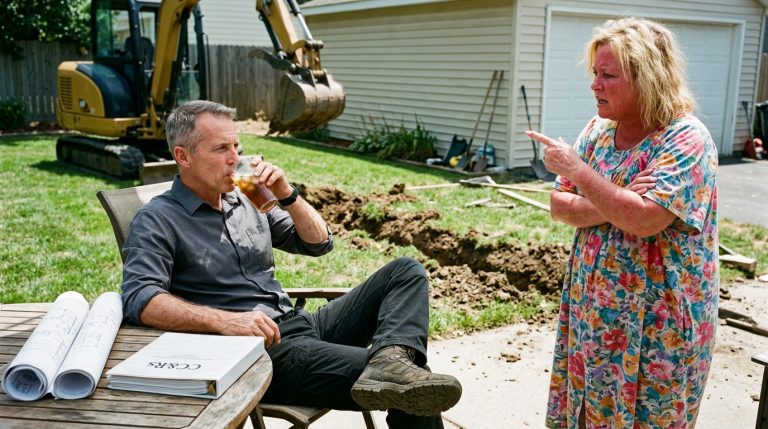
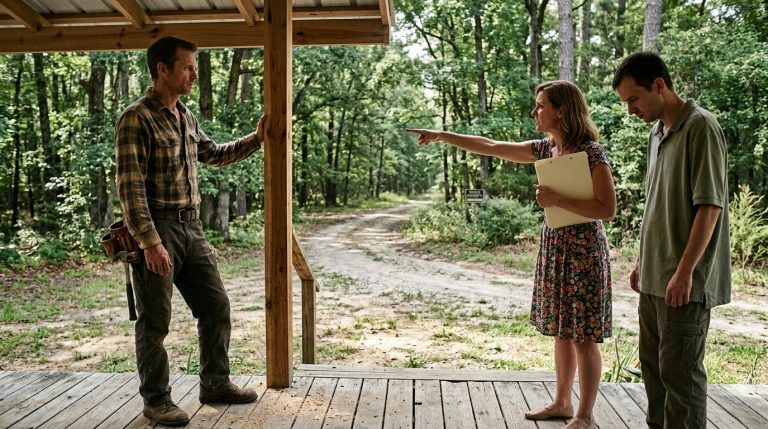
The gnats were a persistent, low-frequency hum against the edge of my ear, tiny punctuation marks to an absurdity that felt entirely unreal. I did not look away from the raw, brown gouge cut straight through three acres of my heirloom bloody butcher corn. The stalks lay broken like discarded limbs, their deep red kernels crushed into the mud alongside the neat plastic stack of Whispering Pines trail markers. Karen Miller stood at the margin of the wreckage, her floral-print muumuu a violent, artificial clash against the raw Carolina soil, wearing her presidency like a crown of thorns she expected everyone else to bleed from.
“Your corn is an eyesore, Major,” she had said, her voice dripping with the effortless certainty of someone who had never built anything with her bare hands. “We’ve improved it.”
The words tasted like iron in my throat. Twenty-two years in the Army Corps of Engineers taught me one immutable law: when an adversary exposes their position through sheer, unadulterated arrogance, you do not strike back in blind anger. You measure the breach. You calculate the load. I kept my fists clenched deep inside my pockets, feeling the dry grit of my own dirt grinding beneath my fingernails as I watched her turn back toward her beige dominion over the hill.
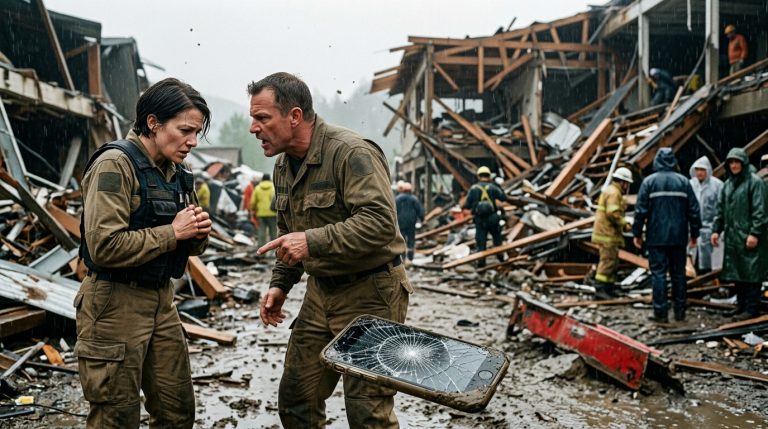
The small yellow Bobcat sat idling twenty yards away near the treeline, its rental company sticker gleaming mockingly in the morning glare. I pulled my phone from my pocket, my movements deliberate and steady, masking the cold fire burning straight through my gut. I hit record. The lens swept slowly across the pulverized stalks, capturing the heavy tire treads biting deep into the root systems. Every frame was timestamped, geo-tagged, and logged with the clinical detachment of a man surveying a compromised levy.
Deputy Miller arrived an hour later, kicking a broken stalk with a boot that looked two sizes too big for him, his young face pinched in quiet sympathy. “She really just did this?” he asked, looking down the quarter-mile scar.
“She did,” I replied quietly, handing him the screen. He muttered something about civil matters and the limitations of county deputies, writing down a report number that we both knew would end up buried in a filing cabinet. I did not argue. The sheriff’s office was a secondary line of defense; my real campaign required heavier architecture.
When the deputy’s cruiser finally kicked up dust down the gravel drive, I walked the perimeter alone, pausing where the tread marks crossed our historical property markers. Something caught my eye near the edge of the second-growth pine—a single, stray trail marker tossed carelessly into the brush, its serial number scratched off with a pocketknife.
CHAPTER 2: THE PAPER FORTRESS
The sun had slipped below the ridge by the time I finished collating the first stack of responses, the shadows stretching long and sharp across the white oak floorboards of the farmhouse. Outside, the crickets kept a steady, mechanical rhythm, a stark contrast to the quiet war taking shape on my kitchen table. Arthur Pendleton sat across from me, his bifocals pushed down the bridge of his nose as he scanned the multi-page reply I had drafted for the HOA’s initial wave of petty violations.
The air smelled of stale coffee and old ink, a combination that always brought back the smell of command tents and midnight operations desks. I reached for my coffee mug, my fingers brushing against the cold ceramic before I stopped myself, letting my gaze drift back to the three official violation notices spread out like enemy troop movements. A fifty-dollar fine for an “unsightly swath of bare dirt”—the very scar Karen had carved with her Bobcat. A hundred dollars for my historic barn’s color not matching their sterile, mandated earth-tone palette. Two hundred dollars for a vintage John Deere parked two hundred yards from their property line.
Arthur grunted softly, tapping a yellow legal pad with the blunt end of a fountain pen. “She’s testing the perimeter, Jack,” he murmured, his voice dry as autumn grass. “She wants to see if you’ll absorb the blows or start swinging wildly. If you swing wild, she wins on technicalities. If you stand still, she buries you in administrative debt.”
“I don’t plan on swinging wild,” I said, my voice low and level. “We dismantle her framework piece by piece.”
I slid my written response across the table. Arthur adjusted his glasses, scanning the dense paragraphs. I had bypassed emotion entirely, stripping the defense down to raw, unassailable statute and precedent. For the property maintenance fine, I cited county ordinances regarding agricultural protection and attached Frank’s newly certified boundary survey, proving the damage originated entirely within my legal acreage—meaning the HOA was attempting to fine me for their own trespass. For the barn, I referenced the original 1850s land grant and county zoning exemptions that predated Whispering Pines Estates by well over a century, making their uniform architectural covenants legally toothless against my property. For the tractor, I cited the state Right to Farm Act.
Arthur read through it twice, a slow, thin smile cutting across his weathered face. “You didn’t just answer her charges, Jack. You turned her own bylaws into a weapon of mass administrative destruction.”
“A rule is only as good as its enforcement,” I replied, leaning back in my chair. “And Karen made a critical tactical error when she issued these fines without a formal, recorded board vote. She thinks she is the board.”
Before Arthur could answer, a sharp knock rattled the front screen door. We didn’t wait; we moved together, boots clicking on the floorboards as I pulled the door open. Arthur Pendleton’s nephew, David Chen—who lived three doors down from Karen and had spent the past year quietly fighting her over solar panel ordinances—stepped onto the porch, clutching a thick manila folder to his chest. He looked over his shoulder once into the darkness before slipping inside, locking the screen behind him.
“You guys need to see this,” David said, dropping the folder onto the table next to my violation replies. His breathing was slightly elevated, the tension of a civilian operating behind enemy lines. “I’ve been scraping the community web portal’s financial logs for the past forty-eight hours. The monthly maintenance summaries don’t match the bank outflows.”
Arthur leaned forward, pulling the folder open. “What kind of discrepancy?”
“Vague categorizations,” David said, pointing a finger at a highlighted row of digital data. “Tens of thousands under ‘Common Area Enhancement’ and ‘Landscape Remediation’ with zero itemized receipts attached. But here’s the kicker—I cross-referenced the dates with local equipment rental companies. Three days before your corn got plowed, a local landscaping outfit billed the HOA nine thousand five hundred dollars for ‘routine seasonal mulching.’ Except it’s the middle of summer. Nobody lays mulch in July.”
The kitchen grew deathly quiet. The single overhead light cast sharp shadows across the stacked papers, throwing the edges of the room into stark relief. I could feel that familiar cold fire coiling tight in my chest—not panic, but the absolute clarity of an objective coming into focus. She hadn’t just acted on a whim; she had used community funds to finance the destruction of my livelihood, hiding the expenditure behind a fraudulent line item.
“She used their money to pay for the hit,” I said quietly, the words dropping like lead weights into the silence.
Arthur looked up from the folder, his eyes sharp and bright behind his lenses. “Which means we aren’t just looking at a civil dispute over a damaged crop anymore. We are looking at a pattern of systematic financial malfeasance executed by an officer acting outside her legal mandate.”
“Exactly,” David nodded, pulling a small flash drive from his pocket and placing it beside the folder. “I’ve got the server logs, the bank routing traces, and a list of three other homeowners who were threatened with fines if they asked questions about the budget. If we package this with your property survey and Dr. Thorne’s agricultural loss assessment, we don’t just file a standard civil suit.”
I looked down at the papers, tracing the sharp lines of the text. Karen had wanted a war of attrition, banking on the comfort and compliance of a suburban bubble where people paid fines rather than rock the boat. She didn’t understand the machinery of endurance. She had handed us the shovel; now we were going to dig the foundation of her undoing.
“Get the documents ready, Arthur,” I said, my gaze fixed on the dark window reflecting our silhouettes. “Tomorrow morning, we draft the state agricultural claim, and we make sure her name—and her name alone—is at the top of the defendant line.”
CHAPTER 3: THE SMOKING GUN
The hum of Arthur’s office fluorescent lights carried a sharp, electric whine that set teeth on edge. It was past midnight, and the air smelled heavily of old paper, ozone, and cooling solder from the data recovery drive David Chen had left spinning next to the monitor. We had not moved from the mahogany table in three hours, the silence broken only by the rhythmic clicking of keys and the occasional scratch of a pen against legal foolscap.
“Found it,” David whispered, leaning so far forward his chest nearly touched the screen. He tapped a finger against the glass. “The invoice routing numbers don’t just point to standard common area maintenance. They trace right back to an emergency expenditure authorization code that bypasses regular board consensus.”
Arthur pushed his glasses up his nose, peering over the rim at the glowing rows of financial data. “Show me the authorization signature, David.”
“That’s the beauty of it,” David said, his voice tight with vindication. “There isn’t one. Not a valid board signature, anyway. It’s a digital facsimile token stamped under an administrative override flag. Only the sitting president has the security key to execute that protocol.”
I stood up from the heavy oak chair, the joints in my back popping softly in the quiet room. I walked over to the tall, dusty window looking out toward the dark line of the treeline where my farm met the Whispering Pines perimeter. The moon cast sharp, silver edges across the ruts of the gravel drive. Karen Miller hadn’t just made a bureaucratic error or misunderstood a boundary line. She had engineered a fraudulent paper trail to mask an act of intentional malice, using the community’s own treasury as a private slush fund to finance the destruction of my livelihood.
The realization did not bring anger. Anger was an uncalibrated force, a liability that burned through focus. Instead, it brought a cold, absolute clarity. The puzzle pieces were no longer scattered; they were locked in place, forming a complete tactical picture.
“We don’t wait for the civil court docket,” I said, turning back toward the table, my voice dropping into the steady register I used when briefing an operations team before dawn. “If we file through standard channels alone, her corporate defense lawyers will try to bury this under months of administrative delays and insurance arbitration. We take the transaction logs, the landscaper’s testimony, and the server records directly to the state agricultural division’s special prosecutor tomorrow morning.”
Arthur looked up, a sharp, approving glint in his eye. “And we make sure the process server catches her before she has time to coordinate an alibi with the board’s corporate counsel.”
“Carl,” I said, naming the veteran process server Arthur had relied on for years. “Give him the copies wrapped in certified linen. I want her personally served while she’s standing in her own foyer.”
The following morning broke gray and heavy, the humidity clinging to the skin like a damp wool blanket. Carl executed the service with the surgical precision of an infantry flanking maneuver. By noon, the shockwaves had hit the Whispering Pines administration office. Karen’s initial response was not a counter-filing or a legal defense, but a stunned, deafening silence—the kind of vacuum that precedes a structural collapse. But bullies of her breed do not fold quietly; they lash out when the perimeter is breached.
Two days after the personal service, the retaliation arrived not in the mail, but at my gate. A county sanitation inspector accompanied by two armed private security contractors pulled up unannounced, flashing credentials and demanding immediate access to my historic barn under the guise of an emergency environmental hazard complaint. They claimed an anonymous tip had been filed alleging toxic chemical runoff threatening the community watershed.
I stood on the porch, my boots planted firmly on the worn pine planks, watching them approach with heavy, deliberate strides. The lead inspector, a man with a clipboard pressed tight to his chest like a shield, stopped at the base of the steps.
“Major Callahan,” he said, his tone clipped and official, though his eyes darted nervously toward the open fields. “We have a mandate to inspect your storage facilities immediately. Step aside.”
I didn’t move an inch. I didn’t raise my voice. I simply reached into my shirt pocket, pulled out a folded copy of the federal district court injunction Arthur had filed late the previous night, and unfolded it with slow, deliberate care.
“You are standing on private agricultural land protected by federal right-to-farm statutes,” I said, each word landing with the weight of a dropped anvil. “Your warrant is invalid because it cites an administrative code that expired four years ago. Furthermore, the individual who filed the complaint—one Karen Miller—is currently under federal subpoena for financial fraud and malicious property destruction.”
The inspector froze, his eyes scanning the first two paragraphs of the legal document. The color drained from his face as he realized the trap had snapped shut. He had been sent out as a proxy weapon by a desperate woman who didn’t realize her own command lines had already been cut.
Without a word, the inspector turned on his heel, motioned sharply to his guards, and retreated to their vehicles, kicking up a furious cloud of dust as they fled down the drive. I watched them go, my hand resting lightly against the rough cedar post of the porch. The first line of defense had held. The next phase was no longer about holding the line; it was about taking the fight straight to her gates.
CHAPTER 4: THE HARVEST OF RECKONING
The fluorescent lights of the Whispering Pines community clubhouse buzzed with a low, oppressive frequency that grated against the heavy silence of the room. Every seat was filled, and homeowners spilled out past the double doors into the foyer, their murmurous shifting sounding like dry leaves swept across concrete. At the front table, the remaining board members sat in tense isolation, their folders clutched like shields. Karen Miller’s designated seat in the center was conspicuously empty, a vacuum left by a leader whose command lines had utterly disintegrated.
I walked down the central aisle carrying a single leather portfolio, my boots clicking rhythmically against the polished linoleum. Arthur Pendleton and David Chen flanked me, carrying the evidentiary files containing the state agricultural ruling, the falsified maintenance invoices, and the digital routing tokens that proved the expenditure was a calculated, fraudulent assault. There was no need for dramatic flair or raised voices; the machinery of accountability operated with the cold, unyielding weight of an iron press.
Acting President Tom, a nervous accountant thrust into the center of the storm, cleared his throat and tapped his gavel once. “The floor is open for new business,” he said, his voice tightening under the weight of fifty pairs of eyes.
Arthur didn’t wait. He stood up, buttoning his jacket with slow, deliberate precision. “Madame President—or in this case, her absence—has forced this community to confront a profound breach of trust,” Arthur announced, his voice carrying clearly to the back rows. “We call for the formal vote of censure against Karen Miller for gross malfeasance, fraudulent misrepresentation of HOA funds, and intentional property destruction.”
Before Tom could even call for a second, the back doors swung open further as neighbors murmured agreement. But the legal reality was already locked. The State Department of Agriculture’s ruling had arrived an hour before the meeting, validating the full damage assessment and officially piercing the corporate veil. Because Karen had acted outside her mandate and fabricated a paper trail to mask her actions, the two-hundred-and-twenty-five-thousand-dollar judgment was levied directly against her in her personal capacity. No insurance policy covered fraud. No corporate shield remained.
The vote was swift, unanimous, and absolute. It was a public branding that stripped away the illusion of untouchable suburban royalty. Yet the true resolution required more than a legal judgment; it demanded the physical restoration of what had been broken.
Three days later, the quiet returned to the Callahan farm, heavier and more profound than before. A “For Sale” sign had been driven deep into the manicured lawn of Karen’s oversized house on the hill—the physical asset now encumbered by liens to satisfy the court’s judgment. Down on my land, the raw, scarred gouge where the Bobcat had torn through the heirloom crop was gone. A local restoration crew, funded partially by a gesture of goodwill from the newly reformed HOA board, had carefully tilled, amended, and re-leveled the soil.
I stood on the front porch at dusk, watching the warm amber light catch the tips of the newly planted bloody butcher corn stalks swaying gently in the evening breeze. The deep red tassels rustled softly, a living testament to patience, documentation, and unyielding defense. Arthur walked up the wooden steps, holding two steaming mugs of black coffee, and handed one to me without a word. We leaned against the railing together, looking out over the fields.
“She’s packed her cars,” Arthur said quietly, nodding toward the distant hill where movers were loading a sleek black SUV. “Estate sale is scheduled for Saturday. The house sold at a loss.”
“She tried to engineer a sterile world by erasing anything that didn’t fit her template,” I said, taking a slow sip of the bitter coffee. “She forgot that real foundations aren’t built on rules; they’re built on endurance.”
Arthur clinked his mug gently against mine. “The new board wants to sit down next Tuesday to finalize the permanent easement for the outer perimeter trail. Well outside your property line, mapped by Frank, exactly where it belongs.”
“Tell them I’ll have the tractor ready,” I replied, a quiet satisfaction settling deep into my chest.
I set my mug down on the weathered wood of the porch railing and reached out, my fingers tracing the grain of the cedar post my grandfather had carved a century ago. The wood was solid, scarred by weather and time, but entirely secure. The war was over, the boundaries were restored, and the earth was breathing again.