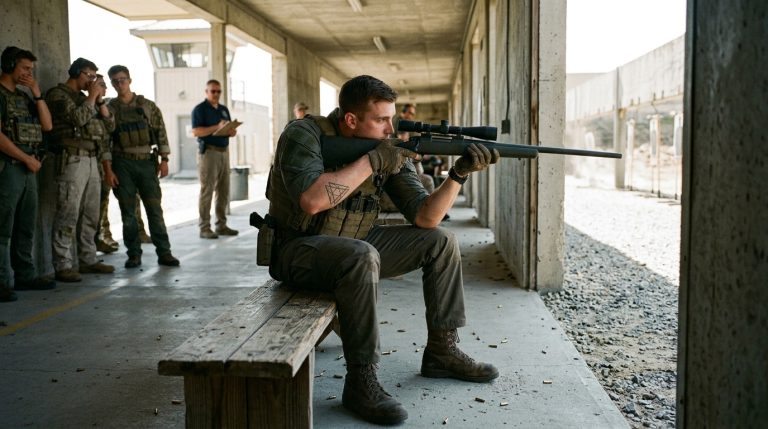
The Concrete Line: How a Quiet Tactical Instructor Dismantled a Suburban Tyrant Without Firing a Single Shot
CHAPTER 1: THE BLUE LIGHT
The screen flickered twice before the live feed stabilized. A flashlight beam slid across my living room wall, picking out the edge of the bookshelf and the corner of the heavy oak desk. For half a second, my brain tried to categorize it as a glitch or a delayed relay from an afternoon squirrel. Then the image sharpened, and I saw a man in cargo pants creeping forward with deliberate, overly dramatic posture.
Behind him came two more figures, one wearing a fishing hat and another with a cheap plastic walkie-talkie clipped to a neon yellow belt. I recognized the patch immediately. It read Neighborhood Safety Enforcer. Two weeks earlier, Karen had taped a pink notice to my front door demanding a voluntary safety inspection, complete with quotation marks and a veiled warning about administrative escalation. I had crumpled it without breaking stride.
I dismissed the rookies instantly, telling them a real-world case study had just dropped into my lap. My phone remained heavy in my palm, but the screen refresh failed—the local network server had dropped the cloud archive feed due to an automated midnight backup crash. The digital evidence was gone. If I wanted accountability, I wouldn’t have it on a silver disk.
I set the phone down on the concrete workbench, rolled a scarred brass caliper between my fingers, and walked out to the truck. The drive home took six minutes, and I didn’t turn on the sirens or call for backup. I parked three houses down, slipped past the side gate through the damp grass, and entered my own home through the unlatched garage door.
CHAPTER 2: THE DARK SWITCH
The house dropped into absolute blackness. Across the kitchen, a sharp yelp cut through the silence, followed by the frantic scrape of boot soles sliding against linoleum. Panic moves fast in people who have never trained for darkness, and the sudden loss of light stripped away every ounce of their rehearsed authority.
A flashlight beam stuttered wildly against the ceiling before dropping to the floor. I stepped out of the utility hallway and planted my boots on the threshold, letting the heavy air of the kitchen anchor me.
—Drop the cutters, — I said. My voice wasn’t raised, but it carried the flat, unyielding weight of an order that required no debate.
A metal clamp clinked loudly against the tile as someone fumbled in the dark.
—Who’s there? Turn the lights on! This is an authorized community inspection! — Karen’s voice cracked slightly, high and sharp with indignation, even as she stumbled against the kitchen island.
—You’re standing in my kitchen without a warrant, — I replied, stepping forward until the ambient light from the backyard security lamp caught the edge of her beige vest. —And you brought bolt cutters to a residential door.
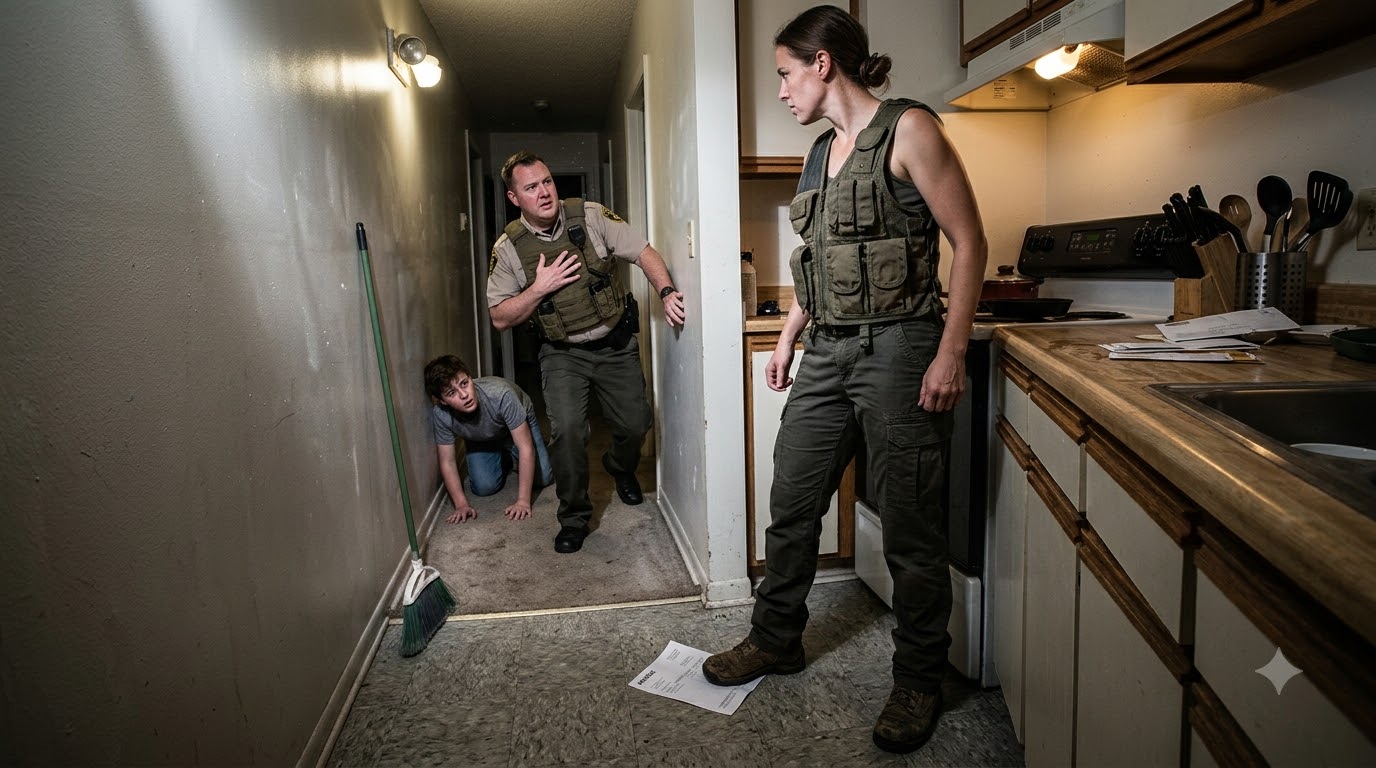
Her son, Kyle, bolted instinctively toward the side hallway, relying on pure panic instead of spatial awareness. I didn’t chase him; I simply reached out and triggered the hand-held strobe rig tucked in my cargo pocket, filling the narrow corridor with blinding, rhythmic pulses of white light. He ran straight into the drywall with a dull thud, dropping to his hands and knees with a sharp gasp of winded frustration.
Karen lunged forward to shield him, her clipboard clattering to the floor. As it hit the tiles, a crisp piece of paper slid out from beneath the plastic pocket. I caught the edge of it with the toe of my boot, pinning it to the floor. It wasn’t an HOA safety guideline. It was a wholesale commercial hardware invoice for heavy-duty deadbolts and window sensors, billed directly to a security supply company registered under her husband’s name.
The room went entirely still, save for Kyle’s ragged breathing against the wall. The clipboard lay half-flipped at my feet, exposing a grid of dates and addresses marked with red checkmarks. This wasn’t a neighborhood watch. It was a targeted inventory.
CHAPTER 3: THE COLD RECORD
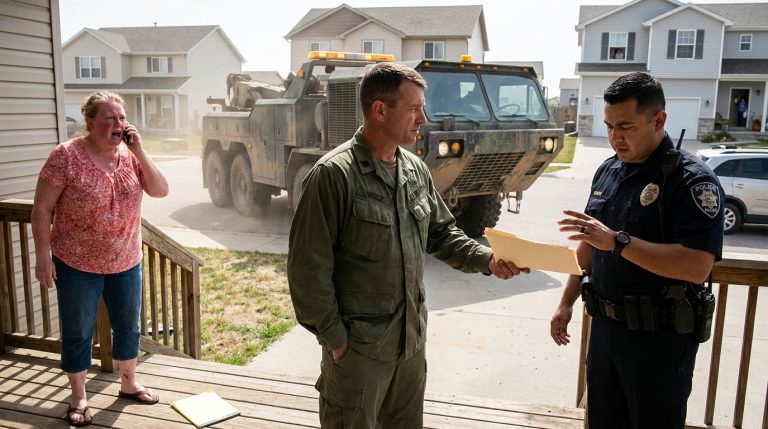
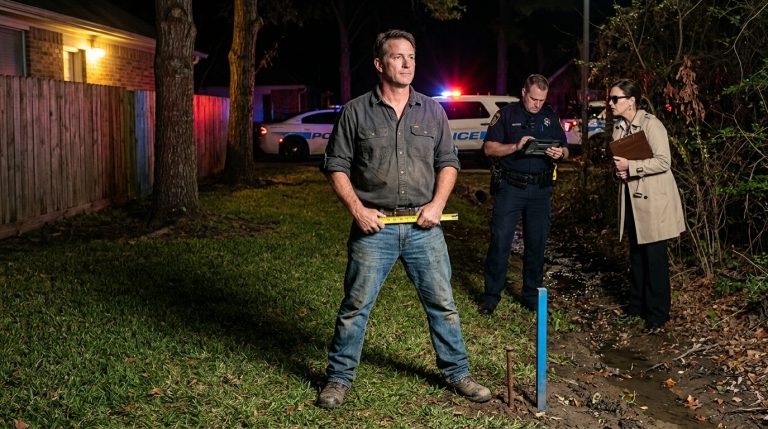
Lieutenant Marquez stood near the bumper of a patrol car, wiping a fine mist of rain from his clipboard. He recognized me before I reached the yellow police tape, his expression settling into a mask of weary professional friction.
—We got the trespass call, — Marquez said, his voice dropping beneath the low rumble of an idling engine. —Your kitchen is a mess, and we pulled three people out of there. But your cloud storage failed right when the feed triggered.
—The server backup crashed at midnight, — I replied, rolling the scarred brass caliper in my pocket. —There’s no digital file left for you to pull from the cloud.
Marquez exhaled a long cloud of breath into the night air, shaking his head.
—Without the digital archive, the prosecutor’s office is going to call this a civil dispute over property lines or neighborhood watch boundaries. Karen is already telling my desk sergeant that you invited them in for a security walkthrough.
—She brought commercial bolt cutters through a locked side gate, — I said, stepping closer so the glare of the light bar caught the paper jammed in my palm. —And her clipboard carries wholesale hardware invoices paid for by neighborhood association dues.
Marquez paused, his eyes dropping to the corner of the invoice sticking out from my grip. He didn’t smile, but the tight set of his jaw relaxed by a fraction.
—Paper trails don’t care about cloud servers, — he muttered, reaching out to take the corner of the sheet. —Bring the rest of the physical logs down to my desk by eight tomorrow morning. We’ll bypass the digital grid entirely.
CHAPTER 4: THE CLIPBOARD LEDGER
I flipped through the stiff manila folders stacked inside the lower drawer, searching for the paper trail linking community funds to private hardware distribution. Dennis, Karen’s quiet husband, stood near the doorway with his hands shoved deep into his pockets, refusing to look me in the eye.
—She kept a secondary ledger in the garage workshop, — Dennis muttered, his voice flat and drained of any defense. —She thought the neighborhood was falling apart. She bought the locks in bulk so people would feel they had no choice.
—It wasn’t about safety, Dennis, — I said, pulling out a spiral-bound notebook filled with handwritten addresses and date-stamped schedules. —She was tracking when people left for work to coordinate the installation slots.
Dennis shifted his weight from one boot to the other, jaw muscles tightening under a sudden wave of defensive pride.
—She only wanted things organized. People got sloppy.
—People have a right to privacy on their own property, — I replied, dropping the notebook onto the desk with a heavy thud. —And misusing association funds to run a private hardware markup scheme crosses a legal line that no amount of clipboards can fix.
The room went dead silent except for the hum of the overhead fluorescent light flickering against the metal shelves. Dennis swallowed hard, recognizing that the paper records laying between us carried far more weight than any digital cloud backup ever could.
CHAPTER 5: THE CLUBHOUSE RECKONING
The room fell dead silent as she raised her clipboard, her face flushed with defensive indignation.
—This assembly has been misled by malicious rumors, — Karen announced, her voice pitching slightly higher than normal. —The safety task force operated strictly under community guidelines to protect our property values from rising threats.
I sat near the back row, slowly rolling the scarred brass caliper between my thumb and forefinger. I didn’t shout or interrupt her speech; I simply reached out and tapped the play icon on the portable audio deck resting on my knee.
A sharp hiss of static filled the room before her recorded voice echoed off the wood-paneled walls.
—Break the side lock, check the back shelves for documentation, and make sure nobody leaves a paper trail.—
The recording played clearly, capturing every crisp syllable of her midnight command inside my kitchen. A collective murmur rolled through the packed rows of residents as people leaned forward, realization dawning across their faces. Karen’s grip on the wooden edges of the podium whitened, her jaw locking in furious denial.
—That audio is manipulated! It’s a digital fabrication by someone who refuses to cooperate with neighborhood standards! — she snapped, slamming her hand onto the microphone stand.
—There is no digital trickery here, Karen, — I said, standing up from the folding chair and holding out the physical wholesale hardware invoices for the room to see. —These are paper receipts purchased with association dues to stock your husband’s private security inventory.
She opened her mouth to argue, but the murmurs in the crowd had already turned into hard, uncompromising stares. The defense had completely collapsed under the weight of her own documentation.
CHAPTER 6: THE WORN PORCH
I picked up the envelope and thumbed open the flap. Inside lay a formal, typed letter of apology, but along the lower margin, three messy words were scrawled in hurried handwriting: I was wrong.
There were no grand speeches, no tearful confessions, and no dramatic sudden conversions. Karen’s systematic overreach had simply run out of bureaucratic fuel, dismantled piece by piece by plain paperwork and stubborn common sense.
The city hearings had concluded with heavy fines and a ten-year prohibition from holding community office. Dennis had quietly stepped back from the hardware supply business, and the neighborhood association had permanently disbanded the unauthorized patrol group.
A few days later, one of the teenage volunteers appeared at my front gate, looking down at his boots with profound embarrassment.
—I didn’t understand what we were doing, — he muttered, shifting his weight awkwardly against the metal fence post. —I thought it was just community service.
—If you want to protect people, you start by learning what boundaries actually mean, — I replied, handing him a wrench. —The hinge on this gate is still loose from where your group forced it. Fix it right, or don’t bother coming back.
He took the tool without another word and spent the next hour tightening every bolt until the gate swung true and silent.
Weeks later, the atmosphere on the street had entirely transformed. Curtains remained open, neighbors laughed freely across driveways, and children rode their bicycles past my fence without stopping or looking over their shoulders.
I settled back into the wooden rocking chair on my front porch, holding a cold glass of iced tea against my palm. The afternoon sun cast long, clean shadows across the pavement, and for the first time in months, there was nothing to inspect, nothing to track, and nothing to defend.