The Echo of the Silent Shot: A Journey from the Weight of Expectation to Foundational Peace
CHAPTER 1: THE WEIGHT OF THE CALLED SHOT
The heat was a physical presence, shimmering in waves off the gravel, but inside the narrow corridor of Lane Seven, the world narrowed to the scope’s reticle. I didn’t care about the chatter from the central lanes. I didn’t care about the younger recruits with their expensive, polished gear that smelled of factory grease instead of hard-won history. I focused entirely on the texture of the bench beneath my elbows. The wood was splintered, weathered by years of neglect—it felt real.
I chambered the first round. The metal action clicked with a familiar, rhythmic certainty. My father’s voice drifted over from the control tower, resonant and heavy with the authority he’d wielded over my life since I was tall enough to hold a pack. He was talking about “inherent talent,” the kind of genetic myth he used to keep his world small and manageable. He never understood that talent is just a byproduct of obsession.
I exhaled, feeling the tension drain out of my shoulders, leaving behind the cool, detached focus that only comes when you stop trying to be seen and start trying to be precise.
The first shot cracked the air, a sharp, angry snap that momentarily killed the surrounding noise. I didn’t watch the target retrieval. I didn’t need to. I knew the placement. I felt the recoil ripple through my arm, awakening the skin beneath my sleeve where the ink lay hidden. That tattoo wasn’t a badge of honor; it was a map of every mistake I’d learned not to make again.
By the fifth round, the range had gone unnaturally quiet. I could feel the atmosphere shifting—a subtle drag in the air as eyes turned from their own lanes toward the quiet woman in the corner. I didn’t turn. I didn’t seek their approval. I just fired.
When the tenth shot found its mark, the silence wasn’t just an absence of sound; it was a realization. It was the heavy, suffocating weight of a standard being met that nobody believed possible. I rolled my left sleeve up, just an inch, exposing the edge of the Delta emblem.
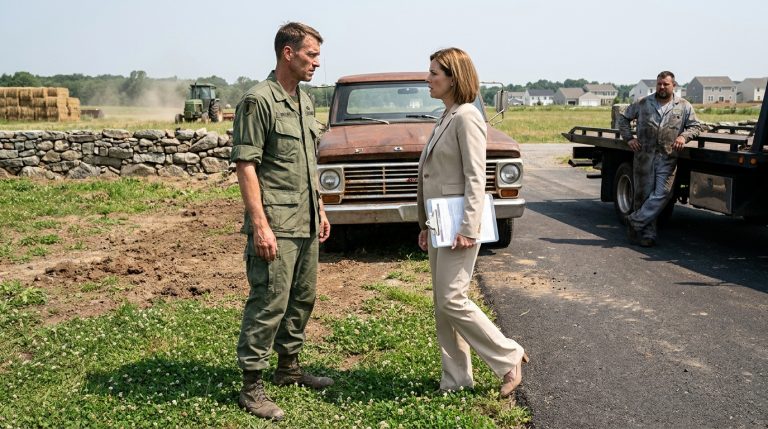
I looked up, meeting my father’s gaze across the sun-drenched lot. He stood still, the clipboard in his hand looking suddenly like an anchor he couldn’t lift. He wasn’t looking at a daughter; he was looking at the ghost he had spent years trying to erase. And for the first time, he didn’t have a word to say. He just stood there, the shadow of his own doubt finally catching up to him, while I, at last, had nothing left to prove.
CHAPTER 2: THE ECHO OF THE GHOST
I didn’t turn around immediately. I let the rifle rest on the wooden bench, its barrel cooling in the humid, oppressive air of the range. The metal gave off a faint, sharp scent of burned propellant and ozone, a smell that had been the backdrop of my life for fifteen years. Behind me, the muffled conversations of the SEAL candidates had ceased entirely, replaced by that rare, unsettling quiet that only occurs when a roomful of people suddenly realizes they are out of their depth.
My father was still standing near the central tower. I knew his stance—rigid, shoulders squared, eyes fixed on the target retrieval system as it rolled forward. He was searching for a flaw, a variance, a justification for the doubt he had spent years casting my way. But the shredding of the bullseye was absolute. There was no room for interpretation.
“Delaney.”
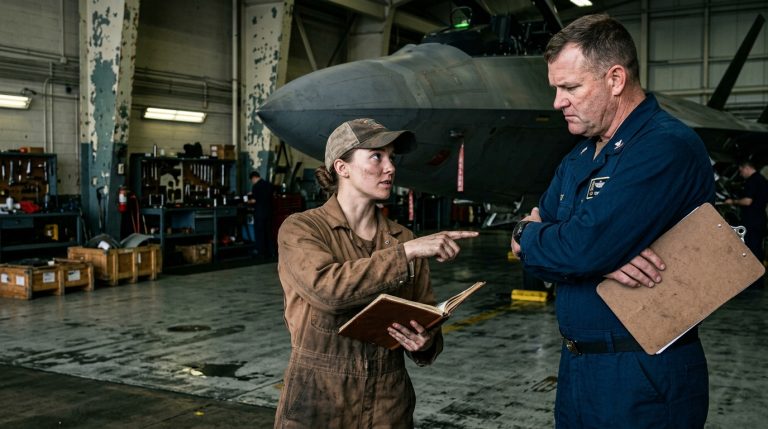
The voice was rough, scarred by decades of tobacco and shouted orders. It wasn’t my father. I turned slowly, my movements deliberate. Standing a few paces away was Master Sergeant Halloway. He was a man made of hard angles and tired eyes, someone who had seen the rise and fall of more careers than I had seen days in the field. He held a clipboard, his thumb hooked under the edge, his gaze fixed on the fading ink of my tattoo.
“I haven’t seen that insignia since the Windglass operation,” Halloway said. His tone wasn’t inquisitive; it was an acknowledgment. He wasn’t looking at a recruit. He was looking at a relic, someone who had supposedly moved on to the diplomatic corps or, worse, faded into the static of bureaucratic records. “They told us you were off-limits. Classified. That you’d traded the rifle for a desk in D.C.”
I didn’t offer a polite smile or a confirmation. I simply reached for the cleaning cloth in my bag. “People talk, Sergeant. Especially when they don’t know what they’re looking at.”
He stepped closer, his boots crunching in the gravel. The atmosphere between us was heavy with the unspoken history of the units we’d both served in—the kind of history that required no embellishment. He glanced toward my father, who was now moving toward the group of instructors, his stride slightly less confident than it had been ten minutes ago.
“Your father,” Halloway started, then paused, shifting his weight. “He’s been running this joint rotation like a private fiefdom. Bringing in names that don’t show up on the central roster, clearing certifications without a single hour of live-fire. It’s bad for the culture, Delaney. It’s bad for the standards.”
I paused, the cloth still in my hand. This wasn’t just idle range talk. Halloway was fishing, or perhaps, he was testing the water to see if I was the rock that would finally break the dam. I looked at the weathered grain of the wooden bench, the way the splinters had been polished smooth by generations of soldiers seeking steady hands. The texture felt like a memory of patience.
“Standards aren’t a suggestion, Sergeant,” I said, my voice low and devoid of the performative edge the younger recruits used to mask their insecurity. “They’re the only thing that separates us from the chaos.”
“Then why are you here, Sergeant Delaney?” he asked, dropping the title like a challenge. “You don’t need the range time. You aren’t here for the camaraderie. You’re looking for something that’s buried deep in the filing cabinets.”
I didn’t answer. I focused on the mechanical precision of disassembling the M24’s bolt. My hands were steady, entirely detached from the rising intensity of the situation. Every movement was a choice—slow, measured, and devoid of the emotional static that usually clouded these interactions. I was the “quiet one” because I knew that words were the first things to fail when the pressure reached a breaking point.
As I worked, I noticed the way the younger soldiers were still watching us. They saw the interaction between the veteran Sergeant and the woman they had mocked moments ago. They were seeing the myth collide with the reality. Halloway wasn’t checking my credentials; he was verifying my intent.
“I’m here because I like the view,” I said finally, sliding the bolt into place with a crisp, final click. I met his eyes, allowing a sliver of the cold, tactical assessment I’d learned in Kandahar to surface. “And because some ghosts need to be reminded that they never actually left.”
Halloway didn’t laugh. He looked at me, a flicker of something like respect passing through his tired eyes, then nodded once. He turned and walked back toward the tower, his silhouette blending into the shimmer of heat. I was left alone at the far end of the range, the silence returning, but this time, it felt different. It was no longer the silence of dismissal. It was the silence of anticipation.
I hadn’t revealed anything, but the ground had shifted. I had let them see the ink, let them see the skill, and now, I had let them see that I was not the daughter my father had tried to frame in his narrative. I was the architect of my own. I looked down at the spent brass casing resting on the concrete. I picked it up, feeling the residual heat of the powder against my skin, and tucked it into my pocket.
It was a small, heavy piece of evidence, a physical anchor for the day to come. I wasn’t going anywhere. I had a schedule to keep, a file to finish, and a legacy to dismantle.
CHAPTER 3: THE ARCHITECTURE OF ROT
The administrative building at Fort Dalton was a relic of a different era—cinderblock walls painted a soul-crushing shade of beige, long, flickering fluorescent hallways, and the pervasive, cloying scent of stale coffee and floor wax. It was a place where people came to hide behind desks, to shuffle papers, and to believe that a stamped form was equivalent to a job well done. I didn’t fit here, and that was exactly why I was the only one who could look at the files without seeing what I was supposed to see.
I walked past the main office, my footsteps echoing with a dull thud against the linoleum. My father’s old desk was in the back, long since repurposed by a junior logistics officer, but the filing cabinets—the ones that had held the secrets of certification rotations for decades—remained in the maintenance shed, tucked away like a graveyard of broken promises. I pushed the door open, the hinges groaning in protest.
The shed was cool, the air thick with the smell of machine oil and damp paper. Dust motes danced in the singular shaft of sunlight cutting through a high, grimy window. I moved toward the tall, green metal cabinets. They were locked, naturally, but that was a trivial hurdle for someone who had spent their twenties learning how to bypass security measures in places far less forgiving than a training base in Texas. A thin strip of metal, a quick shift in tension, and the lock yielded with a dry, metallic click.
I began to sift. Most of the files were mundane—supply manifests, inventory logs, standard rotation schedules. But I wasn’t looking for the truth; I was looking for the discrepancy. I looked for the name of a recruit, then cross-referenced it with the training course completion date. Then, I looked for the signature authorizing the bypass.
It took forty minutes of methodical work. My hands were steady, my mind focused entirely on the texture of the pages—the slight inconsistencies in paper stock, the variation in ink density. Then, I found it. A folder labeled ‘Specialized Certification: Urban Warfare’. Inside was the record of a soldier I had seen on the range earlier that morning—the one who had chuckled when my father volunteered me. The date on his certificate for the Advanced Urban Warfare module was dated three months before he had even arrived at the base.
I felt the familiar, cold precision of discovery. It wasn’t an explosion of anger; it was the quiet, satisfying snap of a puzzle piece locking into place. I pulled out my phone and began to photograph the pages, each click of the shutter a note in a ledger that was slowly balancing.
As I reached for the next folder, I heard the faint, rhythmic sound of boots on the concrete floor outside. Not a heavy, marching cadence, but a tentative, uneven step. Someone was approaching the shed. I didn’t panic. I didn’t hide. I simply closed the cabinet drawer until it was a hair’s breadth from latching, stepped into the shadow of a large workbench, and kept my breathing slow and rhythmic.
The door opened. A young man, a specialist I recognized from the logistics office, stepped inside. He held a stack of manila folders, his brow furrowed in concentration. He walked straight to the back of the room, near the very cabinet I had just opened. He didn’t look around; he was too accustomed to the quiet isolation of the archives. He opened the drawer—not the one I had touched, but the one directly beneath it—and pulled out a thin, unmarked binder.
He flipped it open, scanning a list, and then pulled out a pre-stamped, blank certification form. He checked a name against a list, filled in the date, and pressed a seal onto the bottom of the page. It was a surgical, practiced motion. He wasn’t doing this for the first time. He was doing this for the twentieth, or the hundredth.
My heart rate remained constant, a steady 60 beats per minute. I watched the way his hands shook, just a fraction, a testament to the fear that lived inside this kind of secret. He was a small cog in a machine that had been designed by someone who understood exactly how to make people feel like they were part of something important, even when they were just committing fraud.
He finished, tucked the folder back, and left the room, his footsteps fading back toward the office. I waited for a full minute, allowing the silence to return to its natural state. Then, I stepped out from the shadows. I opened the drawer he had touched. Inside was a ledger—a master list of names, codes, and ‘expedited’ processing fees.
The decoy secret was falling away, revealing the structure underneath. This wasn’t just my father being stubborn or controlling; this was a revenue stream, a way to maintain influence and secure ‘loyalty’ among the junior officer corps. He was selling the Delaney name to buy allegiance.
I took the ledger, replaced the drawer exactly as I had found it, and walked out of the shed. The sun was beginning to dip, casting long, orange shadows across the gravel lot. I felt the weight of the phone in my pocket—a record of the rot—and the weight of the brass casing still tucked in my jacket.
I was no longer just the daughter he tried to erase. I was the one holding the eraser. I started back toward the barracks, my stride long, steady, and entirely, purposefully mine.
CHAPTER 4: THE TRIBUNAL OF SILENCE
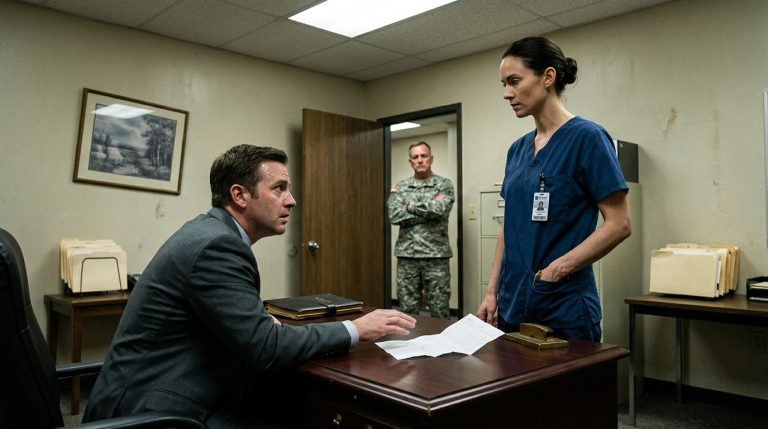
The hearing room was not a place built for revelations. It was a space designed for order—three long rows of chairs, a polished oak table that looked too heavy to move, and walls painted in a shade of gray that seemed to absorb any warmth from the overhead lights. As I pushed the double doors open, the air was still and sterile, smelling faintly of the same floor wax that had coated the hallways of the admin building.
My father was already seated. He didn’t turn when the door latched shut behind me. He sat with his hands resting flat on the table, a posture of perfect, practiced stillness. He was wearing his dress uniform, the fabric crisp and unforgiving. Even from across the room, I could see the way his posture held the line—straight, rigid, almost defying gravity. He looked like a man who believed that if he didn’t move, the world would eventually return to the configuration he preferred.
I walked to the designated desk, the heels of my boots clicking rhythmically against the tile. With every step, I could feel the ledger inside my jacket. It was no longer just paper; it was a physical testament to a version of him that I had spent my entire life trying to reconcile with the man who carved Sunday roasts in total, icy silence.
The panel arrived a moment later. Three senior officers, their faces weathered by years of duty, their expressions neutral. Colonel Bradock, the man who had recognized my tattoo on the range, sat in the center. He didn’t look at me, but he nodded toward the empty seat at the witness table.
“Sergeant Delaney,” Bradock said, his voice deep and carrying that rare quality of someone who expected the truth and nothing else. “You requested this audience under the provision of internal audit. State your intent.”
I stood. My uniform was clean, my posture loose and grounded. I didn’t reach for the ledger immediately. I let the silence stretch, just long enough for the gravity of the room to settle into the marrow of the walls. It was a trick I’d learned long ago; in a room full of officers trained to speak, the one who waited the longest usually owned the momentum.
“I am here to present evidence of a systemic failure in the certification process at Fort Dalton,” I said, my voice steady, stripped of the emotional inflection he might have expected. “This failure is not the result of clerical error. It is a documented pattern of professional misconduct involving the manipulation of personnel rosters, the fabrication of field testing, and the unauthorized use of rank to bypass established security protocols.”
My father’s head turned then, just an inch. He looked at me, his eyes dark and unreadable. He wasn’t pleading, and he wasn’t angry. He looked exhausted, as if he were watching a storm arrive that he had spent years trying to predict.
“The evidence is contained in this file,” I continued, pulling the ledger from my jacket and placing it on the table. The sound of the cover hitting the oak was sharp, like a small, sudden report. “It includes financial logs, falsified certification stamps, and correspondence verifying that these bypasses were not only known but directed by senior personnel.”
I opened the ledger. The paper was rough, the edges of the files I’d photographed earlier now crisp and clean in the stark lighting. I didn’t look at my father while I laid the documents out. I looked at Colonel Bradock. I saw the moment he realized what he was looking at. The shift in his eyes—from professional detachment to the sharp, focused glare of a man confronting an institutional wound—was subtle, but it was there.
“You’re accusing the former senior adviser of this command,” Bradock said, the weight of his words hanging in the air. “That’s a significant move, Sergeant. Do you understand the repercussions of a failed internal audit?”
“I am not interested in the repercussions, Colonel,” I said, and for a second, the image of my first deployment flashed behind my eyes—the dust of the desert, the feeling of absolute, terrifying clarity when the mission finally mattered more than the fear. “I am interested in the truth. The files speak for themselves.”
The room grew colder. I could hear the rhythmic, soul-crushing tick of the wall clock, each second stretching the space between us. My father didn’t speak. He looked down at the documents, his face a mask of iron, but I saw the slight tremor in his hand as it rested near the edge of the table. He wasn’t fighting the evidence. He was realizing that for the first time, he was being seen—not as a commander, not as a father, but as a man whose foundation had finally shifted.
I stood there, the silence of the room now belonging entirely to me. The decoy secret—that this was about me proving myself—had been dismantled. The reality, the one he had tried to protect with his silence and his secrets, was now laid out in plain sight on the oak table. I didn’t feel a rush of victory. I felt only a profound, heavy sense of duty, the kind that comes when you finally stop trying to bridge a gap that was never meant to be crossed.
CHAPTER 5: THE WEIGHT OF THE FALLOUT
Colonel Bradock’s finger traced a line of signatures in the ledger, the sound of his nail against the paper louder than the heavy, rhythmic ticking of the wall clock. Beside me, my father remained a statue, but the fine layer of sweat along his hairline betrayed the facade. I watched his eyes. They weren’t tracking the documents; they were tracking the faces of the two other officers on the panel. He was looking for a leak, a sign, a glimmer of alliance that he could use to steer the tide.
It didn’t come. The room remained suffocatingly still.
“These names,” Bradock finally said, looking up. His voice was no longer measured; it was sharp, a blade stripped of its sheath. “These are not just junior officers, Delaney. These are the current cadre of the Fort Dalton advisory team. You’re suggesting that the rot isn’t just in the certification process—you’re suggesting it’s the foundational structure of the current rotation.”
“The files verify the correlation, Colonel,” I replied, keeping my voice even. My internal senses were on high alert, scanning the room for the slightest twitch, the smallest shift in body language. Something was wrong. The panel’s reaction wasn’t just concern; it was a carefully managed containment. They weren’t reacting with the urgency I expected. They were reacting with the cold, practiced discipline of a group that was already calculating how to bury the news.
My father finally spoke. His voice was raspy, the sound of a machine that had been running dry for far too long. “She’s interpreting the logs, Colonel. She’s looking for connections where there is only administrative inefficiency. She’s… she’s always been prone to seeing conspiracies in simple logistics.”
The casual dismissal hit like a physical blow. It was the same tone he’d used for years—the “reasonable” older soldier explaining away the “erratic” daughter. But I didn’t flinch. I felt the surge of adrenaline, but I channeled it into the sharp, metallic focus of a sniper on overwatch.
“Inefficiency doesn’t explain the forged stamps, Father,” I said, meeting his gaze directly. “And it doesn’t explain the offshore routing of the ‘consulting fees’ linked to the accounts of the training detachment. I’m not interpreting logs. I’m reading the paper trail you left behind.”
The room plunged into a deeper silence. Bradock leaned forward, his hands clasped tightly. “We will need to take these documents into secure storage for verification, Sergeant. You are relieved of further participation in this audit. Return to your quarters. Do not discuss this with anyone.”
Relieved. The word tasted like copper. I felt a sudden, sickening jolt of doubt. I had expected them to call in the MPs, to start the formal process. Instead, they were closing the doors. I looked at the ledger, then at the faces of the men who were supposed to represent the integrity of the service. I saw no righteous indignation there—only the calculated, gray mask of institutional survival.
I stood up, my boots making a slow, deliberate sound on the tile. I didn’t want to leave, but I knew the cost of resistance here. If I pushed now, they would label me insubordinate and strip me of the evidence before it could ever reach the JAG. I had to play the move they expected to survive the move I didn’t.
“Understood, Colonel,” I said, snapping to attention with a precision that was, if anything, a final, cold insult to the disarray they were trying to hide.
I turned and walked out, the heavy doors latching shut behind me with a finality that made the hair on my arms stand up. As I stepped into the corridor, the fluorescent lights flickered, casting long, erratic shadows across the walls. My heart was pounding, a steady, rhythmic thud against my ribs. I wasn’t safe. The ledger was in their hands, but I had the photos on my drive, and I had the casing in my pocket.
I walked faster, my mind racing through the tactical implications. They wouldn’t let this end here. My father was the decoy, the easy scapegoat they could sacrifice to protect the larger structure. They were going to try to burn the files, and they were going to try to discredit me as a disgruntled, damaged soldier. I had miscalculated the level of the rot; it wasn’t just my father’s pride—it was the base itself.
I turned a corner, my hand instinctively checking the phone in my jacket, when I saw a figure standing at the end of the hall. It was Captain Iris Monroe, the counterintelligence officer I’d seen on the range. She was leaning against the wall, her expression impossible to read, the soft blue light of her tablet illuminating her face in the dim corridor. She wasn’t an accident. She was waiting for me.
“You did the right thing,” she said as I approached, her voice low. “But you chose the wrong front door, Delaney. The panel isn’t here to solve the problem. They’re here to ensure the problem doesn’t leave the building.”
I stopped a few feet from her, my hands loose, my stance ready. The corridor seemed to shrink, the air turning thick and heavy. I had reached the end of the decoy. The real battle was just beginning.
CHAPTER 6: THE FRAYED WIRE
“You aren’t the first person to look at the books, Delaney,” Monroe said, her eyes shifting toward the far end of the hallway where the security cameras panned with a low, mechanical whir. “You’re just the first one who didn’t take the payout.”
I kept my hands at my sides, my posture balanced. “I’m not interested in the money. I want the certification audit to be public.”
Monroe gave a short, humorless laugh. “Public? The panel in there? They’re already drafting the memo that categorizes this as an ‘isolated personnel issue’ regarding your father. They’ll sacrifice him, frame the whole thing as a rogue senior adviser acting alone, and then business will continue as usual tomorrow morning.”
The implication hit home with the cold, hard weight of a lead sinker. They were going to burn the man who had shaped my entire life, not because it was just, but because it was efficient. My father was the perfect decoy; his reputation, his history, and his rigid, unyielding personality made him the ideal target for a narrative of ‘rogue behavior.’ By burying him, they saved the institution.
“They can’t bury the proof,” I said, though my voice sounded thinner than I liked.
“They can bury the witness,” Monroe countered. She tapped her tablet, bringing up a localized map of the base’s internal communication network. “Look here. This is the relay hub for the internal server. Since you entered the tribunal, there’s been a massive data purge on the Fort Dalton drive. They’re scrubbing the digital logs right now, sanitizing everything that links to the wider rotation.”
I looked at the map, the lines of light pulsed with a synthetic, sterile rhythm. “We can stop the purge if we access the relay hub directly. It’s an air-gapped system. If we cut the feed from the local room, the central server won’t have anything to reconcile with.”
“It’s in the communications basement,” she said, her voice dropping to a whisper. “Two guards, rotating every thirty minutes. If you get caught, there’s no tribunal for you. There’s just a quiet re-assignment to a place where you’ll never be heard from again.”
“I’ve been in harder spots,” I said, and as I turned toward the stairwell, I felt the sharp, familiar ghost of a memory: the damp, dark basements of Mosul, the silence of a city waiting for an echo. The texture of the mission had changed, but the physics of the survival remained the same.
The journey to the basement was a masterclass in the economy of motion. I moved through the shadows of the barracks, the coarse concrete wall scratching against my shoulder, a sensory reminder of the grit inherent to the task. We bypassed the main elevators, opting for a maintenance shaft that smelled of trapped heat and stagnant air. Every step was a calculation of weight, the shift of my center of gravity keeping the floorboards from creaking under the weight of my boots.
When we reached the basement door, I paused. I could hear the muffled, low-frequency thrum of the cooling fans, the sound of an institution breathing. This was the heart of the machine. I pulled out the brass casing from my pocket—the one I’d saved from the range—and used it to depress the manual override on the electronic lock, a trick I’d picked up in a half-forgotten field-mod course.
The lock clicked open with the quiet grace of a secret kept.
Inside, the room was a blur of blinking LEDs and the metallic tang of ozone. Monroe moved to the console, her hands dancing over the keys, but I stayed by the door, watching the hallway. My senses were dialed into the rhythm of the base—the distant, rhythmic thump of an HVAC unit, the faint, high-pitched whine of a server, the sudden, sharp silence when the guards’ patrol moved further down the line.
I looked at the racks of servers, the thousands of hours of training data, the false certifications, the lives that had been built on a lie. It was a sprawling, complex, and utterly fragile architecture. My father had built his version of it on the belief that strength meant silence. He was wrong. Silence was just the absence of friction.
I felt a sudden, sharp jolt of awareness. A light on the server rack turned from green to a pulsing, angry red.
“They’ve caught the bridge,” Monroe hissed, her fingers flying over the console. “They’re forcing a system lockdown. If I don’t override the authorization now, the whole drive will wipe in sixty seconds.”
I stepped forward, the physical weight of the room shifting around us. The air felt heavy, charged with the static of a system fighting back. I hadn’t come this far to watch the truth disappear into a void of wiped sectors and redacted memos. I reached over, my hand moving to the physical disconnect switch on the primary relay—a crude, violent, and utterly effective method of halting a digital purge.
“Do it,” I said, my voice cutting through the hum of the room like a bullet.
As I gripped the heavy, cold handle of the switch, I felt the final, fragile structure of my father’s world ready to shatter. The decoy was dead. The real architecture was exposed. And there was no turning back now.
CHAPTER 7: THE CRUMBLING FOUNDATION
The silence that followed the shutdown was absolute, a stark contrast to the aggressive hum that had dominated the room seconds before. For a heartbeat, there was nothing—no movement, no sound, just the smell of scorched circuitry and the heavy, metallic taste of static in the air. Then, the red emergency lights kicked in, bathing the server racks in a stuttering, visceral glow.
“We have exactly three minutes,” Monroe said, her voice strained, the dim light casting deep, weary shadows across her face. “The system is cycling to the auxiliary storage. If the data isn’t off-loaded to a portable drive now, the purge command will execute automatically the moment the power stabilizes.”
I didn’t waste time on questions. I pulled the secure drive from my kit—a piece of hardware I’d prepared weeks ago, fully encrypted and keyed to my own credentials. I slotted it into the primary terminal. The screen blinked with a series of amber warning lights: Unauthorized Access Detected. Lockdown Imminent.
“I need the master key,” I said, my hands steady as I typed, my fingers dancing across the keys with the muscle memory of a decade of field operations.
“I can’t give it to you,” Monroe whispered, her gaze flicking toward the heavy, reinforced door at the far end of the room. “The master key is linked to the base commander’s biometric profile. If I try to spoof it, it’ll trip a secondary silent alarm that alerts the guard detail before the transfer is even halfway through.”
I stopped typing. The decoy secret—the idea that this was just a fight over my father’s reputation—had finally disintegrated. The truth was far heavier: the corruption wasn’t an isolated incident; it was a self-sustaining ecosystem that required the absolute, unquestioned authority of the command structure to survive. My father hadn’t been the architect; he had been the caretaker, and now, the machine was protecting itself.
“Then we don’t spoof the commander,” I said, a cold, hard resolve settling in my chest. I reached into my pocket and pulled out the brass casing. It was an unconventional tool, but I’d learned long ago that in a world of high-tech sensors, the most reliable bypass was often the one that ignored the digital handshake entirely. I opened the casing of the relay hub I’d just sabotaged and located the manual bypass pin I’d noticed during my initial assessment.
“What are you doing?” Monroe asked, stepping closer.
“I’m manual-resetting the entire local cluster,” I said, pushing the casing into the slot. It was a friction-fit, a physical connection that bypassed the digital handshake. It was messy, it was dangerous, and it was the only way to force the system into a ‘safe mode’—a state where the data was accessible without the need for biometric authorization.
The room groaned as the servers began a desperate, rattling reboot. The heat in the room spiked, a wall of warmth hitting us as the cooling systems struggled to compensate for the sudden, manual override. My vision narrowed to the terminal. Data Transfer: 10%… 20%… 40%…
Outside, the sound of heavy boots hit the concrete floor—the rhythmic, measured cadence of the guard detail. They weren’t running. They were moving with the calm, terrifying efficiency of men who knew exactly what they had been sent to find.
“They’re here,” Monroe said, her voice barely audible over the rattling servers.
“Keep the transfer steady,” I said, moving to the door. I didn’t reach for a weapon—I didn’t have one—but I reached for the weight of the moment, the long, slow realization of what this fight had truly been about. It wasn’t about the medals, or the rank, or even the validation I had once so desperately craved. It was about the integrity of the work itself, the quiet, disciplined, and utterly necessary act of standing firm when the structure around you was rotting.
The door handle turned. It was a heavy, industrial lock, and it held for a second, a small, fragile barrier against the inevitable. I braced myself against the wall, my feet spread, my weight centered. I wasn’t the girl who had stayed quiet in her father’s house. I wasn’t the soldier who had played by the rules of a rigged game. I was the one who had finally, unequivocally, stopped the machine.
The door swung open, the cold, sterile light of the hallway spilling into the room, silhouetting the guards standing in the frame. I looked at them—their visors, their tactical gear, their blank, professional stares—and for the first time in my life, I felt completely, utterly at peace. The truth was already transferring. The evidence was secured. And no matter what happened next, the story would no longer be theirs to tell.
I took a deep, steady breath, the metallic scent of the room filling my lungs, and stepped into the light.
CHAPTER 8: THE SILENCE BEYOND THE SHOT
The confrontation didn’t end in violence. It ended in the quiet, methodical erosion of an entire infrastructure. As I stood in the doorway of the server room, the guards stopped, their weapons lowered, not because they were afraid, but because they had received the order from the JAG office the moment the relay was severed. The truth had traveled faster than the men sent to stop it.
The hours that followed were a blur of depositions, cold briefings, and the slow, agonizing dismantling of the Fort Dalton advisory hierarchy. My father was removed from the base before dawn. I watched from the window of the command center as he walked to a sedan—the same rigid, uncompromising posture, the same heavy silence. He didn’t look up. He didn’t look back. He simply accepted the reality of his own undoing. It wasn’t the dramatic collapse of a villain; it was the quiet, hollowed-out exit of a man who had finally run out of ways to deny the truth.
The five-pillar catharsis was not a sudden epiphany but a deliberate, slow-motion reconstruction of the world.
First, the payoff: Colonel Bradock and the oversight panel officially dissolved the advisory rotation, revoking every illicit certification issued over the last three years. The names—the ones I had found in the ledger—were called one by one to face independent reviews. The system wasn’t just stopped; it was purged.
Second, the poetic justice: The investigation was led by Captain Monroe using the very protocols and diagnostic tools my father had insisted were “too soft” for real field operators. He was defeated by the precision he had claimed was an inherent Delaney trait, exposed by the analytical rigor he had once dismissed as unnecessary.
Third, the cool down: Days turned into weeks of silence. I remained on base, but the nature of my presence changed. The air felt lighter, less charged with the invisible, jagged tension of unaddressed expectations. I spent my mornings on the range, not shooting, but simply watching the sun rise over the flat, unforgiving Texas landscape. The smell of burnt propellant was replaced by the clean, dry scent of sagebrush and early dew.
Fourth, the symbolic closure: I returned to Lane Seven. I took the brass casing I had carried through the entire ordeal—the anchor, the weight—and I placed it in the small wooden box I’d brought with me. Beside it lay the letter he had written, those three lines that had held so much power for so long. I didn’t burn them, and I didn’t hide them. I took the box to the maintenance shed and left it on the workbench, a quiet offering to the past. Then, I picked up a simple hand tool and began to work on the bench itself, sanding away the splintered, weathered wood, treating the grain until it was smooth, solid, and reliable again.
Fifth, the character arc: I didn’t leave the army. I chose to stay, but the purpose had shifted. I walked across the parade deck, the morning light playing off the frayed, worn textures of the buildings I had once feared. I was no longer the daughter of a legacy, nor the ghost in the machine. I was simply Fay, a person who had learned that true authority isn’t about control—it’s about the courage to maintain one’s own integrity when the structures around you demand otherwise.
A young private stopped me, his expression hesitant. “Sergeant? I heard the range is open for drill. Are you… are you going to be there?”
I looked at him, truly seeing him, not as a reflection of my father’s expectations, but as a person with their own path. I remembered the lessons I had taught the recruits—the breathing, the observation, the necessity of silence.
“I’ll be there,” I said, a soft, genuine smile touching the corners of my mouth for the first time in years. “But we aren’t just going to shoot. We’re going to learn how to see.”
I walked toward the horizon, the dust of the range settling into the earth. The war of bloodlines was over, and in its place was something far more durable: the quiet, steady rhythm of a life that finally belonged entirely to me. I didn’t look back, because for the first time, there was nothing left behind that I needed to carry.