The Iron Ledger of Oak Meadows: A Veteran’s Calculated Descent into Suburban Warfare and Total Retribution
CHAPTER 1: THE SCAR OF IRON
The metal was still warm to the touch, weeping a thin, grey ribbon of flux where the amateur rod had stuttered and gouged the primary pin.
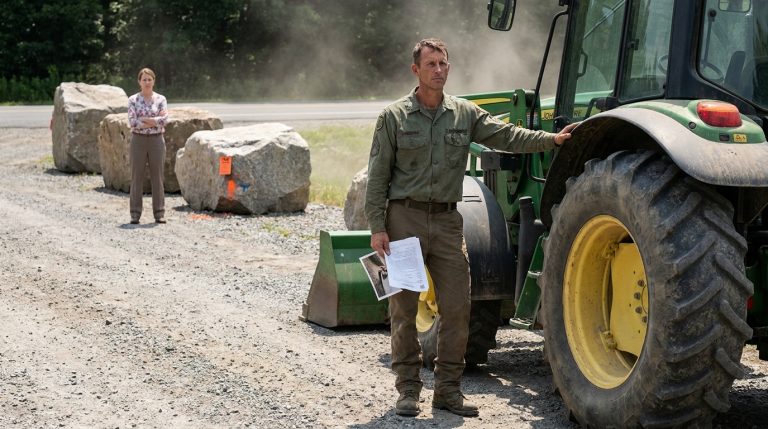
I did not wipe my fingers after brushing the slag. Let the burn sting; it was a clean, honest pain compared to the syrup dripping from the muumuu standing six paces away. Her name was Karen, a woman molded entirely of peroxide and municipal ordinance, holding a laminated clipboard like it was an instrument of statecraft. Behind her, through the ruined throat of the 40-acre cattle gate, Titan tossed his massive head, his nostrils venting twin plumes of mist into the damp morning air as he stared down the open chute toward the county asphalt.
“Article 7, Section 4, Paragraph B,” she recited, her voice pitching into that melodic singsong reserved for people who had never faced a ballistic trajectory or an unhedged consequence. “Effective immediately, Mr. Henderson. The board requires aesthetic and structural uniformity along the perimeter.”
My gaze didn’t leave the bubbling weld. Every microsecond my mind spent calculating weight distribution, cooling times, and tensile strength was a second I wasn’t spending wrapping my hands around her throat—which meant it was a second I was winning. The air smelled of ozone, burnt zinc, and the distinct, coppery tang of coming rain rolling off the western ridges.
“There is no Paragraph B,” I said. My voice was low, flat, stripped of inflection, dropping into the register I used when briefing a quadrant under direct fire.
She blinked, a microscopic twitch of the eyelid behind thick, tortoise-shell frames that told me she had rehearsed the sentence three times in front of her bathroom mirror. “The board voted in an emergency session last night. We are closing loopholes.”
“You didn’t close a loophole,” I said, finally raising my eyes to meet hers. “You committed a felony offense under state property statutes by tampering with agricultural infrastructure. And you did it with an unregistered welder who didn’t even bother to chip his slag.”
A shadow crossed her face—not fear, but the sharp, venomous irritation of a petty bureaucrat whose script had been misread. She turned on her heel, the fabric of her oversized floral dress hissing against the dry brome grass. “You have forty-eight hours to clear the animal before we institute daily fines, Jack.”
She used my first name like a brand. I watched her march down the gravel easement, her spine stiffened by an imaginary scepter, her mind completely blind to the fact that the chessboard had just been overturned.
The first heavy drop of rain struck the hood of my truck with the force of a lead pellet, shattering the surface of the puddle at my feet and instantly turning the red clay into a slick, treacherous grease. I pulled out my phone, thumbed open the camera application, and zoomed in on the porous, bubbling bubbles of the weld, capturing the structural incompetence in high-definition macro before taking three wide-angle shots contextualizing the gate’s relation to the county right-of-way.
The storm was moving fast, dragging a wall of bruised, purple-black clouds across the tree line, but the weather wasn’t the complication; it was the timing.
My phone vibrated in my palm against the rising chill, displaying Sarah’s incoming call on the screen with a steady, pulsing light that demanded an immediate answer.
CHAPTER 2: GATHERING ON THE PERIPHERY
I accepted the call without looking down at the display, sliding my thumb across the glass while my eyes tracked the greasy mud sliding down the base of the gate posts. The rain didn’t fall so much as it drove horizontally, whipped by a sudden gust rolling off the western ridgeline that smelled of wet asphalt and crushed pine needles.
“I see the truck coming around the upper bend,” Sarah’s voice came through the speaker, tight, clipped, stripped of any domestic warmth by the whistling wind. “The winch line is secured in the bed, but the mud on the west slope is already knee-deep. If we try to drag him out that way without clearing the brush, the tractor’s going to slide into the ravine.”
“Don’t use the tractor,” I said, keeping my body angled toward the property line where Karen’s oversized vinyl siding caught the pale, washed-out glare of the security light. “Use the winch off the F-250 anchored to the oak stump. Give me ten minutes to clear the deadfall.”
“Jack, you’re going to catch pneumonia out there. That bull isn’t going anywhere; he’s backed into the dry corner by the cedar break.”
“He’s stressed,” I said, watching a single heavy drop catch the rim of my collar and slide down my spine like a frozen wire. “A stressed animal doesn’t wait for a polite invitation. Meet me at the west access in five.”
The line clicked dead. I slipped the phone back into my canvas pocket, the fabric already soaked through, clinging to my thigh with abrasive friction. Every movement required intent. In a civilian world, people thought time was an elastic resource you could stretch or waste with a cup of coffee; out here, under the shadow of a municipal tyrant who had just committed a criminal act of vandalism, time was a finite tactical currency. You either spent it on preparation, or you paid for it in failure.
The transition from the primary gate to the western service access wasn’t a journey of comfort. It was a half-mile trudge through a choked easement where blackberry briars tore at my canvas jacket, their thorns biting through the weave with the sharp, indifferent precision of barbed wire. The ground beneath my boots sucked at the rubber soles, creating a wet, gasping sound with every stride.
As I crested the rise near the old cedar break, the memory hit without warning—a phantom pressure behind my eyes like the concussive slam of a mortar round hitting three hundred meters out. I could smell diesel exhaust and cordite, the heavy, suffocating atmosphere of a forward operating base where every wall was temporary and every neighbor was an unknown variable. The brain looked for patterns in crisis; it mapped old survival instincts onto new landscapes. Karen wasn’t a suburban housewife with a clipboard; she was an unsecured perimeter waiting to be breached.
I reached the rusted latch of the western service gate. It hadn’t been greased in five years, the iron hinges crusted in orange flakes that flaked off like dry scabs under my bare knuckles. I didn’t rush. Rushing led to mistakes, and mistakes left forensic signatures. Instead, I worked my fingers into the seized pin, using a steel flathead screwdriver from my pocket as a lever, popping the rusted keeper out with a dry, metallic crack that got swallowed instantly by the rumble of distant thunder.
Headlights cut through the downpour thirty yards up the track, painting the dripping foliage in a harsh, sodium-yellow glare. Sarah’s truck slid to a halt, tires spinning once in the clay before biting into the gravel bed. The driver’s side door pushed open with a heavy groan, and she stepped out, wearing her heavy yellow slicker, her face pale in the artificial light but her jaw set with the absolute, unyielding resolve that had kept our farm afloat through three years of drought.
“You got it open?” she asked, shouting over the drone of the idling diesel engine.
“Pin’s out,” I said, wiping a streak of black grease and rust off my forehead with the back of my forearm. “The ground’s too soft for the truck to cross the ditch, but we can rig a snatch block to the oak and pull the wire rope across. Once we clear the wire, Titan will walk through on his own if we keep the grain bucket rattling.”
She didn’t waste breath arguing. She reached into the truck bed, dragging out the heavy iron pulley block and a coiled twenty-foot length of grade-80 tow chain with a metallic clatter that sounded like a dropped toolbox. Her fingers were steady as she looped the chain around the base of the white oak, locking the clevis pin with a sharp twist of her wrist.
“She sent another email,” Sarah said suddenly, her voice cutting through the roar of the rain as she straightened up, water streaming off the brim of her cap.
I paused, my hand resting on the cold link of the chain. “When?”
“Ten minutes ago. While I was loading the gear. She’s calling an emergency board meeting for tomorrow night at the community clubhouse. Subject line says it’s to address ‘unauthorized agricultural disruptions and community safety hazards.'” Sarah offered a thin, bitter smile that didn’t reach her eyes. “She’s trying to get ahead of the sheriff’s report. She wants to make us look like the aggressors before we even file our papers.”
I looked down the slope, past the boundary line where Karen’s immaculate, chemically treated lawn bled into the muddy ditch. A single porch light burned over her side door, glowing like a jaundiced eye through the curtain of rain.
“Let her schedule it,” I said, my voice dropping back into that cold, level register as I gripped the steel cable and began pulling it toward the pasture gate. “A cornered animal doesn’t stop running just because it’s headed off a cliff. It just accelerates.”
We spent the next forty minutes working in rhythm, the silence between us filled only by the mechanical whine of the winch motor, the slip of mud under rubber, and the heavy, rhythmic breathing of the bull as we guided him step-by-step through the narrow chute and into the safety of the interior barn lot. By the time we latched the heavy oak crossbar behind him, the storm had begun to exhaust its fury, settling into a steady, miserable drizzle that coated the world in a grey, uniform wash.
Back in the kitchen, the air was warm with the scent of roasted chicory and damp wool. I didn’t sit down. I walked straight to the counter, picked up the legal pad, and drew a firm, unhesitating line under the day’s first entry. On the left side, under Karen’s actions, I wrote: Emergency meeting scheduled. Escalation phase initiated. On the right side, under countermeasures, I penned two words: Subpoena ready.
The trap was baited. The first wire was pulled. Now we waited for her to step onto the floor she had laid out herself.
CHAPTER 3: THE PERIPHERY OF ASSENT
The legal pad remained open on the laminate counter, its margins crowded with notes written in my left hand while my right still carried the faint, ingrained ache of the winch cable. Morning had come without sunlight, burning off the overnight dampness into a heavy, flat white haze that clung to the chain-link fences and painted the suburban street corners in shades of industrial slate.
I didn’t wait for Sarah to ask. I pulled on my field jacket, zipped it to the throat, and stepped out onto the back porch, my boots crunching lightly on the gravel path that led down toward the southern properties.
The strategy required intelligence, not assumptions. Karen had built her perimeter on the assumption that isolation bred compliance. If she could make every household feel like an island besieged by minor ordinances, no one would look across the fence line to see who else was drowning. To break that perimeter, I had to walk the line.
The air smelled of damp mulch and the faint, chemical sweetness of a neighbor’s lawn treatment—a synthetic green that looked aggressively alive against the dead grey of the season. Two houses down, Arthur Miller was bent double over a raised flower bed, clutching a plastic trowel like it was a shield. His shoulders were rounded, curved inward by years of leaning away from conflict, his knuckles white against the black handle of the tool.
I didn’t approach from the front walk where the sightline from Karen’s driveway could catch me. I cut across the drainage easement, keeping my stride measured, silent, the way we used to move through alleyways when every second window was a potential variable.
“Morning, Arthur,” I said, keeping my voice low enough not to carry over the hedge.
The old man jerked upright so fast his trowel slipped from his grip, clattering against a flat decorative stone with a sharp clink. He spun around, his eyes darting immediately toward the empty driveway across the street before they locked onto me. His throat worked as he swallowed, his jaw trembling slightly beneath a week of thin, white stubble.
“Jack,” he breathed, his hand coming up to nervously dust the dirt off the knee of his slacks. “Morning. Bit… bit foggy today, isn’t it?”
“Visibility’s low,” I agreed, stepping past the boundary line and onto his grass. “Makes it hard to see what’s coming down the road until it’s right on top of you.”
Arthur flinched, a subtle micro-movement of the head that confirmed he had received the HOA’s emergency meeting notice just as Sarah had. He looked down at his petunias as if the soil held a secret escape code. “She sent out another batch of notices last night, Jack. Automated system, I think. Or maybe she just stays up late writing them. Mildred didn’t sleep a wink.”
“What was the violation this time?” I asked, keeping my tone flat, transactional, stripping any emotional accusation out of the exchange so he wouldn’t feel cornered.
“The garden hose,” Arthur whispered, leaning in closer, his voice dropping to a conspiratorial rattle. “We left it uncoiled by the spigot after washing the salt off the sedan. Fifty-dollar fine. Plus a warning that if it happens a second time, it escalates to a review of our exterior property rating.” He shook his head, a gesture of helpless exhaustion. “We paid it, of course. It’s… it’s just easier than getting the registered letters. You know how she gets when you contest things. She tacks on administrative fees until it costs more to fight than to fold.”
I studied his face—the deep lines around his eyes, the chronic tension in his jaw. It wasn’t just fear driving him; it was the psychological erosion of a system designed to wear down the spirit through micro-punishments.
“Has she ever shown you the actual ledger, Arthur?” I asked quietly. “When you paid those fines over the last two years. Did the board ever provide a line-item receipt showing where that money went?”
Arthur blinked, his brow furrowing as he tried to trace back through the paper trail of his own subjugation. “No. We… we just pay through the portal. The management company handles it. Karen says the books are audited internally for security.”
“An internal audit by a board of three people isn’t an audit,” I said, my gaze shifting past his shoulder toward the second-story window of Karen’s house across the street, where the blinds remained tightly drawn. “That’s a closed loop.”
I didn’t press him further. Pushing a broken man too hard turned him into an obstacle; you had to give him a safe space to realize he was standing in the path of a collapsing wall. I thanked him, turned back toward the easement, and continued down the block toward the Garcias’ house.
Carlos was in his driveway, his hands deep in a bucket of soapy water, scrubbing down the frame of a child’s blue bicycle with a nylon brush. When he saw me approach, he didn’t flinch. He straightened up, wiped his hands on a rag tucked into his back pocket, and flashed a grin that had more iron in it than Arthur’s entire yard.
“Heard about the meeting tomorrow night, Henderson,” Carlos said, tossing the rag onto the seat of the bike. “Word is she’s bringing a clipboard large enough to cover the entire table.”
“Let her bring it,” I said, stopping at the edge of his driveway. “Paper tears easily if you pull it from both sides.”
“You got a plan?” Carlos asked, leaning against the handlebars, his eyes sharp and calculating. “Because if we just go in there yelling about my kids’ cedar playset, she’ll twist it into a debate about neighborhood safety and community standards. She’s good at that. She turns every individual grievance into a vote on whether we want trash in the streets.”
“We’re not going to talk about playsets,” I said, my voice dropping into a register that brook no argument. “We’re going to talk about contracts. Specifically, the landscaping contract signed two years ago with a company called Evergreen Solutions.”
Carlos froze. The banter drained out of his posture, replaced by sudden, focused attention. “Evergreen? The guys who show up twice a month with one truck and blow leaves into the drainage ditch? What about them?”
“They’re billing the association thirty thousand a year,” I said, watching his reaction. “And the man who owns the LLC isn’t an independent contractor. He’s family.”
Carlos let out a short, sharp whistle, the sound dying away into the thick morning fog. “Son of a… That’s why she wouldn’t let us see the vendor registry at the last open forum. She stonewalled the whole room.”
“She stonewalled because a closed door is the only thing keeping the structure from sliding into the ditch,” I said, turning my gaze back toward my own property line visible down the stretch of asphalt. “Tomorrow night, she’s going to stand at the head of that table and try to put us on trial. Our job today is to make sure every homeowner on this street knows who is actually sitting in the dock.”
I left Carlos scrubbing the bike and walked the remaining distance back to my kitchen. The legal pad was still there, waiting. I picked up the pen and wrote a single line under the day’s intelligence log: Garcias aligned. Vendor conflict confirmed. The perimeter is leaking.
CHAPTER 4: THE COMMUNITY ROOM AMBUSH
The fluorescent tubes of the Oak Meadows community clubhouse hummed with a flat, sterile vibration that settled directly behind my teeth. It was a sound designed for committee meetings and bake sales, but tonight the air felt heavier, charged with the stagnant tension of a room full of people waiting for a fuse to blow.
I did not take a seat near the back where the shadows offered cover. I walked down the center aisle, my boots striking the industrial carpet with a dull, deliberate cadence that drew quiet, sideways glances from the homeowners squeezed into the folding chairs. Sarah walked beside me, her posture straight, her gaze fixed straight ahead on the long folding table at the front of the room.
Karen sat dead center behind a stack of laminated binders, flanked on her left by Stan the retired accountant, whose eyes were fixed rigidly on a yellow legal pad, and on her right by a woman whose sweater smelled faintly of artificial lavender. A single, heavy gavel rested beside Karen’s clipboard—an implement of theatrical authority that looked absurdly out of place against the scarred Formica tabletop.
As we took our seats in the second row, Karen’s chin lifted fractionally. Her lips tightened into a thin, bloodless line, the peroxide-blonde waves of her hair catching the harsh glare of the overhead grid. She had planned this as a public tribunal, a staging ground to cement her control by forcing dissenters into defensive postures before an audience of nervous neighbors.
She struck the gavel once. The sharp wooden crack cut through the murmurs, silencing the room instantly.
“Good evening, residents,” Karen began, her voice dripping with the practiced, syrupy cadence of a television anchor delivering bad news about an approaching storm. “We have called this special emergency session tonight to address recent, highly disruptive breaches of community protocol, unauthorized structural interference, and an aggressive posture of non-compliance that directly threatens the aesthetic harmony and financial security of Oak Meadows.”
She didn’t look at me, but every eye in the room did. I kept my face blank, my hands resting calmly on my knees, feeling the steady, rhythmic pulse of my own breathing. This was Mode A execution dressed up in parliamentary theater; she wanted a emotional reaction, a public outburst she could gavel down and record as hostile intent.
“The board,” Karen continued, her voice rising slightly in theatrical cadence, “has documented numerous instances of belligerence. We have faced deliberate defiance regarding our perimeter bylaws, malicious resistance to standard administrative fees, and attempts to intimidate board members through unverified accusations. We are a community of laws, not chaos. If we allow individual residents to bypass the rules, the value of every home on this street will plummet.”
She paused, waiting for the ripple of anxious murmurs to spread through the rows—the predictable reflex of homeowners terrified that their property values were somehow tied to an uncoiled garden hose or a pasture gate.
Stan shifted uncomfortably beside her, his fingers twitching against his pen, but he said nothing. He didn’t look up.
When Karen lowered her gavel and opened the floor with a sweeping gesture of her hand, expecting the usual chorus of frightened justifications, I stood up.
The movement was slow, deliberate, entirely devoid of haste. I didn’t raise my voice. I let the silence stretch until the hum of the fluorescent lights filled the vacuum.
“Karen,” I said, my tone flat, level, carrying easily across the linoleum. “Before we discuss aesthetic harmony, let’s talk about the math.”
Her posture stiffened, the practiced serenity cracking at the edges as her eyes narrowed behind her frames. “Mr. Henderson, this is an open forum for community governance, not your personal—”
“State law 720.303 dictates that all vendor contracts and financial ledgers must be made available for inspection upon written request,” I interrupted, cutting through her script without raising the decibel level of my voice. “Two years ago, our landscaping contract was managed by a local firm for twenty-eight thousand dollars annually. According to the records we’ve managed to review, that contract was terminated and replaced by Evergreen Solutions LLC at nearly double the rate.”
A sharp intake of breath rippled through the third row. Carlos Garcia leaned forward, resting his forearms on the seat in front of him.
Karen’s face lost its flush, turning an ashen, mottled grey. “That is an internal board matter,” she snapped, her voice pitching upward, losing its polished anchor. “Vendor selection is proprietary for security reasons!”
“It would be proprietary,” I said, taking two steps into the aisle, closing the physical distance between the audience and the table, “if Evergreen Solutions weren’t registered to Gary Peterson. Your brother-in-law, Karen.”
The room dropped into an absolute, suffocating vacuum of sound. Stan dropped his pen, the plastic barrel rolling across the Formica with a loud, echoing clatter. The woman beside him physically recoiled, pulling her chair two inches away from Karen’s elbow as if contagion were visible in the air.
Karen opened her mouth, but no sound came out—only a sharp, trapped intake of air as she realized the trap she had laid for everyone else had just snapped shut around her own throat.
CHAPTER 5: THE LENS AND THE LEDGER
Karen’s hand remained frozen mid-gesture above the stack of laminated binders, her fingers clawing slightly at the edge of the Formica as if searching for a rung on a ladder that had just been pulled away. The silence in the room wasn’t the polite quiet of an attentive audience; it was the heavy, suspended vacuum that precedes the drop of a freight elevator.
I didn’t step back. I let my weight settle into my heels, keeping my eyes fixed on the small, frantic pulse beating in the hollow of her throat.
“The floor is open for public comment, Karen,” I said, repeating her own phrase back to her with the exact cadence she had used ten minutes prior. “Or would you prefer to consult the vendor registry first?”
Stan swallowed hard, his Adam’s apple bobbing sharply beneath a wrinkled collar. He reached out with a trembling hand, pulled his legal pad toward his chest, and began sliding his papers into a manila folder with frantic, sliding motions. The woman to Karen’s right stood up so abruptly her metal folding chair screeched against the linoleum, the sound grating like a dry bearing. Without a word, she grabbed her handbag, turned on her heel, and walked briskly down the center aisle, her head down, avoiding the eyes of every neighbor she passed.
The fracture wasn’t slow; it split the room down the center like dry timber under an axe blow.
Across the aisle, Mrs. Miller leaned over to her husband, her whisper cutting sharply through the quiet. “Arthur, look at the ledger projection on the projector screen… she never filed the state compliance forms.”
Before Karen could recover enough breath to slam her gavel down, the heavy double doors at the rear of the clubhouse swung inward with a pneumatic hiss. A sharp beam of white light cut across the back row of seats, followed immediately by the dull, rhythmic thrum of an engine idling on the asphalt outside. A medium-sized van bearing the high-contrast logo of a regional news channel pulled into the direct line of sight through the double-paned glass, its exterior satellite mast rising like a skeletal finger into the damp night air.
Susan Vance stepped through the doors first, her trench coat wet from the drizzle, carrying a small, professional microphone with a foam wind-sock bearing a local network stamp. Behind her came a cameraman holding a rig balanced on his shoulder, the red tally light blinking a steady, hypnotic pulse of operational readiness.
The atmosphere in the room pivoted instantly from a local administrative dispute into a public reckoning.
Karen bolted upright, her face flushing from pale grey to a violent, blotchy crimson. “You cannot bring cameras in here!” she shrieked, her voice cracking on the high note as she pointed a manicured finger toward the back doors. “This is a private association meeting! Executive session! Turn that equipment off immediately or I will have you removed for trespassing!”
Susan didn’t break stride. She walked down the center aisle with the calm, predatory poise of someone who had unpicked fifty municipal bureaucracies before breakfast. “Good evening, Mrs. Peterson,” Susan said, her voice carrying clearly over the hum of the overhead lights without needing to raise its volume. “I’m Susan Vance with Channel 8 News. We’ve been reviewing the public incorporation filings for Evergreen Solutions LLC, and we wanted to give you an opportunity to respond on camera regarding the thirty-thousand-dollar discrepancy in the Oak Meadows maintenance fund.”
The cameraman swung the lens inward, locking the heavy glass directly onto Karen’s face. The red tally light stared back at her like an unblinking eye.
Karen raised a hand defensively, her palm flat, pushing against the invisible wall of the lens. “No comment! This is a malicious fabrication orchestrated by disgruntled elements within the association! Turn that off!” She fumbled blindly behind her for the wooden gavel, her fingers scraping across the Formica before her hand closed around the handle. She brought it down once, twice, the sharp thwack-thwack echoing uselessly against the drywall as the room erupted into open murmurs and overlapping voices.
“She fined us five hundred dollars for our roof shingles!” someone shouted from the back row.
“Show us the budget, Karen!” another voice barked.
I stepped back into the second row, pulling my jacket slightly tighter as I watched the collapse unfold from the periphery. The strategy had bypassed the courtroom entirely; the legal filings were merely the paper walls, but public exposure was the solvent that dissolved the mortar. Karen had weaponized the rules for years because the walls of the subdivision kept the light out. Now that the light was inside, the entire architecture of her control was burning away to ash.
Karen dropped the gavel, her shoulders heaving as she stared at the camera lens with raw, unadulterated venom. “You’re ruining this community,” she hissed, her voice dropping into a low, trembling snarl directed straight at me through the lens. “You think you’ve won something, Jack? You’re just breaking a machine you don’t even know how to run.”
She grabbed her clipboard, swept her arm across the table to knock the remaining binders into a plastic crate, and bolted out through the side service door, the heavy metal frame slamming shut behind her with a definitive, metallic crash.
Stan sat alone at the long table, staring down at his empty manila folder. He slowly closed the cover, looked up at me with tired, defeated eyes, and whispered, “We’ll sign the audit authorization in the morning.”
CHAPTER 6: THE RESERVATION OF RIGHTS
The kitchen table had long since ceased to function as a place for meals; it was a forward operating base cluttered with high-lumen flashlights, legal briefs, and the cold blue light of a laptop screen casting sharp shadows across Sarah’s face.
She didn’t look up when I walked in from the garage, though she heard the latch click. Her fingers kept moving across the keyboard with a steady, metronomic clatter, processing the digital fallout of what had happened under the harsh lights of the community clubhouse.
“The insurance carrier just updated their docket,” she said, her voice tight, lacking any inflection of relief. “David forwarded it three minutes ago. A formal reservation of rights letter sent directly to the remaining board members.”
I pulled out the wooden chair opposite her and sat down, the wood scraping against the linoleum with a dry sound that felt too loud in the quiet house. “They’re cutting her loose.”
“They’re cutting everyone loose,” Sarah corrected, turning the laptop screen toward me so I could read the bold legal typography stamped across the top of the PDF. “The carrier is formally denying coverage for any legal actions, civil liabilities, or criminal defense costs stemming from willful misconduct, bad faith, or fraudulent vendor contracts. Stan and the candle lady aren’t protected anymore. Their personal assets are exposed.”
A cold, heavy satisfaction settled into my chest—not the hot flash of anger that had burned when I first saw the welded hinge of the cattle gate, but the steady, calculating weight of a kinetic strike hitting its designated coordinates. When a bureaucratic structure relies entirely on insulation, stripping away the outer membrane leaves the inner core completely vulnerable to the elements.
My phone vibrated against the wood, a sharp, buzzing ring that cut through the background hum of the refrigerator. David Chen’s name flashed across the display.
I hit speakerphone and laid the device flat between us. “Talk to me, Dave.”
“Jack, you missed the morning aftershocks,” David’s voice came through crisp, energized, carrying the unmistakable tone of a litigator who had just forced an opposing counsel into a corner. “Marcus Thorne—the high-priced corporate specialist the board brought in after Karen self-destructed—just called my office twenty minutes ago. He didn’t sound like a man negotiating a settlement anymore. He sounded like a man standing on the deck of a sinking ship looking for a life raft.”
“What did he offer?” I asked, leaning my forearms on the edge of the table.
“He started by asking if we could bundle the civil damages and the HOA restructuring into a single package to avoid the state attorney general’s office expanding their investigation,” David laughed, a short, sharp sound devoid of humor. “I told him the attorney general operates outside my jurisdiction, which we both know is true. Then he dropped the real number. Four hundred thousand dollars total payout, structured through a special D&O policy rider and association reserves, combined with a permanent, court-enforceable ban keeping Karen and her inner circle off any HOA board in the state forever.”
I looked across the table at Sarah. Her eyes met mine, holding steady, reading the math in the silence. Four hundred thousand wasn’t just a settlement; it was a total dismantling of the financial architecture Karen had used to fund her little kingdom.
“Tell him we accept the monetary terms and the lifetime ban,” I said, my voice measured and even. “On one condition.”
“Name it,” David replied instantly.
“The forensic audit doesn’t stop with the last five years,” I said, staring at the small indicator light on the laptop. “We want a full, unredacted public accounting of every single architectural violation fine levied against every household in this subdivision since Karen took office. Every dollar collected under false pretenses gets returned to the residents through the community restoration fund before we sign the final release.”
There was a brief pause on the other end of the line—just long enough for David to calculate the weight of the demand and appreciate its tactical beauty.
“You’re not just burning down her house, Jack,” David said, a grin evident in the rising cadence of his voice. “You’re handing the keys back to the neighborhood.”
“Make sure Thorne has the paperwork drafted by noon,” I said. “We end this on our terms.”
I cut the connection, the screen going dark as the phone settled back onto the grain of the table. Outside the kitchen window, the morning fog had finally broken, leaving behind a hard, clean slate of daylight that caught the edge of the newly delivered steel gate components stacked neatly by the barn. The war was in its final sector. The perimeter was cleared.
CHAPTER 7: THE TERMS OF CAPITULATION
The phone didn’t ring a third time. The line was already open, the speaker setting turned low so the flat, compressed sound of Marcus Thorne’s breathing filled the kitchen space like the whistle of a valve under pressure.
He had stopped trying to project the weary authority of high-priced corporate counsel thirty minutes ago. Now, his voice carried the thin, brittle edge of a man who realized his retainers were being offset by personal liabilities.
“David,” Thorne began, skipping any introductory pleasantry, “we’ve reviewed the final redlines regarding the release of claims. The board has authorized the full four hundred thousand. The insurance carrier is wiring the tranche directly into escrow to avoid the bad-faith cross-complaint.”
I didn’t lean over the phone. I kept my weight centered in the wooden chair, watching the dust motes drift lazily through the shaft of afternoon light cutting across the kitchen floor.
“And the non-monetary terms, Marcus?” I asked, my voice flat, steady, carrying the exact cadence I used when verifying target acquisition before a signed release.
A heavy, wet sigh hissed through the speaker. “The lifetime ban on board service for Karen Peterson and her associates is accepted and integrated into the court-enforceable consent decree. Furthermore… the independent forensic audit firm you selected has already been granted full, unrestricted access to the management portal and the bank ledgers as of noon today.”
“Good,” I said. “Then the paperwork is ready for signature.”
“It’s ready,” Thorne muttered, his voice dropping an octave as if afraid someone else was listening in his downtown office. “Just… tell me this, Jack. How did you know about the ledger discrepancies in the second-quarter maintenance filings before we even opened the internal review?”
“You don’t look at the numbers,” I said, my hand resting on the smooth wood of the table. “You look at the spaces where the numbers aren’t. When a system spends more energy enforcing rules against a garden hose than it does accounting for its own asphalt, the foundation is already hollow.”
The line clicked dead with a short, metallic pop. Marcus Thorne didn’t say goodbye. Men who built their careers on managing collapses rarely wasted breath on pleasantries once the gate had locked behind them.
I looked across the table at Sarah. She had stopped typing, her hands resting flat beside the keyboard, her eyes searching my face with a quiet, grounding intensity. The tension that had held her shoulders rigid for three weeks—since the morning Karen brought her welder to the pasture fence—finally broke, easing out of her posture in a slow, deep exhale.
“It’s done,” she said softly.
“The paper is signed,” I replied, standing up and pushing the wooden chair back into place with a quiet, even scrape. “Now comes the work of clearing the rubble.”
We walked out the back door together, stepping off the wooden landing and onto the gravel path leading toward the southern perimeter. The air was crisp, washed clean by the storm system that had cleared the valley two days ago, smelling faintly of dry earth, cold iron, and fresh pine.
Down the street, in front of Karen’s house, the large moving truck was still idling against the curb, its rear ramp extended like an open jaw. Two men in blue coveralls were hauling a heavy mahogany dresser down the incline, their boots crunching loudly on the manicured grass that had once been guarded with such obsessive, militant precision.
Karen wasn’t standing on the porch with her clipboard. The front door was propped open with a rubber wedge, revealing a bare, hollow entryway where the walls looked pale and stripped where framed certificates had been unhooked. The pink plastic flamingos were gone from the flower beds, tossed carelessly into an open cardboard box sitting by the threshold like discarded trash.
She watched from the shadow of the hallway, her face half-hidden behind the glass of the storm door, but she didn’t step outside. She didn’t raise a finger. The uniform was gone, the scepter was broken, and the system she had weaponized had turned its gears inward, grinding her authority down to dust.
We didn’t slow our pace as we walked past. We didn’t throw glances or trade remarks. We simply walked our property line, maintaining the boundary that had been there before the HOA was ever conceived, steady and unbothered in the quiet afternoon light.
CHAPTER 8: THE WELDED IRON AND THE QUIET MORNING
The professional fabrication crew did not rush. They moved with the deliberate, heavy grace of men accustomed to structural metal, their wrenches clicking against the galvanized anchor bolts with a clean, metallic resonance that carried across the quiet pasture.
I stood ten paces back, my hands tucked into the pockets of my canvas jacket, watching the crane truck lower the new black powder-coated steel gate into its housing. The machine was a marvel of silent engineering—solar-driven, precision-balanced, and engineered to withstand ten times the kinetic weight of a 2,000-pound bull testing its limits against the perimeter.
The old gate—the one bearing the scarred, bubbled scars of Karen’s amateur welder—lay flat on the bed of a flatbed trailer parked by the drive, a twisted piece of junk waiting to be hauled off to the local scrap yard. It had taken a systemic legal collapse, a state-level financial audit, and four hundred thousand dollars in forced restitutions to reach this exact micro-second, but the physical reality before me was simple: the iron was straight, the hinges were true, and the boundary was secure.
Sarah walked down from the porch, carrying a ceramic mug of hot coffee that sent a thin wisp of steam curling into the crisp air. She stopped beside me, her shoulder brushing mine as she watched the master fabricator tighten the final retaining nut on the main pivot pin.
“The audit report from the state investigator hit the portal five minutes ago,” she said, her voice quiet, steady, carrying the clean cadence of absolute closure. “The forensic accounting confirmed every line item. Evergreen Solutions was a shell operation from day one. Karen wasn’t just skimming fines; she was using the association’s reserve accounts to service personal debts under the guise of infrastructure improvements.”
The absolute final truth—Layer 2 of the machinery that had terrorized the subdivision—was no longer hidden behind closed board meetings or confidential executive sessions. It was laid bare in black-and-white ledgers, exposing a desperate, hollow fraud masquerading as civic virtue. Karen’s tyranny had never been about aesthetic harmony or protecting property values; it had been a financial life-support system designed to keep her head above water as her personal debts consumed her. The rules, the clipboard, the welds—they were all smoke hiding a bankrupt foundation that finally collapsed the moment someone refused to blink.
The fabricator wiped his hands on a shop rag, stepped down from the mounting block, and walked over with a small wireless remote control in his palm. He clicked a grey button.
The new steel gate responded instantly, gliding inward on its hidden track with a smooth, whisper-quiet motion that produced zero friction against the morning air. No screeching hinges. No amateur slag. Just pure, calculated engineering doing what it was designed to do.
“Cycles clean, Mr. Henderson,” the fabricator said, nodding as he handed over the remote. “Won’t ever bind up on you, winter or summer.”
“Appreciate it,” I said, slipping the unit into my pocket.
As the crew packed their tools and rolled up their heavy extension cords, I turned my gaze across the asphalt toward the Miller residence.
Arthur was out front again, but he wasn’t weeding under the shadow of a warning letter. He was kneeling beside his flower bed, carefully pressing a cluster of vibrant, brilliant, and gloriously non-compliant yellow roses into the dark, damp earth. When he felt my gaze, he looked up, straightened his back, and raised his hand in a wide, unhesitating wave.
I raised my hand and returned the gesture.
The moving truck down the street finally pulled away from the curb, its diesel engine roaring once before shifting gears and disappearing around the upper bend, carrying the last remnants of the former HOA president into permanent exile. The street belonged to the neighborhood again.
I walked over to the old post where the primary cattle gate had been gouged weeks ago. I knelt down in the red clay, picking up a small fragment of hardened steel slag left behind by the welder who had tried to lock us out. The metal was cold, jagged, and entirely useless. I dropped it into my pocket alongside the remote control, feeling the sharp edge bite against my palm for a final second before I stood up, brushed the dirt from my knees, and walked back toward the house.
The war was over. The damage was repaired. The ledger was balanced, and the iron was locked in place.