The Concrete Blueprint: How an Exhausted Everyman Weaponized His Own Dam Against a Corporate Land Grab
CHAPTER 1: THE VANISHING SHORELINE
The screen door of the cabin groaned on its hinges, a familiar dry sound that had greeted me for decades.
I set my duffel bag on the splintered wood of the front deck, my shoulders still tight from the eight-month stretch of sleepless nights, baby bottles, and diaper pews in Portland.
I reached into my pocket, my thumb automatically finding the cold, familiar ridges of a heavy brass key.
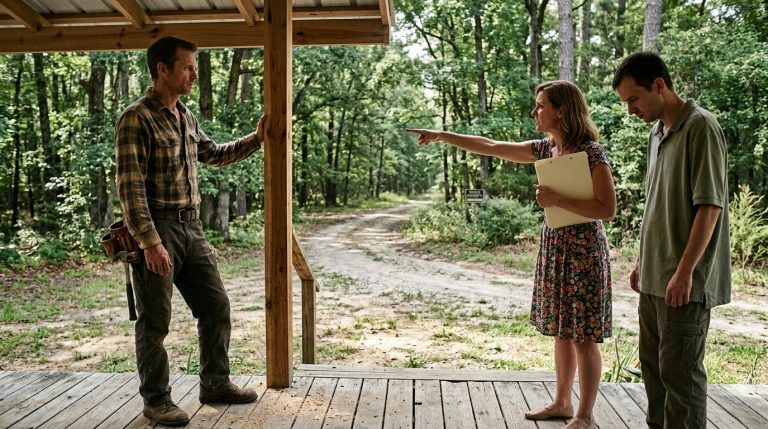
Then I looked east across Lake Whitmore.
The morning mist was burning off the water, revealing something that had no business existing.
Where my quiet eastern cove and the thick border of old-growth pines used to sit, a small city of neat, identical gabled roofs stared back at me.
Tidy decks hugged the waterline.
A paved asphalt parking area sat where my grandfather’s equipment shed used to rot into the earth.
A freshly painted welcome building bore a bright, obnoxious logo advertising luxury weekend getaways.
I dropped the duffel bag.
It hit the deck boards with a dull, heavy thud that rattled the empty coffee mug sitting on the railing.
My fingers twitched against my thigh, the sudden surge of adrenaline hitting my system like ice water.
I didn’t shout, and I didn’t drop my head in despair.
I just walked over to the railing, picked up my old pair of cracked-rubber binoculars, and adjusted the focus wheel until the distant docks snapped into sharp, unforgiving clarity.
Families were already unloading coolers from gleaming SUVs.
Kids in bright neon life jackets were sprinting down a manicured wooden ramp toward the water.
I counted the rooftops along the shoreline, my eyes burning in the glare.
One hundred and nine.
Somebody had put up an entire commercial resort on my land while I was changing diapers three states away.
My jaw ached from the sheer, grinding pressure of my teeth clamping shut.
I didn’t have a team of corporate lawyers waiting in my truck, and I didn’t have an army of consultants to handle trespass notices.
I had a deed in my desk drawer, a set of tired legs, and thirty-five years of civil engineering background that told me exactly how fragile all those expensive little cabins really were.
CHAPTER 2: THE PAPER SHIELD
I shifted the truck into drive and let the tires crunch over the fresh gravel of the access road.
The welcome building loomed ahead, its clean glass panels reflecting the morning sun with an offensive, corporate brightness.
A sleek European sedan sat parked in the designated visitor slot, its paint job completely out of place among the dirt and pine needles of the valley.
I cut the engine, the sudden silence inside the cab heavy with the memory of thirty-five years of quiet property taxes.
The glass door chimed a cheerful, plastic chime as I pushed inside.
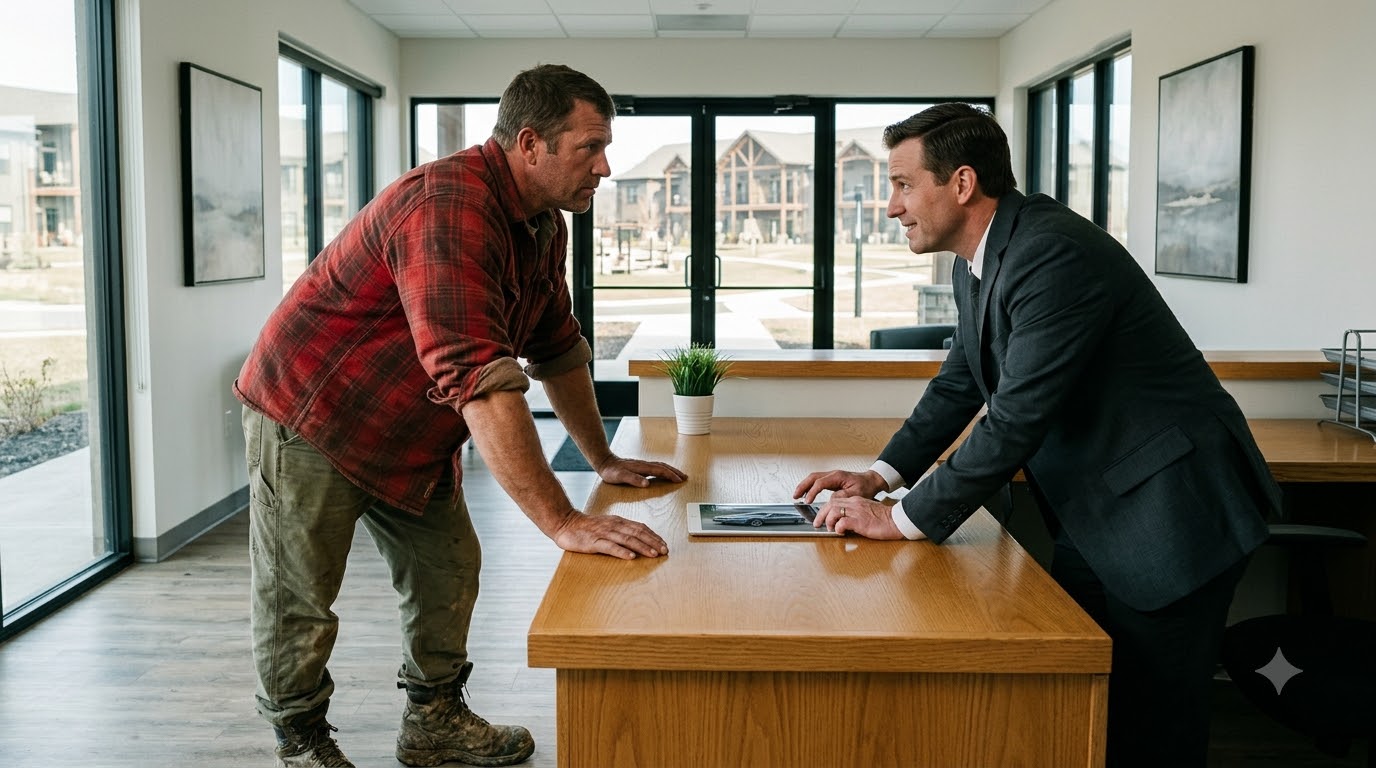
A man in a sharp charcoal suit stood behind the polished oak counter, tapping away at a slim tablet with manicured fingers.
He didn’t look up immediately.
— We are fully booked through the long weekend, sir, if you are looking for a weekend slot, you will need to check the portal online —
I didn’t move.
I leaned both hands flat against the wooden counter, the old wood cold against my palms.
— I am not here for a weekend slot, Garrett —
The typing stopped.
The HOA president slowly raised his head, a practiced, defensive smile already forming across his face like grease on a plate.
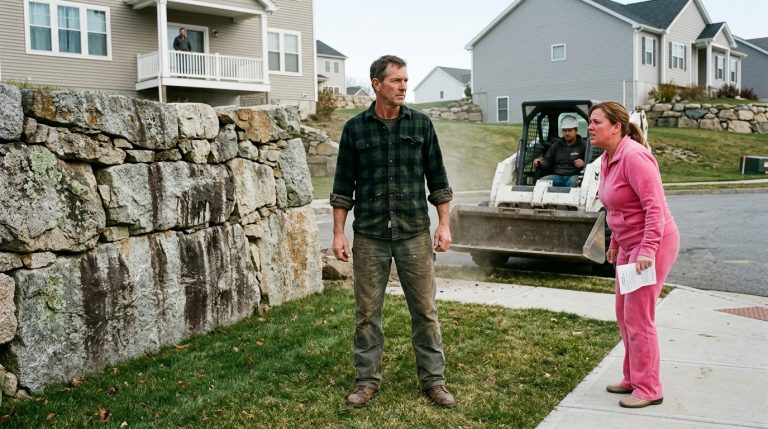
— Mr. Whitmore, right? The county told us you were back in the area. I trust you had a pleasant trip. We have tried to reach out regarding the property overlap —
— You didn’t reach out. You paved over my grandfather’s boat slip —
Garrett set the tablet down with a deliberate, soft click, leaning forward to project an air of calm authority.
— Let us be entirely practical here, James. We have invested twelve million dollars into this infrastructure, county GIS maps showed this land as unallocated recreational perimeter, and lakes over five hundred acres are public recreational resources under state guidelines anyway —
He tapped the screen of his tablet, sliding it across the counter toward me like a gambler pushing chips.
— We are prepared to offer a modest nuisance payout to quiet any minor boundary discrepancies, but let us not pretend a retired engineer can challenge an entity backed by institutional investors —
I didn’t touch the tablet.
I stared straight into his smooth, unblinking eyes, my thumb rubbing the edge of the heavy iron key in my pocket.
— You did a single-party software lookup and called it a title search, Garrett —
His smile didn’t reach his eyes, the muscle beside his jaw tightening just a fraction under the strain.
— You can litigate for years if you choose, James, but our legal team has already drafted emergency injunctions to freeze any interference with our resort operations —
CHAPTER 3: THE IRON WHEEL
The concrete floor beneath my boots was damp, carrying the steady, low-frequency hum of millions of gallons of water pressing against the masonry outside.
I stood alone in the dark control house my grandfather had built back in 1962, my thumb wiping a streak of old grease off the heavy brass indicator plate.
Outside, across the valley, 109 luxury cabins sat comfortably on my lakebed, completely unaware that their entire billion-dollar illusion rested on a single screw gate.
I pulled out my cell phone, the screen casting a harsh blue light over the peeling green paint of the wall, and dialed Martin.
The line rang twice before a raspy, familiar voice cut through the static.
— James? You still looking at that shoreline mess, or did you finally decide to let the courts handle it —
— Martin, it’s James. If I disengage the safety pins and turn this wheel all the way down, what is the exact timeline for a total draw-down —
A sharp, dry whistle of breath came through the receiver on the other end.
— You are talking about four to six weeks to drop the main pool, maybe a couple of months if you want the mud flats to fully settle out— Martin paused, his tone shifting from casual to razor-sharp professional. — Legally, as long as downstream water rights are clear and you are running standard maintenance, you operate that dam. But you are going to wake up a hornets’ nest —
— The hornets already built a city on my porch, Martin —
I slipped the phone back into my pocket without waiting for a farewell, my fingers wrapping hard around the spokes of the iron wheel.
My lawyer, David, had called twice earlier warning about public optics, county filings, and the terrifying speed of corporate injunctions.
I didn’t call him back this time.
I didn’t need an injunction, and I didn’t need a judge’s permission to turn a wrench on my own property.
I planted my boots firmly against the ribbed concrete floor, engaged my weight into the heavy steel spokes, and felt the ancient gears groan as they took the strain.
CHAPTER 4: THE DRY BED
The massive steel gate didn’t rattle as it lifted; it settled into a heavy, continuous mechanical grind that let the millions of gallons behind it finally find a way out.
I stood watching from the concrete apron, wiping a cold drop of river spray off my cheek as the surface of the main pool began to drop in measured, invisible increments.
Down the valley, the first three days passed with deceptive calm while families still splashed in the shallows and rented kayaks.
By the fourth morning, the change became impossible to ignore.
The pristine wooden docks that had hugged the luxury resort now sat perched a full foot above the water line, their anchor chains dangling slack in the air.
Within a week, the drop widened into a three-foot gulf, leaving the manicured beaches exposed as wide, ugly stretches of cracked gray mud and tangled reeds.
My phone buzzed constantly in my breast pocket, vibrating against my ribs with unanswered text alerts and frantic voicemail notifications from local numbers.
I ignored every single one, walking the perimeter fence with my hands shoved deep into my jacket pockets as I watched the high-water mark peel back from the timber foundations of cabin forty-seven.
The resort’s illusion was drying up by the inch, and no amount of corporate glossy marketing could float a boat over bare dirt.
CHAPTER 5: THE DESPERATE COUNTER
Garrett stepped out of his black sedan, his expensive charcoal suit rumpled and sweat beading visibly along his hairline.
Behind him, three investor vans blocked the narrow lane, their drivers leaning on their horns in a rising chorus of panic and rage.
I didn’t step off the porch.
I just leaned my shoulder against the timber post, watching him scramble up the wooden steps with his tablet clutched in his fist like a weapon.
— Are you completely out of your mind, James — Garrett shouted, his voice cracking with a high-pitched desperation that didn’t sound anything like the smooth executive from the welcome building. — We filed emergency multi-million dollar injunctions this morning, and the county sheriff is already on the line —
— Then you should have checked the property lines before you spent twelve million dollars on mud, Garrett —
I crossed my arms over my chest, feeling the steady thrum of my own pulse against my ribs.
— We have bookings! Families have investments! You are destroying livelihoods over a technicality —
— It isn’t a technicality. It’s my land —
He stabbed a finger toward my face, his breath coming in shallow, ragged gasps as the reality of the empty lake bed finally sank into his skull.
— You won’t get away with this, Whitmore. Our lawyers will tie you up in court until you lose every cent you own —
— Let them try —
CHAPTER 6: THE FINAL POUR
Heavy industrial machinery rolled down the eastern shore under a bleak winter sky, their steel teeth biting into the timber frameworks of the illegal resort cabins.
Garrett’s high-priced legal defense collapsed completely once the judge reviewed the certified boundary surveys and title deeds, leaving the association bankrupt and exposed.
There were no tearful confessions or sudden handshakes.
The developer’s association dissolved into bitter cross-lawsuits among investors, leaving the empty structures to be torn down, loaded into dump trucks, and hauled away as splintered scrap.
By May, the environmental checks cleared the scarred earth, and native wild grasses began to take root across the empty mud flats.
I walked down to the dam house alone, my boots crunching on the gravel path.
I reached out and grabbed the rusted iron wheel, my palms calloused from the struggle, and turned it back toward the closed position.
The heavy gates groaned, sealing shut against the runoff, and the water began its slow, inevitable climb back up the valley.
By December, the 800-acre lake was full again, reflecting the gray winter clouds and quiet pines just like it had for sixty years.
I sat on the front deck with a warm mug of coffee, watching a trout break the surface near where cabin forty-seven used to stand.
Ownership wasn’t just a piece of paper tucked in a desk drawer; it was the stubborn grit to protect what mattered when everyone else assumed you were too tired to fight back.