Reclaiming the Texas Dirt Against Corporate Greed and Petty Suburban Bureaucrats
CHAPTER 1: THE IRON GATE BLOCKADE
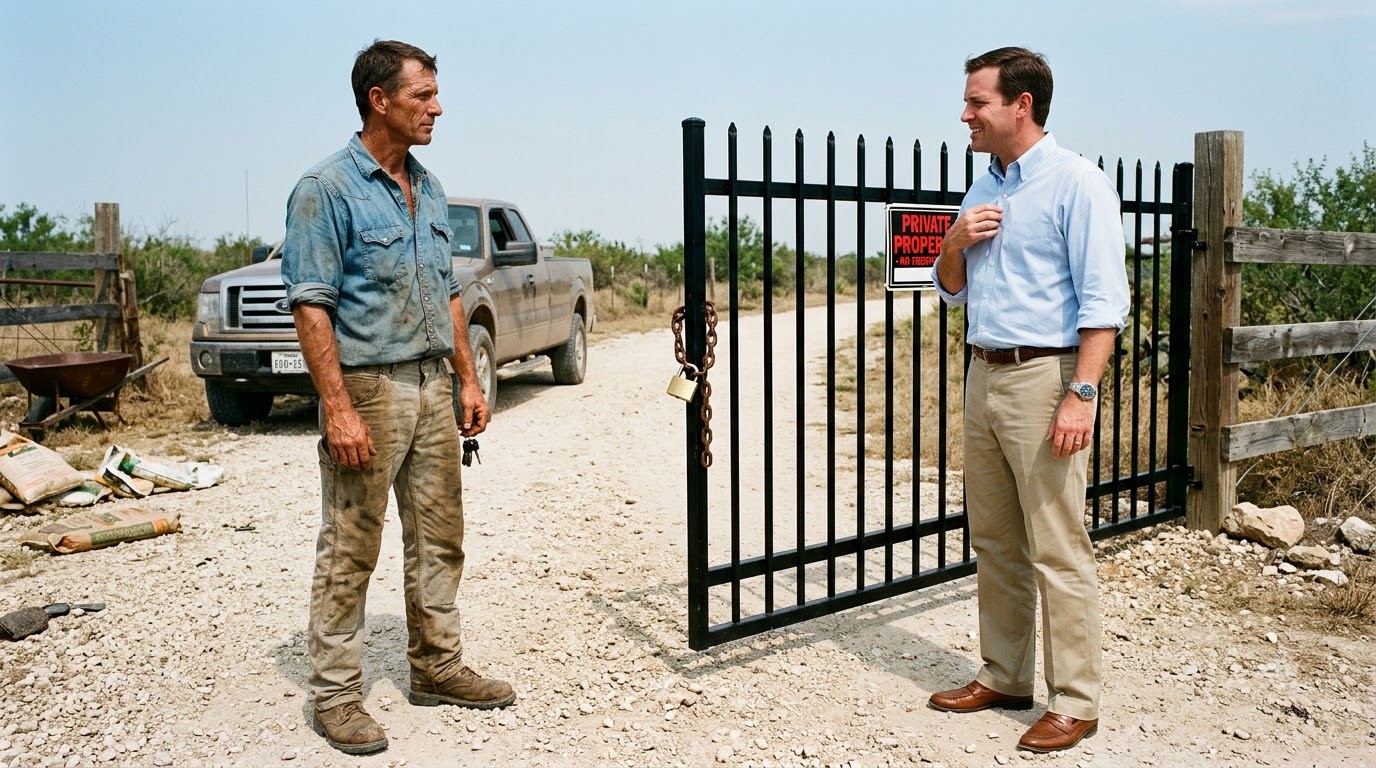
The truck tires crunched over the gravel, slowing to a dead stop three feet short of rusted steel.
A brand-new iron gate stretched entirely across my driveway. A thick brass padlock held the heavy bars locked tight in the center.
Nailed right to the metal was a glossy plastic sign declaring the land part of a private community.
I cut the engine. The radiator ticked in the heavy afternoon heat.
Scout let out a low, confused whine from the passenger seat, his wet nose pressing against the glass.
I reached down, grabbed the keys from the ignition, and stepped out into the dust.
My boots hit the ground with a familiar thud.
I stared at the padlock. It was clean, polished, and utterly out of place against the weathered fence posts I had driven into the earth myself three years ago.
For a second, the sheer absurdity of it tickled the back of my throat.
Life down past Brier Ridge was supposed to be quiet. You buy your dirt, you plant your peach trees, and you keep to yourself.
Instead, some bright-eyed outfit with a catalog aesthetic had decided my front porch was blocking their view.
I wrapped my fingers around the cold brass lock and gave it a firm tug.
It didn’t budge. The chain rattled a sharp, metallic warning against the iron bars.
Across the fence line, the sprawling manicured lawns of Cedar Hollow Estates sat silent and mocking under the glaring sky.
I wiped a bead of sweat from my forehead with the back of my thumb, letting the dry heat sink into my skin.
Panicking never put out a fire, and it sure as hell wasn’t going to open a gate.
I turned back toward the truck, my jaw tightening as I calculated the next move.
CHAPTER 2: OFFICE AIR AND EMPTY THREATS
The crunch of expensive loafers on gravel broke the stillness of the afternoon.
I didn’t turn around right away. I kept my eyes fixed on the new padlock, listening to the measured footsteps approach from the direction of Cedar Hollow Estates.
A sharp smell of synthetic cologne and air-conditioned offices cut through the scent of dry Texas dirt.
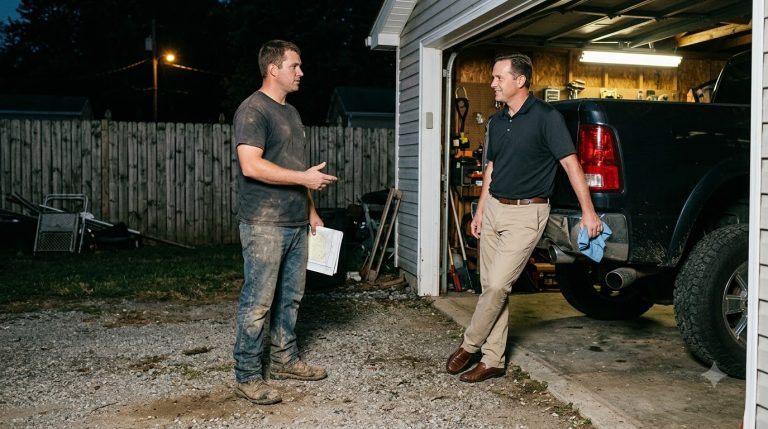
Martin Huxley stopped a few feet short of my bumper, smoothing down the lapels of his pressed khakis.
He offered that practiced, corporate smile—the kind designed to look like mercy while delivering an eviction notice.
“Mr. Callahan,” Martin said, his voice smooth and entirely devoid of any genuine warmth. “I see you’ve noticed our new perimeter upgrades.”
I turned slowly, letting the keys dangle from my fingers.
“You put a gate across my access road, Martin.”
“We’re simply trying to maintain property values and community standards,” he replied, tilting his head as if explaining a basic rule to a slow child. “Your old agricultural equipment and unapproved aesthetic choices do not align with the Cedar Hollow vision.”
A single faded survey marker caught my eye half-hidden in the crabgrass near the fence line, a stubborn reminder of old boundaries ignored by new money.
I ignored his corporate talking points, stepping past the hood of my truck to close the distance.
“My deed was clean before your developers ever dropped a shovel in this dirt, and it’s clean today.”
Martin’s smile tightened just a fraction, the skin around his eyes pulling taut under the pressure of my gaze.
“Cooperation would be deeply appreciated, Mr. Callahan, unless you prefer a protracted administrative headache.”
He turned on his heel without waiting for an answer, walking back toward the manicured lawns with the arrogant bounce of a man who thought paperwork could conquer the earth.
CHAPTER 3: DIGGING THROUGH COUNTY RECORDS
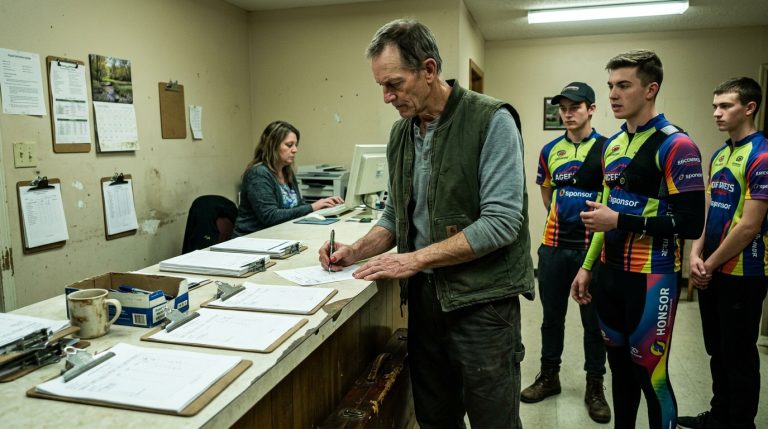
The county archive room smelled of damp paper, old glue, and decades of forgotten municipal arguments.
I set my heavy work boots flat against the linoleum floor, leaning over the high oak counter where the clerk’s office kept the old plat maps.
Without Luis to pull strings or hand over shortcut files, every single property line had to be traced by my own calloused fingers through stacks of yellowed parchment.
My thumb traced a faint ink line on a 1974 parcel map, feeling the tiny physical ridges where past surveyors had pressed their pens into the pulp.
“Looking for something specific, Mr. Callahan?” the clerk asked, her eyes glancing up from behind a stack of tax rolls.
“Just checking where the dirt actually meets the road,” I said, my voice dry as the room.
The archive lights hummed a low, monotonous drone that tested every ounce of my patience.
I turned another heavy page, ignoring the dull ache in my lower back from hours of standing over the flat tables.
A narrow strip of land, designated as an auxiliary access easement, caught my eye near the eastern boundary of what was now Cedar Hollow.
It was a skinny scrap of geography, neglected by the major developers because it looked like a worthless ditch on paper.
My eyes narrowed as I read the parcel ID number scribbled in the margin.
The developer’s shiny new perimeter fence sat directly on top of it, assuming nobody would ever bother to check who owned the microscopic seam between their asphalt and my dirt.
CHAPTER 4: THE UNNOTICED SLIVERS OF DIRT
The clerk’s office grew quiet as the late afternoon sun slanted through the frosted windows, casting long, dusty shadows across the hardwood floor.
I kept my thumb pressed against the map edge, tracing the jagged border where old municipal grants met modern subdivision planning.
It took hours of scanning secondary microfilms to piece together the chain of ownership for those neglected scraps of geography.
A sharp cough from across the room broke my concentration.
“County closes in ten minutes, Mr. Callahan,” the clerk warned, her keys jingling in her hand.
I nodded, my eyes locked on a small parcel descriptor tucked deep into an unindexed filing from the early nineties.
The developer thought they owned everything up to my fence line, but they had missed a crucial wedge of transitional dirt right behind their main complex.
An afterthought on paper, a forgotten sliver that tapped directly into the county right-of-way.
I straightened my back, letting out a slow breath that cleared the stale archival dust from my lungs.
They had spent months building fences and issuing paper violations to box me in, completely blind to the seam beneath their own foundation.
I pulled a small notebook from my shirt pocket and copied down the exact deed reference numbers with a stubby pencil.
The pieces were finally aligning, raw and undeniable, waiting for a common-sense approach to turn their grand design inside out.
CHAPTER 5: SECURING THE VITAL PROPERTY LINE
The title office desk felt cool and steady beneath my palms as I slid the completed transfer documents across the wood.
The clerk glanced down at the parcel numbers, her eyebrows lifting just a fraction as the digital records updated on her screen.
“This strip right here,” she muttered, tapping the glass monitor. “Runs straight beneath the main entrance and storage building of Cedar Hollow.”
“Recorded and filed,” I said, my voice flat and even.
“That makes you the legal owner of the access corridor they’ve been using for months.”
I didn’t smile or make a show of it because paperwork isn’t a victory until the ink dries and the ground acknowledges it.
I paid the recording fees in full, keeping every receipt tucked safely inside my front pocket where the paper wouldn’t wrinkle.
The developers had spent a fortune building gates and paying lawyers to choke off my ranch, never imagining that a single overlooked scrap of Texas dirt could cut straight through their polished lobby.
I walked out of the county building and climbed back into my truck, feeling the heavy hum of the engine vibrate through the floorboards.
The legal foundation was set, solid and undeniable, ready for the final piece of the board to fall into place.
CHAPTER 6: THE FIRST QUIET STRIKE
I walked through the side door of the Cedar Hollow maintenance shed without raising a single voice.
The morning air smelled of fresh asphalt and cut grass from their manicured lawns, completely oblivious to the paper trail resting in my pocket.
On the wall near the tool rack hung a single brass key on a rusted hook.
Martin Huxley rushed into the doorway a moment later, his face flushed and his expensive loafers skidding on the concrete floor.
“You can’t just walk in here, Callahan—this is private commercial property,” Martin snapped, his jaw twitching with sudden, unearned fury.
I lifted the brass key off the hook and held it up between my fingers.
“Not according to the county clerk,” I said, my voice steady and completely flat.
“This entire storage shed and your main office sit squarely on the sliver of land I legally purchased yesterday.”
Martin slammed his palm against the doorframe, refusing to yield an inch of his arrogance.
“That’s a bureaucratic glitch, and our lawyers will have those deeds thrown out before sundown—we won’t let some stubborn rancher wreck this community!”
“File all the papers you want,” I replied, turning toward the door with the key secure in my palm.
“Until then, consider your front office locked out of its own driveway.”
I walked straight through their gate, unlocked the heavy chain, and drove my truck back onto my own dirt, leaving them stranded inside their own expensive trap.