The Silent Perimeter: How Wild Bill Whailing’s Hunter Protocol Turned the Tide of Guadalcanal’s Darkest Hour
CHAPTER 1: THE RIDGE LINE SHADOW
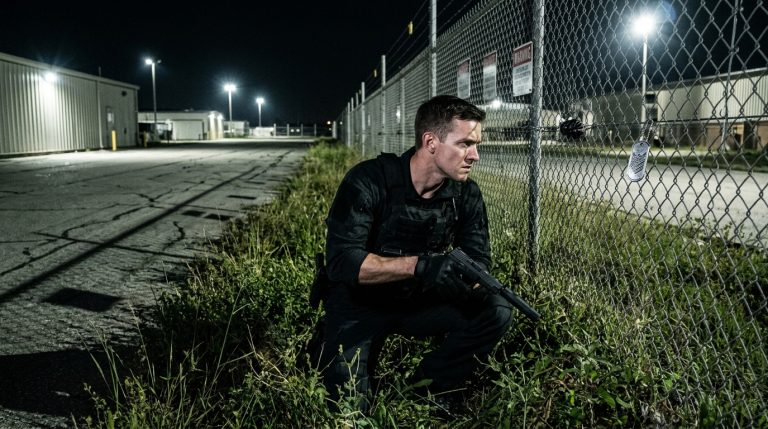
The humidity was a physical weight, a wet wool blanket that pressed against the chest and turned the act of breathing into a conscious, measured chore. Sergeant Miller did not move. He lay behind a log that was more fungus than wood, his cheek pressed against the rough, cold steel of his Springfield.
Through the narrow V-shaped gap in the brush, the ridgeline was a stage, and the actors were ghosts.
They didn’t look like the panicked, charging mobs the reports back at Henderson Field described. They moved low, their boots barely disturbing the damp floor of the jungle. They were sliding forward, an extension of the terrain itself. Miller tracked the man in the lead—an officer, maybe an NCO. He wasn’t looking at the ground. He was looking at the canopy, reading the light, reading the silence.
Miller’s finger was a feather against the trigger. His heart rate, disciplined by weeks of the Matanikau’s grinding rhythm, held steady at fifty beats per minute. Wait for the nervous system. Whailing’s words echoed in his skull, sharper than the distant, persistent thrum of insects. Don’t kill the muscle. Kill the brain.
The officer paused, reaching up to signal his men. It was a subtle flick of the wrist, a language of tension and intent. Beside Miller, the spotter, private Evans, shifted a fraction of an inch. A dry leaf crunched.
The sound wasn’t loud—no louder than a falling acorn—but to Miller, it was a gunshot.
The Japanese officer snapped his head toward their position. He didn’t fire; he didn’t yell. He merely froze, his eyes narrowing into slits, probing the dark wall of vegetation. He was reading the silence just as Miller was.
Miller shifted his focus to a canteen lying in the mud near the officer’s boot. It wasn’t the standard Japanese issue. It was heavy, dented aluminum, stamped with markings that made Miller’s blood run cold. It was American.
How had it gotten behind their own lines?
The officer began to raise his rifle, his movements clinical and unhurried. Miller knew then that the trap he had been sent to spot was not the one he was looking at. He was the one who had walked into it. The air suddenly felt thinner, colder. He squeezed the trigger, the recoil a sharp, metallic bite against his shoulder, but as the world erupted into a blur of green and gray, the realization hit him harder than the rifle: they hadn’t been hunting the Japanese. They had been lured into a mirror.
CHAPTER 2: THE STAFF ROOM DISCONNECT
The gunshot didn’t echo. In the Matanikau jungle, sound was a beggar; it hit the wall of dense, wet vegetation and died, strangled by the hanging moss and the heavy, saturated air. Miller didn’t wait for the sound to die. He rolled, his gear scraping against the rot of the log, moving with a desperate, practiced efficiency that owed nothing to textbook drills and everything to the primal terror of being watched.
He pulled himself into the narrow space between two buttressed roots of a banyan tree. The sting of a splintered branch raking across his forearm went ignored, overshadowed by the sudden, crystalline clarity of the danger. He hadn’t just shot at an enemy; he had shot at a ghost of himself. The aluminum canteen, lying in the mud, was a scream in the middle of a whisper.
Miller’s pulse drummed against the stock of his rifle. His hand was steady, but his mind flickered—a sudden, unwanted image of a training camp back on the island, weeks ago. He remembered a compass, its needle cracked and spinning aimlessly, presented to him by an instructor who had looked at the maps with a hollow, detached gaze. Trust the ground, Sergeant, the instructor had said, but the memory bit at him now. Had the maps been wrong? Had they been steered here by design, a deliberate piece of choreography masquerading as a patrol?
He breathed, a shallow, controlled intake of air that tasted of wet earth and copper. Evans was beside him, his face a mask of mud, eyes wide, locked onto the point where the Japanese officer had vanished.
“That wasn’t right,” Evans hissed, the words barely escaping his throat.
“Shut it,” Miller muttered, the command as sharp as a razor. He didn’t look at Evans. He looked at the trail.
The forest was coming back to life. The insects, silenced by the crack of the Springfield, were beginning to hum again, a high-pitched drone that felt like a drill against his eardrums. If the Japanese were here, they were doing exactly what Whailing had taught the Americans to do: they were waiting for the second shot, the impatient movement, the mistake.
Miller suppressed the urge to move. He forced his body to become part of the decay. He was an object—a stone, a root, a forgotten piece of gear. He watched the light filtering through the canopy. It changed, shifting from the harsh, high-noon glare to the fractured, mottled shadow of the afternoon.
The silence wasn’t empty. It was pressurized. Every time a leaf drifted to the ground, every time a distant branch groaned under its own weight, Miller analyzed it. He had to decide: was this the jungle, or was this the hunter?
He reached into his pack, his fingers brushing the rough, worn leather of a field notebook. He didn’t open it. He didn’t need to. He needed to be invisible. But the weight of the realization remained. The canteen was a piece of evidence that didn’t fit the war he was fighting. It was too clean, too deliberate. If they were the hunters, who was the master of the hunt?
He shifted his grip on the rifle, his calloused thumb sweeping over the safety. If the officer had been bait, then the killing ground wasn’t a tactical necessity. It was a stage. And if the Marine command—his own command—had set the stage, then the battalion wasn’t pushing forward to win. They were being fed into a meat grinder that had been polished and prepared by their own leaders.
He looked over at Evans. The younger man was trembling, not from fear, but from the sudden awareness that the world had shifted. Miller felt a cold, hard resolve crystallizing in his gut, replacing the erratic beat of his heart. He wouldn’t be the man who walked blindly into the trap. He would be the one who identified the gears of the machine.
Miller signaled with two fingers—a subtle, almost imperceptible movement. Stay low. Watch the rear.
He began to crawl, moving not backward toward their own lines, but forward—parallel to the trail, staying just deep enough in the brush to remain hidden but close enough to track the movement he knew was coming. He moved with the rhythm of the jungle, a ghost among ghosts. The ground beneath him felt different now. It felt like a trap, and for the first time in his service, he realized he wasn’t just fighting for the perimeter. He was fighting to understand why his own side wanted the perimeter to break.
He reached a vantage point, a small, elevated dip in the ridge that offered a view of the path behind them. He waited, the silence of the forest pressing against his ears, until he saw the silhouette of a figure moving along the very trail they had just vacated. It wasn’t a Japanese soldier. The silhouette was too tall, the gait too deliberate. It was a Marine scout from another unit, moving with a confident, reckless speed that signaled a total lack of awareness.
Miller watched, his jaw set. The Marine passed within ten yards of the discarded canteen, his eyes scanning for the enemy but missing the silent, waiting observation points that Miller could now see with agonizing clarity. The trap was set for them all.
CHAPTER 3: SELECTION AND THE WEIGHT OF SILENCE
Miller didn’t move for a long time. He stayed pressed into the shallow depression of the ridge, his body radiating heat into the cool, damp earth. The Marine he had watched walk past the canteen was long gone, swallowed by the dense, suffocating greenery of the jungle. Miller’s gaze remained fixed on the spot where the aluminum container lay, a tiny, man-made scar in the pristine decay of the Matanikau.
He finally stood, his knees popping—a sound that felt like a thunderclap in the oppressive quiet. He signaled to Evans. The private was pale, his eyes darting toward the canopy as if expecting the trees themselves to lean in and reveal the architect of this charade.
“We move,” Miller whispered. His voice was gravel, dry and stripped of all inflection. “Not back to the line. We find the perimeter’s edge.”
They moved, not as a unit, but as shadows. Miller’s mind was a closed circuit, running through the implications of what he had witnessed. If the American lines were being fed into a predetermined zone, then the “scout-sniper” detachment he was part of—Whailing’s handpicked hunters—wasn’t just a tactical experiment. It was a cleanup crew. They were there to ensure the “ambush” happened as planned, to trim the edges of the encounter until it fit the narrative the staff officers needed for their reports.
The physical exertion of the climb helped drown out the noise of his own doubts. His boots slipped on wet ferns, his hands clawed into mud and moss-covered bark. He didn’t care about the pain. He cared about the discrepancy. He recalled the briefing three days ago, the way the staff officers had traced the maps with such absolute, almost surgical confidence. At the time, he had interpreted it as mastery. Now, he saw it as theater.
They reached a rise overlooking the battalion command area. From this vantage, the “perimeter” looked like a jagged, festering wound in the jungle. White canvas tents were tucked into clearings, their edges fraying in the humidity. Supply crates were stacked in disorganized piles, a testament to the chaos of the island’s attrition.
Miller knelt behind a curtain of heavy, broad-leafed plants. He unslung his rifle, checking the action. It was a familiar, grounding movement. He needed to be invisible, but he also needed to be a ghost with eyes. He pulled a radio handset from his pack. It was supposed to be their lifeline, the conduit through which Whailing would receive the “Hunter’s Reports.”
He toggled the switch. A low, rhythmic static filled his ear. He adjusted the frequency, twisting the dial with a steady hand. The static shifted, undulating in a way that didn’t match the atmospheric interference of the Solomons. It was rhythmic, a pulse that seemed to coincide with the distant, muffled sound of a heavy machine gun firing—too rhythmic for random noise.
He leaned back, his eyes narrowing. Was the radio being jammed from within their own perimeter? He watched the battalion command tent, seeing an officer—Captain Thorne—pacing outside, a cigarette glowing like a dying ember in the twilight. Thorne was a man who lived by the manual, a man whose career depended on the reports reaching Henderson Field in a specific, sanitized format.
Miller felt a sudden, sharp ache in his chest—not physical, but the heavy, grinding weight of betrayal. He had thought they were fighting for ground, for an airfield, for survival. Now, he understood they were fighting for the perception of those things. The decoy canteen, the misplaced patrol, the jammed radio—it was all designed to keep the hunters blind while the main body walked into a pre-arranged disaster.
He took a slow breath, forcing himself to scan the perimeter one more time. He saw a group of men carrying ammunition crates toward the very flank he had identified as the “seam” yesterday. They moved with the same reckless confidence as the scout he had watched earlier. They were walking into the throat of the beast.
Miller didn’t call out. He didn’t fire a warning. He knew that to do so would be to break his own cover, to reveal his position to the very people who were pulling the strings. Instead, he watched. He recorded the movement, the faces, the timing, his mind turning every detail into a weapon.
He was no longer just a scout. He was a silent witness to a systematic failure. He looked at Evans, who was watching him with a mixture of terror and expectation.
“Listen to me,” Miller said, his voice barely a breath. “We don’t report back until we know who is on the other end of the line. We are going to shadow those supply crews, but we stay in the shadows. If they get into trouble, we don’t move. We wait. We learn.”
He felt the rough, jagged edge of a rock under his palm. He picked it up, feeling the weight, the density of it. It was real. Unlike the reports, unlike the maps, unlike the orders from the tent below. The rock was real. The jungle was real. And the game they were in was far more dangerous than any enemy regiment.
He started down the slope, moving with the precision of a predator. He was no longer trying to protect the perimeter. He was trying to protect the truth, however ugly it might be.
CHAPTER 4: THE FIRST CONTACT
The descent was a slow, agonizing process of friction and control. Miller moved through the jungle not by walking, but by deconstructing the path. He chose his footfalls based on the sound of the vegetation—avoiding the dry, brittle leaves that would announce his presence like a gunshot, favoring the damp, decaying moss that swallowed the pressure of his boots. Behind him, Evans was a shadow, his breathing becoming ragged, a tether that Miller had to constantly monitor.
They reached the floor of the valley just as the light began to fail, turning the jungle into a landscape of bruised purples and deep, impenetrable blacks. The air was heavy, saturated with the metallic tang of an approaching storm—a scent that reminded Miller of the smell of gun oil and ozone.
Ahead, the supply crew moved with an unsettling lack of caution. They were a small cluster of men, four in total, dragging crates that looked to be heavy with ammunition. They didn’t sweep the perimeter. They didn’t utilize the standard “stop-and-listen” protocol that Whailing had drilled into every man under his command. They moved with the confident stride of men who were either hopelessly ignorant or perfectly aware of the ground they occupied.
Miller crouched behind a screen of hanging vines. He watched them pause at a clearing. One of the men, a corporal Miller recognized from the mess line, produced a small, silver mirror. He didn’t use it for signaling in the conventional, code-based way the Marines used. Instead, he flashed it three times in rapid, uneven bursts, then stood waiting.
A moment later, from the opposite side of the clearing—from the very jungle the Americans were ostensibly guarding against—a corresponding flash emerged.
Miller’s grip on his rifle tightened until his knuckles went white. It wasn’t an ambush. It was a handover.
The revelation was a physical blow, a sudden, cold constriction in his lungs. This was the decoy. The “killing ground” wasn’t a trap for the Japanese; it was a logistics lane, a protected channel for goods that weren’t meant for the Marines at Henderson Field. The battalion wasn’t failing because of Japanese pressure; it was failing because its resources were being bled out by its own hands, filtered through a series of “scout” missions that masked the movement of supplies to a destination Miller couldn’t yet identify.
He looked at Evans. The private was staring at the clearing, his mouth slightly agape, the realization of what he was seeing dawning on him with a dazed, hollow look.
“They’re not guarding the seam,” Evans whispered, the tremor in his voice cutting through the humid air. “They’re opening it.”
Miller didn’t answer. He couldn’t. His mind was racing through the tactical implications. If the scouts—his unit—were the ones tasked with securing these “patrol lanes,” then they were, by proxy, the silent partners in this theft. Their very existence, their reputation for being the “eyes” of the battalion, provided the perfect cover. No one would question the path they cleared, and no one would dare probe the zones they claimed were “active combat areas.”
He needed to get closer. He needed to see what was in those crates.
He motioned for Evans to stay put. Miller didn’t wait for a reply. He crawled forward, his movements stripped of all hesitation. The rain began to fall then, a sudden, vertical deluge that transformed the world into a cacophony of drumming water. It was the perfect cloak. The heavy, relentless noise muffled the sound of his movement, masked his scent, and turned the jungle into a blurred, shifting grey.
He reached the edge of the clearing, pressing himself into the hollow of a rotted log. He was less than twenty yards from the supply crew. Up close, the men looked tired, but not like the rest of the Marines on Guadalcanal. They didn’t have the hollow-eyed, gaunt, shaking look of the men who had been fighting for weeks. They were clean, their gear well-maintained, their expressions guarded.
The corporal began opening one of the crates. Miller watched, holding his breath as the lid creaked, the sound barely audible over the roar of the rain. Inside, there were no machine gun belts, no mortar shells, no boxes of K-rations.
The crate was packed with medical supplies—morphine, bandages, and cases of quinine, the most precious commodity on the island. The items that were currently in critically short supply at the field hospital. The items that the wounded men were dying for every single day.
Miller felt a surge of rage so intense it made his vision swim. This wasn’t just a betrayal of the command; it was a betrayal of the men dying in the mud. He realized then that the “political suicide” mission Whailing had taken on was much deeper, much more personal than he had imagined. Whailing wasn’t just trying to fix a doctrine; he was trying to track a parasite.
He saw the corporal check a watch, his movements rhythmic, practiced. He was waiting for something. A transport? A meeting?
Miller’s heart hammered against his ribs. He had the opportunity to strike—a single, clean shot would end this, would shatter the operation right here, right now. But he knew the consequences. He would be labeled a rogue, a deserter, a man who cracked under the strain of the jungle. They would kill him, bury the evidence, and the flow of medical supplies to whoever was paying for them would continue, uninterrupted.
He stayed where he was, his finger hovering near the trigger, his gaze fixed on the corporal’s hands. He had to know the destination. He had to know who was at the end of the line.
The corporal stood up, turning toward the thickest part of the jungle, and for a split second, his face was illuminated by a flash of lightning. He wasn’t just an NCO; he was a man Miller had seen in the company of the battalion officers, a man who held the confidence of the very people who were supposed to be guarding the field.
Miller took a mental picture, locking the image of the man’s face into his memory. He didn’t fire. Instead, he slowly backed away, retracing his path through the deluge. He had his proof, but he also had a target that was much larger than a Japanese machine gun nest. He was going to have to play the role of the loyal scout a little longer, even as the walls of the perimeter began to feel more like the bars of a cage.
CHAPTER 5: THE TACTICAL DECOY
Miller slid into the cave opening just as the sky opened up entirely. It wasn’t rain anymore; it was a cataract of grey, howling water that turned the jungle floor into a river. Beside him, Evans tumbled in, gasping, his hands scraping raw against the jagged limestone. They were deep in the shadow of the ridge, shielded from the deluge, but the cave was cold—a damp, biting chill that seeped into their marrow.
Miller didn’t waste time on breath. He immediately swept the cave with his rifle barrel, his eyes adjusting to the gloom. It was small, a natural fracture in the rock face, but it felt wrong. It smelled of sulfur and machine oil—a sharp, industrial scent that had no place in the heart of the Solomon Islands.
He clicked on his shielded flashlight, the beam a thin, pale finger of light. It caught the dull glint of wood and steel stacked against the back wall.
Miller walked over, his heart echoing the rhythm of the storm outside. He hadn’t just stumbled into a shelter; he had stumbled into a depot. The crates weren’t the standard issue gear he saw at Henderson Field. These were marked with symbols he had seen only on the manifests of the supply crews—the ones that disappeared into the “secured” sectors.
He ran a hand over the lid of a crate. It wasn’t locked. He pried it open with the blade of his combat knife. The wood groaned, a hollow, splintering sound, and the contents were laid bare: more medical supplies, but underneath them, rows of high-grade demolition charges, the kind used for structural demolition, not field clearing.
The decoy was becoming clear, and it was far more sinister than Miller had initially perceived. The “killing ground” wasn’t just for smuggling goods; it was being prepared for a collapse. They were staging the terrain to be demolished—to wipe out evidence, to bridge the gap between their theft and the actual front lines, and to ensure that anyone investigating the seam would be caught in the blast.
Miller sat back on his heels, the cold stone biting into his thighs. He looked at the charges, then at the rifle leaning against the cave wall. His mind began to reassemble the pieces. The canteen, the unauthorized signal patterns, the supply crates—it was a feedback loop designed to feed the battalion into a catastrophe.
“Sarge?” Evans’s voice was a whisper, shaky and fragile. “This… this isn’t ours. Is it?”
“No,” Miller said, the word heavy and absolute. “It belongs to the people who are managing the war from the tents.”
He felt a deep, hollow ache in his chest. The betrayal wasn’t abstract anymore; it was physical, tangible, stacked in crates and waiting to be detonated. He wasn’t just fighting an enemy across the line; he was caught in the gears of a machine that saw the Marines, the Japanese, and the scouts themselves as nothing more than acceptable losses in a ledger of profit and power.
He stood up and began to inspect the charges more closely, his fingers tracing the wiring. They were rigged to a central detonator—a remote frequency receiver. Miller’s pulse quickened. The radio static he had heard earlier… it hadn’t been jamming. It had been the trigger.
He looked toward the cave entrance. The rain was still hammering against the rock, but the wind had shifted, bringing with it the distant, muffled sound of a patrol moving through the undergrowth—men with boots that didn’t snap branches, men who moved with the same fluid, coordinated grace he had seen at the clearing.
They were coming.
He didn’t know if they were looking for him specifically or if this was just their route, but the coincidence was too sharp to be accidental. He had the charges, he had the detonator, and he had the proof of the decoy. But he was trapped in a limestone box with no exit but the one he came through.
Miller looked at Evans. The young private was looking at the ammunition with a dazed, overwhelmed expression.
“Get your gear,” Miller commanded, his voice steady, stripped of fear. “We don’t take the charges. We don’t touch the trigger. We become part of the rock.”
He grabbed his pack and extinguished the light. They pulled themselves into the tightest, darkest crevice at the back of the cave, pressing their bodies into the stone until they were indistinguishable from the shadows.
He waited, the rhythmic thrum of his own blood competing with the violence of the storm outside. He felt the cold dampness of the cave wall against his spine, the rough, unyielding reality of his own existence. He was a scout, a hunter, a man who lived by the rule of seeing first. Now, he would see exactly how far they were willing to go to keep their secrets.
The sound of boots on wet rock approached, stopping just outside the mouth of the cave. A shadow darkened the entrance, silhouetted by a lightning strike—a man standing with a rifle held at the low-ready, his eyes scanning the gloom. Miller held his breath, his finger resting on the safety, the weight of the rifle an extension of his own resolve. He was ready to fight, but more importantly, he was ready to watch.