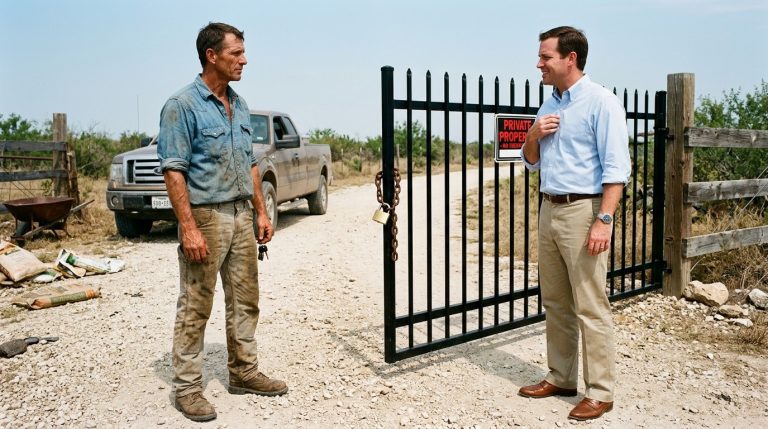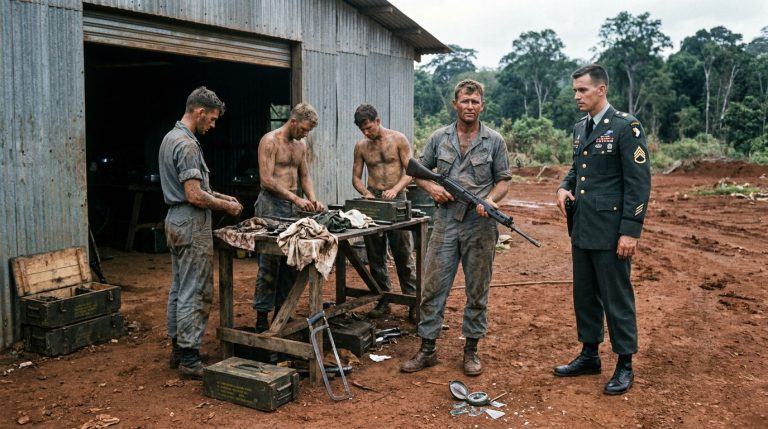
A Fragmented Ghost: The Sharp Edge of Silence in a World of Polished Glass
CHAPTER 1: THE WEIGHT OF THE ASPHALT
The dashboard lights bled a sickly, neon green over the cabin, casting the interior of the Tacoma into a realm of sharp, jagged shadows. Riley kept her eyes glued to the center line of the highway. Her knuckles were white, fused to the steering wheel. She didn’t look back. She didn’t look at the rearview mirror. Behind her, the yacht club was a beacon of soft, golden light—a fragile, artificial world that felt as distant as a star.
Her pulse was a drumbeat in her throat, synchronized with the rhythmic thrum-thrum of the truck’s tires against the asphalt. Every vibration that traveled up through the steering column felt like a shockwave, a physical reminder of the terrain she was leaving behind. The smell of the ocean, which had been the only honest thing at the party, began to fade, replaced by the sterile, synthetic odor of highway exhaust and old coffee.
She felt the sharp, stinging protest of the blisters on her Achilles. It was a good pain. A real pain. It was the only thing in the last three hours that hadn’t been a performance.
She reached down to the passenger seat to retrieve her small clutch, her fingers trembling against the cheap, synthetic fabric. She stopped. Her fingers hovered over the seat. The small, silver dog tags she always kept inside the side pocket—the ones she’d recovered from the sand—weren’t there.
She slammed her hand into the seat, the sharp metal of the console biting into her palm. She shifted the truck onto the shoulder, the gravel skittering and screaming against the wheel wells. She killed the engine. The silence that rushed into the cab was heavier than the noise.
She ripped the clutch open, dumping the contents onto the floor mat: a lipstick she never wore, a handful of crumpled receipts, a spare key. No tags.
The realization hit her with the force of a physical blow to the stomach. She had set the clutch on the balustrade while she was shoving her shoes off. They must have slid. They were sitting there now, on the cold stone of the marina, exposed to the night air, abandoned in the middle of the enemy’s camp.
Her right hand began to vibrate. Not a tremor this time—a seizure of nerves. She stared at the empty floor mat, her vision tunneling until the world narrowed down to the small, dark patch of carpet where the silver metal should have been. She had left a piece of her history behind, and for the first time in years, the hollow ache in her chest wasn’t empty. It was filled with a cold, sharpening panic. She wasn’t just walking away; she was being hunted by her own past.
CHAPTER 2: THE ANATOMY OF AN EMPTY ROOM
The keys bit into Riley’s palm as she climbed the stairs to her third-floor walk-up. Her movements were mechanical, stripped of grace—a sequence of weight shifts designed to minimize the grinding in her left knee and the fire in her blistered heels. She didn’t turn on the light in the hallway. She didn’t need to. The geometry of the space was burned into her proprioception.
She pushed her door open. The air inside was stale, trapped behind triple-pane glass, smelling of dust and the sharp, chemical tang of the cleaning supplies she used to scrub away the scent of the outside world. It was a space designed for neutrality. Everything was beige, brushed steel, or cold, hard plastic. It was a laboratory for living, built to keep the erratic pulse of the world at bay.
Riley locked the deadbolt—two clicks—and leaned her forehead against the cool, smooth wood of the door. The silence here wasn’t the peaceful quiet of a library; it was an active, aggressive absence. It hummed in her ears, competing with the faint, residual ringing from the flash-bang incident months ago.
She turned into the living room, her eyes adjusting to the slivers of streetlamp light cutting through the blinds. She stopped. The room felt different tonight. Not changed, but perceived differently. The sharp angles of her furniture—the low-slung, uncomfortable chair, the glass-topped coffee table—seemed to jut out with increased hostility. Her perception was flickering. She caught a movement in the periphery—the flutter of a curtain, the shift of a shadow—and her right hand instinctively dropped to her hip, searching for the weight of a sidearm that wasn’t there.
She wasn’t on duty. She hadn’t been for a long time.
She walked to the kitchen, her bare feet making soft, rhythmic thuds against the hardwood. The transition from the high-tension environment of the yacht club to the clinical solitude of her apartment should have been a release. Instead, it felt like she had stepped from one pressure cooker into another.
She leaned against the granite counter, the stone biting into her hip. She needed water, but she didn’t reach for a glass. She just stared at the empty space on her keychain where the dog tags should have been. The silence of the room was suddenly punctuated by a sound that didn’t belong: the rhythmic, wet tap of her own heartbeat against her eardrums.
Was she being watched?
The thought wasn’t a product of logic; it was a ghost of a survival mechanism, an intrusive phantom that had haunted her since she got back to the States. She walked to the window and peeled back the corner of the heavy blackout curtain. Outside, the street was deserted. A single car was parked three doors down, its engine ticked as it cooled—a metallic, contracting heat. She watched it for a long, slow minute. If she were tracking someone, she would have parked there. Or she would have parked under the streetlamp, forcing the target to look into the glare if they tried to check the street.
The car didn’t move.
She let the curtain fall. The room plunged back into darkness. She felt the urge to leave again, to drive until the fuel light winked on, to put miles between her and the realization that she had compromised her operational security over a dinner party. But she stayed. She sank into the floor, pulling her knees to her chest, the sharp edges of the furniture looming above her like sentinels.
She closed her eyes and tried to force the box-breathing rhythm—four in, four hold, four out, four hold. But the air felt thin. Every time she closed her eyes, she saw the yacht club again. She saw Brent’s mocking smile, but more clearly, she saw Chloe. Her sister’s eyes hadn’t been filled with worry; they had been filled with a cold, calculated terror. Chloe hadn’t been afraid that Riley was hurt; she had been afraid that Riley was seen.
Why?
The question wasn’t a stray thought; it was a hook in her gut. She reached out to the counter, her fingers brushing against her phone. The screen remained black, a mirror reflecting her own wide, unblinking eyes. She didn’t call Hayes. She didn’t call anyone. She just sat in the dark, the sharp edges of her apartment cutting into her conscience, wondering if the tags she left at the marina would be there in the morning, or if someone else—someone who understood the trident and the skull—had already picked them up.
The silence of the room shifted. A floorboard creaked in the hallway. It was the building settling, the wood expanding in the cooling night air. But Riley’s heart spiked, a physical, sickening lurch of adrenaline. She stood up, her knee popping, her body re-arming itself. She wasn’t just a woman in a dark apartment anymore. She was a target, and for the first time in six years, the target was starting to think like a hunter.
She moved to the kitchen drawer, the one she never opened. Her fingers wrapped around a sturdy, tactical-grade flashlight—a heavy, steel-bodied tool that could double as a defensive instrument. She gripped it hard enough to bruise her palm. The light was off, but the weight of it was enough. She stood in the center of her kitchen, listening to the building breathe, waiting for the silence to break.
CHAPTER 3: THE GEOMETRY OF A GHOST
Riley didn’t move. She stood in the narrow corridor of her kitchen, the tactical flashlight held in a reverse grip. Her breathing was controlled, a disciplined cadence that pulled the stale apartment air deep into her lungs. The creak had come from the hallway—a sharp, high-pitched protest of wood against wood that she recognized instantly. It wasn’t the natural settling of an old building; it was the specific, weighted pressure of a foot placed off-center on a joist.
Her mind fractured, the present moment overlaid with the ghost of a hallway in Kunar. Six years ago, another floorboard had groaned. That one had been followed by the rhythmic snick of a safety being disengaged.
She forced the memory back. She was in Nantucket, not a mud-walled compound. She was in a civilian apartment, not a forward operating base. But the reflex remained. She moved with the predatory economy of someone who had spent their adult life learning how to vanish in plain sight. She bypassed the living room, hugging the wall where the shadows were deepest, her bare feet silent on the hardwood.
She reached the threshold of the hallway and flattened herself against the jamb, her back pressed hard enough to feel the texture of the plaster. She didn’t peek. She used her ears.
Silence. The kind of absolute, pressurized stillness that only exists when someone else is trying just as hard not to be heard.
Riley’s pulse was a dull thud in her throat. She shifted the flashlight to her left hand and reached out to the wall, her fingers tracing the path until they found the switch. She didn’t flip it. Instead, she pushed the doorframe, her knuckles white. She had to know. If this was a threat, it was amateur. If it was a warning, it was surgical.
She exhaled a breath she didn’t know she was holding and stepped out.
The hallway was empty. The moonlight filtered through the end-of-hall window, casting long, skeletal shadows of the fire escape across the floor. Nothing moved. But there, on the small mat by the front door, was a faint dusting of grey grit. She knelt, her movements fluid and devoid of hesitation. She rubbed a pinch of the material between her thumb and forefinger. It wasn’t dust. It was fine-milled limestone, the exact type used in the construction of the marina’s stone balustrades.
A cold spike of electricity raced down her spine. Someone had been at the marina. Someone had followed her back.
She stood up, her jaw set in a hard, uncompromising line. She didn’t feel afraid anymore. The fear had been incinerated by a sudden, freezing clarity. This wasn’t about the party. This wasn’t about her sister’s reputation. This was about the tags she had left behind. They weren’t just metal; they were a breadcrumb trail she had inadvertently laid out for someone who knew exactly what they signified.
She walked back to her living room and grabbed her small, nylon duffel from the closet. She didn’t pack clothes. She packed the essentials of a life built on quick departures: a multi-tool, a portable power bank, a encrypted drive she kept hidden in the lining, and the thick, leather-bound notebook that contained the only record of the Kunar deployment she had kept for herself.
She checked her watch. 02:14 AM.
She didn’t turn on a single light. She navigated the apartment by the moonlight, her movements efficient and practiced. She left the flashlight on the kitchen counter—a silent message that she had anticipated the intrusion. As she moved to the back door, the one that led to the fire escape, she paused. The silence of the apartment felt different now. It was no longer a vacuum; it was a cage.
She stepped out onto the iron grating of the fire escape. The cold, damp air of the city hit her face, smelling of rain and asphalt. She looked down at the dark, narrow alleyway below. Two silhouettes were standing near the mouth of the alley, their posture relaxed, their eyes fixed upward. They weren’t hiding. They were waiting.
Riley backed away, her heart hammering a steady, lethal rhythm against her ribs. They hadn’t come to break in; they had come to wait for her to run. She gripped the cold iron railing of the fire escape, her knuckles raw and aching. She wasn’t going to give them the confrontation they were expecting.
She turned and climbed upward, toward the roof. If they wanted a ghost, she would give them one. She was done playing by the rules of a civilian rehearsal dinner. The architecture of her life was shifting, and she was moving with it. Every step up the rusty ladder felt like a correction, a return to the only state of being that made sense to her: the quiet, desperate, and calculated dance of survival.
She reached the roof and looked out over the sprawling, light-polluted horizon of the city. She was vulnerable, she was being tracked, and she was entirely alone. She gripped the edge of the parapet, her eyes searching the street below for any sign of a third player. The game had begun, and she was no longer a piece on their board. She was the one who was about to start making the moves.
CHAPTER 4: THE ROOFTOP VANTAGE
Riley didn’t stand up. She stayed low, pressing her chest against the gravel-dusted tar of the roof. The wind whipped her hair across her face, stinging her cheeks, but she didn’t blink. Her eyes remained locked on the two figures in the alleyway.
They were still there. One of them had lit a cigarette, the ember glowing like a dying star in the gloom. The way he held it—sloppily, cupped in a hand that didn’t know how to shade a flame—sent a ripple of recognition through Riley.
Professionals, the ones she had worked with, the ones she had feared, knew that even a lit cigarette was a beacon. These men were loud in their stillness. They weren’t checking the perimeter. They weren’t looking up at the roof. They were just waiting, confident in their numbers and their assumption that she would behave like a frightened civilian and bolt for the alley.
A cold, grim satisfaction settled in Riley’s stomach. They were not military. They were muscle—hired, expensive, and predictably arrogant. They were likely tied to Brent, or to whatever circle her sister was desperate to protect. The realization didn’t make them less dangerous, but it made them readable. It shifted the tactical dynamic from an ambush to a geometry problem.
She crawled backward until she reached the heavy, industrial-sized HVAC unit near the center of the roof. It was a massive, vibrating cube of sheet metal that hummed with a low, mechanical drone. She leaned against it, using its vibration to mask the sound of her own shallow breathing.
She needed an exit that didn’t involve the fire escape or the street. She stood slowly, crouching, and traversed the roof toward the neighboring building. The rooftops in this district were a series of interconnected, flat plains, separated by four-foot drops and narrow air gaps. She had crossed them before, years ago, when the city was just a place to hide and not a place to live.
She moved with absolute silence, her feet finding the secure spots on the roof’s surface, avoiding the loose gravel that would crunch and betray her. As she reached the edge of the adjacent building, she paused. Below, the alleyway continued for two blocks, dead-ending into a storage yard filled with rusted shipping containers. If she could reach the shipping containers, she could navigate the grid of the city, keeping to the shadows and the heights.
She looked back once, toward her own building. The fire escape ladder was still retracted, empty. The two men below were still stationary. She had time.
She turned and leaped the gap, landing in a soft, soundless crouch on the neighbor’s roof. The physical exertion burned in her lungs, a sharp, clean ache. She was moving better than she had at the party, the adrenaline stripping away the stiffness of the day. She felt sharper, more focused. The “hollow” exhaustion she had been carrying—the one that had left her feeling like a stray dog in a lab—was being replaced by the cold, tactical clarity of the mission.
She reached the edge of the second roof and looked down. She wasn’t fleeing. She was pivoting. If they were watching her home, they were watching it because they were looking for the dog tags. They weren’t looking for her to go anywhere; they were looking for her to lead them to whatever else she had hidden.
A dangerous idea blossomed. If they were waiting for her to lead them, she would. But she wouldn’t lead them to a place of vulnerability. She would lead them to a place where the playing field was level—or better yet, where she held all the cards.
She thought of Hayes. The way he had stood there, an old predator in a sea of soft, complacent men. He had known exactly what that ink meant. He had known the cost. Maybe he was the only one who could bridge the gap between who she was and what her sister was trying to force her to be.
She picked her way across the rooftops, the city unfolding beneath her like a complex, dark machine. She was heading toward the docks, toward the old repair yard where the Navy had once kept a small cache of sensitive equipment. It was a long shot, and it was a gamble that could end with her being caught, but it was better than sitting in her apartment, waiting for the floorboards to creak again.
As she sprinted across the final, wider gap, the cold air bit into her skin, and for the first time, she felt truly alive. The city was a maze, and she was the only one who knew the walls were paper-thin. She checked her pulse. Steady. She checked her surroundings. Clear. She dropped into the shadows of the next building, her silhouette merging with the darkness, and began the long, silent journey toward the truth.
CHAPTER 5: THE REPAIR YARD ARCHITECTURE
The descent was a study in friction. Riley navigated the rusted external ladder of the final warehouse, her boots finding purchase on rungs that flaked away under her weight like dry skin. Every movement was a negotiation with gravity. When her feet finally touched the cracked asphalt of the repair yard, she didn’t relax. She flattened herself against the corrugated steel siding of the building, her heart settling into a low, rhythmic hum.
The air here was different. It tasted of sea salt, diesel, and the sharp, metallic bite of oxidized iron. The yard was a graveyard of obsolete maritime technology—giant shipping containers, tangled piles of mooring lines, and the hulking, skeletal frames of decommissioned cranes that loomed against the night sky like abandoned giants.
She kept to the shadows, moving with the fluid, low-profile gait of a shadow. Her target was the “Black Box” shed, a small, reinforced concrete structure near the water’s edge where the Navy had kept sensitive repair gear years ago. It was a long shot, but if anyone had left a trail or an old contact point, it would be there.
Her eyes flicked across the yard. The moonlight was obstructed by the clutter, creating a erratic grid of light and dark. She saw a flicker of movement near the center of the yard—not a person, but the shifting of a tarp in the wind. She checked her pulse. The adrenaline of the rooftops had faded, leaving behind a cold, analytical focus. She was in the “dead space” now, the gray area between the civilian world she had fled and the operational reality she was reclaiming.
She reached the edge of a stack of containers and peered around the corner. The shed was ahead, fifty yards of open asphalt. To cross it was to invite detection. She knelt, her hand brushing the cold, wet ground. She found a discarded length of heavy-duty conduit and gripped it—not as a weapon, but as a sensory probe.
She tapped it against the asphalt, listening to the sound. The ground was solid, but there was a subtle, hollow resonance in the center of the yard. She moved, staying within the shadows of the containers, until she stood over the patch of ground that had sounded off. She scraped away the loose grit with her boot.
It was a utility hatch. Heavy, rusted, and likely seized.
She knelt and inserted the conduit into the gap between the hatch and the frame, using it as a lever. Her muscles burned, the old injury in her knee sending a sharp, white-hot warning through her leg, but she didn’t stop. She breathed, applied torque, and felt the iron groan in protest. With a sharp, sudden crack, the seal broke.
Beneath the hatch, a ladder descended into darkness. It smelled of stagnant water and old, dry electricity—the scent of a place that hadn’t been touched in years.
She didn’t hesitate. She squeezed through the opening and began the descent. The ladder was slick with moisture, and the air grew colder with every foot. When her feet finally touched bottom, she pulled the flashlight from her duffel and clicked it on. The beam sliced through the darkness, illuminating a narrow, concrete-walled corridor.
It was a crawlspace, but it was organized. There were remnants of wiring, discarded communications gear, and, most importantly, a wall-mounted locker that looked like it had been forced open years ago.
She approached the locker, her heart hammering a steady rhythm against her ribs. It was empty, save for a single item wedged into the back of the hinge: a small, weathered leather notebook, identical in size and feel to the one she carried in her own bag.
She picked it up, her fingers trembling ever so slightly. She opened it to the first page. The handwriting was unmistakable. It was Doc’s. The man who had inked the skull and trident on her arm, the man who had died in the mud of Kunar.
The notebook wasn’t a log of missions. It was a list of names. And right at the top of the list, written in the frantic, sharp strokes of a man who knew he was running out of time, was Chloe’s name.
The air in the crawlspace seemed to vanish. Riley sat down on the cold, damp concrete, the weight of the notebook suddenly feeling like lead in her hands. She had come here looking for a weapon, but what she had found was a map of a betrayal that reached much further back than the rehearsal dinner. Chloe hadn’t just been afraid of the past; she had been part of it.
The silence of the tunnel was no longer empty. It was filled with the crushing weight of the truth. She looked at her right arm, at the ugly, permanent mark of the trident, and then back at the name on the page. The mission hadn’t failed because of bad intelligence. It had been compromised from the start. And now, she was the only one left to close the loop.
CHAPTER 6: THE FREQUENCY OF BETRAYAL
Riley didn’t move for several heartbeats. She let the phone vibrate against the hard-packed dirt of the crawlspace floor, its muffled buzz sounding like a swarm of angry hornets. She kept her eyes fixed on the name in the notebook: Chloe. It was written in Doc’s unmistakable, spiky script, underlined twice, with a series of alphanumeric digits trailing off the margin.
She reached out and snatched the phone. The screen cast a harsh, blue light against the concrete walls. Unknown Caller.
She didn’t answer. She swiped to silence it, but the screen flickered, showing a notification she hadn’t seen before: Location Pinged. 50 meters North.
They weren’t just watching the apartment; they were tracking her device. She should have wiped it, left it in the apartment, but the ingrained habit of being reachable—of being a functioning member of the world—had been a lapse in judgment that could cost her everything.
She stood up, her knee popping with a dull, sickening ache. She didn’t hesitate. She crushed the phone under her boot, the screen shattering with a satisfyingly crisp sound, and shoved the pieces into her pocket. She tucked the notebook into the inner lining of her jacket, right against her ribs.
She turned and began to navigate the tunnel, her flashlight beam dancing over the damp concrete. She wasn’t going to climb back out the hatch. They were waiting in the yard; they would have heard the hatch seal pop earlier. She needed a different exit.
She reached the end of the crawlspace, where the concrete gave way to a section of old, cast-iron sewage pipe that fed into the harbor. It was narrow, slick with slime, and reeked of rot, but it was an exit. She crawled into the pipe, the cold metal biting into her shoulders.
As she moved, her mind raced. Chloe. The girl who played field hockey, the girl who worried about her rehearsal dinner. The name in the notebook wasn’t just a list item; it was a link to the Kunar mission. If Doc had her name, it meant the compromised intelligence, the “bad intel” that had led them into the ambush, had passed through her hands—or perhaps, had originated from them.
The thought made her skin crawl. It wasn’t that Chloe was a mastermind; it was that she was a conduit. Chloe had always been the one to move in circles where information was the primary currency. If she was involved, it wasn’t out of malice; it was out of a need for the security, the money, the life that she was so desperate to preserve.
The pipe began to slope upward. Ahead, a faint, glimmering light announced the harbor. Riley pushed harder, the friction of her movements causing the blisters on her feet to bleed again. She didn’t care. She reached the end of the pipe and pushed against a heavy iron grate. It was rusted, stuck, but it wasn’t locked.
She heaved, her muscles screaming, and the grate swung outward with a wet, grating protest.
She emerged onto a narrow strip of jagged rocks beneath the pier. The cold air was a shock to her system, smelling of sea salt and rotting kelp. The tide was coming in, the water lapping rhythmically against the pylons.
She looked up. Above, the city lights reflected off the water, painting the harbor in shades of dark blue and oily black. She stood, unsteady on the slippery rocks, and looked back toward the warehouse. Two shadows were moving toward the utility hatch she had just exited. They were holding flashlights, their beams cutting through the yard like jagged knives.
They were close. Too close.
She moved into the shadows beneath the pier, her boots crunching softly on the shale. She had the notebook. She had the truth, or at least the start of it. Now, she needed a way to get off the docks without being spotted.
She walked toward the marina, the silhouette of a private yacht—the one her sister’s fiancé was renting for the wedding week—looming at the end of the pier. It was a long shot, a desperate move, but the yacht had a crew, and it was docked in a blind spot from the main road.
She felt the weight of the notebook against her ribs. Every step forward was a choice. She wasn’t just surviving anymore; she was investigating. She wasn’t the victim of the betrayal; she was the architect of the counter-move. And as she slipped into the dark water to swim the final fifty yards to the yacht, she knew that by the time the sun came up, the entire structure of the “bubble” her sister lived in would be under siege.
CHAPTER 7: THE GHOST ON THE WATER
The water was a freezing, ink-black curtain. Riley moved through it with a slow, deliberate cadence, keeping her head low and her silhouette broken by the churning wake of the incoming tide. The yacht loomed above her, a sleek, ivory-white monolith that looked absurdly out of place in the industrial decay of the docks. To the people inside, it was a floating hotel; to Riley, it was a high-tech fortress of glass and polished teak.
She reached the swim platform—a low, teak-lined ledge just inches above the water. She paused, her hands gripping the cold, sanded wood. Her muscles were screaming, a deep, radiating fatigue that made her movements feel weighted and slow. She didn’t haul herself up immediately. She listened.
The yacht was quiet. The soft, ambient music of the party must have ended hours ago, replaced by the low, almost imperceptible hum of the vessel’s generators. She exhaled a long, steady breath, clearing her lungs of the salt-tasting harbor water, and pulled herself up. She kept her profile flat against the wood, her eyes scanning the stern deck.
Empty.
She crawled toward the sliding glass door that led into the main cabin. It was locked, but the lock was a standard civilian deadbolt—designed to keep out opportunists, not a woman who had been trained to bypass high-security compound doors. She pulled her multi-tool from her pocket, the steel cold and reassuring in her grip.
She didn’t use the pick. Instead, she checked the frame. There was a faint, hairline gap at the top of the runner. She inserted the flat edge, applying pressure. The door gave a microscopic shudder, and the latch clicked open with a sound that felt like a gunshot in the midnight silence.
She slid the door back just enough to slip inside.
The interior was a sharp contrast to the damp, salt-crusted reality of the docks. It was warm, smelled of expensive leather and synthetic lavender, and was bathed in the soft, amber glow of recessed lighting. Riley froze, her senses immediately engaging. She felt like an intruder in a sterilized laboratory, a foreign body in an environment designed for comfort.
She wasn’t looking for jewelry or cash. She moved toward the main navigation console, her footsteps making no sound on the plush carpet. If Chloe was the conduit, the digital trail wouldn’t be on a laptop—it would be in the vessel’s communication logs. These yachts were networked; they mirrored data to cloud-based servers that were accessible from any terminal on board.
She sat at the console, her right hand twitching with a fine, persistent tremor. She ignored it. She opened the interface, her fingers dancing over the keys with a speed that bypassed her conscious thought. She wasn’t looking for emails; she was looking for a specific frequency code—the same one she had seen in Doc’s notebook.
The screen glowed, a stream of data cascading down the display. Then, it hit a wall: Access Denied.
She gritted her teeth. She pulled the notebook from her jacket and opened it to the page with the alphanumeric string. She began inputting the codes, her eyes tracking the progress bar on the screen.
As she worked, a soft, rhythmic sound came from the master suite down the hall. Footsteps. The slow, deliberate shuffle of someone moving toward the cabin.
Riley didn’t panic. She didn’t freeze. She shifted her weight, sliding back into the shadows of the galley counter, her hand finding a heavy, marble-based desk lamp. She wasn’t going to run. She was going to wait. The footsteps grew closer, the light from the master suite spilling out into the hallway, casting a long, distorted shadow.
The figure rounded the corner—a man in a crisp, white bathrobe, his hair disheveled, his eyes squinted against the light. It was Brent.
He stopped, staring at the console, then at the empty room. He hadn’t seen her yet. He reached out to turn on the main overhead light, his hand hovering over the switch.
Riley moved. She didn’t make a sound. She stepped from the shadow, the marble lamp held low, and caught him by the wrist before he could hit the light. She didn’t strike; she twisted, pinning him against the counter with a precision that turned his confusion into a sharp, sudden gasp of pain.
“Don’t,” she whispered. Her voice was flat, devoid of emotion, and carried the weight of everything she had survived that night. “I’m not here for you, Brent. I’m here for the truth about the Kunar manifest. And if you make a sound, I’ll ensure you never sell an invisible asset again.”
Brent’s eyes went wide, his face draining of all color as he looked at her. He saw the cold, hollow exhaustion in her eyes—the look of someone who had nothing left to lose. He slumped, the fight leaving him instantly, his jaw working as he struggled to speak.
“You,” he wheezed, his voice thin. “You’re the one… they said you were dead.”
“I’m not dead,” Riley said, her grip tightening. “But if you don’t start talking, you’re going to wish I was.”
CHAPTER 8: THE LOCKDOWN ARCHITECTURE
The alarm wasn’t just a sound; it was a physical weight, a high-frequency assault that vibrated against the yacht’s steel-reinforced bulkheads. Brent slumped against the galley counter, his breath coming in ragged, terrified gasps. He didn’t fight back. He was a man who understood numbers, and he clearly recognized that the equation of the current moment favored the woman holding the marble lamp.
Riley didn’t look at him. She looked at the navigation console. The screen was flashing a deep, pulsing red: Intrusion Detected. Lockdown Initiated.
She had triggered an automated protocol. The yacht’s doors weren’t just locking; the entire vessel was sealing into a pressurized, hardened state to prevent piracy. The luxury was gone, replaced by the cold, tactical functionality of a floating safe. She had ninety seconds before the bulkheads sealed the main corridor.
She turned back to Brent, her grip on his robe tightening. “The manifest,” she demanded, her voice cutting through the alarm. “The frequency logs for the Kunar transmission. Who was the recipient?”
Brent’s face was a mask of sweat and terror. “I… I don’t know! It’s all handled by the encrypted server. Chloe! She was the one who authorized the connection. She’s not just a sister, Riley… she’s the regional clearinghouse for the intelligence firm. She’s not protecting her life, she’s protecting the contract!”
The words hit Riley harder than any physical blow. Clearinghouse. It was a term she hadn’t heard since the theater, a word that described the intersection of private equity and black-ops logistics. Chloe wasn’t an innocent bystander. She was the one who had made the decisions that led to the ambush.
A heavy, mechanical thud echoed through the deck as the forward bulkhead slammed shut. The corridor was shrinking.
“Where is she?” Riley barked.
Brent shook his head, his eyes darting toward the window. Outside, in the darkness of the harbor, she saw it: a black speedboat, its lights extinguished, drifting toward the yacht’s stern. It wasn’t the police. It was a recovery team.
The realization was a jagged shard of glass in her mind. They weren’t coming for the yacht; they were coming to clean up the mistake. And the mistake was her.
She didn’t waste another second. She shoved Brent toward the galley floor, the impact dull and final. She grabbed the encrypted drive she had pulled from the console, shoved it into her inner jacket pocket, and turned toward the stern. The lockdown had sealed the main exit, but it hadn’t accounted for the yacht’s underwater waste-discharge port.
She sprinted down the hallway, the red emergency lights painting the walls in flashes of visceral, arterial color. She reached the engine room, her heart hammering against her ribs like a trapped bird. The sound of the external boat’s engine—a low, guttural growl—was growing louder, closer.
She vaulted over the engine casing, her bad knee shrieking in protest, and reached the discharge valve. She didn’t use the multi-tool; she used her own strength. She jammed a wrench into the manual override and threw her weight into it. The mechanism creaked, hissed, and finally forced the port open. A torrent of seawater surged in, freezing and pressurized.
It was a suicide move, but it was an exit.
She didn’t look back at the ship, at the life she had once known, or at the sister who had sold her survival for a seat at the table. She kicked off the bulkhead, diving headfirst into the freezing deluge, letting the ocean pull her into the dark, churning safety of the harbor. She was out of the ship, but she was now in the crosshairs, and for the first time in her life, the hunter had become the hunted.
The cold was absolute, numbing, and honest. She surfaced fifty yards away, her eyes scanning the dark water for the speedboat. It was circling back, its searchlight beginning to sweep the waves. Riley ducked beneath the surface, her body coiled, her mind already calculating the distance, the current, and the next move in a game she was now determined to finish.
CHAPTER 9: THE WAREHOUSE BREACH
Riley clawed her way up the barnacle-encrusted pylon, the shells cutting into her palms, until she hauled herself onto the slimy, shadowed under-deck of the commercial pier. She was shaking—not from fear, but from the systemic failure of her body’s temperature regulation. The seawater clung to her like a second, freezing skin, and every muscle fiber felt like a strained cable ready to snap.
Above her, the searchlight swept the water again, its white-hot beam cutting through the gloom, momentarily illuminating the oily, swirling surface. She remained motionless, pressed into the damp darkness, her eyes tracing the boat’s path. It was methodical. They weren’t just searching; they were sweeping the perimeter of the harbor, effectively cornering her against the industrial sprawl of the repair yards.
She moved. She needed to reach the warehouse—the primary storage facility listed in the encrypted drive she had stolen from the yacht. If the truth about the Kunar manifest was archived anywhere, it was in the physical, hard-copy records kept in the facility’s offline vault.
She scrambled over the pier’s edge and dropped onto the gravel of the shipyard. The sound was a loud, crunching betrayal. She froze. The speedboat’s engine cut to an idle, the throaty growl dropping to a low, predatory purr.
She wasn’t fast enough. She had to be invisible.
She sprinted—a flat, efficient, ground-eating run—toward the looming silhouette of the warehouse. It was a massive, windowless structure, its corrugated metal walls gleaming with industrial grime. She reached the rear service entrance, a narrow door reinforced with a heavy-duty maglock. It was the same design as the yacht’s door, but this one was rigged with a redundant alarm sensor.
She checked her pockets. She had the multi-tool, the encrypted drive, and the notebook. She didn’t have a bypass rig for a military-grade maglock.
She studied the door’s threshold. There was a thin, rubberized conduit running along the base—the power line for the lock. She reached down, her fingers raw and bloodied, and stripped back the casing with the edge of the multi-tool. She didn’t look for the power line; she looked for the signal wire.
She tapped the wire. Nothing. She tapped it again. It wasn’t energized.
The realization washed over her with a jolt of cold logic. The security system was offline. The entire yard was experiencing a power fluctuation, likely an intentional brownout triggered by the very people who were hunting her. They wanted her inside the trap.
She didn’t hesitate. She shoved the door, and it swung open with a quiet, smooth glide.
Inside, the warehouse was a cavern of shadows and towering shelves, filled with the debris of forgotten logistics: crates of obsolete radar parts, stacks of weather-worn maritime logs, and pallets of sealed equipment. The air was dead, still, and thick with the smell of ozone and damp cardboard.
She moved into the central aisle, her flashlight dimmed to a pinprick. She was in the heart of the facility, the “Cold Storage” zone where the old files were kept. As she navigated the shelves, she caught a sound—a faint, rhythmic clicking.
She stopped. It was the sound of a mechanical lock resetting.
She turned, her flashlight beam cutting through the dust, and saw them. Not the muscle from the alleyway, but two figures in dark, tactical gear, their silhouettes framed by the open service door. They were moving with a surgical, professional grace. They were looking for her, and they were moving in a pincer formation that left no room for error.
Riley ducked behind a stack of crates, her heart hammering a hard, frantic rhythm against her ribs. She was outmatched, she was exhausted, and she was trapped in a facility that was being systematically cleared.
She reached into her jacket and gripped the notebook. The names, the frequency, the betrayal—they were all here, hidden in the lining of her jacket. If she died here, the truth died with her.
She looked at the crates, then at the aisle leading toward the main office. She had one move left. She couldn’t fight them, but she could distract them. She looked at the heavy, overhead crane controls hanging on the wall—a massive, iron-linked system that controlled the warehouse’s loading gear.
She didn’t think. She lunged, her boots pounding against the concrete, the sound echoing like gunfire. She reached the control panel, her hand finding the lever, and slammed it into the ‘down’ position.
The crane roared, a massive, grinding sound that tore through the warehouse, its heavy steel hook swinging violently across the aisle, smashing through the shelves. The sound was deafening, a cascade of metal and wood collapsing.
The two shadows turned, their tactical lights igniting, their weapons raised.
Riley was already moving, diving into the chaos of the debris, her body a blur of motion in the swirling dust. She wasn’t just surviving; she was creating a breach. She turned, her breath coming in ragged, desperate gasps, and vanished into the labyrinth of the collapsing warehouse, the truth pressed against her ribs, a secret she was determined to hold onto at any cost.
CHAPTER 10: THE COLLISION OF ARCHITECTURES
The dust was a thick, abrasive fog that tasted of rusted iron and shattered concrete. Riley flattened herself against the jagged flank of a collapsed shelving unit, her chest heaving, the air in the warehouse now thick with the particulate debris of her distraction. The two tactical shadows were no longer moving with surgical precision; they were prowling, their weapons raised in a low-ready sweep, their tactical lights cutting erratic, probing arcs through the grey gloom.
She needed to move. She needed to exit.
She scanned the wreckage. The crane hook had torn a massive, jagged hole in the rear wall, revealing the moonlight outside. It was a chaotic, uneven opening, but it was an exit that bypassed the service door where the new shadow had appeared.
She didn’t run. She crawled. She moved with the deliberate, agonizing patience of a hunter, her fingers finding purchase on the jagged edges of debris. Every scrape of her jacket against metal sounded like a thunderclap in the oppressive quiet. She could hear them—their boots crunching on the shattered concrete, the low, rhythmic murmur of their encrypted comms.
“Target is mobile. Advancing on the western sector.”
They were closing in. The pincer was tightening.
Riley reached the edge of the collapse. Below, through the hole, was the jagged, dark expanse of the pier’s understructure. She checked the notebook once more, pressing the leather against her ribs, then tucked it deep into her internal pocket. She didn’t look at the files or the names. She knew what was there now; she didn’t need the validation of the ink. She needed the leverage.
She heard a footstep—a heavy, decisive tread—just three feet behind her.
She didn’t stand. She lunged, rolling out from the shelter of the crate and throwing her weight into the dark. Her shoulder hit the cold, hard floor of the warehouse, and she rolled, the debris tearing at her clothes, before she scrambled toward the wall. A shot fired, the bullet striking a shelf just inches above her head, sending a spray of metal shavings into the air. The report was deafening, a sharp, concussive crack that seemed to stall the very air in the warehouse.
She reached the hole in the wall.
She didn’t drop into the dark. She paused, her eyes locking onto a small, metallic object wedged into the twisted support beam of the warehouse’s structure. It was a digital key-fob, light-reflective and glowing with a faint, pulsing blue indicator.
She snatched it.
It was a redundant key—a backup access point for the entire facility’s server. Whoever had managed the cover-up hadn’t done it from a remote office; they had been here, physically overseeing the erasure of the manifest. This wasn’t just a corporate cleanup. This was a direct, on-site deletion of the Kunar incident.
She dropped into the dark.
The fall was short, ending in a pile of rotted kelp and jagged shale beneath the pier. The impact sent a jolt of pain through her leg, but she didn’t stop. She crawled into the shadows beneath the pilings, her heart hammering against her ribs with a frantic, lethal rhythm.
Above, the warehouse was a hive of activity. Flashlights crisscrossed the opening she had made, and the shouting had become intense, sharp, and panicked. They were realizing that she hadn’t just escaped; she had taken the key.
She dragged herself toward the harbor’s edge, the freezing salt water lapping at her boots. She was exhausted, battered, and running on nothing but the fuel of her own resolve. She reached a small, moored work-skiff hidden beneath the pier’s overhang. It was an old, ugly thing, painted with peeling lead-grey primer, but it had an outboard motor.
She scrambled into the boat, her hands shaking as she pulled the starter cord. The motor sputtered, choked, and died.
The flashlights on the pier swung toward her.
She grabbed the cord again, her knuckles raw and bleeding, and pulled with everything she had left. The motor roared to life, a loud, obnoxious, and beautiful sound. She slammed the tiller, the skiff jolting forward, and raced out into the darkness of the harbor.
She didn’t look back. She didn’t look at the warehouse, or the shadows on the pier, or the city that was still trying to keep her under its heel. She was moving toward the open water, toward the point where the harbor met the sea, where the map ended and the final, unavoidable truth of what happened in Kunar was waiting to be uncovered.
CHAPTER 11: THE BREAKWATER REVELATION
The skiff bumped against the barnacle-crusted pilings of the lighthouse, the sound hollow and definitive. Riley didn’t jump out. She sat for a moment in the darkness, the engine ticking as it cooled, the only warmth in a world dominated by the freezing, salt-laden wind. She touched the notebook hidden against her ribs. The mission was no longer about survival; it was about ending the cycle of exploitation that had consumed the lives of men like Doc and the integrity of everyone who had served in Kunar.
She climbed onto the iron ladder, her movements stiff and agonizing. Every muscle in her body felt shredded, the fatigue pushing against the boundaries of her endurance. She didn’t have much left, but she had enough.
She reached the catwalk of the lighthouse. Standing at the railing, silhouetted by the distant, sweeping beam of the harbor light, was Commander Hayes. He wasn’t in uniform. He was dressed in a dark, tactical jacket, his hands clasped behind his back, looking out over the water with the same detached, predatory calm he had displayed at the yacht club.
“You’re late, Shepherd,” he said, his voice a low, gravelly rumble that seemed to harmonize with the wind.
Riley didn’t approach him immediately. She kept the distance, her hand hovering near her jacket pocket. “I had to retrieve the files,” she replied, her voice raspy but steady.
Hayes turned, his face etched with the deep, weathered lines of a life spent navigating the shadows of the military-industrial complex. He looked at her, his eyes searching, devoid of any warmth. “You found the notebook.”
“I found the list,” Riley said. She pulled the leather-bound book from her jacket and held it up. “Doc’s list. And I found the frequency codes. I know about the clearinghouse, Commander. I know about the ambush in Kunar, and I know why the manifest was wiped.”
Hayes didn’t flinch. He didn’t even look surprised. He simply nodded, a slow, grim acknowledgement of the facts. “The ambush wasn’t a failure, Riley. It was a trade. The unit was the cost of a contract. A contract that Chloe’s firm was commissioned to broker. It was never about the mission; it was about the logistics of the fallout.”
The words hit Riley with the force of a physical strike. She knew the logic, she had suspected the truth, but hearing it from Hayes—the man who had saluted her, the man she had trusted—was the final, devastating piece of the architecture. Hayes hadn’t been protecting the unit; he had been the one overseeing the erasure of their memory to protect the deal.
“You were there,” Riley whispered, the realization tasting like bile. “You were the one on-site. You weren’t cleaning up a mess. You were supervising it.”
Hayes walked toward her, his movements slow and deliberate. He didn’t reach for a weapon. He didn’t need to. He stood in front of her, his presence dominating the cramped space of the catwalk. “I was an officer. I followed the chain of command, even when the chain was forged in corruption. But I saw what you did that night. I saw you pull them out of the wreckage.”
“And you let them erase it,” Riley said, her voice shaking with a cold, violent rage.
“I let them think they erased it,” Hayes corrected, his eyes locking onto hers. “I kept the records. I kept the notebook. I kept it because I knew that eventually, someone would come back for the truth. Someone who had the resilience to survive the cleanup.”
He reached into his jacket and pulled out a small, metallic device—a drive, identical to the one Riley had retrieved from the yacht. “Everything is here. The logs, the communications, the names of the brokers who authorized the strike. It’s all here, Riley. But if you walk away with this, you aren’t just taking down a firm. You’re dismantling the careers of the men who built the post-Kunar infrastructure. You’re going to be a target for the rest of your life.”
Riley looked at the drive, then at the notebook in her hand. The choice was the only thing left. She wasn’t just a survivor anymore; she was the architect of the endgame. She reached out and took the drive, her fingers brushing against Hayes’s cold, calloused skin.
“I’ve been a target for six years, Commander,” Riley said, her voice dead, flat, and absolute. “It’s time to start returning the fire.”
She turned, leaving Hayes standing on the lighthouse catwalk, and began the long, silent descent back toward the skiff. She had the truth, she had the leverage, and she had the resolve. The game wasn’t ending; it was only just beginning, and for the first time, she was the one holding the board.
CHAPTER 12: THE ARCHITECTURE OF AFTERMATH
The transition from the shadow of the lighthouse to the blinding glare of the morning sun was an assault on Riley’s senses. She didn’t head back to the skiff. She stood at the edge of the breakwater, the encrypted drive heavy in her palm, watching the city wake up across the water. The skyline was a silhouette of cold, precise geometry, the same city that had tried to bury her under the weight of an orchestrated silence.
She turned and saw Hayes watching her, his figure motionless against the vast, gray expanse of the sky. He had kept his promise; he had provided the truth, not as an act of redemption, but as an act of inevitability. He knew, as she did, that the truth wasn’t an explosive that would level the city—it was a toxin, slow-acting and corrosive.
She didn’t speak. She walked past him toward the shore, her movements fluid, the fatigue finally beginning to recede into a dull, manageable hum of physical exhaustion. She reached the parking area where her beat-up Tacoma was still parked, the engine cold and the tires crusted with harbor silt.
She opened the door and climbed in. The interior still smelled of her life—old coffee, dog hair, and the faint, lingering scent of the road. It was a mundane, grounded reality that felt infinitely more solid than the high-stakes theater of the yacht club or the warehouse.
She started the engine, the familiar, rattling roar shaking the frame of the truck.
She drove to Chloe’s apartment complex in the suburbs—a place of manicured lawns and sterile, white-painted walls. She didn’t park in the driveway. She left the truck at the curb and walked up the path, her boots heavy on the paving stones. She knocked on the door.
Chloe opened it, wrapped in a silk robe, her face pale, eyes red-rimmed from a night of waiting. She didn’t look like a conspirator; she looked like a sister who had lost her way.
“Riley?” she whispered, her voice cracking. “They told me you were gone. They said—”
“They said a lot of things, Chloe,” Riley interrupted, her voice flat, devoid of anger, stripped of the jagged edges of the night before. She didn’t enter the house. She stood on the threshold, the barrier between their two worlds. “They said you were the clearinghouse. They said the Kunar manifest was your contract.”
Chloe’s hands flew to her mouth, her eyes widening in a terrifying, sudden recognition. The truth didn’t need to be spoken; it was etched into the lines of her face, the way her shoulders slumped, the way the facade of the suburban life crumbled in the face of the reality Riley brought with her.
“I didn’t mean for it to happen,” Chloe wept, the sound thin and wretched. “I just… I needed to belong. I needed the security. They told me it was just data, Riley. Just ones and zeros.”
“It was never just data,” Riley said. She pulled the encrypted drive from her pocket and held it out, not as a weapon, but as a weight. “It was the lives of the people I served with. It was the cost of the life you have now.”
She didn’t hand the drive to Chloe. She laid it on the doorstep, a cold, metallic object on the pristine, scrubbed porch.
“I’m going to the media,” Riley said, her voice quiet, steady, and final. “I’m going to the records office, and I’m going to the families of the men who didn’t come home. You have until noon to decide if you want to be the one who explains the rest of it.”
She turned and walked back to the Tacoma. She didn’t look back to see if Chloe picked up the drive. She didn’t need to. The choice was made.
She drove out of the suburban complex, merging onto the highway that led toward the city, toward the records office, toward the end of the long, dark road she had been traveling for six years. Her right hand, the one that had held the gin glass, the one that had gripped the lamp, was still. She felt the steering wheel under her palms, the road beneath her tires, and the weight of the air in her lungs.
She was bruised, she was broken, and she was forever changed by the architecture of the truth, but she was alive. She reached over and touched the tattoo on her right arm—the skull, the trident, the crooked lines. For the first time, it didn’t feel like a memorial to the dead. It felt like a promise to the living.
She pressed her foot down on the gas, the truck surging forward into the morning sun, driving away from the shadow, into a future that was, for the first time in years, entirely her own.