The Iron Valve on the Dry Dust Line: How One Retired Engineer Shut Down a Million-Dollar Golf Resort
CHAPTER 1: THE FIRST SURGE
The coffee pot sputtered and clicked on the counter, coughing out the last dark drops into a mug I had owned for twenty years. Outside the window, the desert sky was turning the color of a bruised plum, the stars fading out one by one over the five acres of dust and thirsty citrus trees. My knees gave a familiar, dry crack as I straightened up and reached for the folded envelope on the kitchen table.
It did not take a civil engineer to see that eight hundred dollars was wrong. My power bill had hovered around one hundred and twenty dollars every month for nearly two decades, predictable as the sunrise. I set the mug down, the ceramic clinking sharply against the wood, and pulled the last three months of utility statements from the drawer.
The numbers lined up neatly in rows, but the amperage draw on the pump house log told a different story. The motor was cycling twice as often, pulling heavy current through the underground lines while Linda and I slept. Pumps do not work twice as hard for nothing. There was no leak in the main line to the house, and the orchard irrigation was on a strict timer I knew by heart.
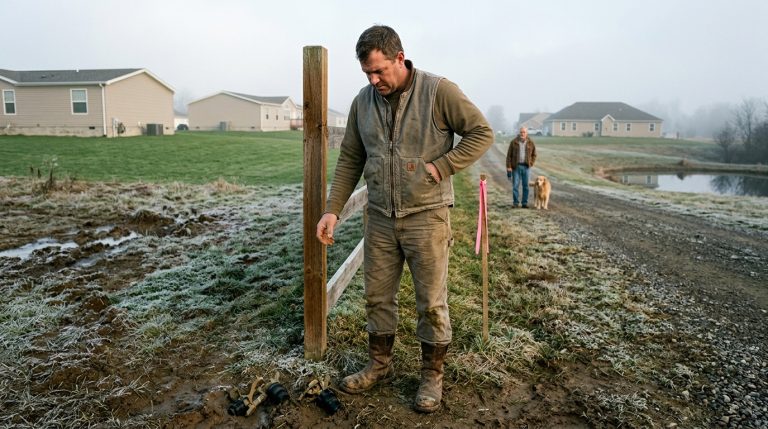
I pulled my heavy canvas jacket over my shoulders, the canvas stiff and smelling faintly of machine oil and dry earth. Stepping out onto the porch, the morning air hit my face with a dry, cold bite that cleared the last of the sleep from my head. The gravel crunched under my boots as I walked toward the detached wellhouse at the edge of the property, my hand sliding automatically into my pocket to grip the cold iron of my pocketknife.
The wellhouse door was bolted tight, the padlock swinging slightly in the morning draft. I unlocked it and swung the heavy wood panel open, leaning in to listen to the low, steady hum of the pressure tank. The rhythm felt off—a fraction too fast, a subtle hesitation in the stroke that only someone who had spent a lifetime listening to municipal water systems would catch.
I closed the wellhouse door and latched it, my gaze drifting down the long stretch of the east fence line where the dusty scrub met the manicured, emerald-green turf of the new golf resort next door. The sprinklers over there were already hissing in the early dawn, throwing wide fans of water across fairways that had no business being that green in an Arizona summer.
CHAPTER 2: THE HIDDEN PIPE
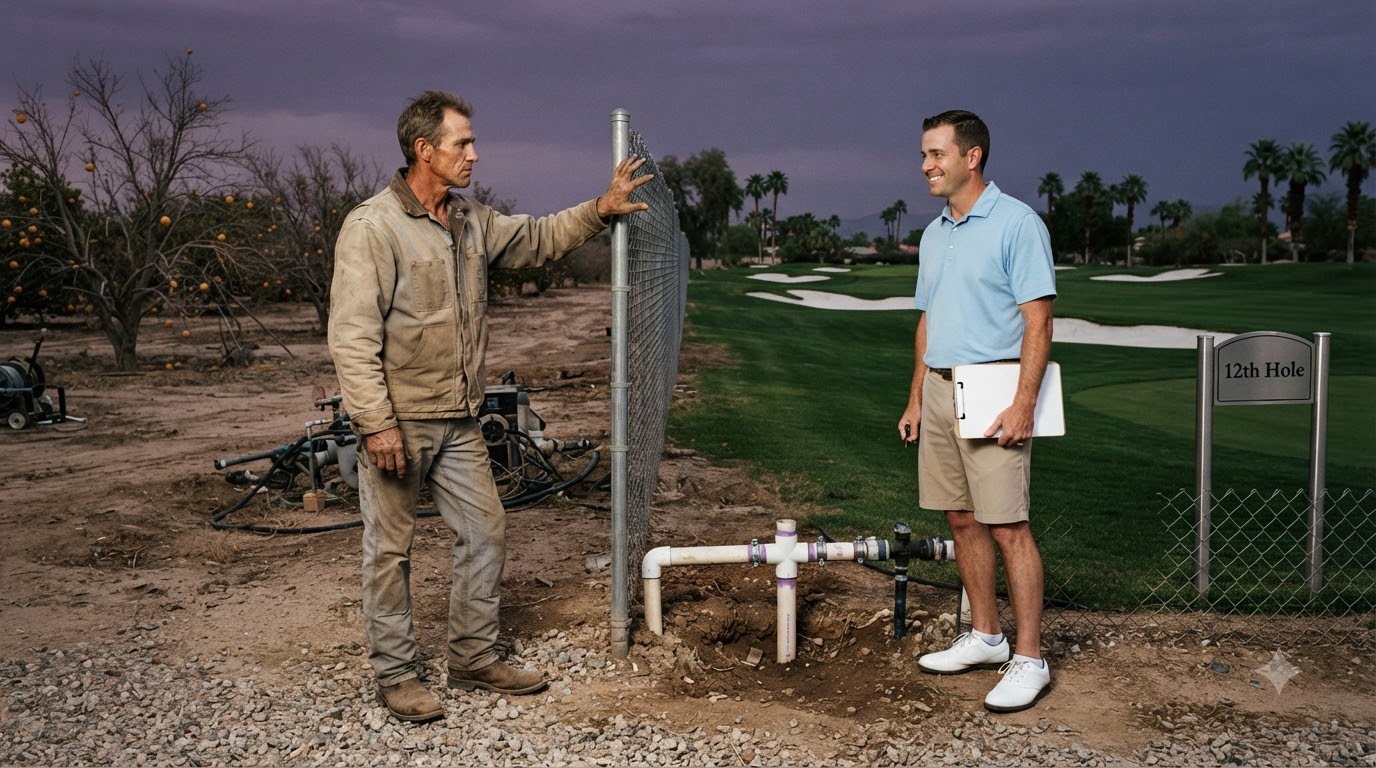
I dropped to one knee, the joint aching with a dull, familiar protest against the morning chill. My bare fingers brushed away the gray topsoil and the loose gravel that had been clumsily kicked back into place. There it was—a clean, professional PVC tee-joint spliced directly into my main 2-inch black polyethylene supply line.
The cut was straight, the primer purple and fresh around the joints, and the pressure clamps gleamed with a brand-new zinc finish. It looked nothing like the weathered, thirty-year-old fittings I had laid down myself back when the century was young. Someone had brought heavy trenching gear across the property line under the cover of night.
“Morning, neighbor,” a voice called out from the other side of the chain-link fence.
I didn’t flinch. I kept my eyes fixed on the clean plastic pipe, my thumb tracing the sharp ridge of the manufactured seal. Bradley stood on the manicured turf of the fairway, wearing a crisp polo shirt and holding a clipboard, his expression a careful mix of corporate charm and mild annoyance.
“You’re up early,” Bradley said, taking a slow step toward the fence line. “We’ve got a crew starting the south bunker overhaul today. Just making sure nobody crosses your boundary.”
My hand stayed on the cold pipe, the gray dust clinging to my knuckles. I stood up slowly, letting my joints crack, and wiped my palm against my canvas jacket.
“They already crossed it, Bradley,” I said, my voice flat and carrying easily across the dew-soaked grass.
Bradley stopped walking, his polished golf shoes halting three feet from the wire. He looked down at the exposed trench, then back up at my face, his smile tightening just a fraction at the corners.
“Not sure I follow you, Mark,” Bradley said, his tone dropping the friendly inflection. “That’s just standard municipal runoff drainage for the perimeter. Nothing to concern yourself with.”
“Municipal runoff doesn’t tie into a private 360-foot well with heavy-duty pressure clamps,” I said, stepping closer to the fence until the galvanized wire was inches from my chest. “You didn’t run drainage. You ran a line straight to your back nine.”
Bradley’s eyes flicked down to the PVC splice and back up, his jaw tightening as the pretense dissolved into cold corporate calculation. He didn’t blink, and he didn’t apologize.
“We have a lot of capital invested in these fairways, Mark, and summer heat doesn’t wait for paperwork to clear,” Bradley said, his voice dropping into a sharp, transactional register. “Let’s be reasonable adults. Name a maintenance fee, and we can draw up an easement by the end of the week.”
I looked past him at the sprawling, artificial green expanse stretching toward the horizon, sucking dry water out of an aquifer I paid to tap. I reached into my pocket, my fingers wrapping around the cold iron handle of my pocketknife, and held his gaze without a word.
CHAPTER 3: THE COLD MATH
I turned my back on the fence without a word, leaving Bradley standing over his manicured turf with his clipboard clutched against his chest. The gravel crunched under my boots as I walked back toward the house, each step heavy with the dry realization that corporate entitlement didn’t care about boundaries.
Inside the kitchen, the air was warm and smelled faintly of stale coffee. I pulled out my old leather-bound pump log from the bottom drawer—handwritten pages stretching back nearly two decades, filled with ink notes on flow rates, seasonal voltage shifts, and maintenance dates.
Without the digital flow meter to instantly graph the data, I had to rely on raw arithmetic and stubborn memory. I uncapped a brass ballpoint pen and set it against the grid paper, matching the electrical spikes from the power bills against the motor’s operating hours.
The totals did not lie. Month after month, the pump had been working overtime to feed invisible lines running deep beneath the property line. Nearly two hundred and eighty-seven thousand gallons vanished into thin air to keep tourist fairways green.
Linda walked into the kitchen from the hallway, her eyes catching the stack of utility statements spread across the table and the heavy lines carved around my mouth. She didn’t ask what was wrong; she already knew the quiet hum of the house meant trouble had arrived.
“They’re not going to fix this with a handshake, are they?” Linda asked, her voice steady as she set a fresh ceramic mug down next to my papers.
“No,” I said, tapping the pen against the total volume calculation. “They think we’re just background scenery they can tap into whenever their plumbing falls short.”
I closed the logbook with a sharp snap that echoed in the quiet room. There would be no friendly compromises or polite neighborhood meetings. If they wanted water, they were going to find out what it actually cost when a common-sense property owner decides to shut the valve.
CHAPTER 4: THE LOCKED GATE
The brass felt cold and heavy against my palm, a solid piece of mechanical insurance that didn’t rely on digital readouts or corporate promises. I carried the heavy hardware across the dusty yard, the sun already beating down hard enough to shimmer off the metal roof of the wellhouse.
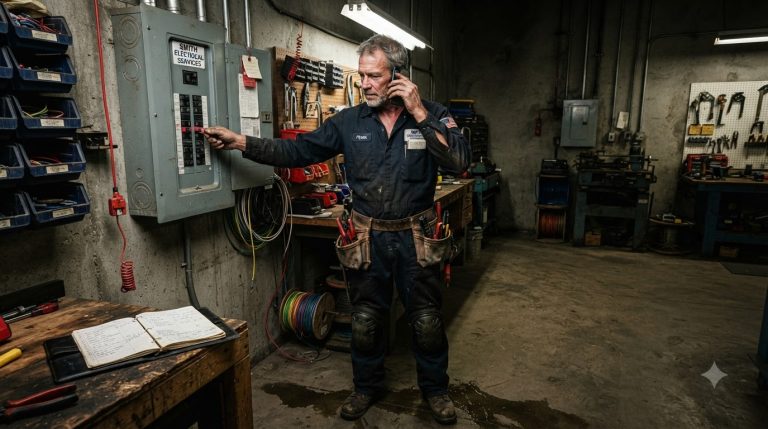
Inside the small structure, the air smelled of ozone and cool damp earth from the pressure tank. I unscrewed the inspection panel on the main feed line just downstream of the hidden property junction, my knuckles scraping against the rough interior wall.
With measured, deliberate turns of the wrench, I fitted the heavy-duty industrial gate valve into place, sealing the junction with fresh pipe dope and tightening the bolts until the metal groaned. No more leaks, no more silent drains.
I swung the heavy padlock through the locking hasp and snapped it shut with a definitive, metallic clack that echoed off the concrete floor. Outside the wellhouse, I mounted two wide-angle security cameras to the wooden eaves, angling the lenses down to cover every inch of the access path and the vulnerable fence line.
A printer hummed quietly on the desk back inside the house as I ran off three laminated notices warning of immediate trespass prosecution. I nailed the signs directly to the wooden posts flanking the east boundary where the resort workers had trampled the brush.
The infrastructure was locked down tight, governed entirely by manual mechanics and common-sense boundaries. I pocketed the heavy brass key, walked back to the porch, and waited for the clock to turn toward the deep hours of the night.
CHAPTER 5: THE ELEVEN MINUTES
The heat was already shimmering off the fairway grass by nine o’clock, baking the dry Arizona soil into a hard crust. I stepped into the wellhouse, the heavy wooden door shutting out the glare, and fitted the iron wrench onto the valve stem.
Outside on the emerald turf, automated sprinklers hissed in rhythmic rows, throwing arcs of stolen water across the tourist greens. My hand tightened around the metal handle, feeling the solid resistance of the pipe feeding a system that didn’t belong to them.
At precisely 9:15 a.m., I pulled the wrench downward with a heavy, deliberate turn. The internal gate slid home with a blunt, mechanical thud, cutting off the flow with absolute finality.
The low hum of the pump dropped an octave, straining against the closed barrier before settling into a steady, unyielding idle. I slipped the padlock back through the bracket, snapped it shut, and pocketed the key.
Nine minutes later, my cell phone buzzed against my thigh with a sharp, insistent vibration. It was Bradley, his voice crackling through the speaker with a frantic edge that completely abandoned corporate polish.
—Did you just shut our water off? One of our primary fairways is losing pressure by the second— Bradley shouted over the line, the sound of distant wind rustling against his phone.
—You mean my water, Bradley— I said, leaning against the wooden frame of the porch door. —Your infrastructure is tapped into a well you don’t own.—
—This is a multi-million-dollar resort, Mark! You can’t just cut the supply without warning— he snarled, his voice cracking with rising panic.
—I didn’t warn you because you didn’t ask— I replied, and hung up the phone before he could find another excuse.
CHAPTER 6: THE IRON CONTRACT
Bradley slammed the folder onto the porch table, his shirt sticking to his shoulders with sweat. He didn’t look like a corporate director anymore; he looked like a man trying to explain to furious investors why half his turf was turning to straw.
—You realize this sets a dangerous precedent for every commercial developer in the county— Bradley rasped, his fingers trembling as he tapped the edge of the printed contract.
—So does theft— I replied, sliding the document across the wood toward him with the tip of my finger.
He stared at the pages for a long moment, his jaw working in silence as he weighed the cost of legal exposure against the dying grass behind him. There were no more polite threats left to make, and no loopholes left to twist.
—Ten years? Quarterly testing on our dime?— Bradley muttered, his voice dropping into a defeated sigh.
—Every single term recorded with the county by noon, or the valve stays locked— I said, leaning back against the wooden support post.
Bradley pulled a heavy pen from his pocket, slammed his signature onto the signature line, and turned on his heel without another word. The first automatic lease payment hit my account on the first of the following month, precise and obedient.
I unlocked the valve, and the water flowed again under clear, rented terms while the crews worked to restore the dead turf. The security cameras still watch the east fence line, and the little wellhouse stands quiet in the morning sun.
There was no victory parade, and the coffee on the porch tasted just the same as it always had. But the boundary was set, and the well stayed ours.