Tracing The Fault Line: How One Electrician And Seventy-Four Neighbors Rewired A Corrupt Neighborhood
CHAPTER 1: THE DIESEL BARRICADE
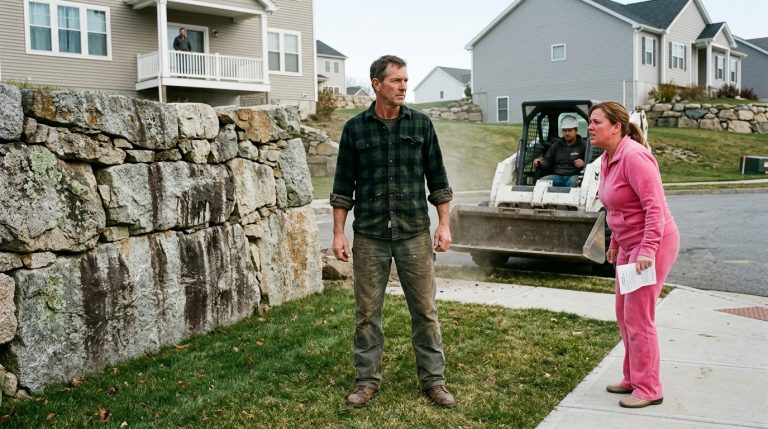
Three diesel trucks sat square across the concrete of my driveway. A heavy dump truck, an idle skid steer, and a flatbed trailer parked bumper-to-bumper.
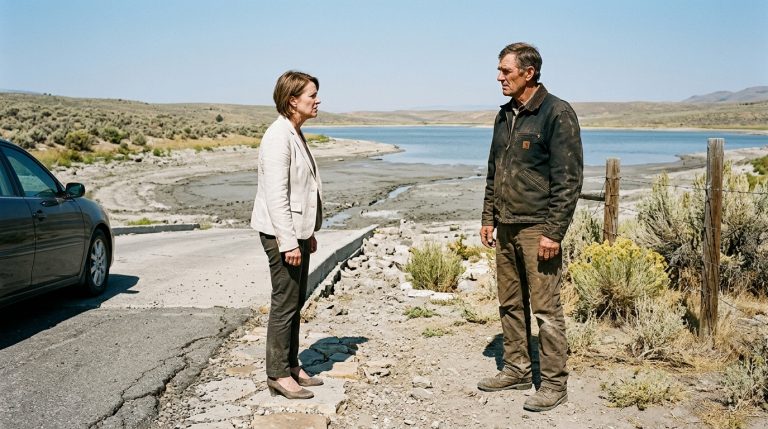
Karen stood near the edge of the lawn holding a clipboard, her blazer unwrinkled and her expression smooth as polished glass. She smiled like someone posing for a photograph she didn’t have to pay for.
I stood on the bottom step of the porch, wiping my hands on a rag that smelled like old solder. My toolbox sat locked inside the garage behind a steel door that wouldn’t clear the bucket of the skid steer.
“Emergency staging,” Karen called out across the pavement, her voice bright and clipped. “Authorized board action, Mr. Smith. Temporary necessity.”
There was no fire, no burst pipe, no exposed service line beneath the asphalt. Just my garage, my livelihood, and her idea of leverage.
I didn’t yell or wave my arms. Twenty years of working around live panels teaches you that shouting at a short circuit doesn’t bring the power back. You find the breaker, you isolate the feed, and you move with cold, deliberate mechanics.
I walked past the side door, slid the key into the deadbolt, and stepped inside the dim quiet of the workshop.
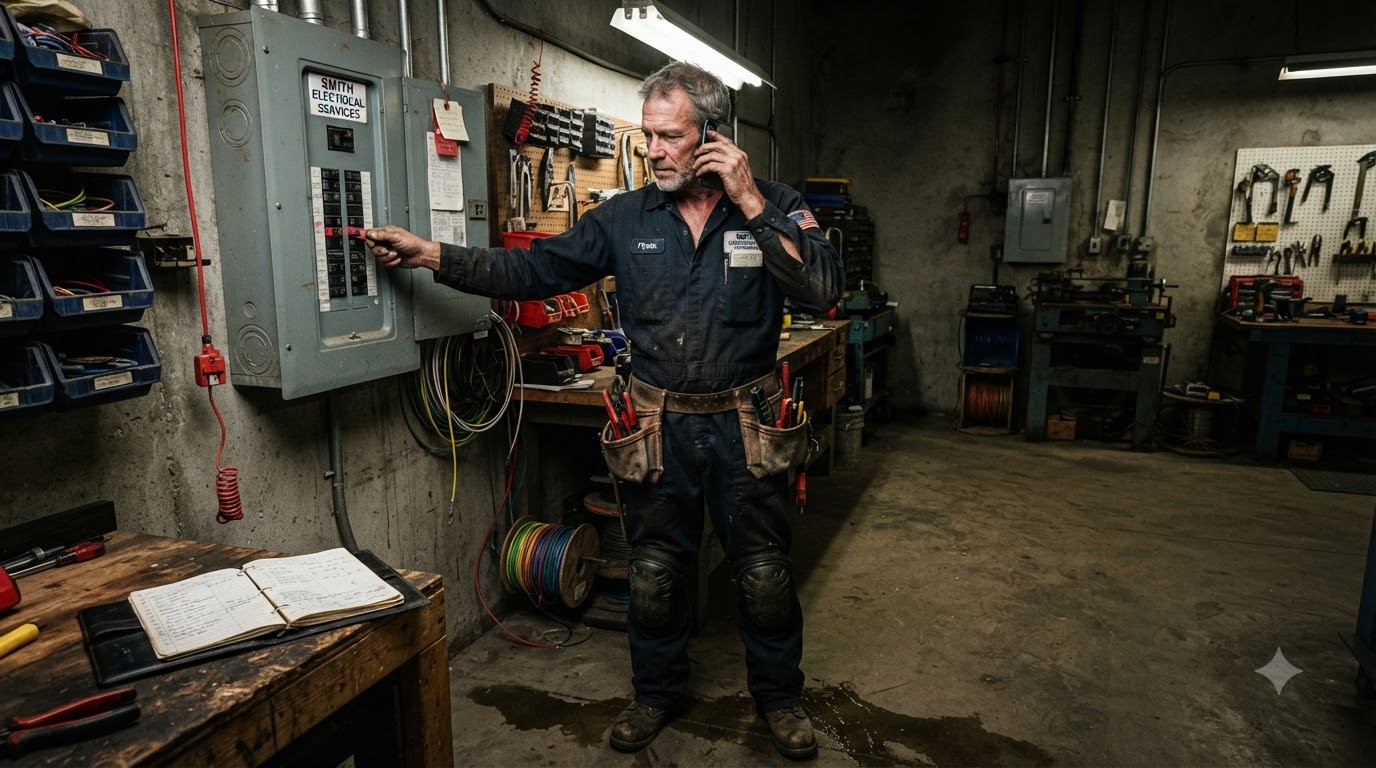
The air smelled of clean metal, machine oil, and cut wire. My benches were lined up tight, bins labeled in black marker, every wrench hung in its precise shadow on the pegboard. It was the only space in my life that didn’t feel like a wreckage after the divorce.
Outside, a diesel engine rattled the window glass, vibrating right through the concrete floor.
I reached up overhead, grabbed the red emergency release cord, and pulled. The trolley mechanism gave a hollow, metallic clunk as the automatic drive disengaged.
I slid the heavy manual deadbolt straight through the steel rail, locking the door tight from the inside.
Reaching over to the breaker box by the workbench, I flipped the main toggle for the opener system downward. The tiny green indicator light clicked off, plunging the motor into silence.
I locked the side service door behind me, pocketed the key, and pulled out my phone to dial the sheriff’s office.
CHAPTER 2: THE SCRATCHED RECORD
The phone in my pocket vibrated against my thigh, a short, stuttering buzz that meant another automated notice or another neighbor checking if the coast was clear.
I didn’t answer it.
Instead, I laid out three manila folders across the workbench right under the amber glow of the task lamp.
The paperwork inside didn’t lie, even if the neighborhood board tried to dress it up in legal jargon and embossed letterhead.
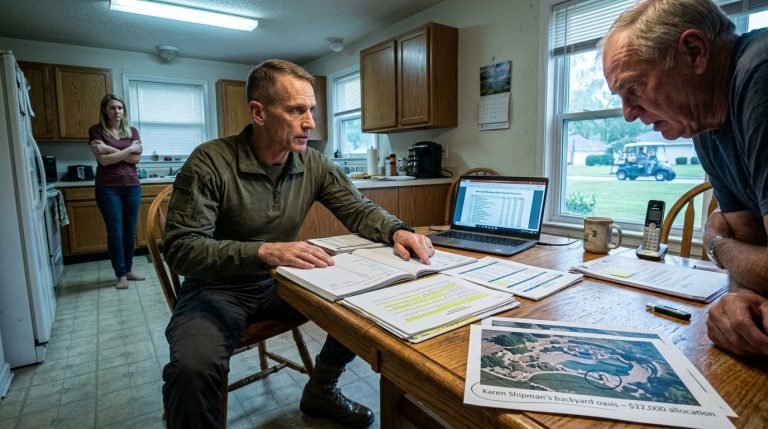
I flipped open a ledger dating back eighteen months, my thumb tracing the column totals where maintenance fees had crept upward by twelve percent across all one hundred and thirty-two households.
Next to it lay a copy of the recent landscaping contract awarded to Danny’s firm—Karen’s nephew—signed off without a single competitive bid or open board vote.
On the margin of page four, a coffee ring stained the paper brown, marking where I had spilled my cup three nights ago during the first round of sorting.
The math was as clean as a properly wired breaker panel: load matched output, and the extra draw was pulling straight from everyone else’s pocket.
Outside, a heavy tire crunched over loose gravel on the street, slowing down before rolling past.
I pulled out a small black ledger, the one with the cracked leather spine, and began updating the dates and times next to the list of selective enforcement notes.
Mrs. Garcia’s landscaping truck parked overnight on Tuesday without a fine; the Patels’ utility trailer left untouched for forty-eight hours; yet my trade van tagged twice in one week for resting in my own driveway.
Pattern recognition is just tracing a fault line until you find where the insulation melted away from the copper.
Karen wasn’t managing a community; she was running a tollbooth disguised as a country club.
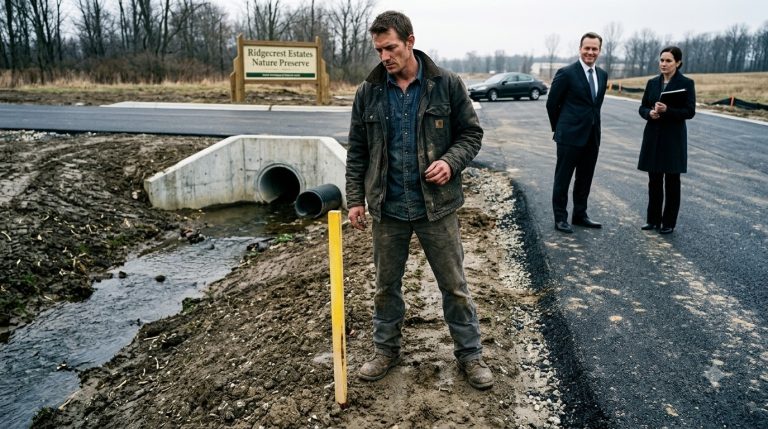
The municipal permit database on my screen showed a glaring hole where the emergency authority filings for the street blockage should have been stamped.
Nothing. Zero record.
Just a phantom emergency conjured up to justify parking three thousand pounds of commercial iron across my property line.
A sharp rap sounded on the side service door, dry and deliberate, breaking the silence of the workshop.
I didn’t move my hand from the ledger.
“Mr. Smith,” a voice filtered through the solid core wood, tight and thin with practiced authority. “We know you’re in there. Refusing to cooperate with board directives only compounds the infraction.”
I picked up the scarred metal tape measure, let the blade draw out an inch, and snapped it back with a hard click.
CHAPTER 3: THE RESTRAINING ORDER
A county deputy stood on the front step when I opened the inner door, holding a thick packet of white paperwork bound with a silver staple.
He didn’t look at my face; his eyes drifted past my shoulder toward the heavy machinery still idling out on the tarmac.
“Service of notice, Mr. Smith,” he said, handing over the papers with the practiced indifference of a man who delivers bad news before breakfast.
The temporary restraining order spanned three typed pages, drafted by a corporate law firm three towns over and signed by a municipal judge who had never set foot in our subdivision.
It barred me from coming within one hundred feet of Karen’s property line, effectively drawing a red perimeter that cut my normal walking route down the street into a dead end.
The geography of the restriction sliced the neighborhood right down the middle, turning the common sidewalk into an imaginary minefield.
“Effective immediately,” the deputy added, turning back toward his cruiser without waiting for a signature.
From three houses down, a white sedan sat parked with mathematical precision, its driver-side window rolled down an inch to catch the morning air.
Karen didn’t wave, but the glint of sunlight off her lapel jewelry was enough to signal she was watching the boundary line take effect.
That was her move: isolate the target, choke off communication, and let the paperwork do the heavy lifting while the trucks kept the driveway sealed.
I walked back inside the workshop and laid the court order flat next to the empty legal pad.
Door-to-door petitioning was out of the question if a single step past the property marker risked a contempt charge and a jail cell.
The rules of the board were designed to keep me cornered, blind, and silent behind my own locked deadbolt.
Except the restriction applied strictly to me, not to the people living twenty feet away who had been quietly watching the same trucks block their street.
A sharp tap echoed on the side service door, lower down this time, rhythmic and familiar.
I turned the deadbolt, pulled the door open six inches, and saw Mrs. Rodriguez standing on the concrete mat holding a heavy brown leather folder.
“You can’t walk down to the cul-de-sac, Frank,” she said, her voice steady and low as she tapped the edge of the folder against the door frame. “But nothing says we can’t walk over here.”
CHAPTER 4: THE WORKBENCH PARLIAMENT
Mrs. Rodriguez laid out several folded sheets of ruled paper across the smooth wooden surface right next to my toolkit.
“The restraining order stops you from walking down their street, Frank,” she said, tapping a pen against the edge of the workbench. “It doesn’t stop people from walking over to yours.”
Jake stepped through the side doorway behind her, ducking his head slightly to clear the low frame and carrying a cardboard box filled with photocopies.
The workshop smelled of cutting oil and coffee grounds, a tight and steady space that felt a world away from the manicured lawns outside.
“We went through seven blocks this afternoon,” Jake said, setting the box down with a dull thud against the concrete floor. “People are tired of getting letters over trash cans and fence heights.”
I reached into the box and pulled out a signature sheet, the ink dark and dense in neat rows of handwriting.
Thirty-two names on the first page, forty-two on the second, totaling seventy-four households across the subdivision.
That surpassed the fifty-one percent threshold required under section twelve of the community charter to call a special vote and remove the board president.
Karen had built her entire system on the assumption that isolated homeowners would grumble, pay their fines, and stay out of her way.
She had never counted on people sitting down at a workbench to do the math together.
“The Petersons dropped their complaint after we showed them the backlog of back-due waivers,” Mrs. Rodriguez added, leaning against the drill press. “They realized the rules only applied when it suited the office.”
I checked the signatures against the parcel numbers in the municipal ledger, confirming every single line item with a stroke of my pencil.
The paper felt heavy in my hand, carrying more weight than any court-ordered injunction or embossed envelope ever could.
“We have the numbers,” I said, looking up from the desk toward the locked garage door. “Now we just wait for the clock to run out.”
CHAPTER 5: THE LEGAL EXPIRATION
The calendar on the workshop wall showed Friday noon, the exact minute the temporary restraining order expired under municipal code.
Outside the window, the three diesel trucks had sat locked in place for fourteen straight days, their tires baking in the midday sun while the exhaust pipes grew cold.
The subdivision bylaws were explicit: unauthorized commercial equipment could occupy a residential lot for no more than four hours without formal written consent.
Fourteen days crossed every boundary of local code, turning a temporary nuisance into an engineered blockade.
A sharp rap sounded on the side door, crisp and nervous.
I turned the deadbolt and pulled it back six inches to find Jake standing there holding a pocket watch with the cover flipped open.
“Time’s up, Frank,” he said, his thumb flicking the metal case shut. “The court restriction lapsed at noon sharp.”
I reached over, lifted the steel wrench off the signed petition papers, and slid the stack into a canvas binder.
Karen was already standing out on the pavement beside her white sedan, her clipboard tucked firmly under her arm as she scanned the driveway like a general inspecting a front line.
She expected me to stay locked inside, trapped behind my own deadbolt while the machinery held the property hostage.
She didn’t know the petition papers were already organized by parcel number and backed by seventy-four verified signatures.
“Let’s go check the circuit,” I said, stepping past the workbench toward the side door.
CHAPTER 6: THE CIRCUIT RESET
The deputy looked past the idle dump truck, his eyes measuring the bumper-to-bumper alignment sealing off the property.
“Did you grant permission for these vehicles to park here, Mr. Smith?” Deputy Martinez asked, resting his hand on his duty belt.
“Not a foot of it,” I said, holding the heavy canvas binder against my chest.
Karen stepped forward onto the apron of the driveway, her clipboard raised like a shield.
“Emergency board authority,” she snapped, her voice pitching up with sudden friction as a bead of sweat tracked through her makeup. “Under section four, the administration maintains full discretion over community access.”
The deputy turned his gaze toward her clip. “Let’s see the municipal permit for that emergency block.”
Karen blinked, her fingers tightening around the plastic clipboard until her knuckles turned chalk-white.
“The board handles internal logistics without municipal filing,” she said, her voice dropping an octave as the lie wore thin.
Mrs. Rodriguez stepped out from the walkway carrying the master roster, holding the papers open to the seventy-four verified signatures.
“Section twelve gives fifty-one percent of homeowners the right to demand immediate removal of the board president,” Mrs. Rodriguez said, handing the pages directly to the deputy.
The color drained from Karen’s face, leaving her skin ashen and tight against her jawline.
She turned sharply toward the white sedan, attempting a final retreat, but the municipal code enforcement vehicle pulled up behind her car, blocking the exit.
“We received an unpermitted commercial storage report for this address,” the inspector announced, stepping out with a violation book already open.
Karen spun back around, her voice cracking with frantic denial. “This is harassment—you can’t do this—I’ve run this subdivision for years!”
“The circuit’s tripped, Karen,” I said quietly, walking past her toward the garage door.
I reached up, pulled the emergency release cord, and lifted the steel door smooth and easy on its tracks.
The heavy machinery was hooked up to flatbeds one by one, the diesel engines roaring into life and rolling away down the street until the pavement was clear.
Karen resigned three days later without a word of explanation, leaving the financial audits to start fresh.
Riley sat on a low stool by the workbench on Saturday morning, sorting wire nuts into a labeled bin while the afternoon sun cut through the open door.
“Did you know it would work out like this?” she asked, holding up a small blue connector.
“No,” I said, wiping a speck of dust off my pliers. “I just knew we had to trace the line.”