A Ghost in the Hindu Kush: The Final Calibration of Captain Ara Blackwood’s Lethal Legacy
CHAPTER 1: THE WEIGHT OF STEEL
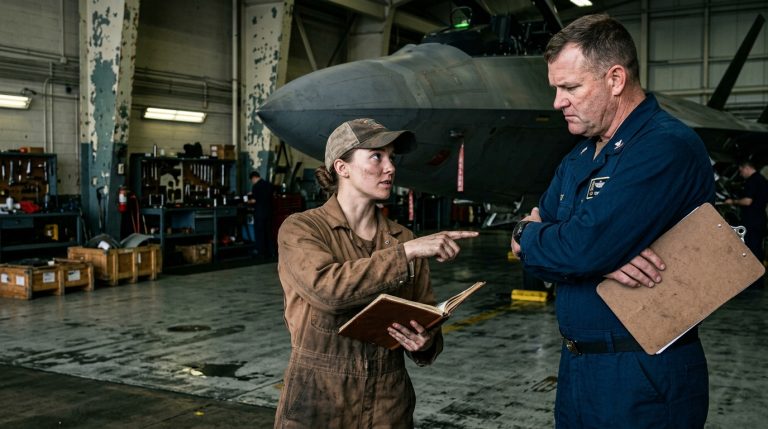
The air inside the Forward Operating Base Atlas maintenance bay was thin, smelling of solvent and ozone. Ara Blackwood sat at the bench, her fingers tracing the serrated edge of a spent casing—the last of her father’s brass.
The silence of the room was heavy, punctured only by the steady, metallic ticking of the cooling rifle barrel. She felt the weight of the last forty-eight hours in the marrow of her bones. The four shots. The impossible math. The sudden, suffocating realization that the war she fought was not merely against enemies on a ridge, but against the fluid, shifting shadows of intelligence politics.
She reached for the terminal near her workspace, intending to wipe her mission logs—standard protocol for a Nightfall-cleared asset. Her login pulse blinked green. Then, the screen flickered. A line of corrupted data scrolled across the monitor, a jagged tear in the clean, clinical interface.
She squinted. It wasn’t standard Afghan chatter. It was a digital signature she recognized from her time in the Task Force: a heartbeat-sync encryption, the kind used by shadow-hunters to track a target’s location by their own electronic footprint.
She leaned in, her breath hitching. Someone had tagged her kit.
“Not just a soldier,” she whispered to the empty room.
She opened the directory. Beneath the encrypted headers was a secondary log, hidden in a partition that shouldn’t have existed. It was a list of names—operatives who had been retired, reassigned, or “neutralized” in the field. Her father’s name was third from the top. Hers was at the bottom, marked with a red, pulsating asterisk.
The maintenance bay door groaned. A shadow detached itself from the frame. It was Corporal Ashford, but his posture was wrong. The fresh-faced swagger he had recently traded for professional focus had evaporated. He stood with the unnatural, rigid stillness of a man holding a concealed weapon.
“You weren’t supposed to see that, Captain,” he said. His voice was devoid of the Tulsa cadence she had grown accustomed to. It was flat, synthetic, and lethal.
Ara didn’t reach for her sidearm. She reached for the Barrett, the massive frame of the rifle currently field-stripped on the table. In a movement too fast to track, she snapped the bolt carrier group into the receiver. The click of the metal meeting metal echoed like a gunshot in the confined space.
“You’re a long way from home, Corporal,” she said, her voice dropping into a register that made the temperature in the room feel as though it had plummeted ten degrees.
Ashford’s hand hovered near his holster, but he froze. He knew the math. At this range, he was already a corpse, and she was the one holding the geometry of his end.
“The agency wants the asset,” he muttered, his eyes darting to the terminal. “They don’t like it when their tools start thinking they’re the ones holding the scope.”
Ara stared at him, the cold steel of the rifle’s grip pressing into her palm. She didn’t feel rage. She felt only the clinical, jagged truth of the double-bottomed secret. She wasn’t just a sniper; she was a variable that needed to be balanced.
“Then tell them,” she said, resting her finger against the trigger guard, “that the variable is currently choosing to survive.”
Ashford’s face tightened. He stepped back, the metal of the bay door clicking as his hand touched the release. Before she could move, he was gone, leaving only the smell of ozone and a single, encrypted drive dropped on the concrete floor—a drive that contained the names of everyone who had signed off on the day her father died.
The Zeigarnik effect took hold. She looked at the drive, then at the rifle, then at the dark, empty doorway. She had just finished the mission, but the real war had just begun.
CHAPTER 2: SHADOW PROTOCOL
The heavy steel of the maintenance bay door settled into its frame with a dull, final thud. Ashford was gone, but the ghost of his presence lingered, a sour tang of adrenaline and unspent violence. Ara didn’t move. She couldn’t. The Barrett was still heavy in her hands, its weight a grounding anchor in a world that had suddenly tilted on its axis.
She looked down at the encrypted drive. It lay on the gray, oil-stained concrete like an obsidian splinter. She reached out, her fingers hovering, and hesitated. In her mind, she heard the rhythm of her father’s voice—not a lecture, but a cadence. The first thing you do when you find a trap, Ara, is look for the tripwire.
She set the rifle back onto the bench with methodical, surgical precision. Her hands were perfectly steady, a stark contrast to the thrumming in her temples. She knelt, retrieved the drive, and felt the unnatural heat radiating from its casing. It wasn’t just data; it was a beacon. She didn’t plug it into the base network. That would be suicide. Instead, she reached into her tactical vest and pulled out a personal, off-grid tablet—a relic from her Nightfall days, scrubbed of all identifying markers and shielded against even the most sophisticated electronic interception.
She slid the drive into the port. A cascade of green text began to spill across the screen, moving faster than the eye could follow. It wasn’t just a list of names. It was a ledger of lives.
As she scrolled, the names of operators she had served with—men and women who had vanished from the record, their families told they had died in training accidents or routine maneuvers—flashed by. The psychological phantom was immediate. She wasn’t standing in a base in Helman anymore; she was back in the wood-paneled study of her childhood home, watching her father clean his service weapon, his eyes distant as he spoke of “the shadow-hunters.” He had known. He had been one of them, and he had known that the ledger existed.
Don’t look at the result, Ara, he had told her once, his hands moving over the rifle’s trigger assembly. Look at the system that demanded the result.
She tapped the screen, drilling down into the file associated with her own designation: Ghost-Blackwood-47. The data was staggering. It wasn’t just a mission log. It was a predictive model—a simulation of her own decision-making processes based on the kills she had registered during her tenure with the unit. They weren’t just watching her; they were cultivating her, treating her like a precision instrument in a machine whose function she hadn’t yet grasped.
The encryption shifted, demanding a deeper level of authorization. Ara felt a cold sweat break out across her neck. To go deeper was to announce her presence to whoever held the master key. She could pull the drive now, walk away, and pretend the world was as simple as a target at a thousand meters. But the thought of her father’s name on that list, of the hundreds of names before it, made the choice academic.
She began the decryption process, watching the bar crawl forward with agonizing slowness. Every pulse of the tablet’s screen felt like a heartbeat in the dark. She needed to know who had signed the orders. She needed to know if Volkov was an enemy or a puppet.
A sound at the far end of the bay—the hiss of a pneumatic door opening—forced her into action. She swiped the tablet to hide the data, shoving the device into the hidden pouch of her vest. She gripped the Barrett just as a technician, a young man with a grease-smudged face and distracted eyes, stepped into the bay carrying a crate of replacement parts.
“Sorry, Captain,” he mumbled, not looking at her. “Just bringing in the optics from the TOC.”
Ara didn’t speak. She didn’t let her eyes track him, didn’t show the slightest flicker of suspicion. She merely picked up a cloth and began wiping down the barrel of the Barrett, her movements languid, professional, and utterly unconcerned.
Hide in plain sight, she thought. Be the weapon, not the operator.
The technician finished his task, his movements efficient, too efficient. He didn’t linger. He didn’t chat. He left the room, the door cycling shut again. Ara waited ten seconds, then twenty, then a full minute. She knew he wasn’t just a technician; the way he had placed the crate was too precise, the angle too calculated to give him a line of sight to her terminal.
The “mole” wasn’t just Ashford. It was the system itself.
She turned back to the terminal, her mind a fortress of cold, tactical resolve. She was no longer just hunting a target; she was hunting the hand that held the leash. The encrypted drive was still in the tablet. The decryption bar had reached ninety percent.
She had to make a choice. If she cracked the code, she would know the truth, but she would trigger the very security measures she had spent her career training to avoid. She took a breath, the rhythm of her father’s ghost guiding her pulse down, and pushed the final key.
The screen bloomed with a series of coordinates. They weren’t in Afghanistan. They were in the heart of the Pentagon—a specific server room that shouldn’t have been connected to an active intelligence grid. A name appeared on the screen, a name she had seen on her father’s retirement paperwork.
The reality was no longer a shadow. It was a name, and it was a target.
CHAPTER 3: THE COLD EQUATION
Ara did not freeze. She did not scream. She stood in the center of the maintenance bay, the tablet’s screen glowing with the damning coordinates of the Pentagon server room, and she felt her heartbeat slow to a rhythmic, controlled thump. The name on the screen—General Marcus Halloway—was a name that had been spoken in reverent whispers at every briefing she had ever attended. He was the architect of the very program that had trained her, the man who had personally signed her father’s deployment orders twenty years ago.
The cold equation was simple: if the architect was the saboteur, then the entire structure of the war in Helman was not a failure of strategy, but a feature of it.
She swiped the tablet dark. The room plunged back into the sterile, buzzing gloom of the bay. She had to move. The connection to the Pentagon server was a breadcrumb trail that Halloway’s security team would be following the moment the handshake protocol terminated. She had, at most, ninety seconds before the base’s internal security network recognized an unauthorized query.
She slid the encrypted drive out of the port and tucked it into the lining of her tactical vest. She grabbed the Barrett, her hands moving with an efficient, brutal grace. She didn’t field-strip it this time. She collapsed the stock, locked the bolt, and slung it across her back. She didn’t head for the door; she headed for the vents.
The maintenance bay’s air circulation system was an old, rusted web of ductwork that stretched beneath the entire infrastructure of Base Atlas. It was claustrophobic, sharp with the scent of stagnant dust and metal, but it was the only place the sensors couldn’t touch.
She hauled herself up, the metal grate groaning as she secured it back into place. Below her, the bay door hissed open. She froze, peering through the slats of the ventilation grid. Two figures in tactical black, bearing no unit insignias, walked into the bay. They weren’t Marines. They moved with the silent, predatory efficiency of Tier 1 contractors.
“The signature was here,” one of them said, his voice clipped and cold. He was holding a handheld scanner that emitted a rhythmic, high-pitched chirp. “The target accessed the encrypted partition three minutes ago.”
Ara watched them move. They weren’t looking for a soldier; they were looking for a ghost. She gripped the edge of the duct, her muscles screaming with the effort of holding her weight, and began to crawl. Every movement was a test of friction and silence. She had to navigate the junction of the TOC and the administrative block—the nerve center of the base. If she could get to the radio room, she could broadcast the data packet onto the general military frequency. It wouldn’t reach the public, but it would reach every independent intelligence relay in theater. It would force the truth into the light, where even Halloway couldn’t bury it.
As she crawled, the sharp metal edges of the duct sliced through the fabric of her uniform, scratching her skin. She didn’t feel the pain. Her focus was absolute. She was calculating the distance, the time, and the inevitable cost.
She reached the junction above the TOC. Below her, the base watch officer was shouting orders, the radio traffic thick with the chaos of an ongoing operation.
“We need eyes on the perimeter!” a voice boomed. “And someone check the maintenance bay logs again. Someone triggered a breach.”
Ara hovered over the grate, looking down at the screen of the watch officer’s console. The very data she had stolen was beginning to propagate through the system—not because she had sent it, but because the system was deleting it, purging the logs of her existence.
She realized with a jolt of ice in her veins that she wasn’t just being hunted; she was being erased. Halloway hadn’t just sabotaged her; he was rewriting the history of her entire service. To the system, Captain Ara Blackwood was about to become a missing person, a soldier who never existed, a sniper who had never pulled a trigger in Helman.
She had to act, but if she broke cover now, she was just a target. She needed leverage.
She crawled further, reaching the junction for the communication suite. She looked at her hands—tanned, calloused, the same hands that had severed the chain at four thousand meters. She had the skill to kill, to destroy, to end. But did she have the skill to survive a war where the enemy was the map itself?
She saw a flash of light through the vent—a security patrol sweeping the hallway below. She held her breath, watching as they passed. She was, quite literally, invisible. A ghost in the machinery.
She reached into her vest, her fingers brushing the cold, metallic weight of the encrypted drive. She would not let them erase her. She would not let them turn her father’s legacy into a footnote in a traitor’s diary. She pulled the drive out, held it to her lips for a heartbeat—a silent promise to the man she had buried in Arlington—and then began to unscrew the junction bolt.
She was going to drop into the heart of the enemy’s sanctuary, and she was going to burn it all down.
CHAPTER 4: HORIZON ZERO
The drop was six feet, a jarring impact that vibrated through the steel plates of her boots. Ara rolled, coming up in a crouch, the Barrett already off her back and held at the low ready. The corridor was bathed in the harsh, rhythmic pulse of emergency crimson lights. The lockdown was total. Every blast door in the administrative block had hissed shut, sealing the hallway like a bulkhead on a sinking ship.
She wasn’t in the communication suite. The ventilation duct had deposited her in the secondary archive—a restricted zone that, according to the maps she had memorized, shouldn’t have even been connected to the main grid. But the walls here weren’t standard concrete. They were reinforced, lined with acoustic dampening panels, and the air smelled of ozone and ancient paper.
She stood, her heartrate spiking. She was trapped. If the system had sensed her presence, the automated turrets or the door-locking protocols would be closing in. She glanced at the wall-mounted terminal. It was dead, the power routed elsewhere to satisfy the lockdown. She was in a blind spot.
Focus, she commanded herself, the voice of her father grounding her. A blind spot is just a place where the hunter isn’t looking.
She moved down the corridor, her steps silent on the industrial carpet. She reached the first door—an unmarked steel slab with no handle. She traced the frame, finding the telltale thin, almost invisible seam of a biometric scanner. She didn’t have the clearance, but she had the override. She reached into her vest, pulled out the decrypted drive, and jammed it into the emergency maintenance port beneath the scanner.
The drive was warm, vibrating with the data it contained. She wasn’t just using it to bypass the lock; she was using it as a surgical instrument to carve a path through the base’s logic.
The door yielded with a soft, pneumatic hiss. The room beyond was a vault—not of files, but of history. Rows of metal cabinets stood in neat, military order, each labeled with a year and a mission code. She saw the folder marked 2009: NIGHTFALL.
She moved to the cabinet, her fingers trembling slightly as she pulled the drawer. Inside lay the truth. Personnel files, mission debriefs, and, most damningly, the private correspondence between General Halloway and the field handlers during the months leading up to her father’s death.
She flipped through the pages, the text blurring in the harsh crimson light. They hadn’t just sacrificed her father; they had orchestrated the entire engagement to test a specific type of psychological trauma response in secondary assets—specifically, her. They had turned her grief into a controlled experiment.
A heavy, measured thud sounded at the end of the corridor. Boots.
Ara shoved the files into her bag, the weight of the paper feeling heavier than the rifle on her back. She didn’t look back. She sprinted toward the secondary exit, a service ladder that led to the motor pool.
She hit the door just as the hall behind her was flooded with a blinding, white-hot spotlight.
“Target sighted!” a voice roared, the tone jagged with synthesized authority.
Ara didn’t return fire. She lunged for the ladder, her gloved hands grasping the cold, rungs. A bullet hissed past her ear, sparking against the doorframe, the sound a sharp, stinging reminder of how close the system was to erasing her. She scrambled up, her movements fluid and desperate.
She burst onto the motor pool roof just as the night air hit her. It was cold, clean, and biting. Below her, the base was a labyrinth of shadows and motion, but she knew where she was going. The secondary target zone wasn’t the Pentagon; it was the regional command relay in the next province. If she could reach the high-gain antenna, she could broadcast the data before the base’s internal security could cut the feed.
But the roof was exposed. She had ten seconds of cover before the spotlights caught her. She looked across the expanse of the base, the landscape of her life, and realized that to win, she had to stop being a ghost and become the storm.
She reached her hand into her vest, her fingers brushing the cold, smooth metal of the drive. The final, damning piece of the puzzle. She felt the wind shift—a subtle, familiar current that carried the scent of rain from the mountains. She had been trained for this. She had been built for this.
She turned, not to run, but to fight. She dropped to one knee, the Barrett’s bipod snapping into position on the gravel roof. She didn’t have a target, but she had a goal. She aimed not at the men chasing her, but at the main power coupling that fed the base’s security array.
One shot. Not to kill, but to cripple.
She breathed in, out, her body going still, the world narrowing to the crosshairs. The distance was only four hundred meters, a chip shot compared to what she had done before. But the weight of the moment was infinite.
Aim higher, she whispered to herself.
She pulled the trigger.
The rifle roared, a primal, defiant sound that tore through the lockdown’s silence. The power coupling disintegrated in a shower of sparks and blue flame. The base lights died instantly, the base plunged into total, absolute darkness.
She didn’t wait to see the effect. She vaulted off the roof, catching the side of a parked Humvee, and disappeared into the night. The mole, the system, the architecture of her own oppression—it was all blind now. And in the dark, she was the only one who knew the way.
CHAPTER 5: THE GLASS CEILING
The darkness of the motor pool was a physical weight, thick with the scent of unrefined diesel and dry, ancient dust. Ara moved not as a soldier, but as a shadow. Every instinct she possessed—the decades of muscle memory honed in the cold, thin air of the Hindu Kush—screamed that she was being watched. The base was dark, the power coupling she had destroyed still smoldering in the distance, but the relay was live.
She reached the perimeter fence, the metal links biting into her palms, and vaulted over with the practiced, effortless grace of a gymnast. She hit the ground in a roll, coming up with the Barrett’s barrel oriented toward the high-gain antenna.
It stood against the starlit sky like a skeletal hand reaching for the void. The signal was unmistakable. It wasn’t just data; it was a rhythmic pulse, a low-frequency hum that vibrated in her teeth. It was a Nightfall burst. Her father’s unit.
Impossible.
He was dead. They were all dead, wiped from the logs, their stories scrubbed by Halloway’s architects. Yet, here was the heartbeat of their communication protocol, pulsing from a base that was supposed to be a hollow shell.
She approached the antenna base, her eyes tracking the movement of every shadow. The relay station was surrounded by a phalanx of silent, armored transport trucks, their engines cold. No guards. No patrols. Just the hum of the antenna and the oppressive weight of the desert night. She crept toward the control hut, the door hanging open on a broken hinge.
Inside, the consoles were bathed in the soft, sickly blue glow of active monitors. She didn’t check the consoles. She checked the floor. Scuff marks in the dust. Fresh. Heavy boots, moving with the gait of men who didn’t care about stealth because they owned the territory.
She heard the movement before she saw the figure. A soft click of a safety being disengaged.
“I was wondering when you’d find your way here, Captain,” a voice drawled from the corner of the hut.
Ara spun, the Barrett swinging into position, but the figure stepped into the light before she could drop him. It was a man, his face a roadmap of scars, older than her father but wearing the same patch—the Nightfall sigil, faded and torn. He wasn’t a mercenary. He was a memory.
“Colonel Vance,” Ara whispered, the name hitting her with the force of a physical blow. He had been her father’s commanding officer. He had been the one to sign the casualty notification at the door of their home.
“Your father was a good man,” Vance said, his voice flat, devoid of the emotion she had seen twenty years ago. “He was a better teacher. But he was naive, Ara. He thought the mission was about service. He never understood that it was about survival.”
He gestured to the monitors. The screens weren’t displaying tactical maps or troop movements. They were displaying her—every shot she had fired in Helman, every heartbeat recorded by the internal sensors of her tactical vest, every decision she had made while being tracked by the very system she thought she was beating.
“You aren’t a soldier,” Vance said, stepping closer, the barrel of his own rifle resting casually on his hip. “You’re the algorithm. We’ve been training you to be the most efficient predator in our arsenal, and you’ve exceeded every projection. The ‘mole’ wasn’t Ashford. It was a stress test. A series of variables meant to see how you’d react when the ground was pulled out from under you.”
The room went cold. The “mole” was a test. The encrypted drive, the coordinates, the lockdown—they were all layers of a simulation designed to harden her into the perfect asset. She wasn’t fighting for justice. She was fighting for the satisfaction of her handlers.
“Why?” she asked, her voice a razor.
“Because we needed to know if you were truly your father’s daughter,” Vance replied. “He refused to pull the final trigger. He walked away from the target to save his own conscience. You? You took the shot. You took the impossible shot. You’re the weapon he refused to be.”
Ara looked at the Barrett, then at Vance. She saw the truth now, the glass ceiling of her own existence. She had been born into a cage, and she had spent her life honing the skills to lock it from the inside.
“And now?” she asked.
“Now,” Vance said, gesturing to the antenna, “you make the choice. You broadcast that data, you expose us, and you force us to shut you down. Or, you step into the role you were born for. You become the command element. You manage the assets, you train the next generation, and you ensure that the system survives.”
He was offering her the world, or at least, the world as they wanted it to be.
Ara shifted her grip on the Barrett. She thought of her father. She thought of the EB brass casing she had left on his grave. She thought of the mother in Arlington, and the lives she had saved at Kandahar.
She didn’t need to choose. She had already chosen.
“You’re right, Colonel,” she said, her voice dropping to a whisper. “I am my father’s daughter. And he taught me something about weapons.”
She didn’t aim at Vance. She aimed at the high-gain antenna’s mounting bolts.
“He taught me that they’re only useful if you’re the one holding the handle.”
She fired.
The shot didn’t hit the man; it hit the infrastructure of his control. The mounting bolts sheared, the massive antenna groaning as it began to collapse, the sound of tearing metal and shattering glass drowning out Vance’s shout of alarm. The antenna swung down, smashing through the roof of the hut, a chaotic, twisting mass of steel and cable that pinned the consoles—and Vance—to the floor.
Ara moved through the debris, her boots crunching on broken monitors. She didn’t kill him. She didn’t have to. The system he had relied on was physically dismantled, the data link severed, the illusion of his power shattered.
She stood over him, the Barrett leveled, and for the first time, she felt the silence. Not the silence of a cage, but the silence of the horizon.
“The test is over, Colonel,” she said, her voice steady. “And you failed.”
CHAPTER 6: THE UNFINISHED ECHO
The air in the relay hut tasted of pulverized concrete and charred circuitry. Colonel Vance shifted beneath the twisted steel of the antenna, his breathing labored, the arrogance that had defined him leaking away with his warmth. Ara watched him, the Barrett steady in her grip, but she wasn’t looking at a target anymore. She was looking at the wreckage of a lie.
“You think you’ve won?” Vance rasped, a thin line of blood tracing his jaw. “You’ve only cut a single thread. The Pentagon, the server, the orders—they aren’t just lines in a ledger. They’re the foundation of the modern field. If you bring this down, you don’t just destroy Halloway. You destroy the very concept of operational stability in the province.”
Ara crouched, her gaze sharp, cutting through his theatrics. “Operational stability? You mean the stability of a machine that feeds on its own parts? My father didn’t die for a concept, Vance. He died because he was a variable you couldn’t control. And neither can you.”
She moved to the terminal that still flickered with the ghost of the encrypted link. It wasn’t Halloway’s server anymore; she had rerouted the connection to the public-facing satellite relay. The data packet—the ledger of Nightfall, the correspondence, the truth of the Kandahar experiment—was already queuing to upload.
“The truth isn’t a weapon,” Ara said, her voice quiet but resonant. “It’s a mirror. And you’re terrified of what it’s going to show the world.”
She hit the final key. The upload progress bar surged to a hundred percent. A signal pulse, strong and undeniable, rippled out across the valley, a digital ghost that would never be scrubbed again.
Vance’s face went slack. The fight left him, the realization settling in that the echo of his corruption would now outlive him.
The Payoff was not a triumph of violence, but of exposure. The sound of distant engines—not the stealthy, blacked-out transport of Nightfall, but the rhythmic, thunderous thrum of local command—began to shake the floorboards. The QRF had arrived, summoned by the very signal she had broadcasted. She saw the searchlights sweeping the ridge, the familiar markings of standard infantry. They were coming for the truth, and for the man who had tried to bury it.
Poetic Justice arrived in the form of a young Captain, a woman Ara recognized from the base command, who burst into the hut with her team. She took one look at the antenna, the broken monitors, and the downed Colonel, and she didn’t ask questions. She saw the data streaming on the console, the raw, unvarnished history of the Nightfall operation, and she knew. She gestured for her men to secure Vance.
Ara stood, the Barrett feeling suddenly light in her hands. She walked out of the hut, into the cold, clean air of the mountain night. The denouement began with the slow, rhythmic settling of the world. The chaos of the lockdown faded, replaced by the mundane, necessary work of recovery.
She walked back toward the motor pool, the silence of the desert welcoming her. She reached the Humvee where she had left her gear, but stopped. She pulled the EB brass casing from her pocket—the one she had saved for the most important moment.
She walked to the edge of the ridge, overlooking the valley where her father had been lost. She didn’t bury the casing. She knelt, found a small, sheltered crevice in the rock face, and placed it there, a quiet, permanent monument to a legacy that was no longer haunted by vengeance. She reached into her vest and pulled out a small, portable tool kit—the one her father had given her, the metal worn smooth by years of use. She took the damaged handguard of her rifle, the one that had been cracked during the ricochet shot, and carefully tightened the locking nut, the steady turn of the wrench a symbolic repair of her own broken history.
The cool down was a slow, deliberate shedding of the predator’s skin. As the sun began to bleed orange over the horizon, Ara felt the sharp, jagged edges of her life softening. The rage that had been her compass for two years had evaporated, replaced by a quiet, steady resolve.
She turned and saw Bryce Ashford walking up the slope. He stopped a few feet away, his expression solemn, his gaze shifting from the horizon to the calm, steady figure of the woman who had saved his brother. He didn’t offer a salute. He simply stood with her, watching the dawn.
“It’s quiet,” he said, his voice stripped of its old swagger.
“It’s finished,” Ara replied.
She looked at her hands. They weren’t the hands of a ghost anymore. They were the hands of a teacher, a warrior, a daughter. The arc was complete. She had started this journey as a weapon forged in the fires of another man’s war, and she had ended it by forging her own path in the dust.
She stood, the mountain air filling her lungs, and for the first time in years, she didn’t look for a target. She looked at the road ahead, a path of infinite possibility, where the lessons of the past were the foundation, not the limit. She wasn’t just a sniper; she was the architect of her own quiet, hard-earned peace.