The Iron Warthog’s Last Descent: A Legacy of Rust, Protocol, and the Silence of the Skies
CHAPTER 1: THE WEIGHT OF THE HOG
The hangar air at Ashland Joint Support Base tasted of iron and hot hydraulic fluid. It was the smell of something old refusing to die.
Major Elias Thorne pulled the canvas cover off the A-10 with a harsh tug, the rough fabric catching on the rivets of a wing that had seen more combat than the entire junior staff combined. Beneath the grime and the sun-bleached green paint, the aircraft looked like a beast of burden—heavy, wide, and brutally honest. It was a relic, as the suits in command liked to say, but relics didn’t falter when the engines screamed.
He climbed the ladder, the metal groaning under his weight. He didn’t think about the politics of the base or the frantic red markers on Barrett’s maps. He thought about the pressure in the fuel lines. He thought about the way the gun barrel had been hand-torqued three hours ago, not by a machine, but by his own grease-stained fingers.
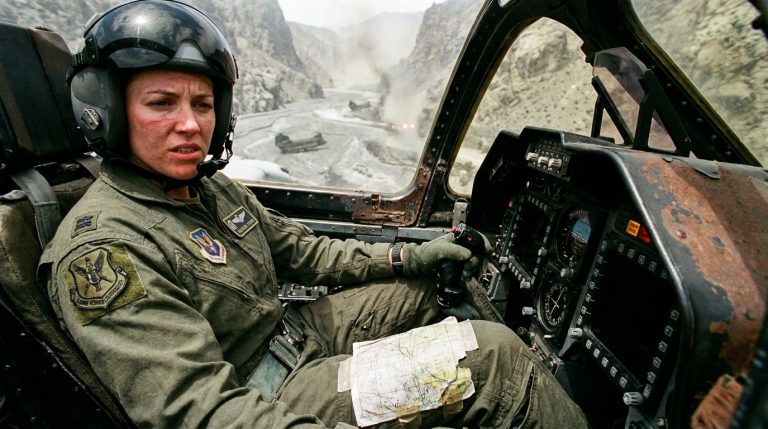
He slid into the cockpit and felt the immediate, suffocating intimacy of the space. Everything here was tactile. He touched the master arm switch, the familiar friction of the guard resisting him just enough to be comforting. He didn’t see a plane; he saw a machine that required a soul to animate it.
The radio crackled to life, a sharp, jagged burst of static that cut through the hangar’s silence. “Thorne, are you in that hunk of junk yet?”
Thorne didn’t reach for the mic immediately. He checked the oil pressure gauge one last time. The needle was steady, leaning into the red, right where he liked it. He watched a drop of dark, iridescent fluid drip from a cooling pipe onto the concrete floor—a tiny, rhythmic heartbeat of a leak. [V-1]
He finally keyed the mic. “I’m in.”
“Alpha 3 is down,” the voice said, stripped of the usual professional courtesy. “They have ten minutes before they’re overrun. You’re the only one within range.”
Thorne gripped the stick. “I’m not a rescue bird.”
“You are today.”
Thorne didn’t respond. He flipped the ignition. The engine didn’t start with a whine like the sleek, computerized fighters that lined the rest of the tarmac; it roared into existence, a deep, earth-shaking rumble that seemed to pull the very air out of the hangar. It was a sound that didn’t ask for permission.
As the craft began to roll, the ground crew scattered, their faces obscured by the shadows of the high, metal-ribbed roof. Thorne felt the familiar vibration transfer from the chassis to his teeth. He felt the weight of the loadout—the munitions meant for suppression, not for games.
He didn’t look back at the tower. He focused on the runway’s cracked asphalt, the surface worn smooth by decades of tires. But as he taxied, his eyes caught something near the hangar’s exit—a series of white markings on the ground, freshly spray-painted in a pattern that looked suspiciously like a flight path, one that led directly into a restricted zone the base hadn’t cleared for flight in years.
He slowed, his heart hammering against his ribs. The path wasn’t for him. It was a funnel. And he was already locked into the center of it.
CHAPTER 2: THE HANGAR FLOOR
The A-10 grumbled as it transitioned from the hangar’s concrete apron onto the cracked, sun-baked asphalt of the auxiliary taxiway. Thorne’s grip on the control stick was white-knuckled, not from fear, but from a persistent, crawling instinct that he was being funneled. The white paint markers he had spotted near the hangar exit remained fixed in his peripheral vision, even as the nose of the Warthog tracked forward. They weren’t standard ground-crew markings; they were precise, neon-bright, and entirely out of place for a base that prided itself on gray-scale efficiency.
He didn’t accelerate. He let the plane crawl, the heavy turbine whine echoing off the corrugated metal walls of the surrounding hangars. Every foot forward felt like an intrusion into a space he wasn’t meant to occupy.
The cockpit’s air conditioning was a polite suggestion rather than a working system, and the scent of sweat mixed with the heavy, chemical tang of hydraulic fluid. Then, the silence inside his own head shattered. A piercing, high-frequency alarm—the ghost of a stall warning from a flight years ago—screeched through his memory, sharp enough to make him flinch. [V-2] He blinked, the phantom sound fading, replaced by the low-frequency thrum of the current engines. He checked his instruments. Everything was in the green, yet the psychological dissonance remained, a cold needle of doubt pricking the back of his neck.
He brought the aircraft to a deliberate, grinding halt just before the intersection where the path diverged.
“Tower, this is Warthog 0-1,” he said, his voice flat, stripped of the urgency the staffer in the command center had tried to impose. “I’m seeing non-standard ground markings at the perimeter. Advise.”
The radio delay was unnervingly long. Static hissed, a sound like dry desert sand skittering across glass. When the reply finally came, it wasn’t the controller he had spoken to minutes ago. It was a sterile, digitized voice that sounded almost automated. “Warthog 0-1, proceed with current vector. Those markings are part of the new logistics flow for the base expansion. Ignore them and maintain current heading.”
Thorne didn’t move. He looked down through the heavy, reinforced glass. Below the wing, tucked partially behind a rusted support pylon, sat a maintenance cart. It shouldn’t have been there. It was loaded with spare tires, an odd choice for a flight-line preparation area, but what held his attention was the way it was angled. It acted as a blind spot for the tower’s cameras. Someone had intentionally placed it to hide the view of the next hundred yards of the taxiway.
He was being managed.
He didn’t argue. He didn’t ask for a second confirmation. He knew the cost of pushing a conversation with a system that had already decided his role. He simply tapped the throttle, giving the hog enough thrust to roll forward, but he kept his eyes locked on the blind spot created by the maintenance cart.
As he passed the pylon, he saw it. A discarded clipboard, left face-up on the back of the cart. It was just a glimmer of white in the shadow, but the timing was too perfect. It was a bait, an invitation to look, to slow down, to be exactly where they wanted him. He felt the weight of the aircraft not just as physical metal, but as a commitment. To turn back now would be desertion. To go forward was to step into a machine of someone else’s making.
He moved the throttle forward another fraction. The Warthog lurched, the tires gripping the hot, crumbling asphalt. He didn’t look at the clipboard. He looked straight ahead, into the shimmering heat haze rising from the runway, where the horizon blurred into a smudge of dull, unforgiving brown.
The base was quiet. Too quiet. No other engines were turning. No ground crews were bustling about the flight line. It was as if the entire facility had hit ‘pause’ just to watch him take this specific, pre-determined step. Thorne let the roar of the engines fill the void, his mind shifting from the frustration of the moment to the cold, mechanical calculus of survival.
If this was a trap, then the trap itself was a tactical reality. He began mentally stripping down his flight plan, discarding the “official” route provided by the tower. He would fly the vector they wanted, but he would not fly it at their speed. He would not give them the predictability they were banking on. He checked his fuel state, the needle hovering precisely where it needed to be for a long, circuitous climb. He was going to reach Alpha 3, but he was going to get there on his own terms, leaving a gap between himself and the command center’s expectations.
The Warthog swung onto the main runway, the vast expanse of concrete stretching out like a grey, scarred ribbon. Thorne took a slow, deep breath, tasting the metallic air of the cockpit. He was no longer a pilot under orders; he was a man in a cockpit, and for the next hour, this machine was the only truth he had.
CHAPTER 3: THE BRIEFING ROOM
Thorne held the A-10 at the head of the runway, his hand resting on the throttle like a surgeon waiting for the anesthesia to take hold. Behind him, the Ashland Joint Support Base seemed to have retreated into a state of suspended animation. The wind kicked up fine, abrasive grit that skittered across the canopy glass, leaving faint, erratic scratches. He didn’t initiate the takeoff sequence immediately. He listened. The radio remained uncharacteristically dead. No ground traffic, no maintenance chatter, nothing but the low-frequency hum of his own idling turbines.
He shifted his weight in the ejection seat. The padding was worn, the fabric frayed at the edges, offering a tactile reminder of the years this machine had spent in service. He didn’t need to look at the instrument panel to know the state of his gear; he could feel the subtle drift of the trim, the minor, rhythmic vibration of the starboard engine that he’d been nursing for weeks. He was part of the machine, and for now, the machine was the only thing on the base that wasn’t lying.
He finally pushed the throttle forward, smooth and steady, forcing the A-10 into a slow, deliberate roll down the asphalt. The friction was a physical weight, the sound of the tires against the concrete a low, guttural roar that traveled up through the landing gear and directly into his spine. He wasn’t rushing. He was observing. He tracked the periphery as he passed the hardened shelters, watching for any sign of movement, any shadow that didn’t belong. Everything was perfectly, unnervingly still.
He cleared the runway, and as he banked the aircraft away from the main complex, he saw the command center’s windows reflecting the harsh, unforgiving sun. Colonel Barrett would be in there, watching the telemetry, waiting to see if his “relic” would commit to the flight path or deviate. Thorne banked harder than necessary, feeling the G-force press his shoulders into the seat, a sharp, physical reminder of the physics of his existence. He wasn’t going to turn back, but he wasn’t going to follow their invisible string, either.
He reached the edge of the base’s controlled airspace and felt the transition in the air—the subtle change from the manicured, regulated atmosphere of the tarmac to the raw, untamed heat of the desert beyond. The transition was a jolt, a sudden shift in the pressure against the hull. He leveled off, the nose of the Warthog pointing toward the coordinates of Alpha 3, but he kept his altitude lower than recommended. He wanted the terrain to hide him. He wanted the low-level turbulence of the valley floor to mask the exact moment he deviated from the command’s intended flight path.
As he skimmed the ridgeline, the radio finally barked to life, the voice sharp and layered with static. “Warthog 0-1, you are veering from the designated transit vector. Correct your course to three-four-zero.”
Thorne didn’t respond. He focused on the manual adjustment of the rudder, his feet working the pedals with a practiced, heavy rhythm. The friction of the metal under his boots was the only dialogue he was interested in right now. He watched the horizon—the dusty, brownish-grey expanse that seemed to stretch into eternity. He was heading for a rescue, or so they claimed, but the air around him felt saturated with the threat of something else entirely.
The cockpit alarms didn’t trigger, but his own internal ones did. He realized, with a cold, detached clarity, that he was being forced into a narrow corridor of choice. If he stayed on their path, he was a puppet; if he deviated, he was an anomaly that would need to be corrected. He opted for a third path: he would remain visible enough to satisfy the monitoring, but obscure enough to maintain his own tactical integrity. He adjusted his speed, slowing just enough to force the command to rethink their timeline.
Every move he made was a calculation, a series of trade-offs measured in fuel, time, and trust. He felt the weight of the aircraft under his hands—a heavy, beautiful, flawed masterpiece of iron—and decided that no matter what happened at Alpha 3, he would get there on his own terms. He wasn’t just a pilot flying a plane; he was a man holding onto a secret that the base didn’t even know he’d uncovered. As he flew, he started to systematically scan the flight telemetry, not for navigation, but for anomalies in the data feed—tiny, fractional discrepancies that shouldn’t have been there.
He was looking for the ghost in the machine. And the deeper he pushed into the desert, the more the machine seemed to push back.
CHAPTER 4: PREFLIGHT RITUAL
The A-10 held its low-altitude course, the desert floor a blur of burnt ochre and slate-grey rock beneath the belly of the beast. Thorne didn’t trust the screens. He sat in the cockpit, the smell of recycled, ozone-charged air thick in his lungs, his gaze flicking between the flight-path display and the actual landscape scrolling by beneath him.
The digital map insisted he was on a straight-line vector, but his eyes told a different story. The canyon walls, the dry riverbeds, and the way the shadows stretched across the dunes—they didn’t match the coordinates the base had pushed to his nav-com. It was a subtle deviation, a shift of maybe three degrees, but in the air, three degrees was the difference between a mountain and a valley.
He didn’t correct it. Instead, he reached for the small, metal-bound manual stowed in his thigh pocket, running his thumb over the worn edges of the binding. He knew the terrain of this sector better than he knew his own reflection. He had spent ten years flying these routes in machines that had far less computing power than a modern watch, and he knew when the machine was being fed a lie.
He keyed the internal diagnostic loop, bypassing the base’s remote access. The cursor on his MFD (Multi-Function Display) blinked with a rhythmic, pulsing light that felt less like a data cycle and more like a heartbeat. [V-4] He looked at the numbers, then out the canopy at the true horizon. The software was correcting for a non-existent wind factor, effectively steering him toward a path that would keep him behind a massive, towering rock formation—a perfect blind spot.
He gripped the stick, his knuckles white against the black rubber. They weren’t just monitoring him; they were actively shielding him from sight, or perhaps, shielding the truth of Alpha 3 from him until it was too late.
He felt a sudden, sharp ache in his right shoulder—a phantom legacy of a hard landing years ago—and he shifted, the friction of his flight suit against the seat’s coarse fabric grounding him. He was a sovereign entity in this cockpit, and he decided, with a surge of cold, calculated resolve, that if they wanted him to fly into a blind spot, he would do it. But he would do it with his eyes wide open, his weapons systems hot, and his digital interface running in an isolated, offline mode.
He disconnected the external data link, the screen flickering once before steadying into a plain, un-corrected grid. The silence in the cockpit deepened. Without the constant chatter of the base’s network, the hum of the turbines became a lullaby of mechanical honesty. He felt the weight of the aircraft, the familiar, grounding drag of the wind resistance, and the subtle, rhythmic pulse of the engine.
He was flying blind now, navigating by the stars he could see through the upper canopy and the jagged silhouettes of the peaks. Every mile he covered was a step deeper into the desert, a step further from the comfort of the base’s orders. He reached down and felt the cool, rough surface of the gun arming switch, flipping it from safe to armed in one, singular, fluid motion. The familiar, metallic click was a declaration.
He checked his fuel again. He had enough to make the detour, but it would be tight. It would require him to manage the engine pressure, to fly with a precision that bordered on perfection. He leaned into the turn, the A-10 banking with a heavy, deliberate grace, carving a path through the heat-shimmered air. He wasn’t just flying to save a unit anymore; he was flying to see exactly what kind of hell the command had prepared for him.
The landscape began to change, the wide-open desert giving way to a series of jagged, interconnected gullies that formed a natural labyrinth. He knew these gullies. If he followed them, he could bypass the main approach to Alpha 3 entirely and come in from the flank, a route that would make him invisible to any conventional observation.
He felt the engine’s vibration through the airframe, a steady, pulsing thrum that reassured him. The machine was holding up, but he knew the airframe’s structural limits. He was pushing the Warthog, but he was doing it with a care, a touch, that no computer-driven flight system could replicate. He was becoming part of the rust, part of the machine, part of the desert itself. And as he dove into the first of the gullies, the world narrowed down to the space between the wings and the canyon walls, the only world that mattered now.
CHAPTER 5: CROSSING THE BORDER
The world beyond the cockpit glass had narrowed to a violent, rhythmic blur of shadow and stone. Thorne kept the Warthog tucked deep within the gut of the gully, his wings barely clearing the protruding jagged schist on either side. Every time the heavy frame shuddered against a thermal updraft, the metal groaned—a deep, resonant protest that vibrated through the frame and directly into his seat. He was flying at the edge of the aircraft’s handling envelope, pushing the old warhorse to maintain a speed that wouldn’t stall it, but was slow enough to navigate the sharp, serpentine turns of the ravine.
He was flying raw, without the digital safety net of the base’s flight controllers. His eyes were glued to the terrain, his peripheral vision tuned to the rapid-fire changes in light and shadow. The gully floor was a bed of loose, sun-bleached shale that kicked up in small, chaotic plumes whenever his jet wash caught it. He was moving through the “Dusty Gray” zone—the borderland between the base’s jurisdiction and the lawless expanse beyond.
Suddenly, a flicker on his forward-facing thermal sensor broke the monotony of the cold stone walls. [V-1] It was a pinpoint of concentrated heat, far too intense to be a natural pocket of trapped air. He pulled the stick back just a fraction, the A-10 climbing in a tight, aggressive arc that pressed his lungs against his ribs. He leveled off at the crest of the ridge, banking sharply to look down into the lower basin.
There. A vehicle, half-buried under a camouflage net, parked in the shadow of a rock formation. It didn’t look like a rescue unit or a search party. It looked like a listening post—a static observer planted in the middle of nowhere.
He dropped back down into the cover of the gully, his heart hammering against his ribs in a syncopated rhythm with the engine’s thrum. He hadn’t been reported, and the post hadn’t engaged him. It was silent, waiting. He tightened his grip on the stick, his knuckles white. The bait was set. They wanted him to see something, or perhaps they wanted to ensure he kept moving on a path that would eventually lead him to their chosen conclusion.
He began the slow, arduous process of calculating his remaining distance to Alpha 3. He had to be careful; any change in his engine note would be heard in this confined space, and any flare of his exhaust would be a beacon to whoever was manning that hidden post. He throttled back, letting the momentum carry him forward, his hands dancing over the trim controls to keep the nose steady. The friction of the air over the wings felt different here, more turbulent, more alive. He was no longer just flying; he was hunting for the seams in their narrative.
The cockpit’s air felt heavier, saturated with the metallic scent of his own tension. He allowed himself a brief, flickering thought of the pilot who might have flown this route before him, and the chilling realization that he was likely following a trail blazed for his own entrapment. He suppressed the thought. Pity and paranoia were luxuries he couldn’t afford at five hundred knots. He focused instead on the tactile resistance of the control surfaces, the way the plane talked to him through his fingertips.
He navigated another sharp turn, the wingtip coming within inches of the canyon wall. The sound of the engine was deafening, a roar that bounced off the stone and returned as a distorted, haunting echo. He was deep in the belly of the desert now, far from the reach of the base’s command, but he felt an even greater pressure—the pressure of being watched by eyes he couldn’t see.
He didn’t check the communications array again. He knew it would be silent. He had crossed the border, both physical and metaphorical, and there was no turning back to the safety of the base’s established protocols. He was on his own, the only variable in a system that demanded a constant result. As the gully widened slightly, allowing for a momentary easing of his tension, he started to plan his final approach. He would arrive at Alpha 3, but he would do it from a position of absolute unpredictability. He would not be the relic they expected; he would be the ghost they hadn’t planned for.
CHAPTER 6: THE COMMUNICATION BLACKOUT
The A-10 transitioned from the narrow gully into a broader, sun-scorched basin, the sudden lack of confinement feeling like an exposure of the skin. Thorne kept his speed constant, his eyes scouring the horizon for the Alpha 3 location. The silence from the radio was absolute. It wasn’t the static-heavy interference of the desert; it was a dead channel, a clean, digital void.
He keyed the mic, his thumb pressing into the hard, textured plastic of the switch. “Ashland Command, this is Warthog 0-1. I am nearing the projected coordinates for Alpha 3. Requesting current status update on the ground unit. Over.”
He listened. Nothing. Just the faint, rhythmic drone of his own engines, a sound that seemed to mock the lack of human connection. He tapped the radio selector, switching frequencies. Still, nothing. Not even the routine automated handshake signals that should have been pinging his system every sixty seconds.
A sharp, intrusive memory of the command room flashed in his mind—the way the staffer had looked at Barrett, the way the base had gone unnaturally quiet as he taxied out. [V-2] It wasn’t just a mission; it was a performance, and he was the only actor who hadn’t seen the final script. The realization hit him with the weight of a physical blow to the stomach. They weren’t ignoring his requests; they were isolating him from the narrative.
He banked the aircraft toward a prominent ridge that overlooked the entire basin. If Alpha 3 were down there, he should see smoke, a distress beacon, or the remnants of a firefight. He saw nothing but the heat waves rising from the bleached sand. The basin was an empty bowl of dust.
He leaned into the turn, the Warthog responding with a sluggish, heavy defiance that felt like it was struggling against the very air. He checked his navigation again, forcing the system to ignore the pre-programmed route. He looked at the base’s original coordinates and then at the terrain below, his finger tracing a mental path on the glass of his display. The coordinates were wrong. They were off by nearly ten miles—enough to ensure that if he followed them, he would be searching a wasteland while the real incident occurred elsewhere.
He felt the prickle of sweat down his spine. It was a classic misdirection, a tactic used to delay an arrival until the outcome had been finalized. He wasn’t supposed to be here. He was supposed to be miles away, burning fuel and chasing ghosts until his systems forced him to return to base.
He didn’t just feel anger; he felt a cold, sharp clarity. He looked out the canopy, scanning the basin for the telltale signs of a tactical staging area. If this was a bait, then the trap would have a center, a point where the influence of the command was at its strongest. He saw it then—a small, almost imperceptible cluster of dust plumes near a natural choke point in the basin, partially obscured by the shimmering heat. It wasn’t Alpha 3, but it was activity.
He throttled forward, the A-10’s engines erupting into a deeper, more aggressive roar. The machine felt responsive, the controls tightening under his touch as he committed to the descent. He wasn’t going to report the deviation. He wasn’t going to ask for permission. He was going to fly into the center of the anomaly and find out exactly what was being hidden.
The friction of the air over the wings was intense, a high-frequency vibration that rattled the cockpit. Thorne didn’t flinch. He watched the terrain rise to meet him, the details of the basin snapping into focus—the scattered debris, the strange, geometric patterns in the sand, the stillness of the vehicles parked in the lee of the rock formations. It wasn’t a rescue zone. It was a staging area for an extraction that hadn’t happened yet.
He felt the weight of his own decision. By turning toward the anomaly, he was officially breaking from the mission parameters, violating his standing orders, and marking himself as a rogue element. He looked at the gun arming switch, still in the ‘armed’ position, and felt a grim satisfaction. He was entering the trap not as a victim, but as a predator. He would find out the truth of Alpha 3, and he would do it with his finger on the trigger of a machine that had no loyalty to anyone but its pilot. The desert below rushed up, a tapestry of grey and brown, and he dived into the heart of it, leaving the command’s lies far behind in the shimmering heat.
CHAPTER 7: ALPHA 3 ARRIVAL
The basin floor rushed toward him—a jagged, unforgiving landscape of exposed rock and sun-baked silt. Thorne leveled the Warthog just above the deck, the A-10’s heavy frame skimming the ground so closely that the jet blast churned up a roiling curtain of dust. He felt the familiar, jarring resistance of the controls as he maneuvered through the staging area. He wasn’t looking for a landing strip; he was looking for the epicenter of the deception.
The vehicles he had spotted earlier—the ones under the camo netting—were still there, motionless. As he flew a low, banking pass over the site, he scanned the ground with a hunter’s intensity. There was no sign of a crash, no debris field, and certainly no sign of a distressed unit. Instead, he saw organized, military-grade supply caches and modular communications repeaters, all positioned in a tactical configuration that suggested a long-term installation rather than a spontaneous crisis point.
The realization hit him with the force of a sudden crosswind: the “stranded unit” was a fiction, a placeholder created to justify the presence of this equipment in a sector that was officially off-limits.
Suddenly, his altimeter flickered, the needle dipping into a erratic, nervous dance. A low-pressure front was moving in from the north, sucking the oxygen out of the air and kicking up the first of a violent, scouring sandstorm. [V-3] The visibility, which had been crystal clear moments ago, was rapidly degrading into a swirling, amber-colored haze. He felt the change in the cockpit pressure, the air becoming thin and sharp, tasting of pulverized stone and iron.
He didn’t pull up. He dropped even lower, trusting the rugged design of the A-10 to handle the turbulence. He knew he had minutes before the storm turned the basin into a death trap of zero visibility, but he needed those minutes. He circled the cluster of vehicles once more, his eyes straining against the thickening dust.
His eyes locked onto a data terminal, partially exposed near the main comms tent. It was transmitting. Even as the sand began to claw at his canopy, he could see the faint, rhythmic pulse of an indicator light—a signal being beamed directly toward a high-altitude relay satellite. It wasn’t a distress signal. It was a data dump, the encrypted sort that the base command used for off-site archiving.
He felt the heavy, metallic tang of reality settling into his mouth. The bait was the staging area itself, and the truth was the data being siphoned through it. He wasn’t here to rescue anyone; he was here to witness the illegal off-site storage of classified intelligence, and by being here, he was becoming a part of the evidence.
The turbulence slammed into him, a wall of wind that pushed the aircraft sideways toward a rocky outcrop. He fought the controls, the muscles in his arms burning as he wrestled the heavy beast back into level flight. The A-10 groaned, the fuselage vibrating in protest as the storm hit its peak. He couldn’t stay here, not in this.
He leveled the nose and pushed the throttles, the engine note rising to a piercing, high-pitched scream. He didn’t look back at the staging area. He focused on the only thing that mattered now: the data. He had seen the transmission, he had identified the source, and he knew that the moment he stepped back onto the runway at Ashland, he would be walking into a closed circle.
He pushed the Warthog through the wall of dust, the world disappearing into a blinding, suffocating, ochre nothingness. He was flying entirely on instinct now, navigating the canyon by the memory of the geography he had burned into his mind. He wasn’t a savior; he was a witness, and the weight of what he had just seen made the aircraft feel heavier, as if it were burdened by the sheer, cold reality of the secret he now carried.
The storm hammered against the hull, a thousand tiny needles of sand trying to strip the paint from the skin of the plane. Thorne braced himself, his hands locked in a death grip on the controls, his mind racing through the tactical implications. He was entering the escalation phase of the mission, and as the desert turned into a violent, churning abyss, he knew that the return to base would be the most dangerous flight of his life.
CHAPTER 8: THE TACTICAL PIVOT
The world was nothing but amber grit and violent, shivering force. Thorne couldn’t see his own wingtips. The A-10 was being tossed like a leaf in a gale, the airframe groaning as the wind hammered the fuselage from every direction at once. He relied on the internal gyroscope and the raw, kinetic sensation of the stick in his palm. Every time the plane lurched, he countered with a micro-adjustment, his muscles coiled tight, sweat stinging his eyes. The storm had turned the basin into a washing machine of sand and static, and he was being pummeled by the environment itself.
Then, the warning light on the master caution panel flared a dull, angry red: a sudden, sharp drop in engine output. He didn’t need to look to know that the intake filters were clogging with fine, abrasive silt.
He keyed the engine bypass, manually force-feeding the turbines a mix of air and reserve pressure. The engine stuttered, then roared back to life, though the vibration was deeper now, less steady. He wasn’t just fighting the wind; he was fighting the slow strangulation of his machine. He pushed the nose down, aiming for the gully he had exited earlier—the only landmark he could hold in his mind’s eye. He had to drop lower, beneath the worst of the dust, or he would lose the engines entirely.
The descent was a blind plunge. He felt the rapid change in pressure as he neared the canyon floor, his ears popping, his head throbbing with the effort of concentration. A burst of static through his headset, high and shrill like a warning scream, echoed the sound of the crash he had barely missed back at the base. [V-2] He bit his lip, tasting blood, and pushed the memory aside. He wasn’t crashing today.
He pulled up inches—literally inches—from the rocky shelf, the A-10 scraping through a cloud of debris as he leveled off in the relative shelter of the ravine. The visibility sharpened just enough to reveal the jagged rock face rushing toward him. He slammed the stick to the left, the heavy plane carving a tight, brutal turn that pinned him into his seat. He was out of the primary storm, but he was now flying through the turbulence of the lee side of the canyon, where the wind whipped around corners in unpredictable, crushing vortexes.
He leveled off, gasping for breath, the cockpit filled with the faint, gritty haze of dust that had managed to penetrate the seals. He checked his nav-com, but it was dead—a dark, unresponsive screen. He was completely untethered.
He realized then that the command had known this storm was coming. The entire mission timing—the delay at the hangar, the misdirected coordinates—it was all designed to dump him into this basin at the height of the weather event. They hadn’t just sent him to witness a secret; they had sent him to be buried by it, to have his aircraft ‘lost’ in a natural catastrophe that would leave no wreckage for investigators to find.
The anger that had been simmering in his chest boiled over into a cold, efficient focus. He wasn’t a pawn anymore; he was a problem. He turned the Warthog, not toward the base, but back toward the ridge line he had recently crossed. If they wanted a disaster, he would give them a controlled, tactical return. He wouldn’t fly back through the basin; he would skirt the very edges of the storm, using the cloud cover as a shield to reach the secondary, unmonitored maintenance runway he’d used as a cadet twenty years ago.
He didn’t need their permission. He didn’t need their data. He had the physical coordinates of the hidden staging area etched into his memory, and he had the knowledge that the base was compromised. He felt the weight of the aircraft under his hands, the rusted, gritty resistance of the controls now feeling less like a burden and more like a tool. He was no longer trying to rescue a unit that didn’t exist; he was mounting a solitary, covert insertion into the base’s own flank.
The storm clawed at the wings, but he pushed back, his hands steady, his eyes fixed on the horizon where the dark clouds were beginning to tear open. He was going home, but he was going home on his own terms—and he was bringing the truth of Alpha 3 with him, whether the command wanted it or not.
CHAPTER 9: THE EVASION
The world outside the canopy was no longer sky and earth; it was a bruised, swirling violet as the dust storm finally began to lose its lethal grip. Thorne kept the Warthog low, the aircraft vibrating with a jagged, irregular tremor—the physical toll of the grit that had hammered its exterior. Every control input felt heavy, sluggish, as if the plane itself were exhausted.
He was navigating by the faint, dying glow of the moon hitting the peaks of the northern ridge. His MFDs were dark, save for a single, pulsing green ghost of a line that indicated a total loss of base-side telemetry. He wasn’t just flying dark; he was flying forgotten.
His head swam with the lingering effects of the pressure drop—a nauseating, rhythmic pulsing behind his eyes. [V-4] He felt as though the horizon were tilting, shifting at a pace the aircraft couldn’t possibly match. He shook his head, the movement jarring, his neck muscles stiffening. He needed to keep his focus, but the cockpit felt smaller, more constrictive, a iron lung that was slowly running out of air.
He crossed the northern ridge, the dark silhouette of the jagged peaks providing the perfect screen against the base’s long-range radar. Below him, the terrain sloped into a series of shadowed valleys that he knew led to the decommissioned maintenance runway—a strip of asphalt that hadn’t seen a landing in years, buried in the middle of a natural bowl of rock.
He reached for the gear-down lever, but his hand hesitated. The mechanical resistance was too smooth, too easy. He pulled his hand back, checking the hydraulics one last time. If they had tracked his flight path through the storm, they would be waiting. He didn’t lower the gear. He kept the aircraft in its clean, aerodynamic configuration. He would make a high-speed, belly-skimming approach, a move that would minimize his silhouette and maximize his speed until the very last second.
The radio buzzed—not with a voice, but with a series of rhythmic, encrypted pings. It was a digital handshake, a request to identify. He ignored it, his finger dancing across the circuit breakers. He systematically isolated the comms, shutting down every transmitting device on the aircraft. If they couldn’t see his radio signature, they would have to rely on their primary radar, and he was currently shielded by the mountain range.
He felt a deep, gnawing tension in his gut. The evasion wasn’t just about reaching the ground; it was about the moment he touched down. If the runway was guarded, if the staging area he had witnessed earlier was connected to this site, then he was flying straight into a waiting trap. He checked the fuel: he had less than ten minutes of flight time before he’d be forced to dead-stick the landing.
He banking the A-10 hard, the g-force pulling at his blood, his vision graying at the edges. He pushed through the discomfort, his mind narrowing down to the exact degree of the descent. He was flying a relic, a machine built for an era of brute-force conflict, and he was using its lack of sophisticated, easily-hacked electronics to his advantage. The more “primitive” the plane, the harder it was for their digital grid to lock onto him.
The runway appeared as a dark, irregular slash in the valley floor. He saw no lights, no perimeter patrols, no vehicles. It was as if the place were truly abandoned. But he didn’t trust the absence. He saw the faint, telltale disturbance of the gravel on the shoulder—a tire track that looked far too fresh for an forgotten strip.
He leveled the aircraft, his eyes locked on the target. The ground was rushing up, a blur of stone and sand. He held his breath, his hand steadying the throttle. He was going to put the bird down, but he was keeping the engines at fifty percent—a hair’s breadth from takeoff power. He was going to land, but he wasn’t going to stop.
As the wheels slammed against the cracked surface, the entire frame shrieked. The impact was violent, the landing gear groaning under the stress. Thorne didn’t fight it; he rode the vibration, steering the machine with a series of sharp, tactical bursts of thrust. He was a shadow landing on a grave, and as the plane skidded across the uneven surface, he watched the darkness of the hangar line for the slightest movement, his hand poised to tear the aircraft back into the sky at the first sign of a threat.
CHAPTER 10: THE HIDDEN DATA
Thorne didn’t kill the engines. He let them idle, a low, ominous thrum that vibrated through the airframe and into the soles of his boots. He sat for a heartbeat, his breath hitching in his chest, waiting for the inevitable: the sound of a vehicle approaching, the glare of spotlights, the shout of security teams. But there was nothing. Only the hiss of the cooling turbines and the steady, rhythmic ticking of the metal cooling down in the desert night.
He unbuckled his harness, the quick-release buckle clicking with a finality that felt like the snapping of a tether. He didn’t climb out of the cockpit immediately. He took a heavy flashlight from the side console, clicking it on to reveal the interior of the cockpit—the well-worn, oil-stained metal, the frayed wiring, the history of a machine that had been pushed to its absolute limit. He was looking for something specific, a detail he had noticed during a maintenance check months ago—a strange, recessed panel beneath the primary seat mounting, hidden behind a loose rivet.
He slid down from the seat, his knees aching from the tension of the flight. He jammed a screwdriver into the crevice of the panel, the friction of the metal-on-metal feeling like a violent act. [V-1] With a sharp tug, the panel popped free, revealing not the expected bundle of wiring, but a compact, military-grade data port.
He didn’t hesitate. He pulled a portable diagnostic drive from his flight suit and jammed it into the port. The screen on his MFD, previously dead, flickered to life, showing a steady stream of encrypted code. It wasn’t the flight telemetry he had been monitoring; it was a ghost stream, a secondary data feed that had been piggybacking on the A-10’s communications relay since the moment he’d signed out for the mission.
He stared at the screen as the files decrypted, his pulse hammering against his temples. It was a log. A complete, timestamped history of every communication transmitted through the base’s relay for the past six months, including the “distress calls” from Alpha 3. He scrolled through the entries, his fingers trembling. The Alpha 3 messages were fakes—pre-recorded loops, triggered by a sequence of commands sent from Colonel Barrett’s own terminal.
He had the proof. He had the record of the bait, the staging, and the intentional diversion. He was holding the digital skeleton key that would expose the entire Ashland operation.
The weight of it was immediate. He was no longer just a pilot; he was a liability that the base command would go to any lengths to eliminate. As the drive finished copying the final entry, he felt a prickle of sweat on his brow. The silence of the runway was suddenly no longer an absence of threat—it was the quiet before a strike. He needed to get out of there, now.
He ripped the drive from the port, the action sharp and reckless. He shoved it into his flight suit, the metal edge digging into his skin, a constant, sharp reminder of the truth he now carried. He scrambled out of the cockpit, his boots hitting the cracked asphalt with a heavy, reverberating thud. He didn’t look at the hangar. He looked at the shadows, his hand instinctively going to the sidearm he’d brought as a precaution—a tool he had hoped never to use.
The desert night was cold, the air biting at his exposed skin. He moved toward the edge of the runway, his pace deliberate, his senses tuned to the slightest shift in the darkness. Every gust of wind, every shifting stone felt like a movement. He was moving through a graveyard of forgotten machinery, a landscape of rusted iron that matched the brittle, corroded reality of the mission he had uncovered.
As he reached the shelter of a dilapidated supply shed, he paused, his back against the peeling paint of the wall. He checked the horizon. Nothing. Just the vast, uncaring expanse of the desert beneath a canopy of uncaring stars. He had the data, he had the truth, and he had survived the flight. But the hardest part—the return to the base and the final, unavoidable confrontation—was still ahead of him, and as he stood there in the dark, he realized that he wasn’t just walking back into the fire; he was carrying the match.
CHAPTER 11: THE RETURN TO ASHLAND
The sky above the desert had bruised into a deep, sickly indigo by the time Thorne maneuvered the A-10 back into the air. He didn’t take off with the grace of a routine departure; he forced the machine into the air through sheer, stubborn will, the engines growling as they fought the weight of the aircraft and the lingering effects of the sand-clogged intake. He remained low, hugging the terrain, treating every ridge as a barricade and every valley as a potential ambush point.
He was returning not as a pilot, but as a ghost. The silence from the base command remained absolute, a vacuum that hummed with a tension more palpable than any radio traffic. They were waiting. They knew he had diverted. They knew he had seen the staging area. The question wasn’t if they would confront him, but how.
As the familiar silhouette of the Ashland Joint Support Base emerged from the gloom, Thorne felt a strange, cold detachment. The base looked different from the air—a grid of lifeless, geometric shapes, a mechanical construct designed to manufacture realities that didn’t exist. He keyed the transponder, keeping it on a civilian emergency frequency, intentionally bypassing the military codes he knew they were monitoring. It was a thumb in the eye, a clear signal that he was no longer playing by their rules.
The landing was a brutal affair. He dropped the gear at the last possible second, the hydraulic whine sounding like a scream in the quiet of the night. The wheels struck the main runway with a jarring, bone-rattling force, the plane skidding through the residual grit of the storm. He didn’t brake. He steered the Warthog toward the center of the taxiway, where the light from the tower’s perimeter fence threw long, sharp shadows across the concrete.
He saw them then—the vehicles, blocking the path to the main hangar. Two armored humvees, their turrets manned, their headlights cutting through the darkness like the eyes of predatory beasts. They weren’t there to assist; they were there to terminate.
Thorne felt the cold, hard weight of the data drive against his side. He didn’t slow. He throttled up, the A-10 surging forward, the vibration of the engine a roar that drowned out the world. He was aiming for the gap between the vehicles, a move that bordered on the suicidal, but he knew the A-10’s width—he knew the dimensions of the machine better than he knew his own body.
He didn’t fire. He didn’t swerve. He drove the aircraft toward the barricade with a relentless, mechanical precision. The humvees scrambled, the men on the turrets freezing for a split second as the monstrous, iron-clad shadow of the Warthog bore down on them. They expected a pilot to turn away, to surrender, to blink. Thorne didn’t blink. He felt the shear force of the wind as he roared past the vehicles, the wingtip coming within inches of the armored plating, the metal shrieking in protest.
He cleared the barricade and didn’t stop until he reached the heavy, reinforced doors of the hangar he’d started in. He slammed the brakes, the tires erupting in a cloud of burnt rubber and smoke, the plane sliding to a stop just feet from the entrance. He shut the engines down. The silence that followed was heavy, absolute, and filled with the cooling ticks of metal and the frantic thumping of his own heart.
He scrambled out of the cockpit, the air outside feeling stagnant and thick. He didn’t look back at the tower or the converging vehicles. He gripped the data drive in his hand, the metal edge cutting into his palm, and walked toward the hangar doors. He could hear them now—the shouting, the slamming of vehicle doors, the methodical, heavy tread of boots on concrete.
He walked into the dark, cavernous space of the hangar, the smell of oil and old iron rising to meet him like a familiar friend. He wasn’t going to hide. He was going to wait for them. He had the truth, and for the first time in his career, he had the leverage to force the system to acknowledge it. The doors behind him began to slide open, the blinding light of the base’s security floodlights cutting through the gloom, and Thorne stepped into the glare, ready to finish what he had started.
CHAPTER 12: THE QUIET RESIGNATION
Colonel Barrett stepped out from the cluster of security personnel, his uniform crisp and devoid of the desert’s grit, a stark contrast to Thorne’s oil-streaked flight suit. The hangar was silent, the hum of the cooling turbines finally dying down to a dull, sporadic tick. Barrett’s face was a mask of rigid, bureaucratic disappointment, his eyes tracking the data drive in Thorne’s hand with the cold assessment of a man calculating a final profit-and-loss statement.
“You had to go looking, didn’t you, Elias?” Barrett’s voice echoed in the vast, metallic space, devoid of any genuine malice—only the weary, detached tone of someone correcting a subordinate’s procedural error. “You could have stayed in the air. You could have been the hero of a story we wrote for you.”
Thorne didn’t move. He felt the cold concrete beneath his boots, the smell of hydraulic fluid clinging to his skin, and the steady, grounding presence of the data drive. He looked past Barrett to the command staff lingering in the background, their faces illuminated by the harsh, artificial light. They weren’t soldiers here; they were architects of a hollow machine, men who had traded the integrity of their service for the maintenance of a system that thrived on ghosts.
“There was no unit at Alpha 3,” Thorne said, his voice raw but steady. “There was just a server, a relay, and a lie that cost thousands in fuel and risk.”
Barrett sighed, a short, sharp expulsion of air. He signaled to the security detail, who moved forward with the practiced, mechanical gait of men who had long ago ceased to question their orders. “It wasn’t a lie, Elias. It was a transition. We are decommissioning a legacy, and that requires leverage. We needed to prove that the old systems—the A-10, the hands-on diagnostics—were prone to human error. You just gave us the evidence we needed.”
Barrett stepped closer, his shadow falling over Thorne. “Give me the drive. You walk out of here, you accept a quiet discharge, and the record shows you had a mechanical failure. You keep the drive, and you are a thief, a rogue, and a traitor to this base. Choose.”
Thorne looked at the drive, then up at Barrett. The Colonel believed he was saving the base, that he was ensuring its future by discarding its past. But his moral logic was a rusted gear in a broken engine. Thorne saw the truth of the system now: it didn’t fear his revelation, it would simply absorb it and repurpose it to solidify its own control.
Thorne turned, not to the security team, but to the A-10 sitting in the shadows of the hangar. He walked past them, the guards hesitating as he approached the aircraft. He placed his hand on the rough, rivet-scarred surface of the fuselage, feeling the faint, residual warmth of the engine. He took the drive and walked to the primary hydraulic maintenance port, the one he had spent his life maintaining. He didn’t hand it to Barrett. He dropped it into the deep, exposed machinery of the engine intake, the metal clattering as it wedged into the delicate, spinning heart of the turbine.
“The evidence isn’t on the drive, Colonel,” Thorne said, his voice quiet, almost a whisper. “It’s in the flight logs of every aircraft that passed through that basin in the last month. The drive was just the trigger.”
Barrett’s face didn’t change, but his eyes narrowed. He looked at the A-10, realizing too late that Thorne hadn’t been fighting to save the data—he had been fighting to expose the cycle.
Thorne turned and walked toward the hangar doors. The security team moved to block him, but Barrett held up a hand. The Colonel looked at the A-10, then back at Thorne, a flicker of genuine uncertainty crossing his features. He realized that the narrative had already escaped his control.
Thorne stepped out of the hangar and into the cool, silent night of the desert. He didn’t look back. He walked toward the perimeter gate, his boots crunching on the gravel, the sound clear and rhythmic. He felt a sense of immense, hollow peace. He had finished the flight. He had performed the repair—not on the machine, but on his own sense of duty.
The base was still there, the machine still churned, but the silence of the desert was his now. He reached the gate and kept walking, moving into the vast, dark expanse where no signals could reach him, leaving the rusted, cold truth of Ashland Base to settle into its own inevitable collapse. He was no longer a part of the machine. He was just a man, finally, fully, his own.