Fate is a mechanical sequence of broken parts waiting to be reassembled by an unforgiving hand.
CHAPTER 1: THE BUTTERFLY’S MANIFEST
“Parker,” the platoon sergeant’s voice rasped, cutting through the dry drone of the yard’s generator. “The ink. Did you buy that at a strip-mall novelty shop, or did it come free with the cereal?”
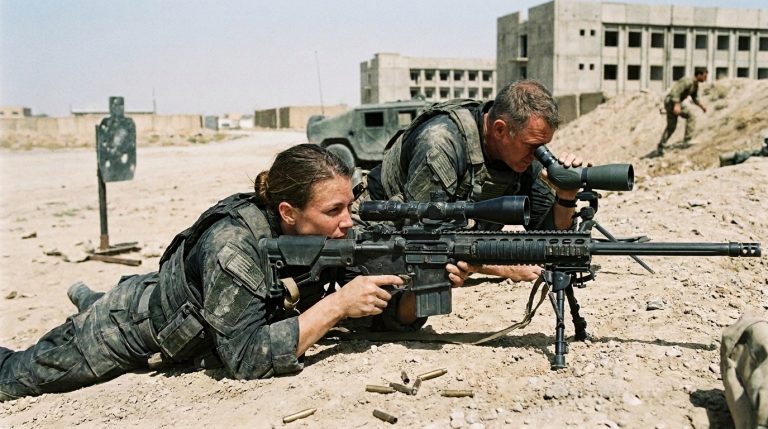
The metal tray hummed against the grain of Emily Parker’s thumbs. The midday sun over Camp Hawthorne didn’t just heat the dirt; it made the air smell of scorched oil and the bitter zinc of corrugated roofing. Behind her, three infantrymen shifted their boots, their heels grinding gravel into fine gray powder.
She did not turn her head. Her spine remained a straight, unyielding line beneath the stiff, salt-crusted fabric of her tan fatigues. The grease on the tray was warm, a thin film reflecting the glare of the sky like a cloudy mirror.
“They say the wings flap if you shake your clipboard fast enough,” another voice muttered, lower this time, wet with a dull, heat-struck amusement.
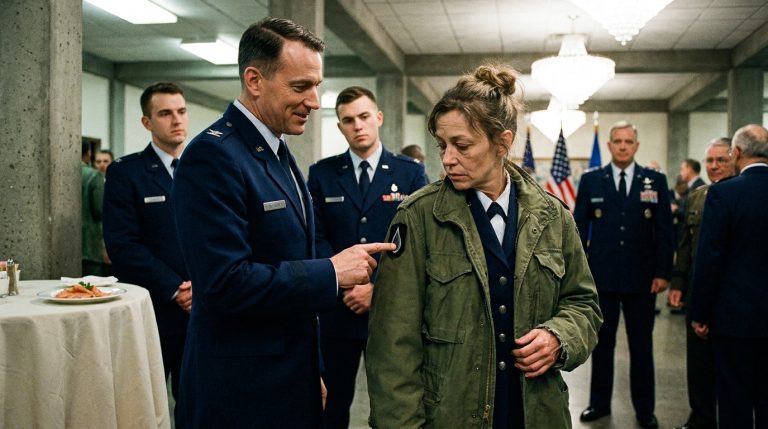
Emily kept her eyes on the small square of space between the shoulders of the private ahead of her. Her sleeves were rolled three precise turns above the wrist, exposing the dark, heavy lines of the black ink. The butterfly didn’t look like skin art; it looked like something stamped by a machine—the edges too clean, the inner geometric lines woven through the wings too sharp for a casual needle. In the direct glare, the tiny numbers hidden within the delicate shading of the lower wing tip were virtually invisible, buried under the dark gray gradient.
The line moved six inches forward. Boots dragged. The heat index was hitting one-hundred and four, and the salt tablets in the plastic bin by the water Lister bag were already melted into a crusty paste.
“She doesn’t talk,” the sergeant said, stepping into her peripheral vision. His shadow fell across her clipboard, a dark, angled block that smelled of stale tobacco and laundry detergent. “You ever hear her speak, Miller? I think the logistics office forgets to issue vocal cords to the clerks.”
Emily lowered her tray onto the wooden crossbars of the serving station. Her movements were transactional, devoid of the jerky haste of someone trying to escape. She watched the server drop a gray scoop of corned beef hash onto the metal divider. The starch stuck to the spoon.
“Manifest forty-four is short two leaf springs for the five-ton trucks, Sergeant,” Emily said. Her voice was flat, desaturated of color, matching the gray dust on her boot caps. “I left the discrepancy report on your supervisor’s desk at six-thirty.”
The sergeant’s smirk didn’t leave his face, but his eyes narrowed slightly, tracking the steady rise and fall of her shoulders. He looked down at her forearm, where the black butterfly sat against skin that had gone pale from twelve-hour shifts under fluorescent bulbs.
“You’re real efficient with a pen, Parker,” he said, his thumb catching the edge of his own tactical vest with a dry click of nylon. “But those trucks don’t move on paper.”
“They don’t move without parts, either,” she murmured.
She picked up her tray. As she turned toward the isolated corner tables near the screen door, her forearm caught the corner of a passing private’s body armor. It wasn’t an accident; the tilt of the man’s elbow was too deliberate. The metal tray twisted. The heavy ceramic mug slid first, its thick lip striking the concrete floor with a hard, flat crack that stopped the clatter of forks within ten paces.
The hash followed, a dull smear across the gray floor tiles.
A sharp, barking laugh started near the water coolers and died down into a low chuckle as Emily slowly knelt. Her knees didn’t hit the floor; she dropped into a perfect, balanced crouch, her weight centered over the balls of her boots. Her fingers reached for the shattered handle of the mug.
Through the clear grease on the floor, she saw her own reflection—and behind it, near the doorway, two men in non-standard green flight suits who had just stepped out of an unmarked humvee. They weren’t looking at the food. Their eyes were locked entirely on the black ink on her arm, their faces tightening into a hard, stone-cold stillness that didn’t belong in the Hawthorne chow line.
CHAPTER 2: THE SEALED LEDGER
The sharp, barking laugh from the water coolers didn’t alter the rhythm of Emily’s fingers as they closed around the largest shard of the broken ceramic mug. The porcelain was thick, retaining a stubborn, sunbaked heat that bit into the meat of her thumb. She compressed her grip just enough to anchor her focus, ignoring the hot grease of the corned beef hash spreading toward the knee of her tan fatigues.
“Don’t worry about the mess, Parker,” the platoon sergeant chuckled, his boot heel hovering two inches from her wrist as he leaned over the tray. “The floor probably needed the protein.”
Emily didn’t answer. She swept a secondary fragment into the curve of her palm, her movements steady, mechanical, tracking the two men by the door through the reflection in a nearby puddle of spilled water. They wore non-standard green flight suits, the fabric faded to the color of dried sage, devoid of standard name tapes but heavy with the specific, dense sag of hidden gear underneath the rib cages. They didn’t laugh. One of them shifted his stance, his jaw locking into a rigid line as his eyes narrowed directly onto the black butterfly ink exposed by her rolled sleeve. He knew the geometry. He recognized the precise width of the lower wing gradient where the unindexed coordinates were woven into the stippling.
Emily pulled her sleeve down with one swift, smooth motion, tucking the ink beneath the salt-crusted cuff of her uniform. She stood up from the crouch, her weight transitioning flawlessly across the balls of her boots without a single tremor of hesitation. She left the remainder of the spilled food for the floor crew, carrying the broken ceramic and the empty metal tray toward the wash racks at the back of the facility. The two flight-suited operators remained by the screen door, their silence creating a distinct, pressurized pocket that seemed to partition them from the loud, sweating crowd of infantrymen. They watched her leave the hall, their eyes steady, calculating, and cold.
The journey back to the logistics warehouse was a slow, deliberate trudge through seventy yards of blinding, alkaline dust that tasted like chalk and old iron. The wind blew in short, violent gusts off the tarmac, rattling the sun-bleached canvas covers of the five-ton trucks parked in the auxiliary lot. Emily kept her clipboard tucked firmly beneath her armpit to prevent the wind from tearing the top sheets of Manifest 404.
When she stepped inside the warehouse, the temperature dropped five degrees, replaced by the dark, heavy scent of cosmoline preservative, stored tires, and the dead air of a steel structure baking under a desert sun. Her desk sat at the far end of the bay, flanked by three-tier metal shelving units loaded with heavy vehicle alternators, wooden crates of brake shoes, and sealed green canisters of small-arms oil. A single desk lamp with a green plastic shade cast a sharp, conical beam over her workspace, leaving the rest of the high-ceilinged rafters in deep, shadowed obscurity.
She dropped the broken pieces of the mug into the metal wastebasket, the clatter echoing off the corrugated walls like a tiny anvil strike. Then, she pulled her chair forward, her fingers tracking across the rough, splintered grain of the wooden desk until they found the corner of the logistics binder.
She flipped the pages to Manifest 404. Her eyes scanned the clean, blue-ink entries she had recorded the previous night. Every line was immaculate, typed or written in precise block letters that left no room for misinterpretation. But as her finger reached the bottom quadrant of the supply manifest, she stopped.
There was a discrepancy.
An unindexed line item sat between the standard listings for truck leaf springs and radiator hoses: Case 09-Alpha / Content: Crypto-Modular Sub-Component / Destination: Gray Operations Hub. The entry didn’t have a standard military stock number. Instead, it bore a nineteen-digit alpha-numeric string that mirrored the exact mathematical sequence hidden inside the shading of her tattoo. Her thumb traced the ink lines through her sleeve. The shipment had been signed in at midnight by an unlisted officer using an encrypted digital signature that didn’t correspond to any unit attached to Camp Hawthorne.
The warehouse door groaned on its tracks behind her, a dry, metallic screech that cut through the silence of the bay. Emily did not snap her head around. She slowly closed the binder, her thumb resting between the pages to hold her place as she listened to the slow, measured crunch of heavy boots on the gravel-strewn concrete floor.
“You’re working late, Parker,” a voice said from the darkness beyond the shelves. It was the armorer, Sergeant Miller, his hands dark with the black stain of graphite lubricant as he wheeled a wooden crate toward the inventory cage. He didn’t look at her; his focus was entirely on the heavy iron padlock dangling from the chain-link gate. “The lieutenant’s been asking about the weapon manifests for the incoming rotation. He thinks someone’s skipping the serial logs.”
“The logs are complete, Sergeant,” Emily said, her voice remaining low and level, a calculated instrument designed to give away nothing. “They’re exactly where they belong.”
“Yeah? Well, things are getting weird around here,” Miller muttered, snapping the padlock shut with a sharp, heavy click that resonated through the empty shelves. “Those flight-suit guys from the tarmac just cleared out three storage bays in Sector Four. Didn’t show a single piece of standard paperwork. Just a red-stamped voucher from the Department of the Army with no name on the line.”
Emily’s grip tightened on the edge of the logistics binder. She knew exactly what those bays contained: the old, unserviced communications gear from the previous deployment—equipment that was supposed to have been turned to scrap two years ago in a classified valley three thousand miles away.
She turned her eyes toward her locker, which stood slightly ajar at the corner of her desk. Through the four-inch gap in the steel door, the blurred edges of the old desert photograph were visible under the dim green light of her lamp. The faces of the team were gone, wiped away by deliberate friction, but the corner of the black special operations patch was distinct, its dark threads catching the light like an open wound.
The letters sat beneath the photo, a neat, thick stack of sealed envelopes tied with a piece of olive-drab parachute cord. None of them had stamps. None of them had addresses. They were addressed only to names that no longer existed on any active roster, written in the late-night silence when the heat finally left the metal roof of the warehouse.
She reached out, her fingers catching the edge of the steel locker door, and pushed it shut. The latch clicked home with a hollow, final sound that filled the empty bay, sealing the ghosts back into the dark.
“Tell the lieutenant the manifest will be on his desk before the morning briefing,” Emily said softly, her eyes returning to the unindexed numbers of Manifest 404. “Every single piece will be accounted for.”
Miller didn’t reply. He rolled his cart toward the exit, his shadow stretching long and distorted across the concrete floor until the heavy outer door banged shut, leaving Emily alone with the scratching of her pen and the heavy, metallic silence of the desert night.
CHAPTER 3: THE FRICTION OF STEEL
The deep, structural rattle of the warehouse’s metal door died out slowly, its final vibrations traveling along the concrete floor to the legs of Emily’s wooden chair. The silence that followed was dense, almost physical, punctuated only by the low, irregular hum of the base electrical grid. She didn’t let her eyes drift back to the locked metal locker. Her thumbs remained hooked over the edge of the logistics binder, her focus anchored entirely on the unindexed alpha-numeric code of Manifest 404.
She took a slow, deliberate breath, the alkaline dust in her throat mixing with the sharp, synthetic tang of the fresh cosmoline emanating from the near shelves. The numbers on the page didn’t change. They sat there like a wire trap, waiting for a single miscalculated stroke of her pen to trigger a query in the main logistics server. She closed the binder with a flat, muted slap, slid it into the lower steel drawer of her desk, and turned the iron key in the lock until the deadbolt threw with a heavy click.
The sudden glare of flashlights from the main bay corridor broke the shadowed peace of her corner.
Two pairs of standard-issue combat boots crunched against the gritty floor, their pace rapid and authoritative. Emily didn’t rise. She kept her hands flat on the scarred wood of the desk, watching as the pale beams swept across the rows of alternators and wooden brake shoe crates before settling squarely on her face. Behind the glare, the silhouette of the lieutenant’s service cap appeared, flanked by the broad, armored shoulders of the platoon sergeant from the chow line.
“Parker,” the lieutenant said, his voice clipped and dry, carrying the brittle irritation of an officer whose sleep schedule had been compromised by the sudden arrival of unlisted attachments. He stepped into the green cone of her desk lamp, his face slick with a thin film of sweat that caught the light like oil. “The motorpool supervisor says you’re still down here holding the weapon logs for the incoming rotation. Hand them over.”
“The logs are secured in the primary desk drawer, sir,” Emily replied, her voice maintaining its flat, desaturated equilibrium. “They’re verified up to the midnight delivery.”
The platoon sergeant stepped up beside the lieutenant, his thumb hooking into his tactical vest exactly as it had done in the dining facility. The scent of stale tobacco and laundry starch followed him, cutting through the warehouse’s chemical mask. “She’s real protective of those papers, sir,” the sergeant muttered, his eyes tracking down to the cuff of her sleeve where the black butterfly ink was hidden. “Maybe she’s trying to hide the fact that the inventory doesn’t match the trucks.”
The lieutenant ignored the sergeant, his gaze falling instead on the grease-stained M4 carbine resting on the corner of the armorer’s workbench three paces away. It was an unserviced training rifle, its receiver worn down to a chalky gray finish from thousands of repetitions in the grit.
“I don’t care about the trucks right now, Sergeant,” the lieutenant said, pointing a finger at the rifle. “I care about capability. The base commander is panicking because we’ve got Tier 1 elements moving through our sector without standard logistics clearance. They look at us like we’re a bunch of inventory clerks who don’t know which end of the receiver spits lead.” He turned his eyes back to Emily, his jaw tightening. “You. Step up to the bench.”
Emily stood up, her movement fluid, her center of gravity remaining perfectly aligned over her boots. She walked the three paces to the steel-topped workbench. The cold iron of the table was scratched and pitted from years of punch tools and hammer strikes.
“Disassemble it,” the lieutenant ordered, drawing a silver stopwatch from his pocket with a dry click of its chain. “Let’s see if the logistics division actually reads the technical manuals they spend all night logging.”
Emily looked down at the weapon. Her eyes tracked the line of the receiver, noting the tiny glints of silver where the parkerization had peeled away near the forward assist. Her right hand moved to her pocket. She didn’t pull a tool; she pulled a clean, five-inch strip of olive-drab cotton cloth—a standard utility rag used for wiping down optics. Without a word, she raised the cloth, wrapped it twice around her eyes, and tucked the loose edge firmly beneath the fabric of her headgear.
The platoon sergeant let out a short, dry grunt. “What is this, a carnival trick, Parker?”
Emily didn’t answer with words. Her fingers moved before the sergeant’s voice could fully clear the air.
Her left thumb struck the rear takedown pin with a sharp, metallic pop. Her right hand caught the charging handle, pulling it back to clear the bolt carrier group from the upper receiver in one continuous, sweeping motion. The sound of metal dragging against metal was regular, fast, and devoid of the hesitant clicks of someone searching for a groove. She laid the charging handle down on the steel table with a dull clink.
Her thumbs moved to the bolt carrier. She extracted the firing pin retaining pin with her fingernail, her touch light, calculating the resistance of the metal through old muscle memory. The small, silver pin dropped onto the table. The firing pin followed, sliding out into her palm with a heavy, greasy weight. She dropped it precisely three inches to the right of the carrier. Her fingers found the cam pin, twisted it ninety degrees, and lifted it free, releasing the bolt from the front of the carrier.
Piece by piece, the components of the weapon lined up on the cold steel table. No wasted arcs. No fumbling over the greasy edges of the small parts. The air in the bay seemed to hold its breath, the only sound being the rhythmic, metallic shorthand of her fingers breaking down the machine.
In eighty-four seconds, the carbine lay stripped bare—twenty-four distinct components arranged in a perfect, unmoving sequence from left to right.
Emily pulled the cloth strip from her eyes, her pupils contracting instantly under the glare of the lieutenant’s flashlight. She didn’t look at the officer’s face. She didn’t look at the platoon sergeant, whose hand had dropped away from his tactical vest, his mouth slightly open as his eyes darted from the laid-out parts to the pale skin of her arm.
“The firing pin channel has excessive carbon buildup, sir,” Emily said softly, her hands already reaching for the bolt to begin the reverse sequence. “It will cause light primer strikes within two hundred rounds. It’s listed on the maintenance report I prepared at six-thirty.”
The lieutenant looked down at his stopwatch, his thumb hovering over the plunger but never pressing it. The silver casing reflected the green glow of her desk lamp, casting a fractured light across the steel-topped bench. He didn’t check the time. He slowly slid the watch back into his pocket, his expression going flat and unreadable as he looked at the quiet woman standing before him in the gray dust.
“Reassemble it, Private,” the lieutenant said, his voice losing its sharp, clipped edge, replaced by a low, cautious weight that hadn’t been there two minutes ago. “And bring the logs to my office when you’re done.”
He turned and walked back into the darkness of the main bay, his boots clicking in a slower, more deliberate rhythm. The platoon sergeant lingered for three seconds, his eyes fixed on the black butterfly ink that had peeked through her cuff as she worked. He didn’t make a joke. He didn’t say a word. He just stepped back into the shadows after his officer, his heavy stride sounding clumsy and loud against the concrete floor.
Emily didn’t watch them leave. Her fingers were already moving, the click of the bolt locking back into the carrier echoing like a minor hammer strike through the empty rows of the warehouse.
CHAPTER 4: THE SHADOW OF THE FLEET
The final, sharp click of the upper receiver seating against the lower pin vibrated directly into Emily’s palms, sealing the weapon back into its functional, cold-iron geometry. She didn’t look up to check if the corridor was entirely clear of the lieutenant’s lingering shadow. Instead, she slid the M4 back across the oily surface of the steel workbench, her fingers maintaining a deliberate, unhurried pace as she lifted her green logistics binder from the lower drawer.
The low, distant thrum of the diesel generators outside didn’t rise; rather, a secondary, heavier frequency cut through the metal walls of the warehouse. It was the synchronized, rhythmic thud of six-cylinder multi-fuel engines grinding through the gravel perimeter of the main gate. The dawn convoy had arrived.
Emily pulled her sleeves down to the exact millimeter that masked the outer curvature of the butterfly wings, tucked her pen into the spine of Manifest 404, and walked toward the primary bay doors. Each step across the gritty concrete floor was a calculation of weight and momentum. She didn’t hurry. The massive steel rolling doors were already chained open three feet to allow the early breeze to clear the exhaust fumes, exposing a horizontal slice of the sunbaked tarmac outside.
The light was raw, an orange, unfiltered glare that turned the swirling alkaline dust into tiny floating sparks of flint. Three flat-bed tactical vehicles and a trio of armored utility trucks rolled into the central yard, their tires coated in the white, chalky clay of the southern salt flats. These weren’t standard logistical transports from the division pool. The chassis were heavily modified, fitted with non-reflective equipment pods, unindexed satellite arrays, and extra fuel cells bolted directly to the steel beds.
Emily stepped through the threshold, the dry heat hitting her skin like an open furnace door. Her boots ground into the loose gravel as she took up her position at the edge of the unloading zone, her clipboard resting against her ribs like a small shield.
Hardened men began to disembark before the engines had fully ground to a halt. They moved with a quiet, coordinated economy of motion that made the regular base personnel look slow and heavy. Their green flight suits were stiffened by salt and caked with dried mud along the seams; their weapons weren’t slung over their backs like administrative burdens but held low across their chests, ready to meet the horizon. These were the operators from the Navy SEAL detachment. They didn’t call out to the base guards, nor did they look around the yard with the idle curiosity of travelers. Their eyes scanned the high perimeters, the rooflines of the fuel depots, and the shadowed spaces between the storage containers with an unblinking, transactional focus.
At the front of the formation walked their commanding officer. His face was a map of deep, sun-hardened creases, his service cap pulled low enough to shade a pair of pale, unyielding eyes that had spent decades looking through night-optics and dust storms.
Emily remained six paces back, her head slightly lowered as she began recording the tail numbers of the lead vehicles into the auxiliary ledger. Her pen moved with a dry, scratching precision, tracking the alphanumeric identifiers that didn’t appear in the standard division directory.
“Get those supply sheets over here, Parker,” the platoon sergeant’s voice barked from behind her, his heavy stride sending a spray of small stones against the side of her boot. He had appeared from the administrative shack, his face still flushed from his interaction in the warehouse, his posture stiffened by the presence of the Tier 1 unit. “The commander doesn’t have time to wait for a clerk to finish her cursive.”
Emily didn’t accelerate her hand. She completed the final digit of the lead truck’s serial, closed the binder with a firm snap, and stepped toward the front of the first vehicle.
The SEAL commander had paused near the front bumper, his hand resting on the rugged iron winch as he checked a handwritten routing slip. As Emily drew within three paces, the wind shifted, catching the corner of her uniform shirt and pulling the fabric tight against her left forearm. The sleeve caught on the sharp brass clip of her board, lifting the cuff just enough to expose the black gradient of the lower wing tip.
The commander’s eyes didn’t pass over it. His gaze dropped from the routing slip, locking onto the geometric ink with the sudden, rigid stillness of a tripod clicking into place.
The air in the immediate perimeter seemed to lose its motion. The operator standing two paces behind the commander stopped mid-sentence, his hand freezing on the receiver of his rifle as he followed his officer’s line of sight. The low drone of the idling trucks seemed to flatten out, converted into a dull, white noise that isolated the three of them from the rest of the base’s frantic morning activity.
Emily stood her ground, her boots anchored firmly into the sunbaked dirt. She didn’t pull the sleeve down this time. She kept her fingers locked around the edges of the clipboard, her posture matching the unyielding, stone-cold weight of the men who stood before her. The secrets hidden within the stippling of the black ink weren’t a story to be told; they were a ledger of dead men and locked coordinates, and for the first time in three years, someone who knew how to read the balance sheet was looking back at her.
CHAPTER 5: THE FORMAL WEIGHT
The brass clip of the log binder dug into the fabric of Emily’s uniform shirt, holding the cuff pinned back against her skin. The commander’s pale eyes didn’t widen; they set into a dense, unblinking focus that seemed to match the rusted steel brackets holding the truck’s bumper together. Beside him, the operator’s finger remained resting on the receiver of his carbine, his knuckles chalky with white dust.
“I said move it, Parker,” the platoon sergeant’s hand came down toward her left shoulder, his fingers splayed to grab the stiff cloth of her sleeve. “The commander doesn’t have all day to—”
“Stand down, Sergeant.”
The commander’s voice didn’t rise above the dull, industrial thrum of the idling diesel engines, but it carried a flat, mechanical finality that froze the sergeant’s hand two inches from her shoulder. The sergeant blinked, his boots shifting in the loose gravel, his jaw dropping slightly as he looked from his own extended fingers to the rigid posture of the Navy officer.
A high-frequency whine cut through the hot air—the distinctive, encrypted burst of an unindexed tactical satellite terminal boot sequence from the lead vehicle’s cab. The sound struck Emily’s inner ear like an iron spike, instantly dragging a cold, gray memory from the vault: the sound of a burning radio hut in an unmapped valley, the smell of charred insulation, and the exact three-digit frequency code she had keyed in the dark while the mountain wall behind her disintegrated under mortar fire. Her thumbs tightened against the wooden back of the binder until the grain flexed. She didn’t let her eyes shift toward the vehicle cab; she kept them locked onto the commander’s weathered face.
Slowly, the commander lifted his right hand. His fingers were stiff, scarred across the knuckles by old rope burns and wire cuts, his palm caked with the dry gray silt of the salt flats. He brought his hand up to the brim of his faded cap, his elbow locking into a sharp, flawless angle that carried the entire structural weight of a joint-forces command protocol.
He saluted her.
The movement was crisp, deliberate, and entirely out of place in the sunbaked, grease-stained yard of Camp Hawthorne. The private first class ahead of the line froze, an unsealed crate of leaf springs dangling from his grip. The two infantrymen who had been leaning against the Humvee straightened up, their cigarettes falling from their lips into the white clay. The entire perimeter of the unloading zone seemed to lose its motion, the frantic clatter of forklifts and clipboards flattening out into a heavy, suffocating silence that smelled of unrefined fuel oil and scorched zinc.
“Sir?” the platoon sergeant muttered, his voice sounding thin, stripped of its administrative authority. He looked at Emily, then back at the commander’s locked arm. “Sir, that’s… that’s Parker. She’s Logistics. The supply clerk.”
The commander didn’t lower his hand. His gaze remained anchored to the black ink on Emily’s forearm, tracing the exact geometric lines where the unindexed coordinates of the valley cemetery were woven into the stippling of the wings.
“I know exactly who she is, Sergeant,” the commander said, his voice low but perfectly audible across the thirty paces of silent gravel. “And if you had any functional intelligence in that head of yours, you’d be at attention right now.”
The operator behind the commander snapped his boots together, his weapon dropping into a secure, low-ready position as his hand rose to his brow in a synchronized movement. Two more men stepped out of the second vehicle, their faded flight suits rustling against the armored doors, their eyes catching the black butterfly ink before their hands automatically found the rims of their helmets.
The platoon sergeant’s shoulder blades twitched. He looked around the yard, his face turning a dark, mottled red as he realized every set of eyes in the auxiliary pool—from the mechanics inside the warehouse to the tower guards seventy yards away—was fixed on the corner of the transport lot. The hierarchy of the base had just twisted on its axis, the standard rank tabs on his collar rendered completely irrelevant by the unwritten clearance of the men in the sage-green suits.
Slowly, clumsily, the sergeant brought his boots together, the heels grinding a single pebble into gray dust. He raised his right hand, his fingers trembling slightly as he joined the salute, his eyes fixed forward on the blank space above Emily’s head to avoid looking at the woman he had mocked three hours prior in the dining hall.
Emily stood motionless in the white glare. The heat from the truck’s radiator hissed near her left knee, a low, regular escape of steam that tasted of anti-freeze and iron filings. She didn’t smile; she didn’t allow her chest to expand with the false satisfaction of an earned victory. She knew the cost of that salute. She knew that every man standing at attention in the dirt was remembering the same burning valley, the same unmailed letters sitting in the bottom of her steel locker, and the dead intercept team whose families were currently protected only by the silence she maintained under her desk lamp.
She brought her right hand up, her fingers straight, her touch striking the edge of her cap with the transactional precision of an armorers’ gauge. She held it for one unbroken second, letting the weight of the base’s collective silence settle into the sunbaked dirt, before dropping her hand back to the side of her clipboard.
“The manifest is verified, Commander,” Emily said softly, her voice desaturated of all color, matching the gray dust on her boot caps. “Sector Four storage bays are cleared for your inventory.”
The commander lowered his hand, his expression returning to its unreadable, leather-hard baseline as he gave a single, tight nod. “Understood, Parker. We’ll take it from here.”
He turned back to his men, his stride long and heavy as he moved toward the administrative shack, leaving the platoon sergeant standing alone in the gravel, his hand still frozen at his brow as the first gust of the midday wind swept the white clay across his boots.
CHAPTER 6: THE QUIET REPAIR
The first gust of the midday wind swept a low wave of white clay across the sergeant’s boot caps, but he remained motionless, his fingers slowly lowering from his brow as if the muscle memory of the salute had locked his joints. Emily didn’t wait for his posture to break entirely. She turned her heels away from the sunbaked lot, her fingers maintaining their transactional grip around the edges of her logistics binder, and walked back toward the open bay doors of the warehouse.
The concrete floor absorbed the sound of her stride, returning only the dull, flat patter of standard rubber soles against grit. Inside, the shadow of the high-ceilinged rafters fell over her like a heavy wool blanket, instantly cutting the blinding orange glare of the yard. The low, synchronized rumble of the Navy SEAL vehicles continued to vibrate through the corrugated iron siding, but here, inside her perimeter, the noise was diffused by rows of heavy shelving and stacks of crated components.
She returned to her desk. The green-shaded lamp still cast its sharp, conical beam across the scarred wood, highlighting the fine gray powder that had settled over her pens since dawn. She didn’t drop her binder. She sat down, her weight centered, and placed Manifest 404 precisely in the center of the workspace.
From the darkness of the neighboring aisle, a shadow shifted. The platoon sergeant stepped into the edge of the light, his face pale underneath the salt-crusted rim of his cap, his chest rising and falling in shallow, guarded increments. He didn’t have his thumb hooked into his tactical vest now. His arms hung straight down, his knuckles white against his trousers.
“Parker,” he said, his voice stripped of its rasp, sounding dry and brittle like ungreased gears. “The manifest numbers… for the Sector Four bays. I didn’t know.”
Emily did not look up from the ledger page. She adjusted the alignment of her black pen against the binder’s metal spine. “The manifest is a record of property, Sergeant. Nothing more.”
“The commander said you were there,” he muttered, stepping closer until the smell of his laundry starch was overridden by the sharp, chemical tang of the small-arms oil on her workbench. “He said you were the only reason they crossed the line. I… I logged you as a line-item liability on the weekly readiness report.”
Emily slowly lifted her eyes, her gaze flat and desaturated, completely devoid of vindication or malice. “Your report was accurate based on the data you were cleared to see, Sergeant. In the division pool, a clerk is a clerk. The records indicate I was structurally discharged three years ago. The entry is clear.”
The sergeant blinked, his jaw tightening as he processed the transactional finality of her words. He had come looking for a confrontation, or perhaps a formal reprimand from an unindexed operator, but her complete lack of emotional friction left him with nothing to push against. His own institutional arrogance had collapsed under its own weight, defeated not by an administrative reprimand, but by the cold, structural reality of her superiority.
“Go back to your formation, Sergeant,” she said softly, her voice barely louder than the hum of the transformer behind the shelves. “The trucks in the auxiliary pool still require leaf springs.”
He stood frozen for two seconds, his posture slumping slightly as the last of his bravado drained into the concrete floor. Then, without another syllable, he turned and walked out of the warehouse, his boots dragging through the loose gravel at the threshold until the outer door groaned closed.
The silence that followed was absolute, the heavy denouement settling over the bay like dust after a storm. The fast kinetic energy of the morning had dissipated, leaving the air thick with atmospheric peace. Emily reached into her lower desk drawer and pulled out a small, steel-hinged tool kit and a spare brass rivet. The primary clipboard she had carried for six months had a fractured corner where it had struck the metal wash rack during the initial encounter in the chow hall.
She placed the board on the desk. Her fingers moved with the same blindfolded precision she had used on the carbine, using a pair of rusted iron pliers to smooth the bent edge of the aluminum frame. The metallic scrape of the tool against the clip was rhythmic and calming. She cleared away the jagged fragments of wood fiber, aligned the new brass rivet into the hinge, and compressed the handles until the metal flattened into place with a solid, clean snap.
The tool was repaired. The object was functional again, its structural integrity restored through simple, unhurried maintenance.
She opened the locker door one final time. The light from her desk lamp caught the blurred desert photograph, and for the first time, she let her fingers brush the edge of the dark special operations patch. She knew that three thousand miles away, in a dry mountain valley where the headstones were marked only by numbers, the encryption keys she guarded remained unbroken. Her presence at Hawthorne wasn’t an assignment; it was a self-imposed penance, a quiet labor conducted in the gray spaces of the world to ensure the living remained safe and the dead remained uncompromised.
She turned the photo face down against the steel shelf, picked up her pen, and opened Manifest 404 to the next unwritten line. The scratching of her nib against the clean paper was the only sound left in the dark bay, a steady, unyielding rhythm that carried the weight of her history into the silence of the night.