The Weight of Iron: A Legacy Sold for Scrap in the Quiet Shadows of Georgia
CHAPTER 1: The Inheritance of Rust
The driveway gravel crunched beneath my boots—a familiar, hollow sound that used to signal safety. Today, it sounded like grinding teeth. The homestead was a shell. Five years away, and the rot had moved in, not through termites or time, but through the absence of someone who fought for every inch of order.
My grandfather, Colonel James Caldwell, had been a man of iron. He didn’t just maintain his home; he defended it. Now, the edges of the lawn were shaggy, the bushes overgrown against the siding, and the porch light hung at a jagged, broken angle. It was the lack of friction that disturbed me most. The air here was heavy, smelling of damp earth and that distinct, metallic tang of iron—the smell of a project left out in the rain to surrender to the elements.
Kyle waited by the car, his posture stiff. He didn’t look at the house; he looked at the treeline, his eyes scanning for movement in the way a man does when he knows the perimeter is compromised.
“Doesn’t feel like a homecoming,” he said, his voice low.
“It’s not,” I replied, my hand resting on the heavy metal dog tags in my pocket. They felt cold against my palm. “It’s a site inspection.”
I walked to the front door. The porch groaned under my weight, the wood weathered to a gray, splintered husk. I didn’t knock. I used my key, feeling the resistance in the lock—the bolt was misaligned, as if someone had forced it and then hastily reset the plate.
Inside, the house was silent. The air was stagnant, devoid of the scent of his black coffee and the faint, permanent aroma of gun oil. Mom met me in the hallway. She looked smaller than I remembered, her grief polished into a mask of polite indifference. She didn’t greet me; she simply stepped aside, her eyes tracking my movements with a suspicion that hadn’t been there years ago.
“You’re late,” she said. It wasn’t a comment on my arrival; it was a comment on my timing.
“I’m here,” I said, my gaze moving past her. I looked for the small things: the arrangement of the mail, the dust patterns on the mantel, the way the house held its breath. Everything looked staged. A performance of mourning.
“Julian is in the garage,” she added, her voice devoid of warmth. “He’s handling the inventory. Said he doesn’t want to be disturbed.”
I didn’t answer. I didn’t need to. I walked toward the back door, my boots feeling heavy on the hardwood. I was thinking about the tools, the missing precision, and the way Julian—who couldn’t tell a socket wrench from a bottle opener—was suddenly acting like the keeper of the gate.
As I stepped onto the back porch, the sky was a bruised, heavy gray. Somewhere, a fence gate rattled in the wind. The garage stood at the end of the path, a small, dark block of wood and history. I felt the weight of the moment—the realization that whatever was happening here, it wasn’t a family affair. It was an extraction. And I was standing right in the middle of the debris field.
CHAPTER 2: The Garage Protocol
The latch bit back. It wasn’t the smooth, familiar engagement I remembered from my teenage years—the one that always surrendered with a soft, confident click under the right pressure. This one groaned, the internal pins gritty with accumulated rust and neglect. It took a moment of deliberate, calculated leverage, my thumb pressing against the worn brass, before the mechanism finally yielded with a hollow, metallic thud.
The garage door swung inward, heavy and complaining on its hinges.
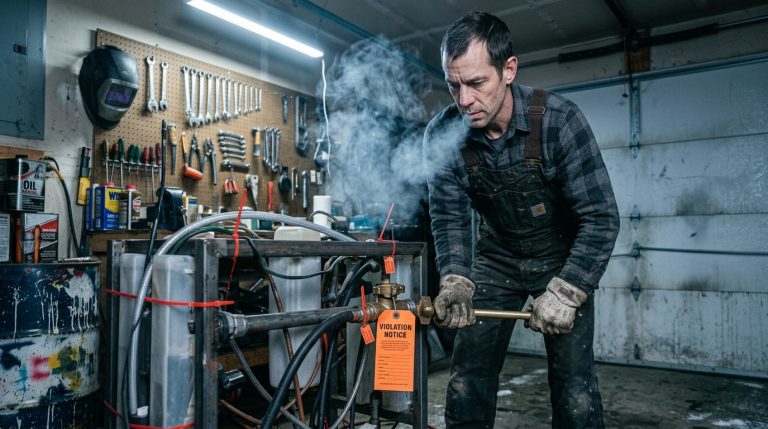
I stepped inside, and the air immediately changed. Outside, the Georgia heat was a wet blanket, but in here, it was a tomb. It smelled of motor oil, oxidized copper, and the peculiar, sharp scent of cedar shavings—a ghost of my grandfather’s meticulous labor. I let my eyes adjust, my pulse steady, counting the seconds. My training didn’t just ask for observation; it demanded it.
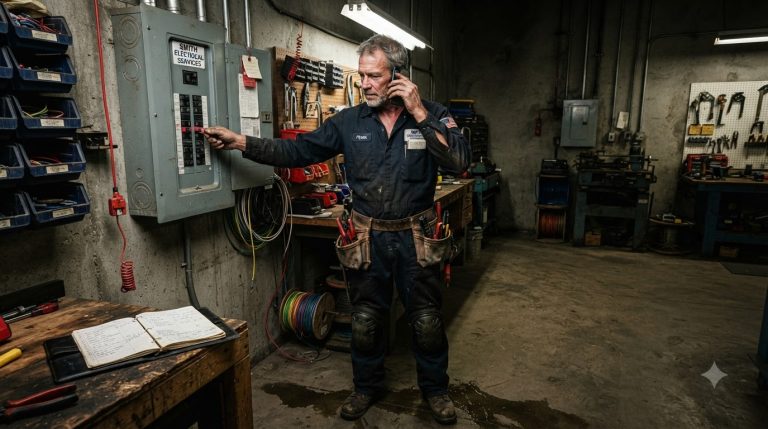
The workbench was a landscape of abandoned intent. A set of precision screwdrivers lay scattered, not organized in their customary graduated order, but thrown—a sharp contrast to the man who used to count his drill bits every Sunday night.
I moved closer. My hand hovered over the pegboard. Three sockets were missing. I knew exactly which ones they were: the 10mm, the 12mm, and the 14mm. Standard sizes, the kind you’d need for everything from a lawnmower casing to a mid-sized data rack mounting.
I didn’t pick anything up. I scanned the dust patterns instead. The gray layer was uniform, except where a circular void marked the absence of a wire cutter. Someone hadn’t just been in here; they had been performing surgery on the environment.
A sudden gust of wind hammered against the side of the garage, causing a loose piece of corrugated tin to shudder against the frame. It was a sharp, percussive sound that made my skin prickle. It wasn’t just a weather event; it was a reminder that this perimeter was thin, and the boundary between the quiet, domestic house and the reality of the threat I’d come home to stop was eroding.
I walked to the corner, my boots silent on the oil-stained concrete. The tool chest sat there, masquerading as a humble workbench base. It was a sturdy, heavy piece of equipment, reinforced with steel plating that my grandfather had installed decades ago—not to protect against burglars, but to protect against the inquisitive eyes of his own kin.
I stood before it, my heart rate slowing to a rhythmic, focused crawl. I didn’t need to see the keypad. I reached out, my fingers tracing the cold, pitted surface of the metal. I felt for the indentation of the buttons. Four tones, twice. A familiar sequence, as ingrained in my memory as the smell of stale gunpowder.
I tapped the sequence.
The sound was faint, a series of electronic chirps that felt painfully loud in the oppressive silence of the garage. I held my breath, waiting.
Click.
The door eased open just a fraction. I pulled it back, my nerves braced for the contents. I expected the familiar weight of old steel, maybe a service pistol or a stack of ledger books.
Instead, the safe was cavernous and nearly empty. A few manila folders lay haphazardly at the bottom, their corners bent as if they’d been shoved in with significant haste. They were out of alignment, the labels faded and peeling.
I reached inside, my movements deliberate. I pulled the first folder out. It was light, far too light to contain the original operational logs of a man like James Caldwell. I opened it, and my breath hitched.
These weren’t records. They were copies of copies—photostats of documents that had been processed through a thermal printer, the ink barely legible, the seals blurred into smudges of black ink. The text was clipped on the margins. Someone had tried to make it look like an archive, but the execution was amateur. It was a decoy, a clumsy breadcrumb trail intended to satisfy someone who didn’t know what they were looking for.
And then, I noticed the scuff marks on the floor—faint, grey smears in the dust leading away from the tool chest. They were directional, heading toward the back wall, where the wood paneling had been pried loose just enough to create a gap.
I didn’t turn around. I didn’t look for Kyle, who was likely still watching the perimeter. I just stood there, staring at the empty space in the safe, realizing that the “inventory” Julian was handling wasn’t a funeral arrangement. It was a cleanup.
The air in the room felt colder now, heavy with the weight of iron and the realization that the man who had raised me hadn’t just been keeping secrets—he had been running a long-term simulation, and someone, somehow, had found the reset button. I reached into my bag, pulled out my camera, and began to document the scene. Every angle, every misalignment, every scrap of paper.
If they wanted me to find a decoy, I’d give them one. I’d photograph it, I’d let them think they’d successfully led me away from the truth, and then, in the silence of the night, I would start digging.
I snapped the last photo, the shutter click echoing like a gunshot. The garage door rattled again, the wind picking up, and for the first time in five years, I truly felt like a soldier behind enemy lines. I wasn’t here to mourn. I was here to account for the losses.
CHAPTER 3: The Funeral Vigil
The walk from the garage to the main house felt like crossing a frontier. The air was thick with the scent of damp soil and the impending rain that had turned the sky to the color of bruised slate. I kept my head down, the straps of my backpack digging into my shoulders—a grounding, physical weight that reminded me of the files I had just secured.
Behind me, the garage door stood slightly ajar, a dark mouth I had just escaped. Ahead, the funeral home glowed with a sickly, artificial warmth. The sound of organ music—thin, reedy, and profoundly lonely—drifted across the lawn.
I paused at the edge of the porch, the wood groaning under my boots. My heart rate, which had been a steady, tactical beat, began to climb as I approached the threshold. This wasn’t just a gathering of mourners anymore; it was a stage. Every step toward the chapel was a step into a controlled environment where the rules of engagement were written by my brother.
I pushed the door open. The foyer was a riot of forced, floral sweetness—the smell of lilies so pervasive it bordered on the nauseating. It was meant to mask the reality of death, but to me, it just highlighted the decay.
As I stepped inside, the chime of the door triggered a Pavlovian response. I scanned the room instantly. To my left, the guestbook; to my right, the open archway leading to the chapel. The voices were a low hum, a polite, orchestrated drone. Then, the tolling started. A bell from the nearby church tower began to ring, slow and resonant, each stroke vibrating through the soles of my feet.
The sound acted as a psychological phantom, pulling me back to a training exercise in Berlin years ago—the chime of a clock tower that had signaled a localized breach. My grip tightened on the strap of my backpack. I shook the memory away, focusing on the here and now.
I stood in the shadows of the vestibule, watching the crowd. My mother was visible in the third row, her back rigid. Julian stood by the casket, his posture an exercise in studied grief. But my eyes went to the periphery. I saw them immediately. Three men, positioned in a perfect tactical triangle—one by the side exit, two near the rear of the pews. Their suits were too expensive for this town, their posture too static. They weren’t mourning; they were scanning, their heads moving in shallow, synchronized arcs that defied the natural flow of the service.
The man near the side exit adjusted his cuffs, and for a split second, the sleeve rode up. There it was: the unmistakable, matte-black finish of an earpiece cord snaking toward his collar.
I stayed in the shadow, my back against the cold, velvet-covered wall. The rust of the old homestead felt like a distant memory compared to the sharp, industrial precision of these men. I wasn’t just at a funeral; I was being observed.
I took a slow, steadying breath. My hand drifted to my pocket, finding the smooth, cool edge of my secure device. I didn’t need to check the signal; I knew it was active. The realization hit me with the force of a physical blow: Julian wasn’t just performing for the neighbors. He was hosting a verification. He was providing a service to these men, a way to monitor the legacy—or to ensure it stayed buried.
I looked at the portrait of my grandfather beside the casket. He looked regal, stern, a man who had commanded respect and intelligence in equal measure. Looking at him, I felt a surge of cold, pragmatic resolve. They had turned this chapel into a trap, but they had made a fundamental mistake. They assumed the legacy they were scrubbing was a collection of papers.
They didn’t realize that the intelligence hadn’t been in the files. It had been in the man. And now, it was in me.
I started to move down the aisle, my boots making no sound on the heavy carpet. I wasn’t looking for a seat; I was looking for the weak point. I noticed Julian’s gaze shift. He caught sight of me, and for a second, the mask slipped—a flash of genuine, unvarnished fear that he tried to bury behind a practiced, mournful nod.
He knew. Even if he didn’t know what I had found in the garage, he knew I was a variable he hadn’t accounted for.
I reached the last pew and slid into the corner. My movements were slow, fluid, and entirely unremarkable. I sat, placing my backpack on the floor between my feet, the weight of the decoy files a hidden armor. The organ music swelled, a dissonant chord that seemed to tear at the atmosphere of the room.
I didn’t watch the casket. I watched the three men. I watched their hands. I watched their eyes. And I waited. The game wasn’t about who held the most power; it was about who kept their nerve the longest. And as the bell tolled one final, lingering time, I realized that for the first time in my life, I was exactly where I needed to be: in the center of the crosshairs, and entirely, dangerously ready.
CHAPTER 4: The CounterMove
The transition from the chapel’s stifling, flower-choked air to the biting humidity of the parking lot was jarring, a sensory reset that forced my lungs to work harder. I didn’t rush. I kept my stride rhythmic, measured, and completely devoid of the urgency that was surely simmering behind me in the vestibule.
Kyle was waiting by the sedan, his silhouette stark against the gray, overcast horizon. He didn’t turn when he heard my boots crunching on the loose gravel; he only straightened, his posture shifting from passive observer to active protector the moment I was within earshot.
“They’re moving,” he said, his voice barely audible over the distant drone of a highway.
I didn’t answer immediately. I slid into the passenger seat, the leather upholstery cold against my back, and watched the funeral home entrance. The three men in the dark suits were standing near the portico, their heads bent in what looked like a casual, post-service conversation. It was a perfect display of suburban normalcy, right up until the moment one of them glanced toward the parking lot. His eyes locked onto our car for a fraction of a second too long—an instinctive, predatory assessment.
“Start the engine,” I said, my voice low. “But keep the lights off.”
Kyle complied, the engine turning over with a quiet, efficient hum that barely disturbed the stillness of the lot.
“They know you’re watching,” he noted, his hands gripping the steering wheel until his knuckles were white. “And they know you’re not just another mourner.”
I pulled the secure satphone from my bag, the device feeling heavier than it had ten minutes ago. It was a lifeline that was rapidly becoming a shackle. “They think I’m a variable they can manage,” I replied, watching as Julian emerged from the front doors. He was surrounded by a cluster of well-wishers, his smile wide and teeth-baring, his movements expansive and overly confident.
But then, he stopped. He turned his head, his gaze sweeping the parking lot until it hit our car. He froze. The smile remained, but it was hollow, a brittle construct of skin and muscle that didn’t reach his eyes. For a heartbeat, the distance between us collapsed. I could see the tremor in his left hand—the one that had betrayed him in the chapel—as he reached for the door handle of his own vehicle.
“He’s going to make a move,” I said, my eyes tracking his every twitch.
“What’s the play?” Kyle asked.
I thought about the garage, the empty safe, and the clumsy, thermal-printed decoys I had secured. Julian was holding a losing hand, but he was backed by entities that didn’t care about the rules of the game. If I confronted him here, I risked everything. If I waited, I risked losing the thread entirely.
“We don’t engage,” I said, my voice sharpening. “We pull back to the diner on the edge of the county line. I need to run the handshake protocol again. If this is a state-sponsored cleanup, we’re not just dealing with Julian’s greed. We’re dealing with a system that’s been pruning its own branches for thirty years.”
As I spoke, I felt a familiar, chilling detachment—the same clarity I’d felt in briefing rooms and command centers. The V-4 doubt crept in: was I reading the situation with tactical precision, or was I projecting the ghosts of my service onto my brother? Was Julian really a cog in a machine, or was he just a desperate man drowning in his own lies?
It didn’t matter. The system demanded accountability, and I was the only one holding the ledger.
“Move,” I commanded.
Kyle shifted the car into gear, the transmission clicking with a sound that felt final. We pulled away, tires crunching softly on the gravel, and as we crested the hill leading out of the cemetery, I looked in the side mirror one last time. Julian was still standing there, staring at the space where we had been, his silhouette lonely and jagged against the flat, gray sky.
He was trapped by his own performance, and I was the one who had written the final act. The iron-heavy air in the cabin felt thin as I tapped the screen of the satphone, the code 17 Delta flashing in the low light like a warning. The next step wasn’t about the files; it was about exposing the architecture of the rot. I had to know if the shadows in the chapel were the ones pulling the strings, or if they were just the first, inevitable casualties of a much larger fire.
CHAPTER 5: The FBI Arrival
The diner was a relic of the mid-century, a low-slung building of stainless steel and neon, currently struggling against the encroaching dark. We pulled into the furthest corner of the lot, far from the single sedan parked by the entrance. The gravel crunched under the tires, a harsh, grating sound that seemed to announce our arrival to the entire county.
“Keep the engine running,” I said, my eyes fixed on the rearview mirror.
Kyle shifted, his hand resting near the center console. “Daria, if we’re pulling the pin on this, we need to know who’s coming. If the people at the funeral were sanctioned, they’re going to be tracing this signal.”
I didn’t answer. I reached for the satphone, the screen glowing a harsh, clinical blue in the dim interior of the car. My thumbs moved with practiced, reflexive speed through the handshake protocol. It was a digital dance I hadn’t performed in years, but the muscle memory remained—the specific sequence of key-presses, the deliberate pause for the encryption handshake, the silent wait for the relay to acknowledge.
Then, the screen glitched.
The light flickered, the signal bars dropping from four to one, then spiking back up. It was a rhythmic, erratic dance. Outside, the neon sign of the diner—a buzzing ‘OPEN’—flickered in sync with the interference. A butterfly effect, perhaps, or a sign that the local infrastructure was being scrubbed in real-time.
“The line is dirty,” I muttered, my pulse quickening.
“How dirty?”
“Someone’s monitoring the traffic,” I said, feeling the weight of the air in the car shift.
Before Kyle could respond, the silence of the lot was shattered by the sound of tires on gravel—not the slow, deliberate approach of a civilian car, but the rapid, disciplined cadence of heavy-duty vehicles. Four black SUVs crested the hill behind the diner, their headlights doused, appearing like phantoms in the gloom. They didn’t move like police; they moved like a surgical strike.
“Black Birch,” I breathed, the call sign slipping out before I could stop it.
“They’re not here to talk,” Kyle said, his voice dropping into a low, flat register.
I watched as the vehicles fanned out with frightening efficiency, boxing in the funeral home exit we had just left, and then pivoting toward our location. The tactical geometry was perfect. They hadn’t followed us—they had been waiting for the signal handshake to triangulate our position.
The first SUV pulled to a halt twenty yards from our hood, its doors opening in unison. Men in tactical gear, faces partially obscured by balaclavas, stepped out. They carried rifles at the low ready, their movements fluid, unhurried, and deeply threatening.
I sat still, hands clearly visible on the dashboard. This was the moment where the decoy met the reality.
One of the agents walked toward our driver’s side, his movements heavy with the weight of armor. He tapped his gloved fingers on the window. I unlocked the door.
“Lieutenant Caldwell,” he said, his voice a gravelly, professional monotone. He didn’t introduce himself. “You’re in possession of property belonging to the Department of Justice.”
I looked at him, searching his eyes through the slit in the balaclava. There was no recognition, no empathy—just the cold, detached gaze of a man who viewed people as assets to be filed, moved, or deleted.
“I’m in possession of evidence regarding an unauthorized reactivation of Operation Paragrin,” I replied, keeping my tone perfectly calibrated. “If you’re here to facilitate the cleanup, you’re a little late.”
The agent didn’t flinch. He didn’t even blink. He reached for the handle of the car door, his grip firm. “We’re here to secure the scene. You’re no longer under the shadow protocol.”
“And Julian?” I asked, testing the perimeter.
“He’s been detained for debriefing,” the agent said. “As for you, the directive is clear. Step out of the vehicle and surrender the hardware.”
I looked at Kyle. His jaw was set, a muscle jumping in his cheek. We were pinned, outnumbered, and the system we were fighting was currently staring us down from behind a tactical visor. The rot wasn’t just in my brother’s choices; it was in the floorboards of the entire state.
I reached for the door handle, feeling the weight of the moment. The decoy files were in the trunk, the real data was encrypted and buried in the cloud, and for the first time, I realized that the “cleanup” I had initiated hadn’t stopped the operation—it had just brought the house down on top of us.
I stepped out onto the cold, damp gravel. The rain started then, a light, freezing drizzle that felt like needles against my skin. As the agent moved toward me, I saw another vehicle pull up—a black sedan, sleek and unmarked. The door opened, and a woman in a sharp, gray suit stepped out, holding a tablet. She looked at me, not with the cold indifference of the tactical team, but with a terrifying, professional curiosity.
“Lieutenant,” she said, her voice like polished steel. “We have a great deal to discuss.”
The trap had closed. But as I stood there in the rain, I realized the most important secret of all: they were so focused on the data that they hadn’t realized I was the only one who knew where the keys to the encryption were hidden.
CHAPTER 6: The Mothers Reckoning
The woman in the gray suit didn’t wait for an invitation. She walked toward me with the kind of unhurried confidence that only comes from knowing exactly how the board is set. Behind her, the tactical team kept their perimeter, their presence a silent, suffocating barrier between me and the open road.
“Lieutenant,” she repeated, her eyes scanning me with an assessment so detached it felt clinical. She tapped her tablet, the screen displaying a series of encrypted strings that scrolled past too quickly to read. “You have disrupted a sensitive asset reclamation process. You are currently in violation of the National Security Retention Act.”
“I’m in possession of documents detailing an illegal reactivation of a Cold War asset network,” I countered, my voice low and steady. I didn’t reach for the bag in the car; I knew better than to make a sudden move. “If you want to call that a violation, I’d suggest you check the chain of custody on my grandfather’s estate.”
She stopped three feet from me. The drizzle intensified, turning the gravel into a slick, dark mosaic. I noticed then that her tablet was missing the standard Department of Justice inventory seal. It was a blank, sterile slate of glass and metal—a piece of ghost hardware.
“Colonel Caldwell was a patriot,” she said, her tone devoid of irony. “But he was an old man, Daria. He saw shadows where there were only administrative realities. His ‘Paragrin’ project was phased out in 1989. What you found in that garage wasn’t an operation. It was a digital artifact—a ghost in the machine that your brother, in his desperate, clumsy way, decided to try and sell.”
“He was an asset,” I said, feeling the weight of the rain-soaked clothes pulling at my shoulders. “He was listed in the files.”
“Julian was a symptom,” she replied, and for a fleeting second, I saw a flicker of genuine, chilling exhaustion in her eyes. “He found a server access point and thought he’d hit the lottery. He wasn’t working for a shadow agency. He was working for a broker who didn’t care about Cold War secrets, only about the metadata. You’ve blown a three-year surveillance loop for the sake of a funeral.”
The logic felt tight, almost plausible—the kind of lie that was constructed from just enough truth to be dangerous. It was a pivot, a way to render my entire investigation a footnote of amateur paranoia. But it didn’t account for the three men in the chapel, the earpieces, or the fact that they knew the call sign Black Birch.
“If it’s just an artifact, why the tactical extraction?” I asked, looking past her to the SUVs. “Why the silence?”
She gave a small, thin smile that didn’t reach her eyes. “Because when a ghost starts moving, people get nervous. We don’t like clean-up operations that leave loose threads.”
She stepped closer, the air around her smelling of ozone and expensive, cold stationery. “You have two choices, Lieutenant. You hand over the drives, you sign the non-disclosure, and you walk away from the Caldwell estate with your pension and your record intact. Or, you become a loose thread.”
I looked at Kyle, who was standing by the car door, his hands tense but silent. He was waiting for my lead. I looked at the dark treeline, the vast, empty Georgia night, and then back at the woman. The rot wasn’t just in the house; it was the house itself. They weren’t cleaning up Julian’s mess—they were cleaning up the record of their own failures.
“My grandfather told me that honor isn’t about the applause,” I said softly, my voice cutting through the hum of the idling SUVs. “It’s about knowing when to stand alone.”
Her expression hardened, the clinical mask finally sliding into place. “That’s a very noble sentiment. It’s also a very quick way to disappear.”
“I already disappeared,” I said, my pulse finally hitting the rhythm of a mission-ready state. “I’ve been in the sand and silence for seventeen years. You’re going to have to do better than a rainy parking lot in Georgia to make me blink.”
I reached slowly into my coat, not for a weapon, but for the keys to my own history. This was the failure—the moment where the decoy I had planted finally lost its utility. I had forced their hand, and now, they were going to have to decide if they wanted to turn this into a public execution or a long, drawn-out war of attrition.
I waited, my focus locked on her eyes, watching for the moment the order was given. The rot was exposed; now, we would see how much of the structure was left to save.
CHAPTER 7: The David Dossier
The rain had transitioned into a steady, rhythmic drumming against the metal roofs of the SUVs. My skin was cold, but the adrenaline pulsing through my veins made the temperature irrelevant. The woman—the broker of this particular silence—remained impassive, her thumb resting on the edge of the tablet. She was waiting for me to break, to offer up the encryption keys or a plea for a deal that didn’t exist.
“You’re not going to kill me here,” I said, my voice cutting through the drumming rain. “Too many witnesses, and the ‘cleanup’ is already compromised by the arrival of the local task force.”
She arched an eyebrow. “You have a high opinion of our constraints, Lieutenant.”
I didn’t answer. Instead, I turned my attention to the driver’s side of our car. Kyle was still inside, his hand hovered over the ignition. I reached into my pocket, my fingers brushing the edge of the brass key ring—the one David had given me, the one that had unlocked the desk drawer. David. He had been the one to provide the context, the one to map the breach, and the one who had finally linked the “Paragrin” name to the systematic scrubbing of our family’s history.
“You think this is about a dead Cold War project,” I said, stepping closer to her. The tactical agents shifted, their rifles leveling just enough to be a threat. “But my grandfather wasn’t just hoarding paper. He was archiving the failures of the people who pay your salary.”
I pulled my phone out. I didn’t need the tablet; I had the cloud sync. I pulled up the secondary file David had sent—the one labeled Audit_87_Final.
“What is that?” she asked, her clinical mask flickering.
“It’s a list,” I said. “Names. Dates. Transfer logs that show where the ‘Paragrin’ assets went after the unit was officially dissolved. They didn’t disappear. They were liquidated by the very agency that claimed they were gone. Julian was just the guy who found the ledger in the basement.”
I swiped the screen, showing her the first three pages. The data was raw, unrefined, and damning. It wasn’t just a list of names; it was a map of corporate acquisitions, offshore accounts, and the systematic dismantling of military legacy infrastructure. It wasn’t an intelligence operation—it was a fire sale.
The woman’s eyes moved across the data. For the first time, her composure fractured. She glanced at the tablet in her hand, then back at me, her posture shifting from predatory to defensive.
“You don’t understand the scope of what you’re holding,” she whispered, her voice stripped of its polished veneer.
“I understand exactly what it is,” I said, my heart hammering against my ribs. “It’s not a secret anymore. It’s a liability.”
The rain intensified, a sudden downpour that obscured the perimeter of the parking lot. In that moment of visual chaos, a figure emerged from the shadows near the diner’s side entrance—David. He was limping slightly, his coat collar turned up against the deluge, but his eyes were sharp. He held a small, ruggedized drive in his hand, held high enough for the woman to see.
“The backup is already in the public cloud, locked to a timer,” David shouted over the rain. His voice was raw, carrying the weight of thirty years of silence. “If Daria doesn’t check in within an hour, the entire roster goes to the press, the VA oversight committee, and the civilian intelligence watchdog.”
The woman turned, her gaze snapping toward David. She realized the trap had closed, but it hadn’t been set by me—it had been set by the ghosts of the unit she thought she had buried.
“You’re making a mistake,” she said, her voice frantic, a sharp contrast to the cold calculation she’d displayed seconds ago.
“The mistake was thinking you could scrub the past without leaving any blood on your hands,” I replied.
I took the satphone from my pocket and keyed in a final sequence. The screen glowed white, a blinding flash in the dark parking lot. “I’m uploading the index to the central server now,” I said, watching her face pale. “You want to talk? Let’s talk. But the cleanup stops now.”
The silence that followed was absolute, save for the rain. The tactical team stood motionless, their orders clearly in limbo. The woman stared at me, then at the phone, realizing that the leverage had shifted entirely. I wasn’t just a soldier anymore; I was the curator of their destruction.
We had reached the pivot point. The decoy had been incinerated, the secret was fully exposed, and for the first time in thirty years, the truth was no longer a ghost in the machine—it was a weight hanging around their necks.
CHAPTER 8: The Final Ledger
The woman’s hand, steady until this heartbeat, finally spasmed. She didn’t drop the tablet, but her grip faltered, the screen casting a pale, sickly light onto her face as the data stream continued to populate—not with decoys, but with the raw, brutal inventory of a state-sanctioned fire sale.
“You think this is a victory,” she said, her voice barely audible above the rhythmic drumming of the rain. “You think by leaking this, you’re exposing a crime. You’re just exposing a protocol. Do you have any idea how many agencies are built on this exact structure of ‘liquidation’?”
“I don’t care about the architecture,” I replied, my boots planted firmly on the slick gravel. “I care about the individuals who were erased to make the math work.”
I watched the tactical team. Their commander, the man who had stood silent while we debated the end of the world, signaled for them to hold position. The threat of the timer—the digital dead man’s switch—was the only weapon that mattered now. It was the great equalizer.
The woman sighed, a short, sharp sound of surrender. She stepped back, giving me space, her eyes never leaving the screen of my phone. “If you hit that button, you aren’t just burning Julian. You’re burning the entire history of the unit. You’re erasing the very legacy your grandfather spent his life protecting.”
“He wasn’t protecting the unit,” I said, my voice cutting through the damp chill. “He was archiving the corruption so that someone would eventually have to face it.”
I looked over at Julian, who had been brought out from one of the SUVs. He looked smaller, his expensive suit stained by the mud of the parking lot. He caught my eye, and for the first time in my life, there was no smirk, no malice—just a hollow, broken recognition. He hadn’t been the architect of his own downfall; he had been the pawn, a desperate man who thought he could bargain with a storm.
“Do it,” Julian whispered, the sound carried to me on a gust of wind. “Burn it all.”
I didn’t hesitate. I keyed the final confirmation. The screen turned green, then dark. The data packets were sent, the mirror servers activated, and the silence that followed was so profound it felt like the world had stopped turning.
The woman looked at me, her expression finally betraying a flicker of human defeat. She motioned to the team, and they began to withdraw, their movements now sluggish and devoid of the earlier surgical precision. The threat had been neutralized, not by force, but by the unavoidable gravity of the truth.
The next few hours were a blur of federal oversight, forensic audits, and the quiet, crushing weight of realization. The “Paragrin” project was dismantled, not with a bang, but with a series of signatures on legal documents that effectively erased the department’s ability to operate in the shadows. The systemic liquidation was halted, the assets frozen, and the names of those who had been targeted for removal were finally entered into a public registry.
Poetic justice was quiet. It wasn’t a firing squad; it was the slow, methodical collapse of a career built on secrets. The woman in the suit would be reassigned, her influence stripped away by the very bureaucracy she had served. Julian would face his trial, a small, inconsequential cog in a machine that had already moved on to other, more profitable endeavors.
I walked back to the homestead once the agents had cleared out, the dawn beginning to bleed into the horizon as a bruised, pale purple. The house was exactly as I had left it, but the air felt different—lighter, cleaner, purged of the rot.
I found the cedar bench in the backyard, the wood raw and unfinished where my grandfather had stopped sanding it. I picked up the sandpaper from the small tool kit he’d left on the grass and began to work. The motion was rhythmic, soothing—a physical labor that felt like a penance.
Kyle joined me after a while, his footsteps soft in the wet grass. He didn’t speak. He just sat on the steps of the porch and watched the light reclaim the garden. We sat like that for a long time, the only sound the steady friction of sandpaper against cedar.
I eventually set the tool down. The wood was smooth, the grain of the cedar finally visible, shining with a dull, honest luster. I ran my hand over the surface, feeling the pride of a job finished, a repair completed.
“It’s done,” I said.
“Yeah,” Kyle replied. “It is.”
I looked toward the treeline. The shadows were receding, the gray of the morning giving way to the soft, golden promise of a new day. I didn’t feel like a victor, and I didn’t feel like a hero. I felt like someone who had finally finished a long, grueling march and was allowed to put down the pack.
The secrets were gone, the ledger was closed, and for the first time in seventeen years, I was home. I looked at the dog tags in my hand—no longer a tool of the trade, just a memory of a time that had finally, mercifully, come to an end. I stood up, left the sandpaper on the bench, and walked toward the house, the door opening into a silence that was finally, truly, my own.