The Weight of Quiet Water: A Symphony of Faded Textures and Restorative Scars along Highway 12
CHAPTER 1: THE PREDAWN RITUAL
The neon sign for May’s Diner clicked twice before the gas caught, humming a low, flat B-flat that vibrated through the glass of the front door. Isabella Cruz let her fingers rest against the brass casing of the deadbolt. It was 4:58 a.m. The mist off Highway 12 didn’t rise; it drifted horizontally, clinging to the gravel parking lot and the weeds pushing through the cracked asphalt. The air smelled of damp pine and the sharp, chemical tang of bleach from the rag she had left in the bucket the night before.
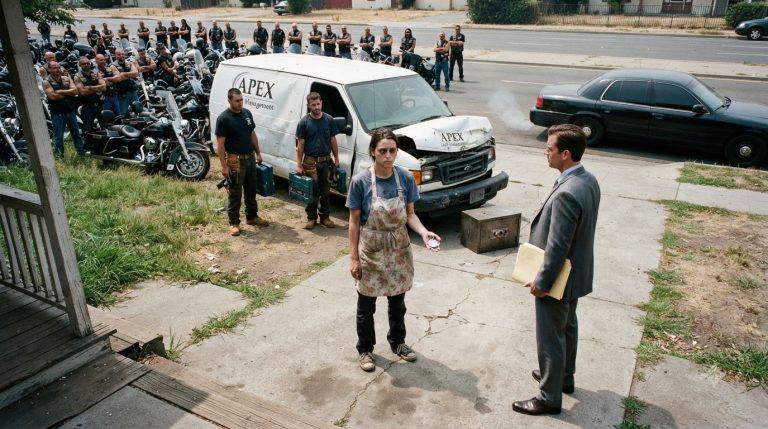
Inside, the dark had a physical weight. She didn’t turn on the overhead fluorescents yet. She didn’t need them. Her boots knew the specific dip in the floorboards near the register, the exact squeak of the hinge on the kitchen swing-door. She tied the faded blue apron behind her back, her fingers moving through the knot without her looking down. The fabric was thin at the waist, frayed along the seams where it had been washed a thousand times until the denim blue had softened into the color of a winter sky.
She reached for the nickeled coffee pot. It was heavy, its metal surface dulled by scrub pads and scarred by decades of being slammed against the burner rings. As she filled it from the tap, the cold water splashed against her right forearm.
The skin there didn’t feel the cold the same way the left did. The scars were thick, uneven ridges that looked like pale twine wrapped tightly around the bone. In the dim red glow of the flickering sign, they looked darker, like old ink beneath the skin. New customers always did the same thing. They looked at her eyes, then their gaze slid down her cheek to the line that disappeared under her collar, and then their knuckles would tighten on their menus. She never watched them do it, but she always knew when the shift happened. The silence in a booth changed when people were trying not to look.
She struck a match. The blue flame of the griddle caught with a soft whump, throwing a sudden, warm yellow light across the stainless-steel backsplash. She laid the first strips of bacon down on the iron. The fat began to render, its sharp, salty scent cutting through the lingering smell of old floor wax. This was the peace she had traded the desert for—a world measured in three-minute eggs, two-dollar tips, and the steady, predictable hiss of a hot plate.
Near the back booth, right under the shelf where the clean coffee mugs were stacked, her hand paused. Her fingers brushed against something hard and metallic wedged behind the wooden molding. She pulled it free. It was a small brass button, tarnished green around the edges, stamped with the faint anchor of a service uniform. It had been there for months, maybe years, dropping out of some trucker’s pocket or an old man’s coat. She didn’t toss it into the trash. She set it quietly beside the register, its weight a tiny, cold anchor against the polished wood.
The clock above the pie case ticked loud in the empty room. 5:15 a.m. In forty-five minutes, the first gravel truck would pull in. She picked up the damp cloth and began to wipe down booth four, her movements rhythmic and slow, her mind drifting to the horizon where the gray was just beginning to turn to a faint, bruised violet.
CHAPTER 2: THE ARRIVAL OF THE ARROGANT
The clock above the pie case struck 5:45 a.m., the metallic clack of the internal gear dropping with a heavy, solitary thud into the quiet room. Outside, the Horizontal mist off Highway 12 had turned from a bruised violet to a flat, pale pewter. Isabella Cruz didn’t lift her gaze from the formica counter of booth four. Her hand, holding the damp blue cloth, moved in one final, slow circle across the faded yellow laminate, tracing a faint ring left by someone’s ancient coffee mug.
The brass service button she had salvaged from behind the molding sat next to the register, catching the first thin needle of cold daylight that pierced the front windowpane. It looked smaller now that the dark was receding.
A sudden, sharp hiss broke the rhythm of the room. On the line, the steady blue glow beneath the iron griddle flickered, shrank to a pinprick of orange, and died. The smell of unburned gas—sharp and faintly sulfurous—woke her senses instantly. Isabella set the rag over the edge of the bucket and walked behind the counter, her boots making no sound on the rubber floor mats. She knelt before the heavy cast-iron stove, her fingers finding the brass pressure valve by touch alone. It was cold, coated in a fine layer of soot that flaked off against her skin. The pilot line was choked; a tiny particle of rust from the old tanks outside had drifted down the pipe, settling into the throat of the burner.
She didn’t call for Margaret. She didn’t hurry. From her apron pocket, she pulled a small, worn piece of stiff wire—a standard paperclip she kept twisted into a straight probe—and slid it into the narrow aperture of the jet. She felt the blockage, a soft, granular resistance, and cleared it with a single, practiced twist of her wrist. When she struck the second match, the flame leapt across the iron rings with a clean, low snap. She watched the blue heat stabilize, her reflection distorted in the grease-filmed stainless steel of the backsplash. Her face in the reflection was a series of shadowed valleys, the pale ridges along her jawline catching the light like wire.
The sound of tires on gravel cut through the hum of the stove. It wasn’t the deep, double-clutch rumble of the morning logging trucks or the familiar, rusted rattle of Marcus Vance’s old pickup. It was too smooth—the heavy, rhythmic crunch of low-profile radial tires rolling over wet stone with an unhurried, expensive weight.
Isabella stood up slowly, wiping her blackened fingers on the edge of her apron. Through the glass of the front door, she watched a dark, late-model European sedan glide out of the mist. Its headlamps were piercingly white, cutting two clean, horizontal cylinders through the damp air before the engine died with a quiet, synchronized click of electronic valves.
Three figures moved behind the tinted windshield. They didn’t get out immediately. For a full thirty seconds, the interior lights stayed off while they sat in the quiet luxury of the cabin, their silhouettes dark and sharp against the pale morning behind them. Isabella picked up the nickeled coffee pot from the burner, testing its weight. It was full, the dark liquid inside moving with a slow, viscous heat. She adjusted the collar of her shirt, pulling the stiff cotton fabric up an extra half-inch until it pressed against the lowermost ridge of the scar tissue on her throat. It wasn’t a gesture of hiding; it was a physical calibration, a hardening of her perimeter before the room lost its isolation.
The car doors opened together, the heavy thud of the latches sounding remarkably like the sealing of a pressurized hatch. The air that rushed into the diner as the front door opened was cold, smelling of premium leather, artificial pine, and an excessive, heavy layer of cologne that immediately challenged the simple, honest scent of bacon fat and bleach.
The lead man stepped inside first. His shoes were thin-soled, black leather that clicked with an aggressive, unearned resonance against the soft linoleum floor. His coat was charcoal wool, dry and perfectly pressed, hanging from his broad shoulders with a structural rigidity that didn’t belong on Highway 12. His eyes skipped over the register, ignored the small brass button sitting by the wood rim, and locked instantly on the corner booth by the window—the one with the clear view of the empty road.
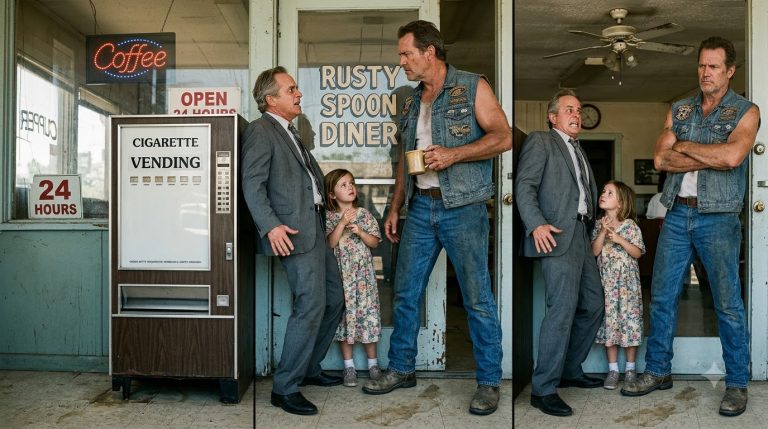
“Place is like a time capsule,” the man said, his voice carrying a loud, flat confidence that filled the room without asking permission. He didn’t look at Isabella as he passed the counter. He didn’t look at the faded blue of her apron. His companions followed him, their laughter short, transactional, and loud enough to break the lingering stillness of the corner booths. They slid into the booth, their heavy wool coats bunching against the cracked vinyl of the seats with a dry, scratching friction.
Isabella let the coffee pot rest against her hip for one heartbeat, her mind mapping the space. Marcus Vance wasn’t in booth four yet—his shift at the mill didn’t let off for another twenty minutes—but the stillness of the diner had already evaporated. She picked up three menus from the stack by the register, the edges of the cardboard soft and rounded from years of grease and thumbs. She walked toward the window, her breath even, her eyes reading the micro-movements of the three men as they adjusted their ties and laid their sleek, glass-faced phones flat on the yellow formica.
“Coffee’s hot,” she said as she reached the edge of their table, her voice level, dry, and completely devoid of the welcoming pitch expected of a roadside waitress. She set the menus down one by one, her right arm turning slightly as she did, exposing the pale, winding trails of fire to the bright, cold light of the window.
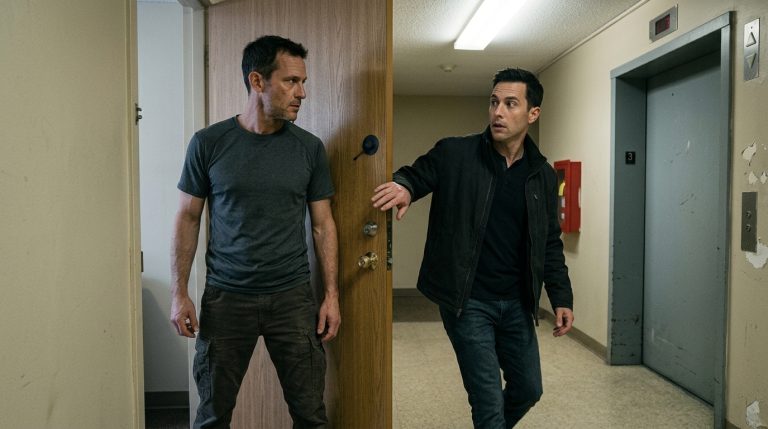
The lead man paused, his fingers hovering half an inch above his phone as his eyes left the print on the cardboard and fixed directly on the uneven, discolored skin of her wrist.
CHAPTER 3: THE DROP PLATE
The lead traveler’s gaze remained pinned to the pale, raised ridges of her wrist for three full seconds, the ticking of the pie-case clock providing a rhythmic undertone to his silent assessment. The two men beside him did not look up immediately; one was adjusting his gold-plated cufflink, while the other slid his thumb across the polished screen of his phone, completely insulated by the quiet luxury of their morning journey. But the air in the immediate perimeter of the booth had tightened.
Isabella did not withdraw her arm. She held the three menus steady, her fingers firmly gripping the soft, rounded edges of the cardboard. The texture of the laminate was cool against her unscarred skin, while the right arm—the one that had felt the white-hot heat of a secondary fuel ignition—registered only the heavy, horizontal draft pushing past the window frame from the cold highway outside.
The man finally tilted his head back, his silk tie slipping slightly across his starched collar with a dry, synthetic rustle. His face was smooth, lacking the weather-beaten creases of the loggers or the permanent grease shadows beneath the fingernails of the mill workers who usually occupied these tables. His eyes were small, sharp, and entirely focused on evaluating the aesthetic discrepancy she presented in the morning light.
“You really think someone like you should be out here serving people?” He didn’t drop his voice. The question was delivered with the flat, professional volume of a senior partner addressing a minor administrative error. He reached out, his manicured index finger tapping the yellow formica twice, just an inch away from the menus she had set down. “Wouldn’t dishwashing in the back be more appropriate for everyone involved?”
The words did not drop like a sudden explosion; they drifted into the corners of the diner like the heavy cologne he wore, settling over the tables with an greasy, unhurried weight.
Behind her, near the counter, the dry scrape of a fork against a ceramic plate died instantly. The rhythmic, circular motion of the cook’s spatula on the iron griddle halted mid-stroke, leaving a thin trail of grease to smoke silently against the back riser. At booth six, an elderly couple who had been dividing a single blueberry muffin looked down at their laps, their postures stiffening into an awkward, self-conscious defense. The diner held its breath, the collective silence turning the small room into a sounding board for the hum of the neon tube by the door.
Isabella straightened her spine, her movements precise, zero-skip calibration. She pulled the nickeled coffee pot back against her hip, the heavy metal vessel balanced effortlessly against her apron string. She did not blink. Her eyes scanned the lead traveler’s expression, noting the faint, symmetrical curve of his lips—a smirk that was less an expression of active malice and more the product of an unshakeable, civilian entitlement. He was a man who believed every environment he entered should conform to a specific, premium standard.
“I have served men like you before,” Isabella said, her voice dropping into the flat, hollow timbre she had used in the triage tents when the mortars were walking their way toward the trenches. It was an even, unhurried sound, completely lacking the defensive heat of an argument. “But in far worse places.”
The traveler’s smirk remained fixed for a fraction of a second before his jaw muscles tightened beneath the skin. The man to his right, who had been focused on his phone, stopped his thumb mid-scroll. The silence expanded, heavy and thick, absorbing the low hiss of the cleared griddle jet behind the counter.
The second companion, attempting to regain the momentum of their earlier laughter, let out a short, forced chuckle that died in his throat when he looked up and met Isabella’s unmoving gaze. “Don’t tell me you were in the military,” the leader scoffed, his eyes sweeping across the trails of fire on her neck as if evaluating an insult to his own morning comfort. “With that face, you wouldn’t make it past the parking lot at recruitment.”
The remark sat between them on the table, cold and unvarnished. But the reaction he expected did not materialize. Isabella did not drop the coffee pot, nor did her fingers tighten on the handle. She stood perfectly still, her mind executing a silent tactical assessment of the room. Near the register, the small brass service button she had left on the rim caught a sudden glint of rising sun from the window, its tarnished anchor a silent, metallic witness against the dark wood.
From the back booth, the heavy scrape of a chair leg against the linoleum broke the stillness. A truck driver who had been eating his eggs stood up slowly, his heavy flannel jacket rustling against the vinyl partition. He did not say a word to the men in the sedan’s corner. He simply dropped a crumpled ten-dollar bill onto his half-eaten plate, pulled his cap down over his forehead, and walked toward the exit, his heavy work boots striking the floor with a rhythmic, thunderous thud that vibrated through the baseboards.
Isabella turned her back on the travelers with an deliberate, unhurried rotation. She walked away from the window, her hands steady as she approached the next booth, the nickeled pot tilted forward to refill a regular’s cup without letting a single drop spill onto the faded wood. Her face remained a calm, unreadable mask, but her skin remembered the specific heat of the fire, and her fingers felt the small, persistent thrum of a world that had begun to watch her every move.
CHAPTER 4: WEAPONIZED SILENCE
The heavy slam of the diner’s screen door rattled the loose pane of glass in its frame, the vibration traveling down the wall and settling into the floorboards beneath Isabella’s boots. The truck driver’s unhurried, rhythmic stride across the gravel lot outside slowly faded into the wash of the wind off Highway 12. Inside, the pool of silence left in his wake was dense, broken only by the faint, wet condensation dripping from the edge of the pie case.
Isabella did not look back at the corner booth by the window. Her focus remained entirely tied to the circular lip of the thick porcelain mug she was filling. The dark coffee rose slowly, its steam rising in a thin, twisting column that dissolved against the faded yellow veneer of the table partition.
Marcus Vance sat in booth four, his broad shoulders slightly hunched forward under a grease-stained canvas utility jacket that smelled of damp cedar sawdust and stale tobacco. He didn’t look up when the liquid reached a quarter-inch from the rim. His hands, massive and cross-hatched with thin white scars across the knuckles from decades of mill labor, were wrapped loosely around the base of the cup. His thumbs were calloused, matching the rough, unpolished texture of the table itself.
“They’re loud early,” Marcus murmured, his voice a low, flat rumble that traveled through the wood rather than the air. He didn’t look toward the corporate travelers near the glass, but his eyes were fixed on a small, folded piece of paper tucked half-hidden beneath his paper napkin.
Isabella allowed the nickeled pot to settle, the residual heat from the metal handle penetrating the thin denim of her apron. “The highway brings all kinds,” she replied softly. Her right arm hung at her side, the pale, raised tracks of skin on her forearm catching the grey morning light. In this light, the skin looked less like a relic of an old explosion and more like ancient lace, softened by time and repeated washings. She noticed the corner of the paper Marcus was subtly guarding. It was a printed logistics sheet from the old supply depot near the rail yard—a layout plan showing vehicle bay rotations from a deployment schedule dated fifteen years ago. It didn’t belong in a mill worker’s pocket.
She took a slow, deliberate breath, reading the micro-posture of Marcus’s frame. He hadn’t touched his breakfast. A small physical discrepancy sat between them—the salt shaker had been moved to the exact dead center of the table’s decorative emblem, a precise, tactical alignment that mimicked a forward marker. Her medical training, the locked-away reflexes that analyzed body language before a single word was spoken under mortar fire, recognized the positioning instantly. Marcus wasn’t just sitting; he was observing the three men by the window with an calculated, defensive perimeter.
“Julian Thorne,” Marcus said, his voice dropping another octave as he used his thumb to smooth a fraying corner of the napkin. He didn’t look at her, but his shoulder shifted, blocking the direct line of sight from the window booth. “The big one. He runs logistics for the regional line. Likes things clean. Thinks the world is a spreadsheet with no margin for error.”
Isabella did not ask how a retired mill hand knew the man’s name or his business. She simply adjusted her grip on the nickeled pot, her fingers touching the cool wood of the handle insert. The subtext between them was thick, a shared language that didn’t require exposition. She knew Marcus had served somewhere in the early 2000s; the way his ankles locked behind the chair legs and the slight, permanent tilt of his left ear toward the door gave him away to anyone who knew what to look for.
Behind them, the three travelers had gone quiet, the sudden departure of the truck driver and Isabella’s level, unbothered retort having stripped the easy arrogance from their huddle. The lead man was staring at his phone, his thumb tapping the glass surface with an irregular, defensive speed that betrayed his discomfort. His companions were murmuring in short, transactional half-whispers, their eyes darting toward the cash register and back to the window, eager to calculate the fastest path out of the room.
Isabella turned her head slightly, her gaze catching a fleeting shadow moving behind the kitchen’s small porthole window. Margaret Benson’s face was there, a web of genuine worry etched into the deep wrinkles around her eyes. Margaret’s hand was resting against the wood of the swing-door, ready to push it open, ready to step onto the floor and assume the burden of the order.
Isabella gave a fraction of a nod—a silent, imperative command that told the older woman to stay back. This was her floor, her peaceful battlefield, and she had no intention of relinquishing the line. Every minor victory in this life had to be paid for with endurance, and she would not let a civilian pocket of noise dictate her routine.
She turned her attention back to Marcus, her face a calm, unmoving mask. “He can like his spreadsheets,” she said, her voice dry and steady as she pulled a clean paper napkin from her apron pocket and laid it precisely beside his mug. “The road doesn’t care about the margin.”
Marcus’s knuckles tightened slightly on the porcelain. He looked up then, his grey eyes meeting hers for a solitary second, a flash of deep, mutual respect passing between them without a single structural label being used to describe it. He shifted his thumb, completely covering the old printed depot sheet, locking the tiny clue away beneath the weight of his hand. Isabella felt the small, persistent thrum of a hidden architecture shifting beneath the surface of the diner, a decoy truth beginning to gather form in the quiet corners of booth four.
CHAPTER 5: THE RIPPLE IN THE BOOTHS
The weight of Marcus Vance’s thumb remained pressed firmly against the edge of the yellow paper, the coarse grain of his skin anchoring the document against the laminate. A low, rhythmic rattle vibrated through the floorboards as a secondary line of gravel trucks shifted gears down on Highway 12, their heavy transmissions throwing a dull hum against the diner’s front windowpane.
Isabella didn’t withdraw her gaze. The reflection of the pale morning sun lay flat across the surface of the coffee she had poured, a dark, viscous circle that held the heat within the thick porcelain walls of the mug.
“The road doesn’t care about the margin,” she repeated, her voice dropping into a register so quiet it barely cleared the space between the salt shaker and the napkin holder. For a split second, the gravelly pitch of Marcus’s acknowledgment didn’t sound like a North Carolina mill town; it sounded exactly like the crackle of a dead-channel radio over an encrypted tactical network—the flat, low-frequency hum that always preceded a secondary mortar bracket. The sensory phantom hit her behind the eyes, a brief, dry heat that made her throat tighten before the familiar smell of bleached cotton and wet wood brought her back to the counter floor.
Marcus didn’t move his hand, but his eyes drifted toward the cash register, where the small brass service button sat reflecting a solitary point of silver light. “Julian isn’t here to look at the scenery, Izzy,” he murmured, his fingers curling slightly until the printed sheet was completely obscured by the shadows of his knuckles. “He’s running an audit on the timber line. He looks at every scrap of cedar that moves through the western ridge. If something doesn’t match the manifest, he cuts the line clean.”
Isabella felt the skin along her jawline tighten, the rough ridges of the scar tissue drawing the skin taut. The subtext was clear, though neither of them had used a single name from Echo 12. Marcus wasn’t talking about lumber. The old logistics depot sheet under his palm wasn’t a mill record—it was a layout map of the forward operating base where the supply trucks had been staged before the fire. The decoy secret was beginning to fray at the edges, its physical presence sitting directly between them on the faded table.
Behind her, the sudden scrape of a leather sole against the floor signaled a shift in the window booth. Julian Thorne stood up, his charcoal wool coat swinging open to reveal the sharp, pressed crease of his trousers. His phone was already tucked into his breast pocket, the glass face hidden away. He didn’t look at Isabella, but his profile was rigid, his eyes scanning the cash register with an aggressive, scanning focus that skipped over Margaret Benson’s small, round face behind the porthole window.
“We’re leaving,” Thorne said, his voice carrying that same loud, executive density that had broken the room’s stillness twenty minutes earlier. He didn’t wait for his companions to gather their folders; he simply threw a crisp twenty-dollar bill onto the formica of his own table, letting the paper float down until it landed squarely on top of the untouched menus. “The service here is exactly what you’d expect from a place that belongs in the dirt.”
His companions rose in unison, their movements synchronized and silent, their expensive leather shoes clicking with an awkward, hurried rhythm toward the exit. They moved past booth four like men trying to avoid the draft from a broken window, their eyes fixed strictly on the brass latch of the front door.
Isabella did not step back to let them pass. She stood her ground beside Marcus’s table, her right hand resting flat against the metal rim of her serving tray, her scarred forearm held parallel to the floor. As Thorne drew level with her shoulder, his stride hitched for less than a fraction of a second—a subtle, physical hesitation where his civilian confidence collided with the iron stillness of her posture. He smelled of cold air and silver polish, a superficial veneer that felt brittle against the heavy, grease-muffled reality of the room.
The latch clicked. The heavy timber door swung open, letting in a sudden, sharp gust of wind from the highway that smelled of raw pine and wet limestone. The three men stepped out into the pewter mist, their dark sedan door clicking shut with that same pressurized, mechanical thud that had signaled their arrival. Through the glass, Isabella watched the tail lamps flare a brief, brilliant crimson before the car pulled out onto the asphalt, its low-profile tires leaving two dark, wet tracks in the grey gravel of the parking lot.
The moment the car cleared the perimeter, the diner seemed to let out a collective, ragged breath. The cook’s spatula resumed its rhythmic scrape against the griddle, and at booth six, the elderly couple began to talk again in low, rhythmic murmurs about the weekend rain.
But the silence at booth four remained unbroken. Marcus slowly lifted his hand from the table, leaving the printed paper exposed in the grey light. He didn’t pick it up. He simply slid it two inches across the formica toward Isabella’s tray, his thumb leaving a small, dark smudge of graphite on the edge of the white border.
“He’s tracking the old manifests, Izzy,” Marcus said, his voice entirely devoid of inflection as he picked up his mug and took a slow, deliberate sip of the hot coffee. “He thinks there’s an inventory leak from the old base line. He doesn’t know what’s locked in those files, but he’s digging. And he’s going to start with the names on the casualty reports.”
Isabella’s fingers closed around the corner of the sheet, the thin paper crisp and cold against her thumb. She didn’t look down at the text, but her skin remembered the specific texture of the old supply logs—the ones she had personally signed off on before the transport went up in flames. The ultimate truth remained buried deep within the dark architecture of her memory, but Layer 1 had just been laid bare on the yellow laminate. She folded the paper into a small, tight square and slid it deep into the pocket of her blue apron, her active agency reasserting itself as she prepared for the next shift of the line.
CHAPTER 6: THE KITCHEN SANCTUARY
The thin, crisp texture of the folded log sheet crinkled softly against the calloused skin of Isabella’s thumb as she pushed it deeper into her faded blue apron pocket. Beneath the square of paper, her knuckles brushed the cool, uneven edge of the tarnished brass button she had placed there earlier. The small metallic anchor sat hard against her hip, a physical weight that anchored her to the floorboards as the sound of Julian Thorne’s sedan completely dissolved into the horizontal wash of Highway 12.
She turned from booth four, her movements fluid and unhurried. Her boots tracked across the faint grease rings near the counter, her eyes performing a swift, habitual sweep of the small room. The elderly couple at booth six had returned to their low-register murmuring, their forks scraping lightly against their shared plate with a soft, comforting rhythm. Marcus Vance remained perfectly still, his massive hands folded around his thick porcelain mug, his face once again an unreadable block of weathered timber as he looked down into the dark liquid.
Isabella walked toward the rear of the diner, her right arm hanging naturally at her side. The raised ridges of her scar tissue caught the cool draft shifting near the floorboards, registering the drop in temperature with a faint, localized ache that she ignored out of long familiarity. She pushed through the heavy wooden swing-door, the hinges grooving with a familiar, low-register squeak that cut off the hum of the dining room neon.
The kitchen smelled immediately of older, heavier surfaces—scorched iron, yellow onions, and the sharp, alkaline sting of commercial dish soap. Margaret Benson stood by the stainless-steel prep table, her small, round frame slightly slouched over a wooden cutting board. She was holding a damp bar towel in both hands, twisting the cotton fibers into tight, pale ropes before letting them unravel back into her palms. The deep wrinkles around her eyes were taut with an immediate, maternal focus that didn’t belong in a simple roadside business.
“They’re gone, Margaret,” Isabella said, her voice remaining in that level, dry timbre that left no room for frantic evaluation. She reached for a clean glass towel hanging from the lower shelf of the warming rack, her fingers moving with the precise, zero-skip rhythm of someone clearing a field kit.
Margaret let the twisted towel drop flat onto the metal surface with a soft, wet thud. “I saw him from the porthole, Izzy,” she murmured, her gaze fixing on the discolored trails of fire climbing up Isabella’s neck. “Julian Thorne doesn’t come down this stretch of the highway for the breakfast special. He’s been sniffing around the county records office in town for three days. My cousin works the desk there. She told me he was looking for old corporate leases linked to the old rail line—and the manifest numbers for the trucks that used the base depot before the fire.”
The subtext hit the metal-lined walls of the kitchen with a dull, heavy resonance. Isabella didn’t let her hands freeze. She picked up a wet porcelain bowl from the wash basin and began to wipe it down with long, horizontal strokes, the fabric of the towel catching on the rough glaze of the rim. “He’s looking at old inventory numbers,” she said, her tone flat, deliberately draining the heat from the older woman’s words. “Let him look. The files from Echo 12 are federal property. They don’t open for regional logistics managers.”
“But he’s not just looking at the steel, honey,” Margaret stepped closer, her voice dropping into a guarded whisper that barely carried over the low hiss of the stove pilot behind them. “He’s matching names. He asked about the waitress with the scars at the county line gas station yesterday. He’s trying to find out who was holding the manifest clipboard the night the secondary fuel tanks went up.”
Isabella felt a small, sharp prickle of cold skin beneath her apron pocket where the folded paper lay. The decoy secret—the idea that Julian Thorne was simply an arrogant traveler conducting a routine corporate audit—had completely dissolved within the greasy air of the kitchen. Layer 1 was broken. Thorne was hunting for a specific leak, a discrepancy in the casualty records that pointed directly back to the supply yard. But the absolute final reality—the reason why the fuel tanks had been left vulnerable to the secondary blast in the first place—remained strictly locked inside the silence she had kept for fifteen years.
She set the dried bowl down on the stack, the porcelain clicking with a solid, definitive thud against the iron shelf. She looked down at Margaret, her grey eyes holding an level, unshakeable calm that had been forged under sandstorms and mortar brackets.
“He can ask whatever questions he likes,” Isabella said, her fingers flattening the front of her apron until the outline of the paper square was completely hidden behind the denim fibers. “The people who know the numbers don’t talk to men like Julian Thorne. And the ones who do talk don’t know the whole truth anyway.”
She picked up the nickeled coffee pot from the secondary burner, testing its weight one more time before turning back toward the wooden swing-door. Her active agency remained completely unbroken; she would not hide in the kitchen sanctuary while her floor required maintenance. She pushed the door open with her left shoulder, stepping back out into the pale pewter sun that was now flooding through the front glass, her boots finding the familiar, dipping floorboard by the register with perfect, real-time precision.
CHAPTER 7: THE CLOSING SWEEP
The wooden swing-door settled behind Isabella with a dying, rhythmic creak, its final vibration masked by the low, regular hum of the griddle line. Her boot came down precisely on the soft, depressed center of the floorboard by the cash register. The dining room had emptied entirely while she was in the kitchen sanctuary; Marcus Vance had slipped out into the gray noon, leaving nothing behind but an empty porcelain mug and a perfectly centered salt shaker on booth four.
The pale, horizontal sun had shifted, casting long, desaturated blocks of light across the linoleum floorboards. The air inside the room had grown colder, smelling less of commercial cologne now and more of the damp gravel dust kicked up by the passing timber trucks out on Highway 12.
Isabella set the nickeled coffee pot back onto its designated burner ring, the metal clicking cleanly against the iron. She reached into her apron pocket, her fingers brushing the stiff, folded edge of the log sheet before wrapping around the handle of the old wood-backed broom leaning against the counter. The horsehair bristles were worn thin on the left side, frayed and split from years of clearing grit from the threshold. She began her sweeping ritual at the far corner of the room, her stroke long, horizontal, and unhurried.
As she drew closer to the window booth Julian Thorne had occupied, a sudden, erratic click came from the junction box near the lintel. The red neon ‘OPEN’ sign flickered twice, its soft hum breaking into a sharp, irregular stutter that didn’t match the standard electrical cycle. Isabella paused, her arms resting flat against the broom handle, her eyes tracking the thin glass tubes. The neon didn’t fade; it skipped, casting an unnatural, rhythmic pulse of red across the yellow formica of the empty table. Her tactical training—the memory of diagnostic equipment failing before an electrical surge—noted the interval. It wasn’t a loose bulb; someone had been shifting the external line transformers down the road, pulling power from the local grid.
She leaned down, her left hand keeping the broom steady while her right fingers swept across the vinyl seat where Thorne had been sitting. The fabric was cold, holding none of the man’s physical warmth, but its faded blue texture felt rough under her skin. Her hand brushed against a small, stiff fragment left behind in the deep fold between the cushion and the wood partition.
It was a thin strip of white adhesive tape, the heavy-duty industrial kind used to seal federal cargo crates. On its surface, a partial series of stamped red characters was visible: E-12-LOG-B2.
Isabella stood up slowly, her spine straightening in one synchronized motion. She didn’t drop her gaze to her hand. She slid the adhesive strip into her pocket alongside the folded document and the small brass uniform button. Layer 1 had completely fractured within the silent space of the empty diner. Thorne wasn’t just matching casualty reports; he had already located the specific crate numbers from the vehicle bays. He was hunting the physical paper trail that connected the secondary blast to the unlatched ordnance, and he was drawing the perimeter closer with every hour he spent in the county line offices.
She resumed her sweep, the horsehair bristles scratching lightly against the grain of the floorboards as she pushed the accumulated gravel toward the zinc dustpan by the door. Outside, the twilight was beginning to settle over Highway 12, the pewter mist turning a deep, heavy indigo as the sun dipped behind the western pine ridge. The road was still, the long stretches of asphalt black and wet under the first flickering streetlamps.
Her active agency remained absolute. She would not wait for Thorne to return with federal authorization or an corporate injunction. She had spent fifteen years shielding the names of the two Marines who had left that bay unsecured—the two boys who now had families, who coached little league, who believed their secret had burned to ash in the Fallujah sand. The burden was hers to carry, a self-imposed Kintsugi that held their broken reputations together with her own silence.
She reached the threshold, her broom gathering the final grains of highway sand into a neat, dark line against the zinc rim. The neon sign above her head gave one final, erratic click before settling back into its low, steady B-flat hum, bathing her scarred wrist in a long, unmoving pool of red light as she locked the deadbolt for the night.
CHAPTER 8: THE SHADOWED SCREEN
The metallic clack of the brass deadbolt slid home into the frame, isolating the interior of May’s Diner from the rising mountain chill of Highway 12. Isabella Cruz kept her palm pressed flat against the cool wood of the door, her fingers resting just an inch away from the lock. Through the glass, the indigo twilight had completed its descent, swallowing the gravel lot until only the white-painted parking bumpers remained visible, glowing faintly like bleached bones under the high streetlamp.
She turned back to the room, the wood-backed broom still gripped securely in her left hand. The silence here was different now—it had lost the tense, echoing quality left behind by Julian Thorne and his associates. It had returned to the soft, matted quiet of a space that had outlived its daily purpose.
Isabella walked down the short aisle toward the counter, her boots following the familiar path without a skip. She reached into her apron pocket, her fingers brushing the strip of industrial tape before pulling out the small, tight square of folded log paper Marcus Vance had slid across the laminate. She laid it flat on the zinc counter rim beside the cash register, smoothing the creases with the side of her unscarred thumb.
The document was an unredacted copy of an Echo 12 supply manifest, dated March 14, 2010. Her eyes tracked down the columns of numbers, skipping past the steel tonnage and the fuel cell allocations until they stopped on a single line at the bottom: Class-V Ordnance Securing Log—Bay 3.
Beside the entry, two sets of initials were penned in faded blue ink. They belonged to the two young privates she had pulled from the burning transport hull just outside Forward Operating Base Courage. It was the physical proof she had spent a decade and a half expecting someone to look for. The secondary explosion hadn’t been an unpredictable tragedy caused purely by an enemy mortar; it had been magnified because the boys had left the rapid-deployment mortar shells unlatched in their storage racks while trying to secure their own personal gear. They hadn’t sabotaged the unit; they had simply been twenty years old, terrified, and fundamentally careless in the dark.
The text on the paper didn’t mention her name, but it carried the serial number of the clipboard she had personally carried into the field hospital. Julian Thorne wasn’t trying to expose a massive military conspiracy; he was running a corporate audit to reclaim insurance losses on regional cargo contracts by proving past negligence by personnel who had transitioned into civilian logistics lines. He wanted to break the two men she had burned her arm to save, dragging their names through a public courtroom to settle a modern balance sheet.
Isabella picked up the old brass uniform button sitting by the register. Its weight was a tiny, cold anchor in her palm. The absolute final reality sat before her on the counter, stripped of its labels and its armor. She had carried the fire not because she was a decorated hero, but because she had chosen to let the blame burn away in the vehicle cabin, allowing the official record to classify the blast as an unavoidable consequence of active combat.
She reached under the counter rim, her hand finding the old, battery-operated radio she used during the evening prep. Beside it, tucked into the dark space behind the utility ledger, sat an old, cracked tablet computer Margaret Benson had left for tracking inventory updates. Isabella flipped the switch. The screen woke with a low, pale gray luminescence that cut through the red neon glare from the window.
A local community message board was active on the browser, the text scrolling automatically under a simple, non-descript heading: Highway 12 Observations.
An anonymous post had been entered less than an hour ago. The writing was sparse, clear, and completely lacked the formal structure of an official report. It detailed the event from the morning—the precise words Julian Thorne had used, the quiet calm with which the scarred waitress had poured the coffee, and the sudden, defensive departure of the truck driver. It didn’t list Isabella’s unit, and it didn’t mention the unlatched ordnance in Bay 3. It simply recorded the texture of the dignity that had remained standing when the arrogance in the room had broken.
At the bottom of the screen, the view counter was shifting in real-time, the digits climbing from dozens to hundreds with a quiet, synchronized click of the data feed. A sleeping network of veteran groups across the state was beginning to blink awake, their flags clearing the digital board as the story began its horizontal drift across the county lines. Marcus Vance had done exactly what a tactical scout was trained to do—he had shifted the perimeter, creating an informational shield that would bring a wall of witnesses to May’s Diner before Julian Thorne could ever return with a legal summons.
Isabella set the tablet down face-blind against the wood rim. She didn’t smile, but the tension behind her jawline softened, the tight ridges of the scar tissue drawing back until her breathing became slow, even, and deep. The decoy had failed; the truth was safe behind a barrier of people who understood that some burdens were meant to be shared in silence.
She walked to the griddle line, her movements unhurried as she turned the gas valves down to zero, watching the tiny blue pilot lights shrink and die across the cast iron. She picked up a small screwdriver from the maintenance drawer and spent five minutes adjusting the loose hinge on the pie case door, turning the screw until the glass pane aligned perfectly with the frame, closing without a single rattle.
The diner was cold now, the air holding the still, peaceful atmosphere of a sanctuary that had held its ground against the highway. Isabella untied her faded blue apron, folding it over the counter edge beside the small brass button, and stepped out into the quiet night, her scars completely uncovered beneath the pale, steady light of the stars.