The Weight of a Single Iron Pin: How a Retired Surveyor Dismantled a Suburban Empire
CHAPTER 1: THE RUSTED PIN
The floral muumuu billowed in the humid air like a warning flag, but the sound that anchored Jack Thorne was much quieter—the scrape of a heavy pry bar against dry asphalt.
Karen planted her hands on her hips, her face flushed to a blotchy purple that matched the aggressive upholstery of her attire. She stood on the chemically treated turf of the Oak Meadows common area, a few feet from the small, jagged cap of rusted rebar protruding from the grass. That piece of iron had been driven half a century ago by a grandfather who believed in sweat, soil, and the absolute permanence of a measured line.
“They’re coming out tomorrow, Jack,” Karen barked, her voice scraping against the quiet afternoon like gravel in a tin cup. “The board voted. Aesthetic standards. You can’t just stick scrap metal in the middle of a planned community and pretend you own the world.”
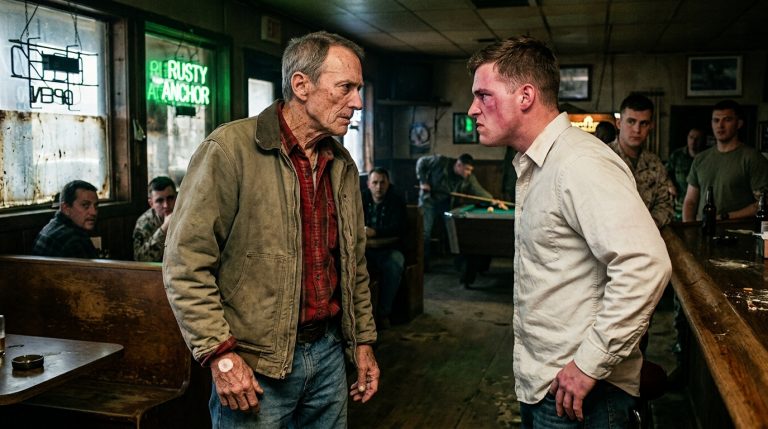
Jack remained silent, his boots planted firmly on his side of the marker. The grass here grew a fraction longer, unruly and deep-rooted compared to the sterile green carpet across the invisible divide. Inside his chest, his heart beat with a slow, disciplined rhythm—the exact cadence he had maintained years ago when the desert dust had muffled the sound of incoming mortar. He didn’t see an angry neighbor in a suburban cul-de-sac. He saw a tactical error. He saw someone leaning too far over their own footing, completely unaware of the drop beneath them.
“You have a work order,” Jack said, his voice level, stripped of any defensive heat. “And your men have shovels. But neither of those things changes the county registry.”
“Don’t quote paperwork to me,” she snapped, stepping closer, her eyes narrowing as if she could physically push him back with sheer disdain. “This is my neighborhood. I built the standards here. That pin is an eyesore, and tomorrow morning, it goes into the back of a truck.”
She turned on her heel before he could answer, her golf cart whining as it reversed down the asphalt artery she treated like a sovereign highway. The two maintenance workers standing by their white utility truck exchanged uneasy glances, the younger one shifting his weight from foot to foot, his fingers tightening around the handle of a sledgehammer. They were just paycheck earners following a laminated sheet of paper, ignorant of the legal fault lines running underneath their work boots.
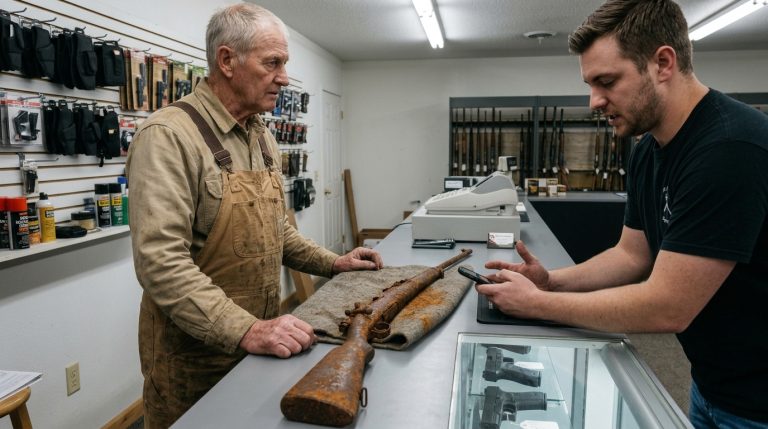
Jack didn’t move as the truck rumbled away, leaving behind a thin haze of exhaust that hung heavy in the damp heat. He reached down, his calloused thumb brushing the cold, oxidized crown of the rebar. It didn’t wiggle. It was anchored deep into the subsoil, tied by invisible lines of geometry to a concrete county monument half a mile down the road.
He turned toward the house, his gaze lifting to the porch where Sarah stood in the doorway, her arms tightly crossed, a shadow of quiet worry carving a line between her brows. He offered a faint, reassuring nod, letting her see the steady set of his jaw.
As he stepped onto the wooden deck, his pocket buzzed against his thigh. He pulled out the phone and stared at the screen, expecting another passive-aggressive notification from the portal. Instead, it was an automated alert from the county property portal, flagging a minor update to the neighboring parcel records—a microscopic digital footprint that didn’t match the historical plat map he had memorized decades ago.
CHAPTER 2: THE PAPER TRAIL
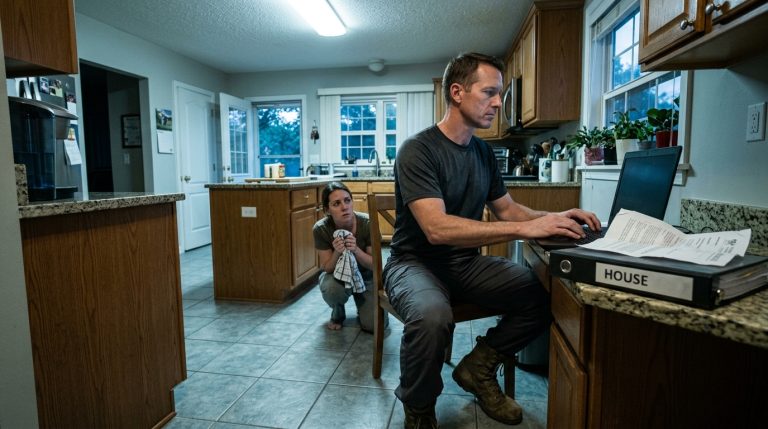
The hum of the refrigerator in the kitchen was the only background noise in the house, a low, rhythmic vibration that punctuated the stillness. Jack sat at the heavy oak dining table, the screen of his laptop casting a pale, clinical glow across his weathered face. Spread out before him like battlefield maps were the documents he had retrieved from the county records office: the original 1961 farm plat, spiderwebbed with elegant hand-inked surveyor notes, and the computer-generated subdivision layout from 1993.
He didn’t rush. Speed was an amateur’s mistake. In the corps, a hasty survey meant a misplaced bridge or a foundation sinking into unstable silt. He picked up a brass-weighted scale ruler, his thumb tracing the chamfered edge as his eyes moved back and forth between the two sheets of paper.
A sudden, sharp memory flared behind his eyes—the smell of freshly turned loam and pipe tobacco, and his grandfather’s voice echoing from decades past: They can take the surface with a checkbook, Jack, but they can’t change where the earth actually sits. He shook the thought away, refocusing on the grid lines. The boundary pin out by the driveway wasn’t an isolated anomaly. It was the anchor point of a structural deception.
Sarah walked quietly into the room, her footsteps muffled by the braided rug. She set a ceramic mug of black coffee beside his elbow, the steam curling upward into the dim light. She didn’t say anything, but her hand rested lightly on his shoulder for a brief moment—a quiet anchor in a rising tide.
“It’s not just a foot or two,” Jack said, his voice low, sounding more like a diagnostic report than a conversation. He tapped the scale against the 1993 developer plat. “Look at the baseline reference. They didn’t tie this section into the county monument down on Route 9. They started their measurements from the centerline of the new access road they wanted to pave.”
Sarah leaned over, her eyes following the tip of his finger as he traced the thin, computer-drafted boundary lines. “And the road sits…”
“Right across our western edge,” Jack finished. “Every single inch of it. The asphalt, the curb, the utility easements, and the decorative strip where Karen loves to police the grass height. It’s twenty feet deep for the entire length of our five-acre frontage. For thirty years, they haven’t just been a neighborhood next door. They’ve been squatting on us.”
The silence returned, heavier this time, laden with the weight of realization. It wasn’t merely a dispute over a rusted rebar cap or a $50 fine for an overgrown lawn. The petty harassment letters stacking up in his plastic sleeve downstairs weren’t random acts of bureaucratic annoyance; they were panic responses. Karen had known, or at least her predecessors had known, that the foundation of their entire subdivision rested on a ghost line. The aggressive enforcement was designed to intimidate him into submission before he ever looked too closely at the maps.
Jack pulled a fresh legal pad toward him, clicking his pen with a crisp, mechanical snap. He began to write in clean, all-caps military print, documenting the exact coordinate discrepancies, the missing reference ties, and the mismatch between the historical monument logs and the developer’s digital files.
“We can’t fight this with neighborhood arguments,” Jack said, keeping his eyes on the paper as his hand moved steadily across the page. “She wants to play paper warfare with fines and certified mail? We’ll give her a paper trail she can’t bury.”
“How much will a certified modern survey cost?” Sarah asked, her voice steady, though the pragmatic strain in it was unmistakable.
“Enough to hurt our savings,” Jack replied honestly, looking up to meet her gaze. “Marcus Cole charges top dollar for federal-grade boundary work. But once he drives those stakes, they’re not opinions. They’re legally binding facts.”
Sarah looked down at the maps, then back to Jack. The worry in her expression gave way to a flinty, shared resolve that mirrored his own. “Then call him in the morning. Let’s see how much she likes her aesthetic standards when the county has to redraw her precious subdivision.”
Jack nodded slowly, setting the cap back onto his pen. He closed the laptop, the screen fading to black, but the coordinates remained sharp and clear in his mind. The defensive phase was over; the lines were drawn, and the first true counter-move was ready.
CHAPTER 3: THE STAKING OF THE LINE
The morning mist still clung to the damp grass when the heavy white Ford F-250 rolled down the asphalt artery of Oak Meadows Lane, gravel crunching softly beneath its tires. Emblazoned on the door was the emblem of Cole Land Surveying and a Bureau of Land Management crest—a silent signal that amateur rules no longer applied.
Jack stood waiting by the edge of his driveway, a thermos of black coffee cooling in his hand. He watched as Marcus Cole stepped down from the cab. The surveyor was a tall, lean man whose face bore the deep-etched map of decades spent under open skies. He wore a faded orange safety vest over a chambray shirt, carrying a rugged plastic tripod case with the practiced, unhurried ease of a veteran engineer.
“Mr. Thorne,” Marcus said, his voice a gravelly baritone that carried easily across the quiet morning. There was no superfluous greeting, no wasted breath. “Let’s find out where your earth actually ends.”
“The baseline reference is down near Route Nine,” Jack replied, matching the surveyor’s pragmatic tone. “The developer’s 1993 plat shifted the whole corridor north by twenty feet, but the original county monuments from sixty-one haven’t moved an inch.”
Marcus offered a thin, knowing smile, the kind of expression reserved for professionals who had seen every shortcut developers ever tried to buy. He popped the latches on the equipment case, unspooled the legs of a sophisticated total station theodolite, and locked it down directly over the contentious rebar pin where Karen’s crew had tried to start their work days earlier.
The physical labor began with a quiet, methodical rhythm. Marcus did not rush; every movement was calculated, measured against the invisible geometry of the county grid. He set a prism pole over a known benchmark down the road while his assistant, a young man moving with matching efficiency, managed the data collector. The instrument whirred softly, a high-tech pulse of infrared light measuring angles down to the second.
From across the street, the familiar whine of an electric motor broke the morning stillness. A green golf cart came to a sharp halt against the curb. Karen sat behind the steering wheel, her floral muumuu stark against the neutral tones of the subdivision. Flanked by two members of her board, she stared across the asphalt with a look of fixed, brittle hostility.
Jack didn’t flinch. He watched her posture stiffen as Marcus continued his calculations without glancing her way.
“They’re on our common area,” Karen called out, her voice sharpening as she hoisted herself out of the cart. “You have no right to set up equipment there. I’m calling the county sheriff again if you don’t pack up right now.”
Marcus paused, his hand resting on the lock screw of the tripod. He didn’t turn to face her immediately. Instead, he adjusted his sunglasses, turned his head just enough to acknowledge her presence, and spoke with absolute, unemotional professional weight.
“Ma’am, I am a licensed federal and state surveyor,” Marcus said, his voice cutting through her complaint like a cold blade. “If you cross that asphalt line and interfere with this instrument, you are tampering with active legal evidence. I advise you to stay on your side of the road.”
Karen sputtered, her face flushing to a dark, mottled red, but the unyielding authority in Marcus’s voice froze her in her tracks. She looked at the total station, then at Jack, who stood silently beside the tripod like a sentinel. Realizing she had no leverage against a certified federal grid, she spun on her heel, climbed back into her cart, and retreated down the street, her silence bought temporarily by the sheer mass of unassailable fact.
With the interruption cleared, Marcus knelt by a patch of overgrown fescue a few yards down the fence line. He pulled a narrow steel probe from his belt and drove it downward into the damp earth. A dull thud echoed back up through the metal shaft.
“Right here,” Marcus muttered, gesturing for the shovel.
Jack stepped forward, taking the handle and sinking the blade into the turf. He cleared away two inches of dark, root-bound soil until his fingers brushed against something cold and unyielding. It was an old concrete monument, its brass disc oxidized green by thirty years of rain and shadow, untouched and unlisted on the developer’s modern maps.
Marcus wiped the brass clean with a rag, revealing the stamped county survey number from 1961. He looked up at Jack, his eyes sharp.
“Twenty-three and a half feet,” Marcus said softly, confirming the exact measure of the encroachment. “The road, the curb, the utility lines—they aren’t on subdivision property, Jack. They’re sitting right in your lap.”
Jack straightened up, wiping the damp earth from his hands onto his trousers. The physical proof was laid out before him, immutable and permanent. The paper war was over; the ground itself had spoken.
CHAPTER 4: THE LEGAL TRAP
The rain began to drum a steady, heavy rhythm against the tall glass windows of David Chen’s downtown office, blurring the gray skyline of the city into a wash of muted charcoal. Inside, the room smelled of cold rain on wool, dry parchment paper, and the metallic tang of printer toner.
Jack stood by the window for a fraction of a second, watching a streak of water crawl down the pane before turning back to the conference table. Spread across the polished mahogany surface was the complete architecture of his counter-offensive. On the left lay Marcus Cole’s certified federal survey map, crisp and absolute, its pink-ribboned coordinates locking down the twenty-three-and-a-half-foot encroachment. On the right sat the thick, three-ring binder Jack had compiled with monastic discipline—the chronological catalog of Karen’s petty tyranny, complete with certified mail receipts, timestamped digital photographs, and exact logs of every bogus fine levied against his property.
David Chen sat opposite the spread, his sleeves rolled up to his forearms, a silver fountain pen poised between his fingers. The attorney was a former JAG officer with eyes that missed nothing—sharp, calculating, and entirely devoid of suburban sentimentality. For long minutes, the only sound in the room was the soft rustle of heavy pages turning as Chen cross-referenced the survey dimensions with the historical violation log.
A slow, predatory smile touched the corners of Chen’s mouth. He set the pen down, leaning back into his leather chair with a quiet creak.
“Mr. Thorne,” Chen said, his voice low and measured, carrying the weight of professional vindication. “I’ve seen plenty of boundary disputes in my career. Neighbors squabbling over six inches of hedge line, developers cutting corners by a foot. But this? This is a masterclass in institutional negligence.”
“She treated the boundary like an invitation,” Jack said, his tone flat and unyielding as he pulled out a chair and sat down opposite the lawyer. “Every letter she sent, every notice taped to our door—she thought she was building a case to put a lien on our ground. She didn’t realize she was handing us the architecture of her own liability.”
“Exactly,” Chen leaned forward, tapping a finger against the thick binder. “If this were just a simple encroachment, we’d be looking at a standard quiet title action. It would take months, cost a fraction of the real value, and likely end in a quiet settlement. But because Ms. Johnson escalated this into a campaign of malicious harassment—using her HOA position to issue fraudulent fines specifically designed to force compliance—she crossed the line from a civil zoning error into bad faith tortious conduct.”
Chen slid a newly printed, ten-page document across the table. The cover page bore the formal letterhead of Chen & Associates Real Estate Law.
“We don’t just file an injunction,” Chen explained, pointing to the itemized financial breakdown on page four. “We present them with an unavoidable economic trap. We offer the Oak Meadows Homeowners Association two distinct paths forward. Option A: They purchase the entire zero-point-twenty-eight-acre strip of land currently occupied by their road, utilities, and sidewalks. Total valuation, including retroactive lease value for thirty years of unauthorized use, surveyor fees, legal expenses, and punitive damages for harassment: four hundred and eighty-five thousand dollars.”
Jack’s eyes scanned the figures. Every line item was backed by hard data, appraised commercial rates, and unassailable legal precedent.
“And Option B?” Jack asked quietly.
“Option B,” Chen smiled thinly, “is the wrecking ball. If they refuse to buy the land, they have ninety days to remove all infringing structures from your property at their own expense. That means ripping up six hundred feet of asphalt, digging out the concrete curbs, relocating the underground water and sewer mains, and tearing out the streetlights. The logistical cost would bankrupt the association ten times over.”
Chen picked up his fountain pen and offered it to Jack. “The letter goes out via certified mail to every single board member today. Once they open this, Karen’s little kingdom won’t just fracture—it will implode. They’ll realize she didn’t just pick a fight with a retired engineer; she handed over the keys to their entire subdivision.”
Jack took the pen, not to sign, but to steady his hand against the edge of the table. The defensive perimeter was fully established. The trap was baited, set, and primed to snap.
CHAPTER 5: THE RECKONING IN THE CLUBHOUSE
The air inside the Oak Meadows community clubhouse was thick, recycled, and heavy with the collective body heat of a standing-room-only crowd. Every folding chair was occupied, and local residents lined the perimeter walls, their faces carved into hard, anxious lines beneath the harsh amber glare of overhead fixtures. Rumors of the legal demand letter had swept through the cul-de-sacs like dry brushfire over the past forty-eight hours, stripping away the polite veneer of suburban routine and replacing it with raw panic.
Jack and Sarah walked quietly through the double doors, slipping into the back of the room just as the low murmur of conversation sputtered and died.
At the front of the hall, standing behind a scarred mahogany podium, Karen gripped the edges of the wood so tightly her knuckles had gone stark white. Her floral muumuu had been replaced by a severe, dark blazer—an obvious, desperate attempt to project executive authority. But the armor was cracking. Her eyes darted restlessly across the crowd, registering the hostile silence of neighbors who had spent years bowing to her petty mandates.
To her left sat the remaining members of the HOA board, slumped awkwardly in their chairs, physically distancing themselves from the podium with every shifting inch.
“Order, please,” Karen called out, her voice lacking its usual gravelly resonance, sounding thin and brittle against the drywall. “This emergency meeting has been called to address a frivolous, unauthorized shakedown attempt by an outside party. The board is taking legal advice, and—”
“Stop lying, Karen!”
The shout rang out sharp and clear from the middle rows. Mr. Garcia stood up, pushing his chair back with a scraping screech that made several people flinch. He held a thick folder clutched in his hand, its pages bulging with copies of yellow violation notices.
“It’s not an outside shakedown,” Garcia said, his voice rising as he stepped into the aisle. “I got a copy of the legal notice. It’s a boundary survey. And it proves what we’ve all suspected for years—you didn’t just pick a fight over a rusted stake with Jack Thorne. You brought a financial catastrophe down on every single homeowner in this neighborhood.”
A sudden wave of overlapping shouts erupted across the room. Neighbors turned to glare at one another, voices clashing in angry confusion. Karen slammed her gavel down once, twice, the sharp cracks echoing like small pistol shots, but the control had slipped permanently from her fingers.
“Quiet! That is completely false!” Karen shrieked, color flooding her cheeks in a mottled, blotchy purple. “The association has rights! We protect property values!”
“You protect your own ego!” yelled Frank, one of the senior board members, standing up abruptly from his seat beside her. He pointed a shaking finger directly at Karen. “I want the record to show right now that the board was kept in the dark. You told us Thorne was just a stubborn eccentric throwing a tantrum over lawn height. You lied to us about the severity of the legal risk. You exposed every family in this room to a half-million-dollar liability because you couldn’t stand being questioned!”
The accusation dropped into the room like a lead weight. The silence that followed was absolute.
Karen’s mouth opened, but no words came out. The rigid posture collapsed, her shoulders slumping inward as she looked out across a sea of faces that had transformed from loyal subjects into an unyielding tribunal. The tactical trap David Chen had engineered was working with mechanical precision; the HOA board, terrified of personal liability for gross negligence, was tearing its own leader apart to save themselves.
Jack stood quietly near the back exit, his hands resting easily in his pockets. He felt no triumph, only the cold, steady satisfaction of structural physics at work. Force met resistance, and the weakest joint shattered first.
Marcus Cole’s survey lines, the meticulous harassment logs, the hard numbers of the legal demand—they weren’t weapons forged out of malice. They were simple, unyielding architectural truths. Karen had spent thirty years building an empire out of paper rules and petty intimidation, completely forgetting that a structure built on a false foundation will always collapse the moment someone checks the footings.
CHAPTER 6: THE SETTLEMENT AND THE RECLAIMED GROUND
The silence of the clubhouse aftermath dissolved slowly into the crisp, dry air of late afternoon as the final paperwork made its way across David Chen’s conference table. There was no theatrical gavel slamming, no cinematic shouting match to mark the end. Bureaucratic architecture, once anchored by unassailable facts, dismantled a tyrannical regime with the quiet, crushing weight of a hydraulic press.
Faced with the undeniable coordinates of Marcus Cole’s federal survey and the imminent threat of multi-million-dollar liability for gross negligence, the remaining board members had folded within forty-eight hours. Karen’s resignation had been swift, submitted via a brief, unsigned email before she packed her minivans and fled the subdivision entirely, unable to face the neighbors she had tormented.
Jack sat at his dining room table, the heavy mahogany surface clear except for a single, formal bank document. Beside it lay the original 1961 farm plat, its hand-inked ink lines matching the crisp reality of the newly filed settlement.
The agreement was absolute. The Oak Meadows Homeowners Association had formally purchased the zero-point-twenty-eight-acre strip of disputed land for an even five hundred thousand dollars, structured across quarterly payments funded by a special assessment. Every homeowner in the subdivision—except for those granted amnesty by the newly reorganized board under Mr. Garcia’s interim presidency—would be paying a quarterly fee directly into Jack’s account for the next five years. It was a permanent, financial monument to overreach, quantified down to the last dollar.
A soft knock at the door broke his concentration. Sarah stepped into the room, holding two mugs of steaming coffee, her expression relaxed, the tension lines that had defined her forehead for months finally smoothed away.
“They’re out there finishing up,” she said quietly, nodding toward the front window.
Jack stood up and walked to the porch, leaning against the wooden railing. Out along the edge of the property line, where the asphalt of Oak Meadows Lane met the green expanse of his grandfather’s tract, a professional crew was driving permanent brass-capped concrete monuments deep into the earth. They were replacing the rusted rebar cap that had started the entire campaign—replacing a temporary symbol of defiance with an official, unalterable boundary marker paid for by the very system that tried to erase it.
Mr. Garcia walked over from the sidewalk, wiping a light sheen of sweat from his forehead. He stopped at the edge of the new brass monument, looking across the lawn with a tired, genuine smile.
“The board approved the new bylaws this morning,” Garcia called out, his voice carrying easily in the calm evening air. “No more grass-height measurements. No more policing mailboxes. We’re rewriting the rules to focus on actual community. The basketball hoop is staying right where it is.”
“Good,” Jack replied, his voice level and warm. “Keep the lines clear, Arthur, and the neighborhood will take care of itself.”
“It already is,” Garcia nodded, offering a crisp, respectful wave before turning back toward his own driveway.
As the sun dipped lower, casting long amber shadows across the five-acre tract, the red tail-lights of a moving van drifted slowly past the subdivision entrance. Karen’s vehicle disappeared down the highway, a solitary, defeated figure exiting the stage without a final word. She had weaponized petty rules to seize control of a kingdom, only to discover too late that she was standing on ground that never belonged to her.
Jack reached down to the wooden porch railing, his fingers brushing against a small scratch in the old timber—a mark his grandfather had carved half a century ago while building the frame with his own hands. He took a slow, deep breath of the cool, unhurried air, feeling the absolute stillness settle into his bones.
The boundary was restored. The paper war was over. The ground was safe.