Cold Steel and Frozen Fuel: The Fall of Whispering Pines
CHAPTER 1: THE WHITE BLUR
Eight degrees Fahrenheit. The thermometer mounted on the oak frame outside the living room window dropped another notch every twenty minutes. Outside, the wind rattled the double-pane glass, driving white horizontal sheets across the yard.
I didn’t move. I thumbed the brass casing of my Zippo, feeling the worn ridges of the strike wheel click once, twice, three times under my grip. I wasn’t lighting anything. Just listening to the mechanical rhythm while scanning the storm line.
Then I saw the orange.
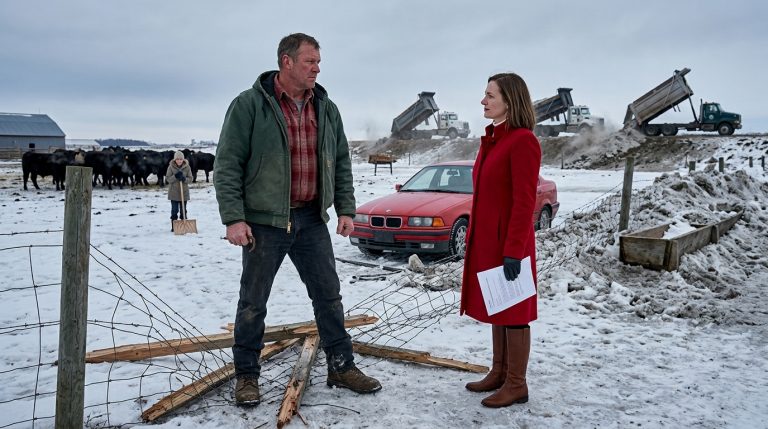
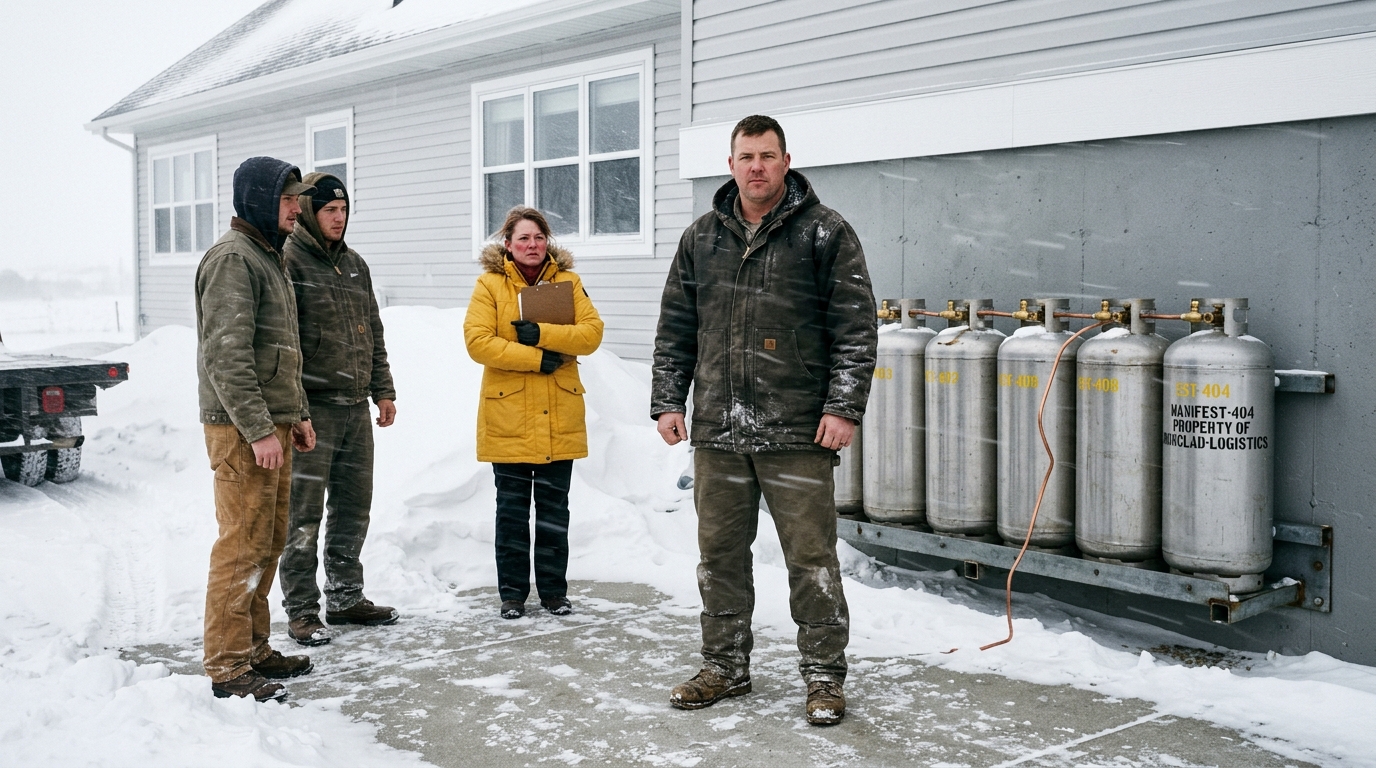
Four neon vests cut through the snow blur behind the woodline. They weren’t municipal workers. Their boots were too clean, their movements too rushed. They were clearing a path directly toward the concrete pad where my eight propane tanks sat—sixteen hundred gallons of liquid heat lined up like pressurized iron soldiers. Refilled six days ago. Over two grand in fuel.
My thumb stopped on the lighter wheel.
I pulled my heavy canvas coat off the peg, shoved my feet into unlaced work boots, and hit the back door before the cold draft could settle inside the kitchen.
The wind hit like a slab of wet concrete. Snow had already accumulated a foot deep along the side foundation. Every step required driving the knee up and stomping flat.
“Hey!”
The storm ate the sound before it reached the tree line. I closed the distance fast, my boots grinding into the frozen gravel.
Two men were already snapping the brass fittings off the manifold with heavy pipe wrenches. Uncoupling the steel lines. The metallic clank carried sharp across the gale.
A third figure stood in front of them, shielded from the wind by the bulk of the second cylinder. Bright yellow parka. Laminated clipboard clutched tightly in a gloved fist.
Helen Thompson.
“Touch another valve and you lose the fingers,” I said. My voice wasn’t loud. It didn’t need to be. I stood six feet back, weight centered, hands low.
The two men with the wrenches froze, glancing back at Helen. They weren’t street muscle. They looked like hired handymen taking two hundred bucks cash for a Sunday morning haul.
Helen didn’t flinch. She adjusted her glasses, her face pinched red against the bite of the wind.
“Mr. Walker,” she said. Her voice was flat, carrying that sterile, corporate tone she used at the annual budget meetings. “These units are unauthorized under Section 4, Paragraph B of the Whispering Pines Land Use Bylaws. You were served a notice forty-eight hours ago.”
“Notice went in the trash,” I said. “Those tanks are private property. I own the steel. I bought the fuel.”
“You own the fuel, Mr. Walker. You do not own the right to breach community safety guidelines regarding bulk explosive storage.” She tapped the clipboard with a gloved finger. “Consider this an immediate abatement action.”
“It’s eight degrees,” I said. “The wind chill is minus twelve. My central furnace is disconnected. Those tanks run my whole heat loop.”
She smiled—a tiny, bloodless curl of the lip that didn’t reach her eyes.
“Then I suggest you file an expedited appeal with the Board on Monday morning.” She turned to the guy holding the pipe wrench. “Load the first two on the flatbed. Move.”
The handyman hesitated, looking at the size of my shoulders under the heavy canvas coat. But Helen stepped between us, her clipboard held like a shield, her eyes locking onto mine with cold, bureaucratic malice.
She wasn’t just enforcing a rule. She was testing leverage.
I didn’t reach for her. I didn’t grab the wrench. I snapped the Zippo wheel once in my pocket, feeling the steel spark inside the dark, then took half a step back to clear my field of vision.
“You’re taking the heat out of a inhabited house during a Level 3 winter emergency,” I said quietly.
“I’m maintaining property values, Mr. Walker.” She gestured toward the truck idling near the access road. “Clear the line, boys.”
I watched them roll the first two-hundred-gallon cylinder into the deep snow, leaving the raw, severed copper line dangling against the gray foundation wall like a snapped artery.
CHAPTER 2: COLD CALCULATION
The red glow of the flatbed’s taillights vanished into the snowstorm before the engine noise even died.
I stayed on my knees in the snow. The frost was soaking through the canvas at my knees, turning cold and stiff against my shins. Right in front of me, the open mouth of the severed copper line whistled as the wind blew across the flare fitting. Zero pressure. Empty.
I reached out with a bare thumb and wiped a streak of grease off the iron bracket where the manifold had been bolted down. Beneath the grime, stamped directly into the heavy steel plate, was a fresh yellow stencil: MANIFEST-404 / PROPERTY OF IRONCLAD-LOGISTICS.
It wasn’t an HOA inventory tag. Whispering Pines used cheap, plastic red seals. This was industrial tracking.
I thumbed my Zippo wheel once inside my pocket. Click.
Rising to my feet, I took a long breath of air so cold it felt like swallowing broken glass. Rage was a luxury for people with working furnaces. Right now, the ambient temperature inside the house was fifty-two degrees and falling at a rate of four degrees an hour. By midnight, the pipes in the exterior walls would freeze and split. By three in the morning, the core structure would hit sub-zero.
I turned my back on the empty pad, stomped the snow off my unlaced boots on the rear threshold, and stepped inside.
The house was dead silent. Without the low, familiar hum of the propane furnace, the silence had a physical weight to it. The air smelled faintly of stale pine and cooling dry-wall.
I didn’t waste time going to the thermostat. I went straight to the hall closet, pulled out my heavy tactical pack, and grabbed a set of thermal baselayers and a roll of industrial-grade duct tape. I wrapped the open end of the severed copper line outside with three layers of tape to keep moisture out of the interior heat exchanger, then came back in and locked the door behind me.
In the kitchen, the wall phone sat cold on its cradle. I picked up the receiver. Dead air. The blizzard had pulled the landlines down somewhere near the ridge road three hours ago, and cell service in this valley during a whiteout was nonexistent.
I opened the bottom drawer of the sideboard, pushed aside a stack of old land surveys, and pulled out an encrypted satellite terminal—a leftover piece of comms gear from my second tour with the 75th that Ethan Blackwell had helped me re-key four years ago for off-grid backcountry runs.
I set the unit on the oak table, flipped the antenna dish toward the north window, and powered it on. The small LCD screen flickered to life, bathing the dim room in a pale blue light.
It took forty seconds to acquire a signal through the snow density. Once the green link indicator turned solid, I dialed a direct numeric string.
The connection picked up on the third burst of static.
“Blackwell,” a voice rasped. Low, gravelly, background noise completely deadened by acoustic foam.
“It’s Walker,” I said. “Helen Thompson just pulled four two-hundred-gallon tanks off my pad.”
A brief pause on the line. The sound of a keyboard clicking twice. “She brought a crew during a Level 3 state of emergency?”
“Flatbed. Two hired hands. Pipe wrenches. She left the copper manifold hanging.” I looked down at my hand. My knuckles were white, stiffening from the onset of frostbite. “They stamped the mounting pad with a tracking code. Manifest-404. Ironclad-Logistics.”
Ethan cleared his throat. “Ironclad isn’t an HOA contractor, Walker. They’re a regional liquidation outfit out of Cheyenne. They handle asset repos and industrial salvage.”
“She’s moving property off-site during a blizzard,” I said. “She knows the lines are down and nobody can call the Sheriff until the snow plows clear the pass.”
“How long do you have before the house freezes?”
“Six hours before the plumbing goes. Ten before the interior drops below freezing.” I paused, listening to the wind hammer against the siding. “I don’t need a lecture on survival, Ethan. I need her supply chain cut.”
“If she’s moving fuel, she needs a licensed regional receiver to log those tanks into a database,” Ethan said, his voice dropping into that flat, operational tone he used when mapping out logistics for a convoy. “The Wyoming Propane Association runs an automated regional manifest ledger. Every gallon of commercial fuel moved in Natrona County has to be cleared through Armstrong Propane’s central dispatch in Casper. If it isn’t logged, it’s a federal hazardous materials violation.”
“Who’s on duty at Armstrong?”
“Carol. She’s been dispatching there for twenty years. She knows me, and she hates Helen Thompson’s guts.” Ethan’s keyboard clattered again, faster this time. “Give me ten minutes to patch through to her private line on the commercial band. I’ll flag Helen’s HOA account for illegal asset seizure and hazardous transport during a natural disaster.”
“Do more than flag it,” I said, thumbing the lighter wheel in my pocket. Click. “Tell Carol that if Helen tries to register those tanks or sell that fuel back into the regional market, I want every distributor in the county to lock her out.”
“A statewide blacklist isn’t easy to trigger without a police report, Walker.”
“Tell Carol the police report is being written the second the Sheriff’s office opens its radio tower,” I said. “Tell her if she touches Helen’s fuel, Armstrong is co-signing on reckless endangerment of a veteran during a deadly storm.”
A two-second silence hung over the satellite link.
“Understood,” Ethan said. “Keep your core warm. I’ll call you back on this frequency in twenty.”
The line went dead.
I powered down the satellite screen to save the battery, leaving the kitchen in total darkness except for the gray light filtering through the storm-battered window. The temperature in the room had already dropped to forty-nine degrees.
I didn’t sit down. I went to the basement stairs, pulled a heavy iron crowbar from the pegboard by the workbench, and headed down into the dark. If Helen Thompson thought she was playing a quiet game of suburban harassment while the storm covered her tracks, she had made one critical calculation error.
She thought I was defending a house. She didn’t realize I was mapping a target.
CHAPTER 3: THE PAPER INSURGENCY
The cold at the bottom of the basement stairs was different. It didn’t rush in with the wind; it clung to the concrete, thick and heavy, smelling of damp limestone and old cast-iron piping.
I gripped the cold steel handle of the crowbar, my gloved fingers flexing to keep the circulation moving. Forty-three degrees down here. The frost line was dropping fast.
I didn’t turn on the overhead bulb—even if the power grid hadn’t glitched out, a lit window in a dark cul-de-sac during a Level 3 emergency was a beacon. Instead, I pulled a small, angled tactical light from my coat pocket, cupped the lens with my left palm to kill the glare, and clicked it to low power. A single pinprick of yellow beam cut through the dark.
I moved down the narrow corridor toward the utility alcove behind the furnace wall. This wasn’t where I kept tools. This was where the previous owner had framed out an old coal chute before capping it with reinforced plywood and four three-inch lag bolts.
I set the flat edge of the crowbar against the top seam, leaned my shoulder into the iron shaft, and applied steady, downward leverage.
The wood groaned. Poplar splinters flaked off like dry leaves. Snap. The top bolt sheared off, dropping into the dark gap with a small metallic ping.
I reached inside, pulled out a waterproof canvas pouch, and laid it flat on the concrete floor. Inside was a tactical night-vision optic, a pair of heavy wire cutters, and a bound binder containing every property survey, plat map, and regional zoning easement recorded for Whispering Pines over the last fifteen years.
I flipped through the plastic sleeves until I found the perimeter boundaries.
Helen Thompson didn’t park that flatbed truck on the main thoroughfare. The snow was too deep, and main roads were visible to the county snowplow crews. If she was moving heavy steel off my pad during a whiteout, she was using the service easement running along the southern fence line—the unpaved utility track behind the property boundaries of houses six through twelve.
I zipped the binder into my coat, slung the pouch over my shoulder, and headed back up the cellar steps two at a time.
When I stepped through the rear mudroom door into the storm, the wind hit with a sharp, howling slap. The temperature on my wrist gauge read four degrees.
I kept low, hugging the shadow of my own garage wall, my boots cutting clean through the fresh drifts. The flatbed’s tire tracks were already being buried under two inches of fresh powder, but the heavy twin-rear axles had compressed the bottom ice layer into deep, jagged ruts. I followed those ruts forty yards down the property line, right to the woodline where the HOA’s utility gate sat.
The chain-link gate was supposed to be padlocked under county fire code rules to allow emergency access.
It wasn’t padlocked. The heavy brass tumbler hung open, coated in fresh grease.
I crouched by the gatepost, my beam catching a set of fresh footprint depressions leading into the back lot of Lot 14—Helen’s property.
I didn’t step through the gate. I stayed on my side of the property line, reached out with a gloved hand, and swept the fresh snow off the utility box mounted to the wooden post. Fixed to the galvanized steel lid with a heavy strip of industrial tape was a yellow plastic shipping manifest.
I pulled my glove off with my teeth, clicked a photo with the satellite terminal’s high-resolution camera attachment, and held the paper close to my light.
It wasn’t an HOA violation notice. It was a commercial Bill of Lading from Ironclad-Logistics, authorized by a secondary corporate signature: Vanguard Regional Acquisitions. Listed under itemized cargo were eight bulk pressurized fuel units, three commercial lawn tractors seized from Lot 22, and a 24-foot aluminum trailer taken from the driveway of Lot 9 two weeks ago.
Every item had been categorized as “Abandoned Suburban Hazard” and cleared for immediate transfer to an off-site staging facility in Cheyenne.
Helen wasn’t just enforcing rules. She was operating a systematic extraction route, using HOA code violations as legal cover to liquidate private property through a corporate salvage pipeline before the owners could even file a civil injunction.
And my sixteen hundred gallons of propane were currently sitting on her flatbed, waiting for the snowplows to clear the pass so the transfer truck could haul them out.
My thumb went to my pocket. Click. The Zippo strike wheel turned against the hardened flint.
Behind me, down the dark alley of the service track, a gate latch clicked softly in the wind. A beam of white light cut through the blowing snow, sweeping across the pine trunks thirty yards away.
I dropped flat into the snow drift, pulling my canvas collar up over my neck, my eyes locked on the moving shadow coming through the storm.
CHAPTER 4: THE SUPPLYCHAIN CHOKEHOLD
The beam swept past six inches above my canvas collar, blindingly white against the curtain of falling snow, then flicked off toward the fence line.
“Check the latch!” a voice barked against the wind—one of Helen’s hired drivers.
“Chain’s stiff,” another voice shouted back. “Snow’s packing into the tumbler. Let’s get inside before the hydraulics freeze.”
I didn’t move until the heavy metal door of Helen’s detached garage slammed shut thirty yards away. The latch clicked home.
I pushed myself up from the drift. Snow cascaded off my sleeves in cold sheets. My fingers were stiffening inside my gloves, the tips numb from the zero-degree burn, but my pulse stayed flat. I withdrew back down the service track, stepping precisely in my own previous boot prints until I crossed back over my property line and ducked into the mudroom.
The interior of my house was forty-four degrees now. Breath bloomed white in the dark hallway.
I pulled off my gloves, brought my hands together, and rubbed the knuckles hard to force blood back into the capillaries before picking up the satellite terminal.
I flipped the screen on. The green link indicator pulsed twice and locked solid. I hit redial.
“Blackwell,” Ethan answered instantly. The acoustic background noise on his end was broken by the faint hum of a high-speed printer.
“I have physical documentation,” I said, my voice low and rasping from the dry cold. “Bill of lading attached to the utility gate. She’s moving the steel under an industrial liquidation header. Manifest-404, processed through Ironclad-Logistics, backed by Vanguard Regional Acquisitions.”
Ethan was silent for two seconds. A sharp tap of a pen against a desk. “Vanguard? They aren’t a salvage firm, Walker. Vanguard is a regional equity group out of Denver. They buy up distressed residential debt and commercial tax liens.”
“They’re using Ironclad as the muscle,” I said. “Taking high-value property off site during an emergency to fabricate immediate compliance defaults.”
“Did you get the serial numbers off the manifold tag?”
“Transmitted the photo to your receiver ten seconds ago,” I replied. “Check your buffer.”
“Got it,” Ethan said. I heard the rustle of paper as he pulled up the file. “Alright. Carol’s on the line right now from Armstrong’s central desk in Casper. She just cross-referenced those tank serials against the Wyoming Propane Association database. Those eight units are registered under your personal VA housing loan file as essential utility equipment.”
“Which means moving them without a court-ordered lien is grand larceny,” I said.
“It gets worse for Helen,” Ethan said, a cold, dry edge creeping into his tone. “Carol just executed a lockout code. She flagged Helen Thompson’s name, her residential address, and the Whispering Pines HOA master corporate tax ID across the state portal. Every certified distributor from Cheyenne to the Montana border just got an automated hazmat alert. Helen Thompson is blacklisted.”
“Can she buy private transport?”
“Not a gallon,” Ethan said firmly. “If any licensed driver drops a valve on her lot or hauls fuel away from her staging point, their commercial transport license gets pulled automatically by the State Fire Marshal. She’s locked out of the entire supply grid.”
“What about the Sheriff?”
“Tower came back online twenty minutes ago,” Ethan said. “Officer Jennifer Park is on duty at the county precinct. I patched Carol’s theft report straight to her console along with your satellite photo of the bill of lading. Park checked the parcel registry—she recognized the Vanguard stamp immediately. County Prosecutor’s office is already drafting a warrant for reckless endangerment.”
I pulled the Zippo from my pocket, clicking the steel wheel against the flint. Click. A single bright spark flared in the dark kitchen, reflecting in the frosted window pane.
“How long until Park gets through the pass?” I asked.
“County plows just opened the south access road,” Ethan said. “Park’s en route with two units. But Walker… Helen just called an emergency board meeting for seven-thirty tonight at the community center. She’s trying to pass an expedited vote to retroactively dissolve individual property rights on all exterior utility pads before the police arrive.”
I looked at the clock on the microwave wall. Seven-twelve.
“She’s trying to build a legal shield out of HOA minutes,” I said.
“She doesn’t know the police are coming,” Ethan said. “She thinks the whiteout bought her until Monday.”
“I’m heading to the center,” I said, closing the satellite terminal screen. “I’ll bring the paper.”
CHAPTER 5: THE BOARDROOM CHECKMATE
The snow under my boots groaned like dry bone as I cut across the greenbelt toward the clubhouse.
Seven-twenty-two. The wind was dropping, but the cold had settled in deep, solidifying the slush into rutted ice. Through the double glass doors of the Whispering Pines Community Center, bright fluorescent light spilled out over the drift, buzzing loud enough to hear through the glass.
I pushed the double doors open. The sudden blast of dry, radiator-heated air hit my face, smelling of damp wool, industrial floor wax, and stale coffee.
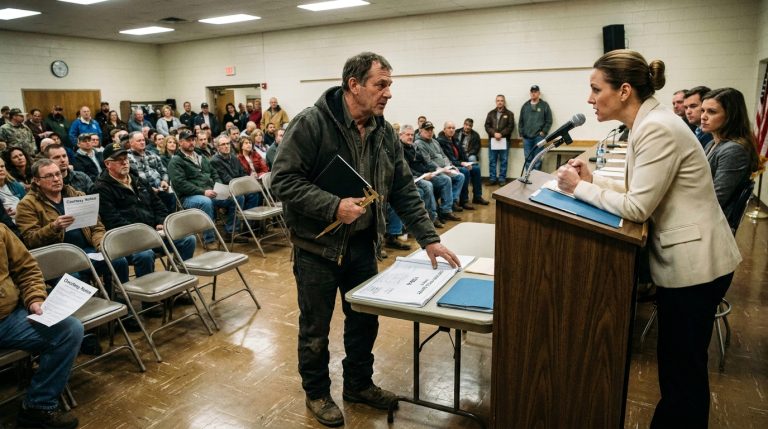
Thirty residents were packed into the folding metal chairs. The air was thick with low, anxious murmurs. People were sitting in their heavy winter coats, gloves shoved into pockets, feet tapping against the linoleum.
At the front table sat Helen Thompson.
She had her metal clipboard squared neatly on the folding table next to a water glass. To her left, Robert Chen—the board vice president—sat leaning back, staring at his thumb joints with a pale, tight expression.
Helen didn’t look up when the door latch clicked. She tapped her wooden gavel twice on the pressboard tabletop. Tock. Tock.
“We have a quorum,” Helen said. Her voice cut crisp through the room, sterile and measured. “Given the regional emergency declaration, this special executive session is now in order. Item one: an emergency amendment to Section 4 regarding hazardous utility fixtures on residential lots.”
“It’s seventy-four degrees in here, Helen,” Gary from Lot 9 called out, his voice hoarse. “My living room is forty-one. My water lines are freezing while we sit here listening to parliamentary procedure.”
Helen didn’t glance at him. She adjusted the horn-rimmed glasses resting on her nose. “Out of order, Gary. The board is taking proactive measures to protect community infrastructure from unvetted equipment. All non-compliant fuel storage units seized under today’s abatement order are being transferred to a bonded regional holding facility under emergency protocol Manifest-404.”
I stepped past the rear row of chairs, my wet boots leaving dark, gritty treads on the clean linoleum.
“The facility isn’t bonded, Helen,” I said.
The room went dead silent. Heads turned sharply.
Helen froze for half a second, her thumb tightening around the handle of her gavel until the knuckle turned yellow. Then she smoothed her sweater with her left hand, her chin tilting up.
“Mr. Walker,” she said, her tone dripping with rehearsed patience. “You are not recognized to speak. You are currently in default of multiple municipal code notices.”
“You hauled sixteen hundred gallons of private fuel off my pad two hours ago,” I said, walking steadily down the center aisle. “You used two hired hands with pipe wrenches and a flatbed bearing Ironclad-Logistics markings.”
“Those tanks were an unflagged explosion hazard—”
“Those tanks were registered under my federal VA housing deed,” I interrupted, reaching into my canvas coat. I pulled out the sealed document pouch and laid it flat on the table right over her agenda notes. “And Ironclad-Logistics isn’t a bonded holding firm. They’re an un-credentialed salvage liquidator working contract routes for Vanguard Regional Acquisitions.”
Robert Chen’s head snapped up. He looked at the paper pouch, then at Helen. “Vanguard? Helen, what is he talking about? You said the county authorized an emergency clearance.”
“Robert, sit down,” Helen snapped, her composure cracking around the edges. She reached to slide the pouch off her table, but I set my palm flat on top of it.
Two hundred pounds of pressure. The pressboard table groaned.
“Vanguard doesn’t hold salvage permits in Wyoming, Helen,” I said quietly, looking down into her eyes. “They buy up default claims. Your scheme wasn’t code enforcement. You’ve been seizing high-value utility assets during weather events, fabricating immediate compliance fines, and transferring title through Ironclad to trigger forced liens on these properties.”
A collective gasp rippled through the rows of folding chairs. Gary stood up from his seat. “She towed my aluminum utility trailer two weeks ago! Said it was a parking code violation!”
“Sit down!” Helen slammed her gavel on the wood. CRACK. “This is an illegal disruption of an official board meeting! Mr. Walker has no standing here! The HOA bylaws explicitly authorize—”
“The HOA bylaws don’t override federal hazmat statutes,” I said. “And as of six-forty-five tonight, Armstrong Propane executed a master lockout across the Wyoming Propane Association portal. Your personal tax ID, your home address, and the Whispering Pines corporate master file are blacklisted. No distributor in the state of Wyoming will drop a valve on your property or haul fuel for your contractors.”
Helen’s jaw locked. Her face drained of color, turning the same chalky white as the snow outside. “You… you can’t do that. That’s commercial interference.”
“It’s a hazardous materials hold,” I said. “Signed off by the State Fire Marshal.”
“This is absurd!” She surged up from her chair, knocking the water glass over. Water pooled across her agenda papers, soaking the printed bylaws. “I am the president of this board! I am protecting the property values of this entire neighborhood from people like you who think rules don’t apply to them!”
“You aren’t protecting anything,” Robert Chen said, his voice trembling as he backed his chair away from her. “Helen… what did you do with the lien filings?”
Before Helen could answer, the frosted glass double doors at the back of the hall swung wide open.
A gust of sub-zero air rushed in, sweeping across the floorboards. Officer Jennifer Park stepped through the threshold, clad in a dark navy winter tactical parka, her hand resting casually on the utility strap of her duty rig. Behind her stood two Natrona County Sheriff deputies, snow dusting their shoulders.
Park’s eyes scanned the room, locking directly onto the head table.
“Patricia Helen Thompson?” Park asked, her voice easily cutting through the hum of the ceiling lights.
Helen stood frozen behind the spilled water glass, her breathing shallow, her hands trembling as she clutched her wooden gavel like a weapon. “Officer… this is a private neighborhood meeting. Mr. Walker is trespassing and making false—”
“Save it, Helen,” Park said, walking down the center aisle with heavy, measured steps. “Natrona County District Attorney just signed the warrant. Grand larceny, reckless endangerment during a state of emergency, and systemic fraud.”
Park reached the table, unclipped a pair of steel cuffs from her belt, and set them down on the wet pressboard with a cold, metallic clink.
“Put your hands behind your back.”
CHAPTER 6: SALT AND ASHES
The cold steel mechanism clicked twice as Officer Park ratcheted the cuffs around Helen’s right wrist.
Helen didn’t scream. She didn’t thrash. But her left shoulder twitched backward, her fingers clawing at the edge of the folding table, sending her horn-rimmed glasses skittering into the pool of spilled water.
“You don’t have jurisdiction over corporate HOA governance,” Helen hissed, her voice paper-thin, vibrating with a desperate, frantic rage. She pulled against Park’s grip, her boot heels skidding on the wet linoleum floor. “This is a civil property dispute! Vanguard holds the master lien! If you touch me, their legal team will file an injunction against the Sheriff’s department by morning!”
“Vanguard’s Denver office was served an asset-freeze order forty minutes ago, Patricia,” Park said smoothly. She forced Helen’s left arm down, clicked the second cuff home, and pulled her off the table balance. “Turns out forged abatement forms cross-filed with Ironclad-Logistics under code Manifest-404 trigger federal wire fraud charges. The DA isn’t asking for bail.”
The two deputies stepped forward, taking Helen by the upper arms. She looked back over her shoulder, her face flushed red, eyes wide and bloodshot as she searched the rows of folding chairs for a single ally.
Nobody moved. Gary from Lot 9 crossed his arms, leaning back against the wall. Robert Chen quietly slid the master board ledger across the table and pushed it toward Officer Park.
“The flatbed truck is parked behind her utility lot,” I said, stepping up beside Park. “All eight cylinders are strapped down in the back.”
“My guys already secured the vehicle, Walker,” Park replied, nodding toward the door. “Armstrong Propane’s transport rig is sitting at the south gate right now. Carol sent a driver to re-hook your line personally.”
They marched Helen down the center aisle. Her heavy coat dragged against the chair legs, her boots shuffling awkwardly without her hands to balance her stride. The double doors swung open, letting in a swirl of fresh, cold snow, and then closed behind them with a heavy rubber thud.
The silence inside the hall didn’t break for a long ten seconds.
I reached down, picked up my waterproof document pouch from the wet table, and tucked it back inside my canvas coat.
“We need a vote,” Robert Chen whispered, staring at the empty chair where Helen had sat for seven years. “We need to dissolve the board covenants. All of them.”
“You don’t need a meeting for that,” I said, thumbing my Zippo wheel inside my coat pocket. Click. “Just sign the county releases.”
I turned and walked out the back doors into the quiet night.
The wind had completely died down. The sky above Natrona County was clearing, breaking open into a deep, icy black punctured by thousands of sharp stars. The temperature sat at two degrees above zero, but the air felt clear, still, and clean.
Down at the corner of my lot, the yellow lights of an Armstrong Propane service truck flashed slowly against the snowdrifts.
I walked down the driveway, my boots crunching through the frozen crust. The driver—a tall guy in heavy blue coveralls with an Armstrong patch on his chest—was already kneeling by my foundation pad with a heavy torque wrench.
“Mr. Walker?” he called out, wiping frost off his mustache. “Carol had me haul all eight of your tanks back from the flatbed. Brackets aren’t damaged. I’m hooking the copper manifold back up right now.”
“Appreciate it,” I said.
I stood by the foundation wall, watching his hands work the brass flare fittings with practiced, steady leverage. He bled the air out of the primary line, opened the main valve with a soft hiss of pressurized gas, and checked the pressure gauge with a soapy water spray. Zero bubbles. Tight seal.
“You’re good to go,” the driver said, wiping his wrench on a rag. “Furnace pilot should kick on as soon as you flip the breaker inside.”
“Thanks.”
I walked around to the mudroom door, stepped inside, and flipped the main breaker toggle on the grey panel.
Deep in the dark basement below, the heavy iron solenoid clicked. A low, rhythmic hum vibrated through the floorboards as the furnace igniter lit, followed three seconds later by the deep, rushing roar of burning propane.
I walked into the kitchen. I didn’t turn on the overhead lights.
I sat down at the oak table, pulled off my heavy canvas coat, and laid my Zippo flat on the wood. The room was already warming up—forty-six degrees, forty-eight, fifty. The chill was retreating from the drywall.
I reached out, unscrewed the brass casing of the lighter, and pulled the inner fluid cartridge. The cotton wick was dry, charred black at the tip from a hundred silent sparks.
I took a small tin of lighter fluid from the sideboard drawer, squirted six drops into the felt pad, and pressed the inner assembly back into the brass sleeve.
I set it down, leaned back in the chair, and listened to the steady, uninterrupted pulse of heat pushing through the vents, warming the dark corners of the house.