The Weight of Iron and Grace: A Master Gunner’s Quiet Legacy in a Modern World
CHAPTER 1: The Echo of Iron
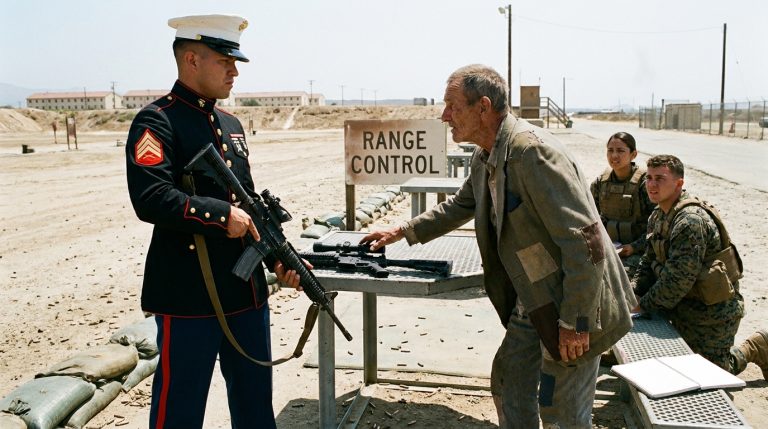
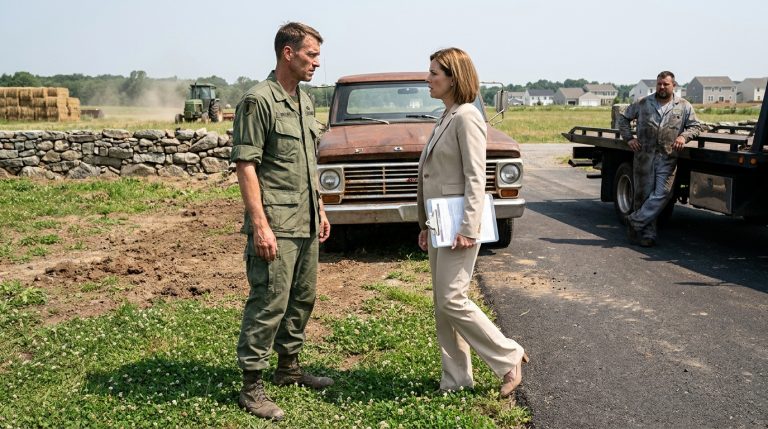
The Georgia sun felt heavier than it had an hour ago. Sam kept his pace deliberate, a slow, methodical shuffle that conserved energy like an old engine. He could hear the young specialist, Miller, closing the distance. The man was panting, his tactical boots scuffing the pavement with a lack of grace that grated against Sam’s nerves.
“Sergeant Major! Wait.”
Sam didn’t stop, but he slowed just enough to acknowledge the intrusion. He kept his eyes on the horizon, where the heat shimmer blurred the perimeter fence into a distorted mirage.
“You’re heading in the wrong direction, son,” Sam said, his voice raspy, like dry leaves skittering over concrete. “The barracks are back that way.”
“I don’t care about the barracks,” Miller hissed, jogging to catch up. He looked disheveled, the starch in his uniform ruined by the sweat of his own panic. “The General… he looked at you like you were a ghost. I’ve checked the archives. There’s no record of a ‘Corbin’ on that specific deployment, not officially. Who are you?”
Sam stopped. He turned slowly, his joints clicking in the silence. He looked at Miller—really looked at him—not as a soldier, but as a man who had suddenly realized he’d been reading the wrong map his entire life. The boy was terrified, not of Sam, but of the sudden void where his own certainty used to be.
“Official records are written by clerks in air-conditioned rooms, Miller,” Sam said softly. He reached out, his hand—grizzled, shaking slightly, but steady in its intent—and brushed a speck of dirt off Miller’s shoulder. “They miss the things that happen in the mud. They miss the sound of a spring snapping in the dark.”
Miller flinched, then stood rigid. “My team isn’t incompetent. We followed the manual. We followed the doctrine.”
“You followed a manual,” Sam corrected, turning back to the road. “You didn’t follow the machine. There’s a difference. And if you keep forcing that bolt without checking the ejector port’s tension, you’re going to do more than break a piece of steel. You’re going to lose the people standing next to you.”
Miller stepped in front of him, blocking his path. His face was pale, his eyes wide and searching. “Then teach me. If you’re who he says you are… teach me how to read it.”
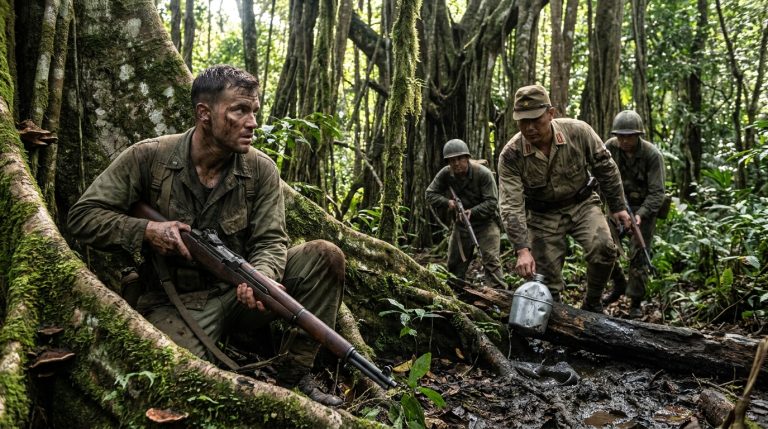
Sam looked past him, toward the distant, rusting silhouette of the M60 mounted on the range. He saw not the weapon, but the memory of a face he had buried forty years ago—a face that had died holding that same model of steel, trusting Sam to keep it clean, to keep it breathing.
“It’s not a lesson, Miller,” Sam whispered, his voice hitching. “It’s a debt. And I don’t know if you’re ready to pay it.”
He walked past the young man, leaving him standing in the sweltering silence of the road. As Sam stepped away, he felt something cold brush against his side—a flicker of a memory, a phantom hand on his arm, and the realization that the gun Miller had been fighting wasn’t just old. The serial number he had caught a glimpse of on the receiver was etched into his own skin, a set of digits he hadn’t spoken aloud since 1968.
CHAPTER 2: The Ghost in the Grain
The walk to the bungalow was shorter than Sam remembered, or perhaps the humidity had simply made the air thick enough to push back against his stride. The silence of the base—usually a comforting, familiar backdrop of distant drills and humming generators—now felt punctured by the uneven, frantic rhythm of Miller’s boots behind him. The young specialist was still following, his presence a jarring, insistent intrusion upon the quiet geometry of the afternoon.
Sam didn’t look back. He kept his gaze on the path, his mind occupied by the sudden, unwanted clarity of that serial number. It was a sequence of digits that tasted like copper and wet soil, a jagged piece of 1968 that had no business being stamped onto a piece of modern, pampered steel. He felt the phantom pressure of the M60’s trigger against his index finger, the heat of the barrel searing through his gloves, and the damp, cloying scent of the jungle—the same scent that always rose to meet him whenever he smelled fresh, unburnt oil.
“I’m not a teacher, Miller,” Sam said, his voice gravel-low, directed not at the man, but at the empty air. He stopped at the edge of his property, where the wild, overgrown brush surrendered to his meticulously kept garden. “And you’re not a student of the craft. You’re a technician of the state. You don’t want to learn the machine; you want to make it obey.”
Miller skidded to a halt, his chest heaving. The boy was flushed, his face a map of conflicting emotions—frustration, genuine fear, and a desperate, gnawing need for validation. He stood at the edge of the property line as if an invisible fence prohibited him from crossing.
“It’s not about obedience,” Miller protested, his voice cracking. “It’s about performance. If I can’t get the M60 to cycle, it’s a failure of my station. My career, my team—we’re scrutinized by the day. If I can’t explain the mechanical failure, I’m the one who looks redundant.”
Sam turned, his hand resting on the gate of his garden. He looked at the young man’s uniform, noting the way the fabric was stretched across his shoulders—tight, synthetic, and utterly devoid of the history that flannel carried. “Redundant. Is that what they told you? That if a tool doesn’t work the way you want it to, it’s useless?”
“It’s what the manual says,” Miller muttered, deflated.
Sam reached out and plucked a singular, withered tomato from the vine near the gate. He didn’t eat it. He just held it, feeling the texture of the skin, the soft, yielding resistance of decay. “The manual tells you how to clear a jam, Miller. It doesn’t tell you why the metal grows tired. It doesn’t tell you how a weapon learns to hold a grudge after seeing too much blood. You’re trying to treat a soldier like a calculator.”
Sam opened the gate and stepped into his sanctuary. The garden was a tangle of green and brown, the colors faded and soft compared to the sterile, sun-bleached concrete of the firing range. He gestured toward a small, clutter-filled shed at the rear of the lot, a place where he spent his days carving wooden birds—creatures of flight and delicate hollow bones, the antithesis of the heavy, lead-spewing beast he had just returned from the dead.
“Come inside,” Sam said, his voice suddenly weary, the strength he had projected on the range beginning to ebb into the hollow spaces of his joints. “If you want to know why that gun failed, you need to see what happens when things lose their structural integrity. It’s not a mechanical issue, son. It’s a matter of decay.”
Miller hesitated, looking back toward the base, then stepped across the threshold. The shed was cool, smelling of sawdust, linseed oil, and the faint, sharp tang of iron. On the workbench sat half-finished carvings—birds with wings poised for flight, their surfaces smoothed by hours of patient, repetitive labor.
Sam moved to the back wall, where he kept a ledger, its spine held together by electrical tape. He didn’t open it to the current day; he flipped back through yellowing pages, past dates that hadn’t seen the light of day in decades. He stopped at a page where the ink had bled into the paper, creating a dark, Rorschach-like stain.
“You asked for the record,” Sam said, sliding the ledger across the workbench. He didn’t point, but his finger hovered over a specific entry, an administrative note about a unit’s operational readiness that felt far too clinical for the context of the war it described. “You want to know why your M60 failed today? It’s not because it’s a museum piece. It’s because it’s been stripped of its history. They’ve been pulling parts, Miller. Replacing reliable, tempered steel with cheaper, faster-manufactured alloy to meet a budget quota that doesn’t care about the final result.”
Miller leaned in, his eyes widening as he read the notes. His face underwent a subtle shift; the arrogant, defensive posture he had worn on the range evaporated, replaced by a cold, realization-born dread. “This… this is an internal maintenance log. This isn’t for public record. How did you—”
“I didn’t steal it,” Sam interrupted, his voice sharp enough to cut through the stillness of the shed. “I kept it. Because when you lose the soul of the machine, you lose the hand that holds it. And if you’re as good an armorer as you claim to be, you’ll see the pattern. They aren’t just letting these guns fail. They’re orchestrating the obsolescence.”
Sam reached out, his hand—the same hand that had cleared the jam in twelve seconds—hovering near Miller’s own hand, which was trembling. The “Ghost of the Feed Tray” wasn’t just a legend born of combat; it was a ghost born of the slow, grinding erosion of truth. He saw in Miller’s eyes the first genuine spark of something other than ego: the dawning, terrifying awareness that the institution he served with such blind faith was rotting from the inside out.
“Now,” Sam whispered, the smell of cordite and wood shavings mingling in the stagnant air. “Are you going to keep acting like a technician, or are you going to help me find out who authorized the replacement of those receiver rails?”
CHAPTER 3: The Anatomy of an Oversight
Miller didn’t move. He stood over the ledger as if it were a live explosive, his fingers hovering inches above the stained, yellowed paper. Outside, the Georgia wind had picked up, rattling the corrugated tin roof of the workshop with a rhythmic, metallic clatter that seemed to sync with the frantic thrumming in Sam’s own chest.
“They wouldn’t just replace parts without a paper trail,” Miller said, his voice stripped of its earlier arrogance. He looked up at Sam, his eyes searching the old man’s face for a denial that wasn’t coming. “Even in the worst budget cuts, you have to log the requisition, the procurement, the authorization. You’re talking about high-grade steel being swapped for inferior alloy on critical systems. That’s not just incompetence, Sergeant Major. That’s a liability.”
Sam leaned back against his workbench, his hand resting instinctively near a carving chisel—not as a weapon, but as a comfort. He felt the cold, smooth wood of the tool against his palm. “You’re thinking like a man who expects the system to work the way it was designed, Miller. You’re assuming there’s a rational mind behind the sabotage. You’re looking for a signature, a name, a stamped form.”
Sam walked to the window, peering through the slats of the blinds. Outside, the shadows were lengthening, turning his garden into a landscape of dark, indistinct shapes. He thought he caught a flicker of motion near the treeline—a figure standing too still, too observant. He drew the curtain tight.
“When I was at the sniper school,” Sam continued, his voice dropping, “we taught the recruits that you don’t fight the terrain. You adapt to it. You read the wind, the slope, the density of the brush. The military you serve today has forgotten how to read the landscape. They’ve built an environment where the bureaucracy is the only terrain that matters. And in that landscape, the most effective way to eliminate a threat isn’t to fight it—it’s to starve it.”
“Starve the equipment,” Miller whispered, the logic beginning to settle in his eyes. “Make the old systems look so unreliable that the brass has no choice but to authorize the budget for the new platforms. It’s not sabotage for the sake of destruction. It’s sabotage for the sake of marketing.”
“Exactly,” Sam said, turning back to him. “And the M60 you were struggling with today? It’s not a relic. It’s an obstacle to their bottom line. It still functions perfectly when it’s treated with respect, and that makes it a dangerous counter-argument to their new, expensive toys.”
Miller pulled a small, digital tablet from his tactical vest, his fingers flying across the screen. The screen illuminated his face with a pale, ghostly light. “I have access to the supply chain logs for this sector. I can pull the last six months of maintenance requests. If what you’re saying is true, there should be a gap—a period where the high-grade components just ‘disappeared’ from the inventory.”
“Do it,” Sam urged.
The workshop went silent again, save for the hum of the cooling fan on the tablet. Miller worked with a speed born of desperation, his brow furrowed in deep concentration. He wasn’t the man who had been fumbling at the range hours ago; he was a machine of inquiry, stripped of the pretense of “official” training.
Suddenly, Miller froze. The tablet buzzed, a sharp, discordant sound that felt too loud in the confined space. He pulled the screen toward him, his pupils dilating. “Sergeant Major… look at this.”
Sam stepped closer, peering over Miller’s shoulder. The screen displayed a series of requisition codes, all signed off by a name that shouldn’t have been in this sector. It was an authorization from a supply officer who had been dead for three years.
“Ghost signatures,” Miller muttered, his breath catching in his throat. “They’re using dead accounts to authorize the supply chain. It’s untraceable.”
Sam felt a chill that had nothing to do with the workshop’s temperature. He moved to the door and eased it open just a crack, listening to the ambient sounds of the evening. The crickets were silent—an unnatural hush that blanketed the property. He realized then that the movement he had seen earlier wasn’t a trick of the light.
He grabbed a heavy canvas bag from beneath his bench, shoving a few essential tools inside—not weapons, but the delicate, precision instruments he used for his carving and his mechanical repairs. He looked at Miller with a gaze that held no room for argument.
“We aren’t going to solve this from here, Miller,” Sam said, his voice cold and steady. “The moment you pinged those ghost signatures, you didn’t just expose a discrepancy. You tripped a silent alarm in their digital architecture. If they’re as deep into this as I think they are, they’ll be coming to ‘decommission’ the evidence. And that means us.”
Miller didn’t ask questions. He simply packed his tablet, his movements sharp and efficient. As they stepped out into the twilight, the air felt thin, vibrating with an impending collision. Sam gripped the handle of his bag, his mind racing through the map of the base he had memorized forty years ago. He knew where the vulnerabilities were, and more importantly, he knew where the truth was buried—not in the digital logs, but in the physical evidence they were trying to hide.
They walked toward the treeline, moving with a practiced, low-profile silence that Sam hadn’t employed since the Asha Valley. He was no longer the old man in the flannel shirt; he was the ghost again, leading a young, wide-eyed soldier into the dark, heart-first into a storm of their own making.
CHAPTER 4: The Archive of Shadows
The transition from the cool, open evening into the subterranean bowels of the base archives was like stepping into a lung that refused to exhale. The lights in the corridor flickered with a buzzing, dying energy, casting long, erratic shadows that danced against the concrete walls. Sam moved through the gloom with a deliberate, haunting ease, his footsteps nearly silent, while Miller followed close behind, his boots sounding like hammer blows on the industrial flooring.
They reached the reinforced door of the historical records vault—a relic of a previous administration, heavy and thick-walled. Miller knelt at the keypad, his fingers hovering. “If they’re using ghost signatures to authorize procurement, they’ll have the digital trail here, stored in the physical backup logs,” he whispered, his voice sounding thin and brittle. “But if I trigger the access, it will log my credentials. They’ll know exactly who opened this vault.”
“Then don’t use your credentials,” Sam said. He reached over Miller’s shoulder, his gnarled hand moving with a fluid, practiced grace that bypassed the keypad entirely. He manipulated a hidden manual override lever tucked beneath the frame—a legacy detail that the modern staff had long since forgotten. With a heavy, grinding groan of protesting metal, the door creaked open.
Inside, the room was a labyrinth of towering metal shelves, packed tight with boxes that smelled of trapped time. The air here was heavy, dry, and thick with the grit of decades. As they moved deeper into the stacks, Sam felt a sudden, sharp pang of vertigo. For a fleeting second, the archive shelves transformed in his mind; the rows of boxes shifted into the dense, rain-slicked vegetation of the Asha Valley, and the silence was replaced by the low, ominous hum of an impending ambush.
He steadied himself against a shelf, the metal cold and biting against his palm. Stay here, he told himself. The past is buried. You are here for the present.
Miller was already scanning the shelves, pulling files with frantic, jerky motions. “Here… 2024, 2023… procurement audits. It’s all here. But look at these gaps.” He pointed to a series of empty slots, the dust on the floor around them disturbed by recent traffic. “Someone’s been cleaning house. They knew we were coming.”
“They knew as soon as you queried those codes,” Sam replied, his voice a low, warning growl. He turned, his senses hyper-focused. He heard it then: the faint, rhythmic click of a security sweep approaching from the main corridor. It wasn’t the sound of an automated system; it was the measured, purposeful gait of human movement.
“They’re here, Miller,” Sam said. “Pack what you have. We don’t have time to cross-reference.”
Miller scrambled to shove the folders into his pack, his hands trembling. “We can’t leave! This is the only proof!”
“Proof is useless if you’re dead,” Sam snapped, the sharpness of his tone cutting through the boy’s panic. He moved to a back exit—a narrow ventilation passage that Sam knew from his days as an instructor. He forced the grate with a heavy pry bar from his canvas bag, the metal screaming in protest as it gave way.
As they slid into the confined, dusty darkness of the shaft, the main vault door swung open. A beam of white, piercing tactical light swept through the aisles, illuminating the dust motes in the air like stars in a dead galaxy. Sam held his breath, his hand firm on Miller’s shoulder to keep the boy from moving. Through the grate, he watched as two figures moved through the stacks—not guards, but men in clean, unmarked uniforms, their movements disciplined and precise.
One of them stopped at the shelf where Miller had been working. He reached out, his gloved hand tracing the empty space where the files had been, and then he stood still, his head cocking to the side as if listening to the very fabric of the building. Sam saw the glint of a suppressed weapon at his hip, the modern design sleek and lethal.
They weren’t just security; they were an extraction team. The “budgetary sabotage” was a front for something much deeper, something that required the total erasure of anyone who understood the mechanical reality of the weapons they were manipulating. The failure of the M60 at the range hadn’t been a glitch; it had been a test, and they had failed it by being too curious.
Miller’s breathing was erratic, a desperate, gasping sound that seemed loud enough to echo through the entire vault. Sam leaned closer, his mouth against the boy’s ear. “Don’t move,” he whispered, his voice a ghost of his former authority. “They aren’t looking for evidence. They’re looking for us.”
As the tactical light swept over the grate, Sam felt the weight of his own history pressing down on him. He had spent forty years trying to protect the legacy of his brothers-in-arms, but he realized now that he had been protecting a tomb. The truth wasn’t in the files; it was in the hands of the people who were currently hunting them through the dark. He tightened his grip on the pry bar, the steel familiar and cold, and prepared for the inevitable confrontation.
CHAPTER 5: The Weight of the Ghost
The ventilation shaft was a narrow, suffocating throat of galvanized steel, coated in decades of dust that clung to Sam’s skin like fine, gray ash. Ahead, Miller crawled with a frantic, uncoordinated energy, his elbows clanging against the sides of the ductwork with every movement. Sam followed, his own body moving with the rhythmic, ghost-like economy he had mastered in the dark of a hundred trenches. Every muscle in his body screamed in protest, protesting the strain, but he clamped down on the pain, his focus narrowed to the singular objective: the commanding officer’s suite.
They reached the final grate, a heavy steel barrier overlooking the administrative corridor. Through the narrow slats, Sam observed the hallway. It was bathed in the harsh, sterile glow of blue-hued emergency lighting. Two members of the extraction team stood at the end of the hall, their posture predatory and still. They weren’t just guarding the archives; they were tightening the perimeter.
Sam signaled Miller to stay low. He carefully extracted the small, precision tool kit from his canvas bag. His hands, though gnarled and trembling with the onset of age, became steady as marble when they touched the metal. He worked the screws of the grate, the sound muffled by the low hum of the base’s ventilation system. As the metal frame came loose, he caught it before it could clatter to the floor, holding it in place until he had enough clearance to ease himself out.
He descended to the floor with the quiet grace of a predator, landing in a crouch. Miller followed, stumbling slightly, his eyes wide with the adrenaline of the hunt. Sam didn’t offer a hand; there was no time for empathy. He guided the young specialist toward the command office door, a heavy, solid slab of oak that felt like a relic from a different era.
He didn’t knock. He manipulated the lock with a tension wrench—a skill he hadn’t used in years—and the door yielded with a soft, decisive click. They slipped into the office, which smelled of floor wax and stale coffee. It was dark, save for the blue-lit rectangle of a monitor on the massive desk.
Miller rushed to the terminal, his fingers hovering over the keys. “I’m going to bypass the local security and broadcast these logs to the regional inspector. If I can get this uploaded to the public server, they can’t hide the evidence.”
As Miller worked, Sam walked to the wall behind the desk. It was adorned with display cases—trophies of the base’s history. His eyes locked on a specific piece, mounted in a frame of velvet and glass: an M60 receiver. He walked toward it, his heart hammering against his ribs. He studied the serial number etched into the side of the metal.
He stopped, his breath hitching. It wasn’t just any serial number. It was the same one etched into his own skin, a memory he hadn’t spoken aloud in forty years. The realization hit him with the force of a physical blow. The weapon he had carried in the Asha Valley, the one he had held while his comrade—his best friend—had bled out in the mud, hadn’t been lost. It had been salvaged, repurposed, and mounted here as a symbol of ‘modernized’ doctrine, its history erased, its soul stripped to make way for a failing budget plan.
The “sabotage” wasn’t just about money. It was an act of desecration. They were literally tearing apart the weapons of the past to build the machines of a hollow future.
“I have it,” Miller whispered, his voice trembling. “The upload is starting. We have the proof.”
Suddenly, the door to the office exploded inward, the heavy wood splintering under the force of a tactical ram. Light flooded the room, blinding and white. The two men from the archives stepped through the opening, their weapons leveled, their faces hidden behind dark, featureless visors.
“Step away from the terminal,” the lead figure commanded, his voice modulated, devoid of human inflection.
Sam didn’t move. He stood between the men and the display case, his hand resting on the glass. He felt the phantom weight of the M60 in his arms again—the heat, the vibration, the desperate, singular need to protect what remained of his honor. He wasn’t a retired soldier anymore. He was the ghost of the feed tray, and the machine was calling to him, demanding he finally pay the debt he had been carrying for half a century.
He didn’t look at Miller. He didn’t look at the tactical lights. He looked at the serial number under the glass, and for the first time in his life, he smiled. It was a cold, iron-hard expression of absolute, terrifying clarity. The trap was sprung, but they had made a mistake: they had cornered a man who had already survived the worst hell the world had to offer.
“You should have left the past in the dirt,” Sam said, his voice rising, no longer raspy, but resonant with the strength of a titan. He reached for the display case, the glass shattering under his palm as he grabbed the steel receiver from the velvet, the metal cold and heavy, a familiar, brutal weight in his hands.
CHAPTER 6: The Song of the Last Guard
The office was silent, save for the hum of the cooling fans and the heavy, ragged breathing of the extraction team. They stood paralyzed by the sight of the old man—not cowering, but holding a piece of history that had been twisted into a lie. Sam felt the steel against his skin, the serial number digging into his palm. It was the weight of every day he had spent since 1968 wondering if the sacrifice in the Asha Valley had been for anything at all. Now, he knew. It hadn’t been forgotten; it had been weaponized.
“You want to know about the machine?” Sam said, his voice a low, gravel-rich sound that seemed to vibrate in the very structure of the office. He didn’t look at the men with weapons. He looked through them. “You think you can dismantle the past and sell it for parts, thinking nobody will notice the absence of the soul.”
The lead operative stepped forward, his weapon wavering. “Put it down, Corbin. This is an administrative matter. You’re trespassing in a secure facility.”
“Administrative?” Sam let out a short, sharp laugh. He walked toward the desk, his movements slow, deliberate, and entirely unafraid. He placed the heavy receiver down on the mahogany surface with a decisive thud. “I remember the man who carried this weapon first. I remember the mud on his boots and the way he talked about home. He didn’t die for a budget report. He died believing this nation stood for something better than this.”
Miller, behind the desk, hit the final key on the terminal. The screen flashed a bright, defiant green. “Upload complete,” he announced, his voice steadying. “The regional inspector has the files. The ghost signatures, the procurement logs, the decommissioning orders—it’s all out. It’s public.”
The operatives froze. The mission had shifted from silent extraction to public exposure in a matter of seconds. The threat of violence, once their primary leverage, was now their undoing. They knew that in the digital light of public scrutiny, their shadowy operations would be dismantled piece by piece.
“Go,” Sam commanded, his gaze pinning them to the floor. “Tell your masters that the ghost of the feed tray is done serving their lies. If they want to come for the rest of it, tell them I’m waiting in the garden.”
The operatives hesitated, caught in the grip of a power they didn’t understand—the power of a man who had nothing left to lose and everything to hold accountable. They holstered their weapons and retreated, their disciplined formation crumbling into a hurried, shameful exit.
The silence that followed was heavy, but it was no longer oppressive. It was the silence of a house after a storm. Miller sat back in the chair, his face pale and exhausted. He looked at the receiver on the desk, then at Sam. “We did it, Sergeant Major. It’s over.”
Sam shook his head, his stooped back finally settling into a posture of rest. “It’s not over, son. It’s just been cleaned. The machine is honest, remember? It only requires someone to keep it running.”
He walked to the window and looked out at the base, the blue lights flickering in the distance. He had exposed the rot, but he knew the base would continue, and the history would eventually be reclaimed. His work here was done.
In the weeks that followed, the base underwent a quiet, thorough reckoning. The administrative rot was purged, the ghost accounts closed, and the legacy hardware—including the M60—was restored to its rightful place of honor, no longer a pawn in a fiscal game but a testament to those who had stood in the mud.
Sam returned to his bungalow, his days once again filled with the slow, patient work of his garden. He continued to carve his wooden birds—delicate, fragile things that stood in quiet defiance of the harsh, metallic world he had helped defend.
One afternoon, a package arrived on his porch. Inside was the receiver, cleaned, re-blued, and mounted on a base of polished oak. There was no note, just a service record indicating its official retirement and return to its original operator. Sam took it to his workbench, his arthritis-gnarled hands moving over the familiar, cold steel. He spent hours polishing it, the scent of oil and wood-dust mingling in the air.
He felt a deep, profound sense of peace. The debt had been paid. The ghost had been laid to rest. He walked to the window, watching a small, wooden bird—the latest in his collection—sitting on the sill, its wings spread as if ready to take flight into the setting sun. He was just an old man in a quiet house, and for the first time in forty years, the weight on his shoulders wasn’t a burden—it was simply the gravity of a life well-lived, finally resting in the stillness of a hard-earned grace.