The Weight of Water and Iron: How a Retired Marine Plumber Dismantled a Suburban Tyrant Through Absolute Precision
CHAPTER 1: THE CEDAR AND THE CEMENT
The cedar slats were still breathing out the sharp, clean scent of the lumberyard when the shadow fell across the threshold.
Mark Davis did not turn his head immediately. He kept his thumb pressed flat against the edge of the copper fitting, feeling for any microscopic burr that might compromise the seal under pressure. Thirty years of plumbing taught him that haste was the primary precursor to failure. You checked your work twice. You assumed nothing.
“That’s a three-thousand-dollar fine, Mr. Davis, payable within fifteen days or it doubles.”
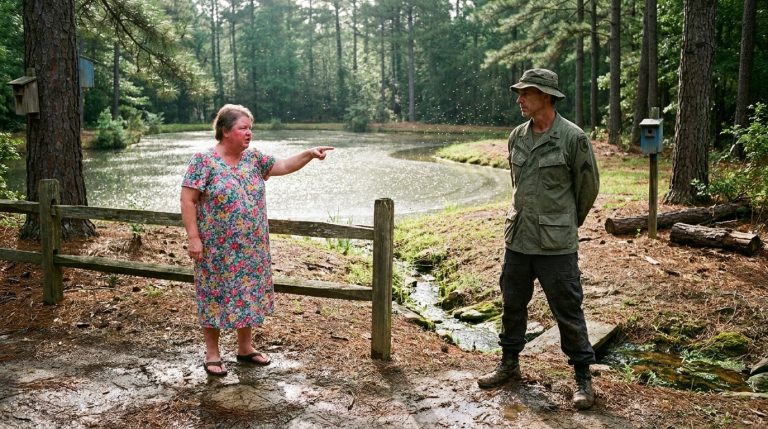
The voice carried the precise, clipped cadence of a woman who practiced her inflection in front of an oval mirror every morning. Karen stood six feet inside his property line, her floral-print caftan billowing slightly in the dry wind coming off the cul-de-sac. She held a black clipboard against her ribs like a breastplate.
Mark slowly released the copper fitting, wiped his palm across the thigh of his work trousers, and straightened up. His joints gave a faint, familiar pop. He looked past her, down the immaculate, pesticide-drilled green of the Oak Hollow lawns where the sprinkler heads rose punctually at six every evening to water grass that had no business growing in this climate.
“Karen,” Mark said. His voice was low, flat, and devoid of the defensive spike she clearly expected. “There’s a clerical error somewhere. I checked the covenants twice before I set the posts. A freestanding outdoor enclosure that isn’t visible from the public right-of-way requires no municipal review.”
“The bylaws, how cute,” she snapped, tapping a manicured nail against the corner of the paperwork. “You think the municipal code governs Oak Hollow? Section Seven, Article B, Paragraph four. Exterior modifications. You didn’t file an architectural application. Therefore, you are in violation. It is not complicated.”
She turned slightly, her gaze flicking toward the lattice screen overgrown with jasmine. The cedar shower was tucked cleanly against the rear fence line, completely screened from the asphalt street. The only way she could have logged its existence with such pinpoint accuracy was by looking down from her second-story master bedroom window—a vantage point that required deliberate, sustained peering into his private yard.
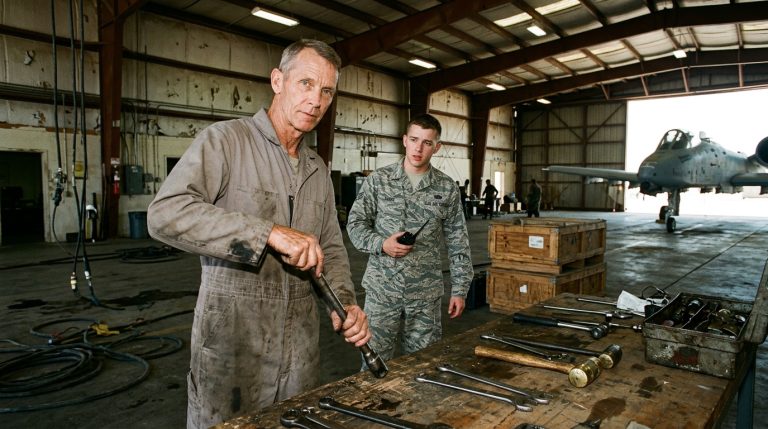
Mark felt a cold, thin line of discipline lock down behind his ribs. Thirty years ago, operating heavy brass valves in the bilge of a rolling transport ship or reading blueprints under the red tactical lights of a forward base had trained him to isolate variables. Emotion was an inefficiency. Panic was a leak.
“I’ll review the section,” Mark said evenly, his eyes fixed on the sharp angle where her jaw met her neck.
“See that you do,” she said, spinning on her heel with a dramatic swirl of synthetic fabric that left a faint trail of expensive perfume hanging in the dry air. She marched back toward the cul-de-sac, her posture rigid with unearned authority.
Mark waited until she cleared the driveway. Then he walked slowly to the edge of the cedar enclosure, turned the brushed-nickel handle, and let the cold water run over his knuckles. The spray hit the concrete pad, swirling down toward the hidden French drain system he had laid out by hand with gravel and geotextile fabric. It drained clean. It drained silently.
He reached down, picked up the white violation notice she had deliberately dropped near his boot, and folded it once without looking at the text.
The front door of his ranch house was unlocked. Inside, the quiet hung heavy, smelling faintly of old paper and the lingering scent of lavender his late wife, Sarah, had favored. He walked past the hallway photograph of his daughter Jessica and his granddaughter Lily, stepping directly into the converted garage workshop along the back wall.
The air here smelled different. It smelled of cutting oil, iron shavings, and twenty years of accumulated carbon dust.
Along the back bulkhead sat the heavy, industrial gray filing cabinets. Mark pulled open the lowest drawer marked with faded masking tape: Oak Hollow Estates – Subcontractor Logs. The metal rollers groaned, sliding outward to reveal rows of thick, manila folders stuffed with blue-line prints, carbon-copy invoices, and handwritten margins bearing dates from fifteen years ago.
He pulled the master file for Lot 1.
Inside was the original construction log, complete with the signature of a developer who had long since skipped the county, and a secondary, thinner folder labeled simply: K. Miller – Private.
Mark opened it. The notes inside were written in his own sharp, legible cursive—measurements, load calculations, and the specific warning he had given her during an off-the-books master bath remodel five years prior, when she had demanded an oversized Jacuzzi tub and an unvented steam unit atop standard two-by-ten floor joists without a single county permit.
He ran his finger down the margin note he had penned the day she paid him in crisp, untraceable cash to bypass the inspectors: Joists insufficient. Vents non-compliant. Liability retained by owner.
Mark closed the folder and set it beside the legal pad on his workbench. The three-thousand-dollar fine was not an administrative correction. It was the opening salvo of a siege.
He picked up his pen, wrote the date at the top of a clean sheet of paper, and stopped abruptly as a sharp, rhythmic tapping echoed from the front porch. It wasn’t a knock; it was a summons.
CHAPTER 2: THE FIREPROOF FILING CABINET
The sharp, flat rhythm of knuckles striking the front door cut through the hum of the workshop fluorescent lights. It was not a delivery driver’s casual double-knock, nor was it the polite tap of a neighbor looking to borrow a ladder. It had a deliberate, mechanical cadence—two beats, a pause, and a third strike that carried straight down the hallway.
Mark did not drop his pen immediately. He let the nib rest against the paper for a full second, watching the dark ink settle into the grain of the legal pad.
In the Corps, a knock delivered like an indictment meant someone wanted you to react before you had time to assess your spacing. When you reacted in haste, you surrendered the interior lines.
He laid the pen down, squared the edge of the folder marked K. Miller – Private, and pushed himself back from the workbench. The metal legs of the stool scraped against the concrete floor with a dry, protesting shriek. The phantom memory flickered—Sarah standing by the kitchen island years ago, holding a mug of black coffee, her eyes crinkling at the corners as she listened to him complain about some developer trying to skirt code specifications in the outer districts. Let them trip over their own pipe, Mark, she had said, blowing softly across the surface of the ceramic. A man who builds on sand doesn’t need a push.
Mark shook the memory aside, sealing it behind the iron bulkhead of his discipline. He walked out of the workshop, his boots making a heavy, measured sound against the hallway carpet.
When he pulled the front door open, no one was standing on the welcome mat.
Instead, a fresh manila envelope sat squarely in the center of the concrete porch, held down against the afternoon thermal draft by a smooth, gray river stone. Mark looked past it, sweeping his gaze across the cul-de-sac. Two houses down, a gray sedan sat idling near the curb, its tinted windows reflecting the harsh glare of the mid-afternoon sun. The engine note was a low, muffled purr.
He didn’t step outside. He kept his shoulder braced against the doorframe, his fingers curling lightly around the edge of the wood.
“Looking for something, Gary?” Mark’s voice carried across the manicured lawn with effortless carrying power.
The sedan’s brake lights flickered once. For a heartbeat, the vehicle remained dead still. Then the passenger-side window hummed down an inch, revealing the pale, anxious profile of Gary Peterson, the nervous board member who had spent the last HOA meeting staring desperately at his necktie. Gary did not look back. He raised a hand in a clumsy, defensive gesture, hit the master switch, and the sedan lurched away from the curb, tires hissing softly against the asphalt before turning the corner toward the main avenue.
Mark reached down, lifted the river stone, and picked up the envelope. It was unsealed.
He stepped back inside, kicked the front door shut with his heel, and walked back to the kitchen counter. He pulled out a single sheet of heavy white cardstock. There was no formal letterhead this time. Just a printed note in block letters: FINAL NOTICE: COMPLY OR LIEN EXECUTION WILL COMMENCE IN SEVENTY-TWO HOURS.
It was a blatant escalation. Karen hadn’t waited for the fifteen-day window to expire. She was compressing the timeline, trying to panic him into an erratic legal or physical response before he could map out his counter-strategy. She wanted a visible mistake.
Mark folded the note once, twice, and dropped it into the wastebasket.
He walked back to the garage, his boots hitting the concrete with the steady rhythm of a metronome. He didn’t rush to the phone. He didn’t call Tom just yet. He opened the second drawer of the gray filing cabinet—the one containing the master database for the entire Oak Hollow development—and pulled out the comprehensive lot-by-lot inspection logs from fifteen years ago.
The pages were yellowing at the edges, clipped together with rusted steel fasteners that left faint orange stains on the paper.
He flipped past the rough-in diagrams for the perimeter drainage systems and located the master electrical and plumbing compliance sheets. There it was, stamped in red ink across the bottom of every third page by an inspector whose signature was now illegible: CONDITIONAL PASS – THERMAL EXPANSION RETROFIT PENDING.
A pending retrofit that never happened. Barry, the developer, had pocketed the thirty thousand dollars allocated for the expansion tanks, signed off on the final certificates using a handful of local municipal contacts who looked the other way, and vanished into retirement in Florida. And the Homeowners Association, by taking over the corporate charter of the development, had legally inherited the unmitigated liability.
Mark pulled a fresh legal pad toward him and began to write down the exact addresses, matching the unequipped water heaters to the members of Karen’s inner circle—Brenda’s house on Lot 18, Gary’s split-level on Lot 9, and Karen’s colonial at the very apex of the cul-de-sac.
The silence of the garage was absolute, broken only by the faint hum of the refrigerator in the utility room. He wasn’t just defending his outdoor shower anymore. He was tracing the main line back to the municipal tap, locating every single weak joint in the system where a single ounce of pressure could burst the entire structure wide open.
He picked up his pen, circled Karen’s address three times until the paper tore slightly under the point, and began drafting the precise framework for the demand letter that would shatter her illusion of absolute control.
CHAPTER 3: THE STIFLING ATMOSPHERE OF THE CLUBHOUSE
The air inside the Oak Hollow community clubhouse smelled permanently of industrial bleach and burnt decaf coffee. It was a neutral, beige room designed to neutralize dissent through sheer architectural monotony. Low acoustic tiles covered the ceiling, absorbing sound and replacing it with a dead, heavy quiet that made every movement feel amplified.
Mark did not take a seat in the metal folding chairs scattered across the linoleum floor. He remained standing near the back, his shoulders squared against the rear wall, his hands resting easily in the pockets of his dark twill jacket.
At the head of the long folding table sat Karen. Her floral caftan had been replaced by a stiff, slate-gray blazer that lent her an air of severe administrative finality. Flanking her were Gary, whose fingers rhythmically tapped a nervous tattoo against his knee, and Brenda, who stared intently at a legal pad as if trying to memorize the grain of the paper.
Roughly twenty residents filled the middle rows. They sat with their shoulders hunched, eyes fixed straight ahead, manifesting the quiet posture of people who had learned through small, cumulative penalties that visibility was a liability.
Karen cleared her throat. The sound scraped through the room’s cheap sound system, a dry, metallic chirp.
“Item four on the agenda,” Karen announced, her voice carrying a practiced, rhythmic chill. “Case number 2023-14, homeowner Mark Davis, one-twenty-four Willow Creek Lane. The board has reviewed the formal appeal regarding the exterior alteration fine. The appeal is denied. Furthermore, due to the homeowner’s failure to cure the violation within the stipulated timeline, an additional penalty of two thousand dollars is hereby levied, bringing the total to five thousand.”
She paused, lifting her chin to survey the room, waiting for the familiar, cowed silence to settle deeper.
Mark didn’t flinch. He didn’t step forward to shout or slam his palms against a table. Instead, he let the silence stretch for three agonizing seconds—long enough for the room to realize that the expected defensive stutter was not coming.
“Ma’am,” Mark said. His voice was low, flat, and cut through the dead acoustic space without raising a decibel.
Karen’s gaze snapped toward the back of the room, her eyes narrowing into cold slits. “Mr. Davis, you are out of order unless recognized by the chair.”
“I have a simple question regarding jurisdiction,” Mark continued, his tone entirely level, matching the sharp angles of the room’s drop-ceiling grid. “Does the board’s definition of an exterior alteration officially apply to all permanent residential modifications within Oak Hollow, or is enforcement strictly limited to fixtures that happen to lack a municipal building permit?”
A sudden, sharp intake of breath rippled through the middle row. Gary stopped tapping his fingers. Brenda’s pen froze three words into a sentence.
Karen’s face mottled into a dark, uneven flush. “The board’s purview is absolute and requires no interrogation from a non-compliant resident. The fine stands. You have seven days before a property lien is filed.”
“A lien,” Mark repeated quietly, letting the word hang in the bleached air like an exposed wire. “It’s fascinating how efficiently the board processes paperwork for a three-thousand-dollar garden shower, while entirely overlooking four-hundred-square-foot unpermitted additions attached to primary residences right here in the cul-de-sac.”
Karen stood up half an inch, her palms flat against the folding table. “That is an absurd, defamatory fabrication. This meeting is adjourned.”
She banged her wooden gavel once. The crack echoed sharply against the acoustic tiles, but nobody moved. The residents in the folding chairs didn’t stand up to leave; instead, several heads slowly turned, looking back toward the doorway where Mark stood in the dim shadow, his expression as unyielding as a cast-iron valve.
The control had fractured. The room was no longer listening to the gavel; they were waiting to see what he would pull out of his pocket next.
CHAPTER 4: THE BLUEPRINTS OF OAK HOLLOW
The front door clicked shut, locking out the damp chill of the evening. Mark did not turn on the overhead chandelier. He walked straight through the dark living room into the dining area, where the overhead brass lamp cast a hard, cone-shaped beam of yellow light directly across the center of the mahogany table.
He unrolled the original development blueprints for Oak Hollow Estates, anchoring the crisp, heavy paper at all four corners with heavy steel pipe wrenches. The blue sheets hissed softly as they flattened out, smelling of dry wood pulp and chemical dye.
Fifteen years of dust and micro-adjustments rested in those ink lines. Mark leaned over the table, his knuckles pressing against the edge of the paper, tracing the property boundary of Lot 1 with the tip of a blunt thumb.
The sunroom addition was not marked on these sheets. That much was a physical certainty. When Barry’s crew finished the rough-ins, Lot 1 had ended precisely at the exterior brick veneer of the rear colonial wall. But according to the county assessor’s digital elevation files he had downloaded that morning, Karen’s sunroom extended exactly ten feet past that veneer, pushing a solid slab-on-grade foundation directly into the mandatory twenty-foot utility and drainage setback.
He reached for a red grease pencil from his tray. Without hesitation, he drew a bold, rectangular hatch over the footprint of her sunroom, marking the exact coordinates of the encroachment.
A house built over a drainage setback was a structural liability waiting for a heavy frost or a shifting water table. But more than that, it was a paper trail that could not be scrubbed by an arbitrary HOA vote. If the municipality’s code enforcement division pulled the master plat map—which he had already forwarded via the anonymous portal—they would find that every square foot of that glass-and-aluminum enclosure violated regional zoning laws.
The front doorbell rang.
It wasn’t the aggressive, rhythmic pounding of an enforcement notice. It was a single, hesitant touch of the chime—light, rhythmic, and brief.
Mark straightened up from the blueprints, his muscles sliding smoothly beneath his shirt. He walked down the dark hallway without rushing, his boots making a dull thud against the hardwood floor. He didn’t flip the porch light on. He simply reached out, turned the deadbolt, and pulled the door open two inches against the security chain.
Dave Riley stood on the porch, his shoulders squared under a canvas field jacket, his breath pluming faintly in the cool night air.
“You’ve got a tail on the corner,” Dave said, his voice low and devoid of panic. He didn’t wait for an invitation; he unhooked the security chain himself with a practiced flick of his thumb, pushed the door open, and stepped inside, sliding past Mark into the warmth of the hallway.
Mark shut the door and clicked the lock home. “Gary?”
“Gary’s too terrified to drive past nine o’clock,” Dave said, unzipping his jacket and tossing it over the back of the living room sofa. He walked toward the dining area, stopping dead in his tracks when he saw the blue-line prints illuminated under the brass lamp. He whistled softly, a long, low sound of professional appreciation. “Well, I’ll be damned. You didn’t just keep your own records, Mark. You kept the whole skeleton of the beast.”
“Barry wanted speed, I wanted compliance,” Mark said, walking back to the table and picking up his grease pencil. “When you build a system that relies on shortcuts, you have to document every weak joint so you know where it’s going to rupture first. Karen thinks she’s operating a kingdom. She’s sitting on a cross-connection with zero backflow prevention.”
Dave pulled out a wooden chair, sat down, and rested his forearms on the edge of the table, his eyes scanning the technical notations scribbled in the margins. “The guys at the hardware store started talking today. Word got out about your appeal at the clubhouse. People are scared of the five-thousand-dollar fine, sure, but they’re more scared that you didn’t back down.”
“Fear is just high pressure in a closed loop,” Mark said, his eyes narrowing as he studied the intersection of Lot 1 and the municipal easement line. “If you don’t install an expansion tank to absorb the thermal surge, the welds give way. We aren’t going to shout her down at the next meeting, Dave. We’re going to let her own panic do the work.”
Dave leaned back, a dry, humorless grin touching the corners of his mouth. “And what’s our next tactical move?”
“We give the system twenty-four hours to heat up,” Mark said, capping the red grease pencil with a sharp click. “Then we open the valve.”
CHAPTER 5: THE COFFEE SHOP ALLIANCE WITH DAVE RILEY
The fluorescent hum of the diner booth two towns over was a steady, low-frequency drone that masked the quiet clink of ceramic spoons against porcelain coffee mugs. Outside, the pre-dawn mist pressed heavy and gray against the streaked plate-glass windows, blurring the neon sign of an all-night gas station across the asphalt.
Mark sat with his forearms flat on the laminate table, a ceramic mug of black coffee cooling between his palms. Across from him, Dave Riley leaned back into the cracked vinyl booth seating, his military posture ramrod straight despite the early hour.
“The Rodriguezes are locked in,” Dave said quietly, keeping his voice beneath the threshold of the neighboring booth where a truck driver dozed over a plate of eggs. “Mrs. Rodriguez found three separate violation warnings from last year regarding their wheelchair ramp. All of them are dated within forty-eight hours of when she politely asked Karen to reconsider the annual fee hike.”
Mark didn’t nod immediately. He took a slow, measured sip of the bitter coffee, letting the heat settle behind his ribs before looking up. “Selective enforcement is a pattern, not an accident. If we only present grievances about ramps and garden borders, the board will dismiss it as neighborhood friction. We need a lever that compresses the entire structure at once.”
He reached into the inside pocket of his canvas coat and slid a single manila folder across the laminate surface.
Dave opened it with a flick of his thumb. Inside lay the carbon-copy records from the original Oak Hollow construction phase—specifically, the supply manifests for the domestic water heating units.
“One hundred and fifty homes,” Dave muttered, his eyes tracking the handwritten column of serial numbers. “I remember when these went in. Barry told everyone the city inspected every inch.”
“Barry lied,” Mark said, his voice cold and flat as cast iron. “And Karen inherited the liability the day she stepped into the president’s office. Every single one of those units lacks a thermal expansion tank. In a closed plumbing loop, constant heating creates pressure spikes. Most days, the system holds. But under peak load, or when an aging relief valve fails…”
“It ruptures,” Dave finished, looking up from the folder with a sharp, hard glint in his eye. “Basements flood. Structural joists rot out. And the insurance company denies the claim because the non-compliant installation was signed off under the current HOA corporate entity.”
“Precisely,” Mark said. “Karen thinks she’s running a personal fiefdom based on three-thousand-dollar garden fines. She doesn’t realize she’s sitting on an unvented pressure vessel with a corroded safety valve.”
Dave closed the folder deliberately, sliding it back into the protection of his jacket. “Alright. You provide the engineering facts. I’ll assemble the platoon. The Rodriguezes, the Lees, and the Chengs are ready to meet at your place tomorrow night after dark. No emails, no paper trails. Just face-to-face coordination.”
Mark watched the reflection of the diner’s neon light pulse against the dark windowpane. The perimeter was secure, the alliances formed, and the pressure inside the system was quietly building toward the red line.
CHAPTER 6: THE FIRST MISSILE HITS THE FRONT DOOR
The gravel in the driveway crunched under the tires of the Ford F-150 with a dry, metallic rattle. Mark did not kill the engine immediately. He sat behind the steering wheel, his hands resting on the worn leather of the steering rim, watching the scene unfold one hundred yards away at the apex of the cul-de-sac.
A crisp white municipal truck bearing the seal of the city’s building and safety division was idling by the curb. The driver—a man in a high-visibility vest clutching a plastic clipboard—was just turning away from Karen’s front door. In his wake, a bright orange violation sticker gleamed against the glass of the main entry sidelight.
Mark watched through the cracked windshield as Karen wrenched the door open. Her floral-print caftan billowed around her ankles like the rigging of a ship caught in a sudden squall. Even from across the asphalt, her posture radiated an incredulous, white-hot fury. She gestured wildly toward the rear of her property, pointing an accusing finger directly at the massive glass sunroom that dominated her back elevation.
The municipal inspector did not flinch. He offered a flat, professional shake of his head, tapped his clipboard with a pen, and walked back toward his vehicle without uttering a single conciliatory word.
Mark shifted the truck into park, the gear lever sliding into position with a solid, mechanical clunk.
The anonymous zoning complaint he had filed three days prior through the digital municipal portal had landed precisely where it needed to go. It wasn’t an emotional retaliation or a petty neighborhood squabble; it was an exact, unarguable coordinate matching the setback violations on the master plat map. When the city inspector cross-referenced the property records, he found no permit history, no structural engineering sign-off, and a ten-foot encroachment into the public utility easement.
Karen stood on her porch long after the white truck had pulled away, the harsh morning light glinting off her glasses as she scanned the surrounding houses. Her gaze swept past the Rodriguez home, lingered for a tense second on Dave Riley’s driveway, and finally locked onto Mark’s truck sitting quietly at the lower end of the street.
She knew. Or, at the very least, she suspected who had pulled the pin on the first grenade.
Mark cut the ignition. The engine shuddered once and died, leaving only the ticking of the cooling exhaust pipe. He opened the driver-side door, stepped down onto the asphalt, and walked slowly toward his front steps. He didn’t avoid her gaze; he met it with the flat, unreadable stare of a man who had spent decades calculating load tolerances and structural strain.
She turned on her heel and slammed her front door so hard the timber frame vibrated across the cul-de-sac.
Mark walked inside, locking the deadbolt behind him with a firm twist of his thumb. The interior of the house was cool and quiet. He walked past the hallway mirror without glancing at his reflection, heading straight for the kitchen counter where his evidence binder lay open.
The first pillar of her authority had cracked down the center. But a cornered adversary with institutional leverage rarely surrendered; they lashed out blindly, hoping to break the perimeter before the main structure gave way.
He picked up a red pen, drew a clean diagonal line across the first entry on his tracking sheet, and waited for the inevitable counter-move.
CHAPTER 7: THE ESCALATION OF THE TOW TRUCK
The hydraulic groan of steel cable unspooling against pavement cut through the afternoon quiet with the raw, abrasive friction of a lathe blade biting into dry stock.
Mark did not hesitate. He pushed away from the kitchen counter, his boots hitting the floorboards with a sharp, synchronized cadence, and crossed the living room in three strides. He reached the front window just as a bright yellow commercial flatbed truck backed aggressively up to the curb directly in front of his property line.
A young driver in a high-visibility vest jumped down from the cab, carrying a clipboard under one arm, and immediately dropped to one knee beside the front bumper of Mark’s 1986 Ford F-150. The old work truck was parked legally along the public street, its tires aligned six inches from the concrete curb, its registration and inspection stickers completely current.
Mark pulled the front door open and stepped out onto the concrete porch. The cool air bit sharply against the edges of his collar.
“What do you think you’re doing with that winch?” Mark’s voice carried across the strip of lawn, flat, measured, and stripped of all conversational warmth.
The driver stood up quickly, wiping his palms on his work trousers, his face flushing a mottled, uncomfortable pink. He looked down at the clipboard, then back up at Mark, avoiding eye contact. “Got an order to clear a hazardous, leaking vehicle from the public right-of-way, sir. Association dispatch.”
Mark walked down the steps, his boots crunching over the dry blades of grass. He didn’t raise his voice. He kept his stride steady, moving with the unhurried precision of a mechanic approaching a high-pressure line. “Take a close look at the pavement under those tires,” Mark said, stopping three feet from the front bumper. “Touch the asphalt with your bare hand if you need to. Is there a single drop of oil? Is there any fluid leaking from this block?”
The driver swallowed hard, took a nervous step toward the truck, and glanced down. The pavement beneath the differential was bone dry, pale gray, and spotless.
“Look, man,” the driver stammered, pulling a crumpled paper slip from his breast pocket. “I don’t make the rules. The property manager issued a priority infraction notice. Hazardous fluid accumulation and abandoned property. They already paid the flat rate for the hookup.”
Mark reached out and took the paper from the kid’s hand with a single, fluid motion. The notice was printed on official HOA letterhead, bearing Karen’s sharp, aggressive signature at the bottom alongside a handwritten fine notation of one thousand dollars. It was an outright fabrication, born of panic and executed with the blunt force of someone who believed administrative stationery could override physical reality.
“She paid you for a tow,” Mark said quietly, his eyes locked onto the young man’s anxious eyes. “And if you hoist this vehicle off a public street based on a fraudulent notice, you aren’t just participating in an illegal seizure. You’re committing grand theft using municipal infrastructure as a cover. My lawyer is currently reviewing a fourteen-page liability brief for this exact association. Do you want your company name on the docket when the court orders an asset seizure?”
The driver stared at Mark for three long seconds. He looked at the dry pavement, then at the heavy steel winch cable still dangling slack from the flatbed’s deck, and finally at the cold, unblinking focus in the older man’s posture.
The kid made his calculation. The dispatcher’s fee wasn’t worth a federal tort claim.
“Hell no,” the driver muttered, shaking his head. He bent down, unhooked the safety chains he had draped over the bumper, and tossed them back onto the bed of his truck with a sharp clatter of iron. “I’m calling the office. Tell them the vehicle was legally cleared.”
Without waiting for another word, the driver vaulted back into the cab, slammed the door, and threw the transmission into reverse. The diesel engine roared, the tires squealed softly against the asphalt, and the yellow flatbed swung around in a wide arc, disappearing down the avenue.
Mark stood alone on the curb, the paper notice gripped tightly in his hand. The paper was crisp, but the edges were already curling in the dry wind. Karen had crossed the line from bureaucratic harassment into direct, illegal property interference. She had stopped playing chess and started swinging a sledgehammer in the dark.
He folded the notice twice, tucked it securely into his inner pocket alongside his logbook, and turned back toward the house. The trap was fully loaded now. Every wild swing she took only tightened the steel cable around her own footing.