The Salt of Forgotten Acres: A Symphony of the Horizon Bell and Broken Men
CHAPTER 1: THE REASSIGNMENT OF SLIP 12
The coffee in the chipped ceramic mug had gone lukewarm, a skin of condensed brackish air forming over the dark surface. Walter Briggs didn’t stir it. His thumb, mapped with pale scars from thirty-year-old wire-rope bites, traced the rim. Outside the small window of the harbor office, the morning light didn’t break; it leaked through a grey, salt-crusted mist that smelled more of diesel exhaust than the sea.
“Slip twelve has a new plate, Walter,” the girl behind the glass said. Her fingers didn’t stop their rhythmic, synthetic click against the plastic keyboard. She didn’t look up to see the faded blue of his ball cap or the silver Command Master Chief pin pinned crookedly to the canvas crown. “Platinum tier. It’s automated now. The system won’t even accept your old key-fob.”
Walter didn’t raise his voice. He kept his boots—the leather cracked at the instep, stitched together with heavy-gauge sailmaker’s twine—planted flat on the linoleum floor. “The Bell’s been in twelve since the town took down the old cannery pier,” he said. His voice had the dry, rhythmic scrape of low tide over gravel. “She draws five feet. Dock six clears the mud by four inches when the moon goes full.”
“Layout updates,” she murmured, a practiced phrase that felt smooth, like the molded plastic hulls of the new center-consoles down at the marina expansion. “You’re by the fuel station now. It’s closer to the bait sheds anyway.”
He didn’t argue. Argument required a belief that the words spoken between two people carried weight, but here, the words were just grease for a track already laid down. He took the yellow slip of paper she slid through the semicircular notch in the glass. The paper was thin, chemical-scented, and cold.
When he walked out onto the dock, the texture of Bayfield Shores hit his skin like a damp wool blanket. It was changing from the bottom up. The old cedar planks beneath his boots—the ones that used to groan with a predictable, familiar give—had been replaced in sections by composite decking that didn’t rot, didn’t splinter, and didn’t hold the heat of the sun. The new yachts looked like white teeth stuck into the dark gums of the bay. They didn’t have names like The Mary-Ann or The Sea-Hag; they had letters and numbers, crisp and vinyl, applied by machines.
He reached Dock 6. The air here was different. The water didn’t clear to the green gravel below; it held a shifting, iridescent film of unburned two-stroke oil that gathered in the corners of the concrete pilings.
The Horizon Bell sat low in the scum. Her mahogany ribs were sound, but the sun-bleached blue paint along her gunwale showed the gray grain of the wood beneath, thirsty for linseed oil. As Walter stepped onto the pine decking, the boat dipped, a slow, heavy roll that knew his weight precisely.
He bent to check the forward cleat. The hemp line was stiff, salt-baked into a rigid knot that required the horn of his marlinspike to nudge loose. But as his hand touched the gray rope, his eye caught something that didn’t belong. The water right beneath the Bell’s stern wasn’t just oily—it was churning with a thick, frothy discharge from an old overflow pipe that the marina had listed as sealed five years ago. A small, floating piece of plastic—a modern, branded zip-tie with a serial number—was wedged directly into the rudder assembly, locking the brass leaf in place. It hadn’t drifted there. It had been pulled tight through the knuckle of the hinge.
Walter looked up. Across the channel, on the third-floor balcony of the new Harbor Lifestyle Pavilion, a single figure in a white-and-blue polo shirt stood with a tablet tucked under one arm, looking down toward the mud-flats.
CHAPTER 2: THE LOGIC OF CORPORATE SALT
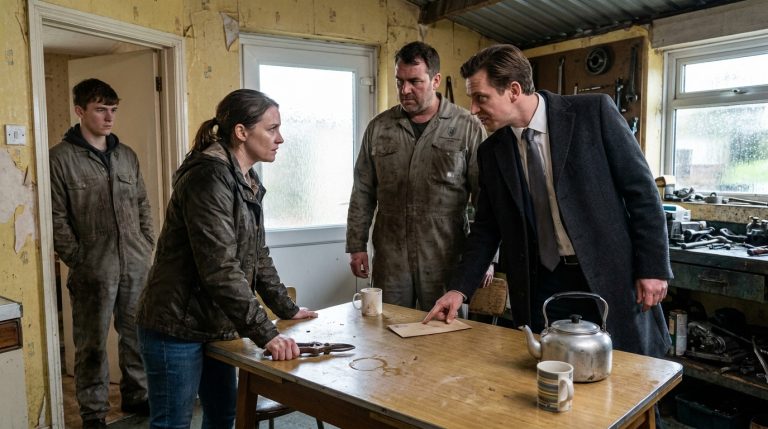
The thick, serrated plastic of the heavy-duty zip-tie bit into the skin of Walter’s palm as he leaned over the transom, his shoulder wedged against the Horizon Bell’s raw-edged cedar rub-rail. The harbor didn’t quiet down for the sun; it simply changed frequencies. The low, structural hum of the marina’s main transformer station vibrated through the hull, into his knees, and up through the marrow of his shins. Across the slipway, the black water bubbling from the unsealed drainage pipe left a yellowish, curdled foam against his fresh navy-blue hull trim.
He didn’t look away from Chad Ellison. The harbor manager’s white polo shirt was a sharp, aggressive spot of light against the tinted glass of the upper pavilion, but the distance was enough to blur his face into a smooth, featureless oval. Walter reached down with his right hand, his fingers dipping into the cold, diesel-slicked layer of the surface film, and caught the trailing tail of the plastic restraint. When he yanked, the tie didn’t give. It had been pulled to its absolute last notch, drawing the brass leaf of the rudder hard against the sternpost until the wood groaned a faint, dry protest.
“Mr. Briggs.”
The voice didn’t come from the balcony. It came from the concrete walkway directly above Dock 6. Chad Ellison had moved with the silent, rubber-soled efficiency of a man who spent his days on groomed teak decks and golf carts. He stood at the edge of the slip, his thumbs hooked casually into the pockets of his pressed khaki trousers. The glare from his sunglasses hid his eyes, reflecting two tiny, warped versions of the Horizon Bell’s mast.
Walter didn’t stand up immediately. He stayed tucked against the transom, letting his fingers map the exact thickness of the plastic band. It wasn’t standard commercial rigging. It was thick, UV-stabilized nylon, the kind used by industrial municipal contractors to secure high-voltage lines. He let go of the rope, swung his leg back over the gunwale, and stood on the pine deck. The movement was slow, his 77-year-old joints popping with the small, dry sound of an ungreased block.
“The rudder’s fouled,” Walter said. His voice was flat, containing no accusation, only the heavy weight of a physical fact.
Chad didn’t look at the water. He held a sleek, gray tablet in his left hand, its screen bright with charts that had nothing to do with depth or tides. “The harbor layout has shifted, Walter. We sent the notices out through the automated portal three weeks ago. Dock six is the designated berth for non-compliant hulls under forty feet.”
“The hull isn’t non-compliant,” Walter replied, his boots tracking a damp, gray smear of harbor grease across his clean deck as he moved toward the midship cleat. “The timber’s cedar over oak frames. The lines are sound. I’ve kept the registration current with the Coast Guard station since the re-platting in ninety-two.”
Chad took two steps down the aluminum ramp that connected the concrete seawall to the floating finger pier. The metal structure flexed under his weight with a sharp, rhythmic rattle. “The board updated the aesthetic covenants in April. Section four, clause nine. No open-grain wood exposures above the waterline within view of the commercial boardwalk. It’s a consistency metric, Walter. The people paying forty thousand a year for a slip across the channel don’t want to look at an unfinished maintenance project when they’re sitting on the cafe terrace.”
Walter’s thumb went to the brass button of his old denim shirt. The fabric was thin there, worn down to the white threads by decades of laundry soap and saltwater. He could smell the fuel station forty yards away—the sharp, chemical stink of unleaded gas mixing with the sour, dead-crab odor of the uncleaned pilings beneath the slip.
“The school group comes tomorrow,” Walter said, his eyes fixing on the small, neat stack of orange Type I life jackets tucked beneath the bench seats. They were thick, old-style canvas vests, each one stenciled with USN in faded black ink across the shoulder straps. “Eight kids from the district line. We’re doing the current charts down by the light-keeper’s bar.”
“The school trip isn’t authorized for this dock,” Chad said. He didn’t raise his voice; he spoke with the smooth, rhythmic cadence of a corporate representative reciting a safety brief. He tapped the screen of his tablet twice. “Dock six is classified as an industrial utility zone due to the fuel lines. Minors aren’t permitted on the floating walkways without a commercial liability rider. Your old volunteer permit was grandfathered under the municipal trust, but the marina’s private now. The trust was dissolved during the December refinancing.”
Walter looked down at the floating finger pier. The water pressure in the wash-down hose beside his berth suddenly died with a wet, hollow gurgle, the vinyl line going limp across the grey composite boards. The small, iridescent sheen of oil on the surface seemed to thicken, drawing closer to the wooden flanks of his boat.
“The lease for twelve was paid through the winter,” Walter said softly.
“A credit has been issued to your account for the difference in square-footage,” Chad said, turning back toward the ramp. His polo shirt caught the wind, the starched collar snapping once against his jaw. “But the Bell needs to clear the channel by Thursday morning. We have a ninety-foot custom catamaran coming in from the builder in Sarasota. They’ve leased twelve through three seasons.”
He didn’t look back as his rubber soles began their rhythmic click up the aluminum grating. Walter remained on the pine deck, the boat shifting beneath him as a large, black wake from a passing water-taxi rolled into the dead-end slip, forcing the Horizon Bell’s stern down into the shallow mud. He reached into his pocket, his calloused fingers brushing against the cold, iron edge of his old rigger’s knife.
CHAPTER 3: THE GATHERING ON THE PIER
The cold iron spine of the rigger’s knife stayed tucked inside Walter’s denim pocket as the tide continued its stubborn crawl against the hull. He did not pull the blade. He spent the remainder of the evening kneeling on the aft-decking by the weak light of an oil lantern, using a brass marlinspike to slowly tease apart the compressed, salt-hardened fibers of the industrial zip-tie. The nylon was rigid, resistant to the saltwater, but under constant, patient leverage, the locking teeth finally sheared with a sharp, plastic snap. The brass leaf of the rudder swung free, settling back into its alignment with a low, metallic clunk that echoed up through the steering lines.
He didn’t leave the vessel that night. He slept in the small, narrow berth beneath the forward console, listening to the slap of the fuel-filmed water against the hull planks.
By six o’clock Wednesday morning, the gray light had barely detached itself from the eastern marsh grass. Walter stood at the galley counter, pouring black coffee from an old tin pot into his chipped ceramic mug. The warmth of the mug was the only soft thing in the cabin. He checked his pocket watch—the silver casing scratched from years of shipboard bulkheads—and stepped out onto the pine deck.
The gravel parking lot at the far end of Port Bayfield Marina was already picking up the early hum of the school bus. Miss Laya Jennings was the first to step off the yellow bottom stair, her canvas tote bag weighed down with stacks of laminated tide charts and boxes of cheap colored pencils. Behind her, eight fifth-graders spilled onto the crushed oyster shells of the driveway. They weren’t the loud, brightly jacketed children who climbed out of the luxury SUVs by the yacht pavilion; they wore oversized, hand-me-down windbreakers, their high-top sneakers showing gray stains from the inland mud.
“Keep together, please,” Miss Jennings called, her voice small against the rumble of the departing bus engine. “Marcus, leave the gravel alone. We walk straight to the dock.”
Walter moved to the bow, his calloused hands catching the thick hemp mooring line. He didn’t wave. He simply stood by the timberhead, his straight spine braced against the weight of the boat as the children approached. A boy named Toby—the smallest of the group, whose single mother worked the late shift at the seafood packing plant—ran ahead, his boots rattling against the concrete seawall until he hit the transition to Dock 6.
“Captain Walter!” Toby called out, his face lighting up as he reached the top of the ramp. He held a crumpled paper bag containing two peanut butter sandwiches, his eyes tracing the clean, navy-blue trim of the Horizon Bell. “Are we going all the way to the outer light today? The wind’s hitting the water real hard.”
“The wind is coming out of the south-southeast, Toby,” Walter said, his voice a steady, low rumble. “We stay inside the cut today. The current’s moving too fast across the bar.”
He held out a thick, weathered forearm, offering a steady brace as Miss Jennings guided the children down the aluminum ramp one by one. The kids moved onto the floating wooden dock, their voices bouncing off the fiberglass hulls of the nearby speedboats like a flock of gulls. Walter began reaching into the storage locker, lifting the heavy canvas life jackets by their stenciled straps to distribute them.
“Excuse me.”
The voice cut through the children’s laughter like a wire through cheese.
Chad Ellison walked briskly down the main pier walkway, his tablet gripped tightly in his hand, his hair perfectly parted against the morning breeze. He didn’t look at the children. He kept his eyes locked on the old stenciled canvas vests Walter was holding. Two affluent tourists in matching designer sailing jackets stopped near the upper boardwalk, their phones already raised to record the interaction, while an influencer from the nearby wine cafe leaned against the railing with an iced coffee, watching with detached curiosity.
“I thought we discussed the layout parameters yesterday, Walter,” Chad said, stopping at the edge of the finger pier. His voice was elevated, carried easily by the offshore wind toward the boardwalk. “This area is designated for commercial fuel service only. I told you specifically, minors are not allowed on this walkway. Your volunteer agreement is no longer recognized by this facility.”
Miss Jennings stepped between the kids and the manager, her hand instinctively resting on Toby’s shoulder. “Mr. Ellison, we have an authorized school program. The district office confirmed our access to the public boat launch weeks ago.”
“The public launch was absorbed into the private marina parcel during the November municipal re-zoning,” Chad said, his thumb clicking the tablet screen with an aggressive, rhythmic snap. He stepped closer, his shadow falling across the Horizon Bell’s bow. “We are a premium destination now. We serve a certain clientele, and we have curated aesthetic standards to maintain. This vessel, these unapproved activities—they are simply not part of the image Port Bayfield is projecting.”
The children went entirely silent. Toby looked from the glossy tablet down to his own scuffed sneakers, his grip tightening around his lunch bag until the brown paper tore at the seam.
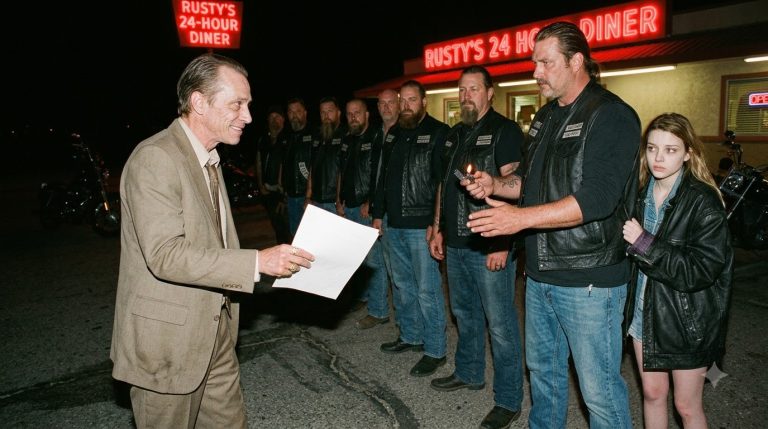
Walter stood slowly from the storage locker, an orange canvas life jacket still held across his forearm. He reached into his shirt pocket, his fingers extracting a small, protective plastic sleeve containing his Coast Guard Master’s License, his faded Command Master Chief ID, and the original signed municipal charter from 2009. He held them out in the quiet space between them.
Chad didn’t even raise his hand to take them. He leaned forward, his sunglasses reflecting the tight, controlled line of Walter’s jaw.
“I don’t care who you used to be, old man,” Chad said, loud enough to ring off the composite decking of the empty slips. “This marina has standards, and you, sir, don’t meet them. We don’t serve people like you here.”
The silence that followed was heavy, filled only with the dirty, yellowish wash from the drainage pipe gurgling against the wooden hull. Miss Jennings opened her mouth to speak, her face flushing with a mix of anger and shock, but Walter gently held up his left hand, his calloused palm stopping her before she could step forward.
He didn’t yell. He didn’t look up at the tourists watching from the cafe balcony. He slowly folded his permissions back into his pocket, turned toward the bow cleat, and began untying the hemp line from the timberhead.
“Captain Walter?” Toby whispered, his voice cracking as he looked at the wooden deck he wasn’t allowed to step onto.
Walter gave the boy a single, steady nod—a silent apology that required no spoken words. He pushed the Horizon Bell away from the finger pier with his boot, his arms working the long cedar oar to guide the wooden craft into the middle of the channel, leaving the concrete slips behind as he drifted toward the open, unmonitored gray of the bay.
CHAPTER 4: THE SILENT HORIZON
The thick cedar grain of the long sweep oar pressed hard into the meat of Walter’s palms, the wood weathered down to a pale, fiber-bare texture that absorbed the cold sweat of his hands. Each stroke was a slow, heavy leverage against the sluggish tide of the inlet. He didn’t look back at the dockmaster’s polished composite walkways or the neon-accented sign of the wine cafe. He kept his eyes fixed on the low, stone breakwater at the mouth of the harbor, his arms moving in the exact, unhurried cadence he had learned forty years ago in the heavy swells of the Atlantic.
Behind him, the distance between the Horizon Bell and the shoreline widened into twenty yards, then forty. The small figures of the children remained huddled near the yellow safety line of the concrete seawall, their hand-me-down windbreakers forming a small patch of faded color against the uniform gray of the new development. Toby’s arm was still raised in a static, frozen wave, his torn brown lunch bag tucked firmly under his elbow.
Walter dropped the heavy oar into its leather-lined crutch, letting the boat settle into its own inertia. The water out here was deeper, away from the frothy yellow scum of the commercial drainage pipes, but the air still held the oily weight of the marina’s high-octane pumps. He reached for the wooden tiller, his calloused thumb resting over the brass pin of the rudder head. The hull drifted past the edge of the terrace where Lena Cho sat.
Lena didn’t look down at her notebook. Her left hand was braced against the cold metal railing of the cafe balcony, her fingers squeezed so tightly around her phone that her knuckles showed white beneath her skin. The device was held steady, its small, glass lens tracking the slow, silent departure of the wooden craft. On her screen, the glowing frame captured the precise contrast between Chad Ellison’s crisp, branded polo shirt and the salt-stained denim of Walter’s jacket. She didn’t press stop until the Horizon Bell cleared the shadow of the pavilion entirely, its small American flag fluttering once in the cold draft coming off the marsh.
Walter guided the boat down the coast, past the modern glass fronts of the harbor lifestyle condos, until the shoreline smoothed out into the familiar, sun-bleached cedar fencing of his own cottage. He dropped the small iron anchor into three feet of gray water, the hemp line sliding through his palms with a dry, hissing sound. He didn’t go inside the house. He sat on the low engine box, pulling a square of coarse oilcloth from his pocket to wipe down the brass fittings of the binnacle.
By dusk, the mist had flattened the entire bay into a single sheet of slate. Inside the cottage, the only illumination came from the small, yellow dial of his old shortwave radio and the blue glare of a device he didn’t own.
Lena Cho was sitting in her rented Volkswagen three miles away, her fingers moving across her glowing screen with a frantic, unskipping precision. She had bypassed the municipal feedback boards entirely. Her post was raw, the video uncropped, showing the exact micro-second Chad Ellison’s voice bounced off the concrete pier. Beneath the footage, she typed the names she had gathered from the old fishmonger: Walter Briggs. Command Master Chief. Fifteen years of free trips.
The internet didn’t build slowly; it broke like a roiling sea over a sandbar. By nine o’clock, the counters beneath the video were spinning faster than the mechanical wheels of Walter’s water-meter.
Inside the harbor office, the small desktop monitor behind the glass partitions began to chime with a continuous, electronic stutter. Chad Ellison sat at his desk, his fingers hovering over his tablet as the notification logs filled with names he didn’t recognize—veterans from the panhandle, teachers from Jacksonville, names accompanied by small, digital emblems of anchor chains and silver stars. He didn’t look out the window at the dark slips; he kept refreshing a verified thread that had originated from the Norfolk naval hub.
A single comment sat at the top of the feed, pinned by an account that carried no promotional links, no corporate slogans, only the stark, white image of three silver stars on a formal shoulderboard. The username read Radm_Train. The text below was six words long: Location confirmed. Situation noted. Standby.
Walter Briggs sat in his worn wicker chair on the cottage porch, his old flip-phone closed and dark on the pine table beside him. He didn’t see the digital surge, nor did he see the scanned image of a 1984 newspaper clipping that was currently passing through three million screens—an image of a younger sailor lifting a shivering, wet boy out of the rotor-wash of a Coast Guard helicopter. His fingers were occupied with a short length of three-strand hemp, tracing the fraying logic of the rope in the dark, his mind mapping the specific weight of the south tide that would turn by morning.
CHAPTER 5: STEEL AND SILENCE
The frayed tip of the three-strand hemp rope slipped from Walter’s calloused fingers as the clock inside the small cottage kitchen struck midnight. He didn’t rise to pull down the faded canvas shade over the front window. Through the glass, the dark, slick surface of the bay remained flat, a wide expanse of oiled obsidian that barely reflected the amber safety lights hummed by the distant yacht pavilion. The small flip-phone beside his left hand stayed inert, its battery cover scratched down to the dull gray plastic underneath. The anonymous text message remained locked in its digital queue, its cryptic command to maintain position hovering in the static dark of the room.
By four in the morning, the silence changed. It wasn’t a sound at first, but a low-frequency displacement in the air that rattled the loose iron latch of the wood-stove.
Walter sat forward, his palms resting flat on the unpolished cedar arms of his wicker chair. His spine, rigid from thirty years of shipboard posture, aligned itself with the steady, deep-vibration hum that began to move through the cottage’s foundation pilings. It wasn’t the erratic, high-pitched thrum of the twin-engine center-consoles or the wet slosh of the tourist water-taxis. This was the dense, uniform compression of high-displacement steam turbines and multi-blade brass screws cutting through the outer deep-water channel at dead slow.
He stood up, his joints making no sound in the damp air, and walked out onto the porch. The mist was thick, smelling of wet cordgrass and cold salt mud, but the light was being swallowed by something vast on the horizon.
One mile out, where the sandy bar dropped off into the ninety-foot coastal trough, six colossi broke through the gray curtain of the fog. They came in a flawless, staggered line-ahead formation—three gray-hulled guided-missile destroyers, two massive logistical supply ships, and at the center, the towering, dark silhouette of the USS Sovereign. They carried no decorative flags, no ceremonial lights, and no broadcasted hails. The massive steel hulls simply slipped into the shallow bight of Bayfield Shores like a row of granite cliffs rising from the bottom of the sea.
By six-thirty, the town began to wake, but its breath was caught in its throat. On the main boardwalk, a delivery driver dropping off crates of imported mineral water at the wine cafe let a plastic tote slip from his hands, the glass bottles shattering across the composite decking without anyone turning to look. The morning joggers stopped in a disorganized cluster by the lifestyle pavilion, their reflective nylon jackets bright against the towering gray flanks of the destroyers that now filled their phone screens.
Inside the harbor office, Chad Ellison stood with both hands pressed against the glass window-pane, the collar of his branded marina polo shirt completely unbuttoned. The digital tablet on his desk was chiming continuously, a frantic series of automated alerts from the maritime tracking system identifying the vessels as Fleet Division Three, but his eyes were fixed on the water below.
A black-hulled naval launch detached itself from the side of the Sovereign. Its low, enclosed cabin was matte-finished, throwing off no reflections as it cleared the breakwater. At its bow, the white-starred flag of a Rear Admiral cut through the fuel scum of Dock 6. Behind it, five open personnel carriers followed in perfect distance, their fiberglass decks occupied by rows of sailors in pristine dress whites, their arms locked at their sides as they stood at full attention in the morning damp.
The lead launch made its landing at the prominent berth of slip twelve—the exact spot where Walter’s nameplate had been unbolted forty-eight hours before. The heavy rubber bumpers of the military craft compressed against the newly installed composite pilings with a sharp, pneumatic hiss.
Rear Admiral Thomas Rain stepped onto the concrete pier first. His white dress cap was pulled low, the gold oak leaves on the brim casting a sharp shadow over eyes that didn’t glance at the glass pavilion or the gathering crowd of reporters. His chest was a solid block of colored ribbons, the silver stars on his shoulderboards catching the first clear ray of sun breaking through the marsh mist.
He walked five paces to the center of the walkway and stopped. The crowd of tourists, influencers, and dockhands pressed back against the cafe railings, their whispers dying until the only sound left was the low gurgle of the drainage pipe under Dock 6.
“I am looking for Command Master Chief Walter Briggs,” Rain said. He didn’t use a megaphone. His voice was low, dry, and carried the specific, flat authority of a man used to speaking over the roar of an Atlantic gale.
No one in the crowd moved for three seconds. Then, Elena the fishmonger, her plastic apron still wet with slime from the morning bait delivery, stepped out from the doorway of her shed. Her hand trembled as she pointed down the coastal road toward the curve of the sand-spit. “He’s at the old cottage past the point, sir,” she said, her voice cracking. “They wouldn’t let him keep the boat here.”
Admiral Rain looked at the empty berth of slip twelve, then turned his head slowly toward his second-in-command, a tall Chief Petty Officer whose fingers were tucked into his leather utility belt. “Chief Mitchell. Take the retrieval convoy down the shoreline road. Bring the Master Chief back with full honors.”
“Aye, aye, sir,” the Chief replied.
Three matte-black military transport vehicles, their side panels clean of any commercial markings or dealership decals, backed out of the marina’s VIP parking lot, their heavy tires grinding the crushed oyster shells into white dust as they turned down the narrow sand road leading toward Walter’s fence. Rain did not follow them. He turned back toward the water, his eyes locking onto the gray grain of the Horizon Bell where it sat anchored far out in the shallows, his face remaining as unreadable as the iron hull of the ship behind him.
CHAPTER 6: THE RETRIEVAL CONVOY
The heavy low-frequency vibration of the three black transport vehicles did not announce itself through sirens. It ground its way into the wet sand and crushed flint of the shoreline road, a dense, mechanical thrum that reached Walter’s porch seconds before the first chrome grille rounded the salt-cedar hedge. Walter stayed flat-footed on his wooden deck, his old rigger’s knife remaining deep in his denim pocket. He watched the lead vehicle bounce over the rutted washboard path, its wide tires spitting grey coastal mud against its clean rocker panels before coming to a synchronized, dead stop in the grass beside his well-house.
The doors swung open on compressed gas struts. Chief Petty Officer Mitchell stepped down onto the unpaved driveway, his leather utility belt creaking under the weight of his standard gear. His face was weathered to the shade of old pine wood, lines etched deeply around his mouth from years on open bridge wings. Behind him, four active-duty sailors in crisp, winter whites stepped into the sea mist, their boots instantly picking up the pale dust of the crushed shells.
“Command Master Chief Briggs,” Mitchell said. He didn’t offer a hand; he brought his fingers up to the peak of his black cap, holding the salute in the still air until Walter slowly raised his own hand, returning it with the exact micro-second precision of the pre-digital fleet. “Admiral Rain’s compliments, sir. The division has taken position at the primary birth. We are ordered to escort you back to the pier.”
Walter’s eyes didn’t stray to the glossy finish of the vehicles. They settled instead on a thick, legal-sized plastic binder tucked beneath Mitchell’s left arm. Through the translucent cover, the top sheet bore the blue seal of the State Department of Environmental Protection, heavily watermarked and stamped EXEMPT FROM PRIVATE CONVEYANCE. Beneath it lay a secondary page—a surveyor’s plat mapping out slip 12 with a bold, hand-drawn red line that ran directly beneath Chad Ellison’s electronic marina boundary. The corporate boundary was flagged in ink as VOID – UNLAWFUL PLAT EXTENSION.
“The Bell is on her hook,” Walter said, his voice scratching softly against the damp wind. “The lines aren’t rigged for an empty watch.”
“We have a detail boarding her now from the launch, Master Chief,” Mitchell replied, his hand resting steady on the plastic binder. “They’re clearing the ground tackle and bringing her in under navy power. She’ll be tied up at the center pier before we clear the town line.”
Walter turned back to the screen door of his cottage. He didn’t pack a bag. He reached into the small, dark alcove behind the jamb, his fingers finding the worn cotton strap of his old sea-bag—not to fill it, but to retrieve his clean winter ball cap, the one with the gold lettering that hadn’t seen the sun since his retirement ceremony in ninety-six. He placed it carefully on his head, adjusting the brim until the shadow fell exactly across the bridge of his nose.
He walked down the three steps of the porch, his boots sinking into the wet clover. The sailors split into two lines, flanking the door of the middle transport vehicle as Walter approached. As he stepped inside the passenger compartment, the smell of new leather and heavy electronics replaced the familiar scent of wood-smoke and dry grass.
The journey back along the coast road was conducted in real-time, zero-skip progression. Through the heavy, tinted glass, Walter watched the changing face of Bayfield Shores roll past frame by frame. The new condos with their mirrored balconies looked small now, dwarfed by the massive gray masts of the destroyers looming over the roofs from the outer channel. The water of the sound was no longer empty; two rigid-hulled inflatable boats from the USS Sovereign were running parallel to the shore, their outboard motors roaring with a clean, synchronized whine that flattened the surface chop into long, white paths.
When the convoy reached the perimeter gates of Port Bayfield Marina, the security barriers were already raised flat against the sky. The private guard in his yellow jacket stood outside his booth, his hands flat against his thighs, his eyes fixed on the lead navy bumper as it rolled past without braking.
The vehicles moved through the VIP parking section, stopping where the crushed oyster shells met the wide concrete apron of the main boardwalk. The crowd had tripled since the morning. Nearly three hundred people—dockhands, local fishermen, tourists still holding forgotten cardboard coffee cups—formed a dense, silent semicircle that parted only when Chief Mitchell opened the passenger door.
Walter stepped out onto the concrete. The wind from the bay caught his jacket, pulling the fabric tight against his ribs. Across the channel, at slip twelve, the Horizon Bell was already coming alongside, her mahogany sides riding high and clean between two navy launches, her small American flag snapping in the draft.
Admiral Rain remained at the center of the pier, his white dress whites bright against the gray background of the fleet. He didn’t call out. He waited until Walter’s scuffed boots hit the first plank of the wooden walkway, his eyes locking onto the older man’s face with a heavy, silent intensity that seemed to hold forty years of salt within it.
CHAPTER 7: THE UNFURLMENT OF THE PIER
The rough timber of the main walkway hummed under the weight of the surrounding silence as Walter’s scuffed boots came to a halt precisely three paces from Rear Admiral Thomas Rain. The wind off the sound was cold, sweeping through the gaps in the boardwalk railings and rustling the starched trousers of the ceremonial color guard standing at the flank. Behind them, the gray hull of the Horizon Bell listed slightly in the gentle swell, her pine decking catching the raw midday sun while two active-duty navy coxswains completed their final, neat turns on the mooring cleats of slip twelve.
Admiral Rain did not move his hand from his side to break the posture. He kept his gaze fixed on the gold lettering of Walter’s old winter ball cap, his eyes holding the specific, dry light of a man who remembered every micro-second of the rotor-wash off the Florida keys forty-two years before.
“Command Master Chief,” Rain said, the voice steady, devoid of the performance pacing used by the town politicians. “The fleet has recorded your arrival. Your station is secure.”
He turned slightly, his shoulder boards catching the light as he nodded toward Chief Mitchell. Two young sailors stepped forward, their arms carrying a heavy, wooden easel which they set flat on the gray composite boards beside the slip’s main stanchion. Upon it sat a thick frame containing an unrolled, historical land-plat document.
Walter walked closer, his joints making their familiar, faint pop as he leaned in to look. His thumb traced his denim jacket pocket, his eyes finding a specific, out-of-place blue ink line drawn through the margins of the 1992 municipal deed. It wasn’t an automated digital marking like the ones on Chad Ellison’s tablet; it was a permanent, hand-notated boundary change from the state maritime surveyor’s office, cross-referenced with a small, brass-backed land marker that had sat undisturbed beneath the gravel lot for thirty-four years. The plat proved that slip twelve was never part of the commercial lease block sold to the out-of-state investment group. It had been legally designated as a permanent public trust for educational maritime volunteers during the post-cannery restructuring—a fact Chad Ellison had intentionally hidden by backdating the compliance notices to push the old-timers out.
Chad Ellison stood forty yards back, his shoulder pressed against the white pillar of the lifestyle pavilion. His face was no longer smooth or tan; the glare from the gray naval vessels had turned his skin a dull, chalky white, his fingers twitching against the side of his trousers where his tablet had gone entirely dark.
The mayor of Bayfield Shores stepped out from the shelter of the cafe terrace, a small, silver-bound leather portfolio held awkwardly between his palms. His boots made a hurried, uneven clatter against the boards as he stopped beside the presentation stand. His voice, when he began to read the executive order, was thin, shaking under the quiet scrutiny of the hundred uniform sailors standing at absolute attention across the docks.
“By decree of the municipal council and under verification of state coastal authority,” the mayor read, his eyes jumping nervously from the parchment to the starched front of Admiral Rain’s uniform, “the commercial designation of this berth is hereby nullified. The facility will henceforth be listed in all maritime registers as Briggs Pier, dedicated to the permanent preservation of local volunteer service.”
Behind the easel, four crewmen from the USS Sovereign silently raised a massive, heavy-gauge naval ensign. The fabric was dense, snapping twice against the morning breeze with a sharp, leather-like crack that caused Toby and the other fifth-graders at the edge of the crowd to stand up on their toes.
Walter looked down at the bronze plaque the chief had unveiled beside the mooring post. The metal was cold, unpolished, showing the dark grain of the casting sand around the raised letters of his own name. He didn’t offer a speech. He didn’t turn to face the cameras of the regional reporters who had gathered by the bait sheds. He simply reached out with his left hand, his thumb brushing a small smudge of gray harbor soot off the corner of the metal plate, before turning back to the Horizon Bell to check the lead on her forward spring line.
CHAPTER 8: THE KINTSUGI RIGGING
The forward spring line felt rough and familiar under Walter’s palms, the triple-strand hemp holding the damp chill of the harbor water as he pulled it taut against the oak bitts. He didn’t drop his gaze to the polished bronze plaque catching the midday sun on the pier above him. He simply tucked the trailing tail of the line beneath the clean wrap of the cleat, ensuring the boat settled with a soft, natural rhythm against the heavy rubber bumpers.
Rear Admiral Thomas Rain stepped down from the concrete walkway onto the floating timber deck of slip twelve. His white uniform dress shoes made a quiet, flat creak against the pine planks. The ceremonial crowd—the politicians, the out-of-town reporters, the lifestyle influencers—remained on the upper boardwalk, their voices muffled by the wide gap of open water and the disciplined presence of the Navy personnel flanking the perimeter.
Rain stopped at the Horizon Bell’s midship gunwale. He didn’t announce his presence. He reached into his high starched collar, his fingers extracting a small, weathered leather pouch that hung from a tarnished steel chain beneath his uniform ribbons. He placed the pouch flat on the wooden engine box between them.
“The logbook from the eighty-four extraction was unsealed this morning, Walter,” Rain said. His voice was no longer carried by the professional authority of the command bridge; it was lower, thinner, catching slightly on the salt air. “The Department of Naval Records corrected the registry. The incident at the light-keeper’s bar is no longer listed as an operational failure by the pilot.”
Walter did not lift the leather pouch. His hand stayed fixed on the wooden tiller, his thumb tracing a deep grain in the sun-bleached cedar. He had known the contents without opening the seal. In the winter of 1984, during a catastrophic Category 4 rescue operation off the keys, a young, green helicopter pilot named Thomas Rain had miscalculated the rotor-clearance against an old iron radar tower, clipping the blades and stalling the turbine. To protect the future career of the brightest young tactical mind in the Atlantic Fleet, Command Master Chief Walter Briggs had altered the post-incident log, taking the full structural blame for the positioning error before quietly moving toward an early retirement in Bayfield Shores.
“The registry didn’t need changing, Tom,” Walter said softly. “The boy I carried out of that hull didn’t care about the logbook. He just needed to stay above the swell.”
“The boy grew up,” Rain replied, his fingers brushing the cold bronze pin of the binnacle. “And the Navy doesn’t leave its anchors in the mud. The Horizon Project has been fully chartered by the state education board. The seed funding cleared the regional treasury at dawn.”
Across the slip, Chad Ellison was no longer standing by the white pillar of the lifestyle pavilion. His desk inside the harbor office had been cleared into a single gray cardboard box. He walked down the gravel path toward the perimeter gate, his shoulders hunched inside his unbranded canvas jacket, a sealed white envelope left behind on the counter of the reception desk. The letter inside—addressed to Walter in a tight, unprinted hand—contained no legal jargon or corporate defensive phrasing; it was a sparse, three-line apology for the forged compliance notices, accompanied by a small, brass key to the harbor’s private tool locker. It was a visceral surrender, born not from legal coercion, but from the absolute psychological collapse of his corporate architecture under the weight of six gray destroyers.
The afternoon sun began its slow, heavy dip toward the western salt-marshes, turning the water of the bight from slate-gray into a deep, warm amber. The colossi of Fleet Division Three didn’t leave with fanfare. One by one, the three guided-missile destroyers shifted their rudders, their massive screws kicking up a white, uniform foam as they backed out of the deep-water channel into the open Atlantic, their silhouettes slowly dissolving into the blue horizon until only the low, familiar drone of the coastal swell remained.
Pacing dropped drastically, the frantic energy of the internet surge settling into the quiet, rhythmic wash of the tide.
Walter walked to the forward locker, his scuffed boots moving across the clean pine decking with an unhurried precision. He pulled out the long, fraying halyard rope—the specific section of rigging that had worn down to the white inner core over fifteen seasons of children’s trips. He didn’t use a synthetic nylon replacement. He sat on the low wooden bench, his old iron rigger’s knife resting on his knee, and began weaving a traditional kintsugi-style splice, wrapping the frayed section with clean, oiled tarred twine until the broken joint was stronger than the original line.
The kids from the district line were already gathering by the edge of the stone breakwater, their windbreakers tucked into their backpacks as they watched the water clear. Toby walked down the ramp of Briggs Pier, his scuffed canvas sneakers making no sound against the composite boards. He stopped by the forward cleat, his eyes tracing the dark bronze letters of the monument before looking up at Walter.
“Are we still doing the current charts on Wednesday, Captain Walter?” the boy asked.
Walter Briggs adjusted the brim of his gold-lettered ball cap, the shadow falling neatly across his eyes as he pulled the tarred twine tight with his teeth. He gave the boy a single, steady nod—a small gesture of resilience that held the entire weight of his restored harbor.
“We go out at first light, Toby,” Walter said, his voice a low, enduring hum against the turning tide. “The wind is coming round to the west. The water’s going to be clear.”