The Weight of Salt and Iron: A Pragmatic Blueprint for Survival on the Erie Line
CHAPTER 1: THE CRUDE MACHINE
The navy knit beanie was stretched so thin that the frozen skin of Eli’s scalp showed through the pilled, lint-choked yarn. Every breath was a dry, scraping whistle—the sound of a seven-year-old’s lungs struggling to clear the residual stink of carbon monoxide from the utility room floor. He kept his head down, tracking the world by the vertical chrome legs of the diner booths and the salt-stained margins of the floor tiles.
He stopped at Booth 4. The man and woman sharing a mountain of golden, salted fries didn’t look up until the wet squeak of Eli’s left sole settled into a rhythm of absolute stillness. The woman’s shoulder didn’t just turn; it rose like a rusted iron shutter, her quilted jacket rustling with a dry, synthetic click that signaled an immediate closing of the border. Eli didn’t ask. He had learned exactly seventeen months ago that asking gave them words to use against him.
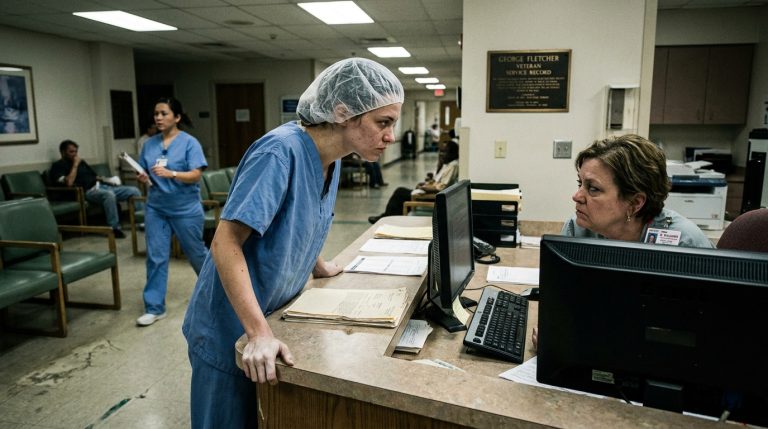
He moved toward the laminate counter where the register sat. The cashier’s thumb was broad, oil-stained, rhythmic as it flicked across the scratched, grease-filmed glass of her phone screen.
“No loitering,” she said, her voice flat, never rising to meet his hazel eyes. She didn’t look at his lips, which were split vertically and stained a faint, unnatural gray from the sub-zero trek. “Buy something or leave, kid. I’m not running a daycare.”
She slid her phone three inches to the left, a deliberate, defensive repositioning against the worn Formica counter. Eli’s fingers, raw and stiff as frozen twigs, twitched near his pocket where the plastic coin pouch held exactly twelve dollars and fourteen cents. It was the weight of his entire existence, but the counter felt miles high, a cliff of gray laminate.
Then came the heavy leather sleeve. The off-duty guard near the wire magazine rack didn’t use anger; he used mass. His hand clamped down on Eli’s upper arm, his thumb aligning perfectly with the yellowing, five-finger bruise left behind three nights ago when the radiator went black.
“You need to get outside if you’re not waiting for a ride,” the guard said. His breath smelled of wintergreen mints and stale tobacco. “Can’t have you bothering the customers.”
Eli didn’t pull away. He froze. His muscles hardened into the rigid posture of a rabbit under a low hawk, waiting for the grip to transfer to his collar. But the guard’s watch gave a short, metallic chime—the half-hour shift change—and the pressure loosened just enough for Eli to slide his shoulder low, ducking behind a spinning rack of souvenir Erie mugs.
He didn’t stop until he reached the far corner booth.
Calvin “Grizzly” Mercer didn’t look like the rest of them. He sat behind a white ceramic mug of black coffee that had gone cold enough for a skin to form on the surface. His black leather jacket was heavy, the grain deep and cracked around the armpits, showing the pale, faded gray ghosts where the Hell’s Angels rockers had been picked out with a knife years ago. His beard was a thick briar of silver and ash, covering a jaw that didn’t move as Eli approached.
Grizzly set his spoon down. The metal hit the edge of the chili bowl with a sharp, clear ping that seemed to silence the low hum of the refrigeration units behind the counter.
Eli reached out. His knuckles were purple, the skin across the back of his hand split in tiny, parallel red lines from the lake-effect wind. He placed a folded piece of paper on the scarred wood of the table.
The crayon was crude—a crimson chopper with wings that didn’t match any standard design, but the fork angle was dead accurate to the old rigid-frame Harley Grizzly had stored under a grease tarp in his garage for ten winters. Underneath, the block letters were shaky, dug so deep into the cheap pulp paper that the wax had flattened into shiny, solid tracks: HELL’S ANGEL.
“Please,” Eli whispered. The sound was dry, like two sheets of sandpaper rubbing together in an empty room. “He’s coming to take me back.”
Grizzly didn’t look at the door. He didn’t ask for a name or a dynamic. He simply unzipped his jacket with one slow, deliberate downward tug of the heavy brass pull. The leather parted like an iron gate, and he shifted his six-foot-three frame sideways, creating a three-foot pocket of absolute shadow between the table and his chest.
“You’re safe now,” Grizzly said. The rumble was low, vibrating through the wood of the bench into Eli’s wet shoes. “I’m not leaving.”
He reached into his pocket and pulled out his phone, his thumb hovering over a sequence of numbers he hadn’t touched since the state line changed. But before his finger could descend, the headlights of a late-model silver SUV swept through the frost-rimed front windows of the plaza, casting the long, distorted shadow of the automatic entry doors directly across the face of the crayon drawing.
CHAPTER 2: THE CORE SAMPLE
The silver SUV didn’t cut its engine. It idled by the rusted iron barrier of the diesel pumps, its tailpipes spitting thick, gray plumes of carbon into the driving white sheets of the Erie storm. Through the salt-filmed glass of the corner booth, the vibration of that heavy V6 hummed directly into the iron frame of the table, setting off a microscopic chatter between Grizzly’s cold coffee mug and the white ceramic rim of the chili bowl.
Grizzly’s thumb didn’t move from the screen of his phone. His skin was the color of old leather left out in a scrap yard, his knuckles gray with the embedded carbon of forty years spent tearing down iron engines. He didn’t look up at the glare. He didn’t have to. The unique, high-pitched whine of that specific power-steering pump told him everything the registration plate couldn’t—the vehicle belonged to someone who kept their machine clean on the outside but let the fluid rot underneath.
Beneath the heavy drape of the unzipped leather jacket, Eli didn’t make a sound. His body simply contracted, a mechanical shrinking that pulled his sharp shoulders inward until his collarbones looked like twin iron nails beneath the damp canvas of his parka. His sneakers, stiff with salt crust and half-frozen slush, scraped once against the grit of the floor tiles. Squeak. Then, the silence returned, heavier this time, smelling of the wet iron radiator clanking in the wall behind them.
“Keep your eyes on the paper, little man,” Grizzly said. His voice stayed low, a rhythmic vibration that didn’t travel past the edge of the laminate table. It was the tone he used when a rusted chain was about to snap under a hoist—flat, deliberate, devoid of the panic that makes men move too fast.
“He has the app,” Eli whispered. The words were small, dry shavings of ice. He wasn’t looking at the window; he was tracking the black shadow of Grizzly’s hand against the crayon drawing. “The little light on his desk. It turns blue when I get past the gate. It’s inside my coat. In the lining. He sowed it in with the fishing string.”
Grizzly’s dark eyes shifted down, not to the boy’s face, but to the hem of the oversized tan parka. The rough twine holding the broken zipper together was frayed, salt-rimed, but near the left pocket, the seam was thick. The thread there wasn’t cotton; it was heavy monofilament, nylon blue, pulled through the cheap synthetic fabric with the crude, wide stitches of a man who didn’t care about the look, only the anchor. A tracking puck. Commercial grade. The kind bounty hunters clamped onto the oil pans of bail-jumpers.
A sudden memory—sharp and jagged as a broken gear—sliced through Grizzly’s focus. Thirty winters ago, a county sheriff had handed him a plastic bag containing a pair of waterlogged boots and an iron key found in a drainage ditch near the docks. We didn’t know he was out there, the deputy had said, shifting his tooth-pick, his eyes already tracking the clock on the wall. Kids drift, Mercer. The cold does what it does. The wrists on that boy had been blue too. The same shade as the monofilament thread in Eli’s coat.
Grizzly’s jaw tightened until the silver wire of his beard bristled against the heavy collar of his vest. He didn’t let the heat rise to his face. In the scrap business, anger was how you stripped a bolt; calculation was how you saved the threads.
He lifted his phone. His finger descended on the single speed-dial entry for Preacher Cain. The circuit didn’t click through the modern digital lines; it routed through the old, hard-wired tower on the ridge that the club kept maintained with their own copper wire and solar batteries.
“Preacher,” Grizzly said into the grid.
“Talk,” the response came. The voice on the other end was old, rhythmic, backed by the low, steady click of a typewriter carriage. Preacher didn’t sleep during lake-effect storms; he sat in the back office of the salvage yard, logbooks open, tracking the shipping manifests of the winter freighters.
“I’ve got a seven-year-old child in the corner booth at the lakefront travel plaza,” Grizzly said. He kept his eyes on the silver SUV outside. A door had opened. A man’s boot—expensive black leather with a heavy Vibram sole, unmarred by actual labor—settled into the gray slush of the curb. “He’s wearing canvas shoes in an eighteen-degree drop. His wrists are ringed out with zip-tie scars, and his guardian just pulled up to the glass. Name is Trent Holloway. He’s got a tracking puck sewn into the kid’s hem.”
The line went dead for three seconds. Not the silence of a dropped call, but the heavy, pressurized pause of a man calculating logistics across ten miles of snow-drifted asphalt.
“Holloway,” Preacher repeated. The typewriter click didn’t restart. “The deacon over at St. Jude’s. The one who handles the county housing placements for the non-parental estate funds. Pixel looked into his books two months back when the yard needed a municipal variance. He’s got forty-thousand in short-term markers out with the offshore bookies in Windsor. His house is leveraged to the rafters.”
“The kid memorized a number,” Grizzly said, his voice dropping another octave as the man outside turned his face toward the diner lights, adjusting the wool collar of a clean gray topcoat. “Two hundred ninety-six thousand, seven hundred. A life insurance rider. Eli says the guardian told him winter does the work.”
“The line is open,” Preacher said, his voice dropping into the flat, institutional cadence of a man who spent twenty years organizing motor pools. “I’m hitting the horn. Every leather on the interstate is turning around. Switchback is already in his truck. Don’t let the man touch the boy’s coat, Grizz. If he pulls that puck before we map the line, the legal status stays with the guardian.”
“He won’t touch him,” Grizzly said.
He ended the call, sliding the heavy phone back into his vest pocket. Outside, Trent Holloway had cleared the first row of parking bumpers. He wasn’t running. He walked with the heavy, confident stride of a man who owned the paperwork, his hands tucked deep into his pockets, his chin up against the wind. He looked like the kind of citizen who signed the fronts of checks and sat on the boards of small-town banks.
Eli’s hand reached out, his small, blue-shadowed fingers grasping the stiff leather of Grizzly’s sleeve. The friction of his small grip made a dry, scratching sound against the hide. “Grizzly,” the boy whispered, his eyes locked on the crimson crayon chopper. “The drawing. Is it real?”
“The frame is iron, Eli,” Grizzly said, his hand coming down over the paper, his broad palm covering the crayon completely as the automatic door of the diner gave its loud, mechanical groan. “The wheels are solid. It doesn’t break when the ground turns to ice.”
The cold air from the vestibule hit the booth first, smelling of salted sleet and the sulfurous stink of the highway trucks. Behind them, the cashier’s phone clicked against the laminate counter as she stood up straight, her eyes tracking the gray topcoat approaching the register.
Grizzly didn’t shift his weight. He sat perfectly still, a mountain of old iron and scarred leather, waiting for the first word to drop.
CHAPTER 3: THE GATHERING OF LEATHER
The wool hem of Trent Holloway’s gray topcoat was pristine, dry, completely untouched by the horizontal sheets of the blizzard outside. He stopped exactly three paces inside the diner, his fingers uncurling from his pockets with a slow, calculated precision. He didn’t look like a man searching for a runaway; he looked like an appraiser tracking a misplaced piece of inventory. His gaze swept the rows of Formica tables, bypassing the truckers and the road-tripping couple, until his eyes locked onto the far corner booth where the shadow of Grizzly’s broad shoulders obscured the wall.
“Eli,” Holloway said. His voice was smooth, carrying the practiced resonance of a man who spent his Sundays projecting to the back pews of St. Jude’s. “You’ve caused quite a disruption. The car is warming up. It’s time to go home.”
He took two steps forward, the thick Vibram soles of his boots grinding the highway salt into the pitted floor tiles with a dry, crunching friction. He didn’t reach for the boy immediately. His eyes were fixed on the heavy brass zipper of Grizzly’s leather jacket, which remained open just enough to reveal the thin, synthetic edge of Eli’s oversized parka tucked deep into the dark space beside the bench.
Grizzly didn’t rise. He kept his broad palms flat on the scarred wood of the table, his fingers covering the shaky wax lines of the crimson chopper drawing. The weight of his frame was anchored deep, his boots jammed against the rusted iron pedestals that bolted the table directly into the concrete subfloor.
“The boy is staying right where he is,” Grizzly said. The rumble in his chest was quiet, but it set off a faint, sympathetic ring in the empty silverware holder at the edge of the laminate. “The weather out on 90 isn’t fit for a dog, let alone a kid in wet canvas.”
Holloway’s mouth twitched, the thin line of his lips hardening into a patronizing curve. He reached into his coat pocket, his hand emerging not with a weapon, but with a black leather wallet containing a laminated county placement certificate. He laid it flat on the edge of the table, his index finger pressing into the plastic until the seal turned white.
“I am his legal guardian, friend,” Holloway said, his tone dropping into that flat, institutional cadence that closed doors and finalized state files. “The court signed the emergency decree in July. If you interfere with his transport, you are committing an felony extraction. The Erie police patrol is exactly four minutes away on the bypass. I suggest you slide your legs out of that booth.”
Behind Grizzly’s shoulder, the small, stiff shape of Eli’s body began to vibrate against the wood of the corner wall. The boy’s breathing had gone shallow again, that dry, carbon-monoxide whistle catching in his throat like a rusted latch.
“He’s going to plug it in,” Eli whispered, his chin pressed so hard into his chest that his navy beanie slipped, exposing the raw, blue-rimmed margins of his upper ears. “The big one on the shelf. He left the book open on the table. He said the frost takes the tracks away.”
Holloway didn’t flinch at the words. His eyes narrowed, his gaze shifting from the boy to the thick, monofilament blue thread visible along the hem of Eli’s coat pocket. He reached his left hand out, his clean, unblemished fingers hooking like a claw as he moved to grab the stiff fabric of the boy’s sleeve.
The door chime didn’t just ding; the heavy glass pane of the front entrance rattled within its aluminum frame as three men crossed the sill simultaneously. They didn’t swagger, and they didn’t shout. They moved with the cold, coordinated weight of a machine that had been running on the same gears for thirty years.
Daryl “Preacher” Cain came first, his silver hair pinned back, his heavy leather cut oil-stained and stiff from the storm. Behind him, Switchback’s boots made no sound at all on the salt grit—the habit of an internal affairs detective who spent his prime tracking bad badges through the dark. Doc followed, a heavy, olive-drab trauma kit slung over his shoulder, its iron buckles clanking against the brass snaps of his vest.
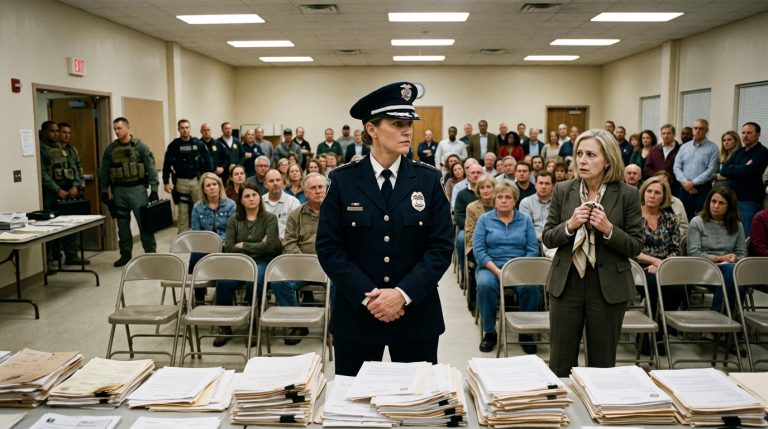
“Step back from the table, Mr. Holloway,” Preacher said. His voice wasn’t loud, but it had the specific, dry density of an iron plate hitting an anvil. He didn’t look at the deacon; his eyes were already scanning the room, marking the cashier who had gone rigid behind her register, and the off-duty security guard who was slowly sliding his hand toward his belt utility loop.
Holloway drew his hand back from Eli’s sleeve, his posture straightening as he adjusted the collar of his topcoat. “This is an administrative matter,” he said, turning his face to meet Preacher’s level gaze. “The child is under state wardship assigned to my domicile. You have no legal standing in this diner.”
“We’ve got the ledger, Trent,” Switchback said, stepping into the space between the booth and the door, his hands tucked loosely into the belt of his canvas trousers. He pulled a small, ruggedized laptop from beneath his arm, its screen already glowing with a dense grid of blue and white spreadsheets. “Pixel’s been in your offshore accounts for twenty minutes. The Windsor bookies logged your last transfer at 11:14 p.m. Forty-two thousand dollars from the Eli Turner Trust, routing through a shell company called ‘Holloway Maintenance and Supply.’ You didn’t buy lumber for his room, Trent. You bought five card blocks at the blackjack table.”
The deacon’s face didn’t lose its color; it hardened, the muscle along his jaw tightening into a rigid knot of ivory. “Gambling records are non-admissible without a federal forensic warrant,” he said, his voice dropping into a razor-thin hiss. “You’re outlaws with a collection of salvage titles. The police will be here in two minutes.”
“I’m not calling patrol,” Switchback said, his thumb tapping the glass of his personal phone. “I just opened a direct line to Captain Miller at the district house. He’s looking at a copy of the 2021 medical examiner’s report for Kayla Benton right now. Same house. Same unventilated utility room. Same space heater manual left open to page fourteen. The insurance payout was a hundred and sixty-four thousand, wasn’t it? You’ve got a real habit of losing kids when the lake turns to grease.”
Outside, the low, synchronized rumble didn’t start with a roar; it began as a deep, sub-audible vibration that shook the salt shakers on every table in the traveler plaza. The 217 motorcycles didn’t arrive in a line; they formed a solid, interlocking wall of iron and chrome across the perimeter of the asphalt, their engines cutting out at the exact same fraction of a second. The sudden silence that followed was heavier than the wind, a massive, pressurized weight that pinned the entire diner between the glass and the truth.
Doc didn’t wait for the legal dynamic to clear. He slid his massive frame past Holloway, his steady, gray-fleshed hands dropping onto Eli’s wrists. He didn’t use force; his fingers settled gently against the raw, pink rings where the plastic zip-ties had scarred the skin.
“Core temp is sitting below ninety-four, Preacher,” Doc said, his eyes tracking the slow, sluggish rise of the boy’s chest. “His pulse is thready as dry silk. If we don’t get him into a controlled re-warming environment within thirty minutes, his heart is going to start skipping beats. The carbon monoxide in his lungs is already bonding with his hemoglobin. We’re out of time for a debate.”
Preacher looked at Grizzly, then down at the crayon drawing of the winged motorcycle that still lay beneath Grizzly’s palm. “Take the boy, Doc,” Preacher ordered. “Take Tiny and Hammer for the perimeter escort. Nobody touches that child until the state medical board clears the intake.”
Holloway took one step forward, his boots clicking sharply on the tile as he reached for his phone. “This is an illegal seizure,” he shouted, his voice cracking against the silent rows of booths. “I have the papers!”
Grizzly stood up. He didn’t use his hands; he simply rose from the bench, his six-foot-three frame blotting out the light from the front window completely. The shadow of his heavy leather vest fell across Holloway’s face like an iron shutter, his gray-wired beard inches from the deacon’s pristine wool collar.
“The papers don’t breathe, Holloway,” Grizzly said, his voice a low, gravelly engine idling in the dark. “The boy does. And tonight, we’re changing the locks.”
CHAPTER 4: THE WITNESSES ON THE STAND
The air between Grizzly’s vest and the deacon’s gray topcoat didn’t just feel tight; it smelled of pressurized iron and the faint, chemical bite of cold copper. Trent Holloway didn’t retreat, but his left heel caught the metal transition strip separating the tile floor from the booth platform with a sharp, hollow tink. His gaze flicked past Grizzly’s shoulder, tracking Doc’s thick fingers as they slid beneath the twine holding Eli’s parka together, lifting the frail weight of the boy off the vinyl bench in one smooth, mechanical ascent.
“You’re making an assumption of jurisdiction that will ruin you,” Holloway said, his voice dropping into a tight, focused register that barely carried to the next row of stools. His eyes didn’t widen; they shrank into two dark, calculating points, his hand remaining steady over the laminated certificate on the table. “The local sheriff has my home layout on file. They know my status. When they arrive, this room becomes a locked trap.”
“The room’s already locked, deacon,” Preacher Cain said. He didn’t look at Holloway. He walked past the table, his heavy leather vest scraping the back of an empty wooden chair with a dry, rhythmic hiss. His boots tracked the yellow interstate grit directly toward the center counter, where the cashier’s knuckles were still pressed white against the plastic rim of her register drawer.
The diner had gone completely cold. The rhythmic clank-clank of the old kitchen radiator had ceased, replaced by the low, unyielding hum of the storm pressing against the thick plate glass.
Preacher stopped three feet from the register. He laid his broad palms flat on the salt-filmed laminate, the iron rivets along the wrist cuffs of his gloves catching the yellow glare of the fluorescent tubes overhead.
“You told the boy to leave,” Preacher said. He didn’t use an edge; his tone was flat, institutional, the voice of a state safety inspector marking a cracked boiler. “The temperature on the porch is dropping through eighteen degrees. He’s seven years old, his shoes are split canvas, and you cited a loitering clause.”
The cashier didn’t look up at his vest. Her eyes stayed locked on the grease-smeared glass of her phone screen, which was still dark. “The manager handles the hours,” she stammered, her thumb twitching against her apron string. “We get runners from the city all the time. They look for handouts. It’s a liability if they slip on the fuel pads.”
“He didn’t ask for a piece of bread,” Preacher said. He shifted his gaze five inches to the left, where the off-duty security guard stood by the metal wire magazine rack, his right forearm still pinned flat against his utility belt. “And you used five fingers on a yellow bruise. You recognized the angle of the grip, didn’t you? You saw the mark on his sleeve and decided the paperwork wasn’t worth the shift credit.”
The guard didn’t answer. His chin dropped an inch into his collar, his fingers uncurling from the leather loop of his belt with a slow, reluctant friction. The heavy, metallic smell of old fryer oil and burnt chicory seemed to settle over the counter like rust on an old iron crane.
Behind them, near the entrance to the restrooms, Sandra Klene’s hands were shaking so hard the plastic coins inside her winter outreach jar set off a rapid, plastic chatter. She had adjusted the paper label three times, her eyes tracking Doc’s massive back as he carried the bundle of Eli’s coat toward the double-pane vestibule doors.
Preacher turned his frame toward her, his boots leaving dark, salt-rimed crescents on the yellowed tile with every micro-step. “You told him God gave him a home,” he said. The words weren’t a shout; they had the cold weight of a iron bar dropping into gray slush. “You looked at his layers and assumed the state had already cleared the ledger. You chose the safety of the box over the grease on the floor.”
“I… I have an obligation to the church board,” Sandra whispered, a thin, watery line breaking across the dry powder of her cheek. She didn’t look at Holloway; her fingers clamped onto the iron handle of her cash box until the knuckles turned gray. “We can’t encourage the runaways. The legal guardians must be respected or the entire structure falls apart.”
“The structure’s already rotten, lady,” Grizzly said from the corner. He hadn’t shifted his position by the booth, his broad frame still cutting off Holloway’s visibility to the parking lot. His right hand came down on the edge of the table, his index finger tapping the shaky wax lines of the crimson chopper drawing Eli had left behind. “The boy didn’t run from a home. He ran from an iron slide-latch on the outside of a utility door.”
Holloway’s eyes flicked to the drawing, then back to Grizzly’s scarred knuckles. A small, cold detail clarified itself beneath the yellow light—the deacon’s black leather boots were completely dry. The soles were immaculate, devoid of the gray salt-crust and frozen slush that lined every other shoe in the room. He hadn’t walked from the highway; he had driven to the glass, tracked the puck from the warmth of his leather seat, and waited until the boy’s circulation slowed to a crawl before stepping onto the tile.
“The police are pulling onto the access road now,” Holloway said, his voice dropping into a sharp, transactional whisper. He reached down and slid the laminated county certificate back into his topcoat pocket with a smooth, silent tug. “The state will look at the registry. They will see my credentials, and they will see your records from the state line. You have exactly thirty seconds to let me clear the door before this becomes a grand jury extraction.”
“The line’s already open to Captain Miller, Trent,” Switchback said from the doorway. He didn’t look up from his ruggedized laptop, but his finger hit the return key with a dry, mechanical clack. “The Windsor casino logs just cleared the domestic wire transfer. The money came from the Eli Turner Trust, but the signature on the authorization wasn’t yours—it was the digital stamp of a deceased estate officer from 2023. You’ve been using a ghost badge to clear your markers, deacon. That isn’t an administrative variance. That’s twenty years in the iron house at Lewisburg.”
The door chime gave its final, metallic ding as Doc stepped through the outer vestibule, his heavy olive-drab kit swinging against his thigh as the first pair of Hell’s Angels riders closed ranks behind him in the white sheets of the storm. The silver SUV outside remained idled, its V6 engine sending a continuous, rusted rattle through the travel plaza’s foundation, but the iron wall of leather had already settled around the glass, silent, unyielding, and dry.
CHAPTER 5: THE SERPENTS OF WEST 29TH
The transition from the traveler plaza’s yellow tile to the raw concrete of the outdoor platform didn’t offer an interval for adjustment; the freezing lake air hit Grizzly’s jaw like a spade made of scrap iron. Squeak, scrape, rattle. The heavy link-chains wrapped around his rear tire bit into the hard-packed ice of the overflow lot, spitting a gray slurry of pulverized rock salt and soot against the rusted metal mudguard as he threw his weight onto the iron pedal. The engine didn’t start with a modern click; it caught with a violent, unlubricated metal thwack that sent a shudder directly through the steel frame into his spine.
Beside him, two hundred and seventeen machines were already vibrating in a tight, serpentine block, their exhausts belching thick, blue-rimmed plumes of low-grade fuel that smelled of burnt zinc and old gaskets. Nobody spoke through the white sheets of the storm. The discipline was structural, planned across forty winters of running heavy iron through the gray margins of the line.
“Holloway’s silver rig is already clearing the bypass ramp,” Switchback shouted through the drone of the idling V-twins. He was standing on the footboard of his utility truck, his left hand clamping his ruggedized laptop against the cab door to shield the screen from the frozen shards spinning off the eaves. “He’s tracking the phone lines, but Captain Miller’s cruisers are routing from the south junction. We have exactly eleven miles of unplowed county asphalt before he hits the bungalow gate.”
Grizzly twisted the throttle, the cable scraping against the dry internal sleeve of the handlebar with a distinct, gritty friction. He didn’t look back to see if the convoy was following. He dropped his boot onto the transmission linkage, the gears engaging with a heavy, metallic clunk that signaled the start of the serpentine formation.
The journey down West 29th Street wasn’t a race; it was a slow, mechanical crawl through a world that had gone completely desaturated, gray-black and rimed with salt scale. The wind didn’t just push sideways; it drove the ice shards directly into the small, parallel tears in Grizzly’s leather sleeves, freezing the skin beneath until his wrists felt as stiff as the iron tie-rods on his front forks. Every half-mile, an unlubricated chain link on the bike behind him would catch an oxidized sprocket, producing a rhythmic, metal-on-metal shriek that cut cleanly through the roar of the cylinders.
The “Therefore/But” logic of the road took over. The town had failed to clear the secondary drifts; therefore, the convoy had to drop into a single-file line, their tires tracking the narrow, brown ruts left by the industrial salt-spreaders. But the blizzard shifted its trajectory three miles out, bringing down a dense sheet of gray fog off the lake that reduced the visibility of the red brake lights ahead to a fleeting, pulsing blur.
Grizzly kept his eyes low, tracking the unpaved shoulder by the rusted mailboxes and the leaning utility poles that marked the margins of the residential line. His mind stayed locked on the physical details Switchback had pulled from the spreadsheet—the forty-thousand dollar marker, the digital stamp of a dead clerk, the single space heater left on a cold shelf. It wasn’t an abstract scheme; it was a crude machine built of paper and ice, and Holloway was currently driving toward the switch.
“He’s pulling into the driveway,” Preacher’s voice came through the low-frequency radio grid, the signal crackling with the static of the power lines overhead. “The silver rig just crossed the sidewalk. He’s bypassing the front steps. He’s going straight for the side door where the utility box is anchored.”
Grizzly didn’t accelerate. An unearned burst of speed would split the serpentine formation on the black ice; instead, he maintained the steady, grinding momentum of the iron block, his front tire cutting through the fresh drift at the corner of West 29th exactly as the blue and white flashers of Captain Miller’s leading cruisers illuminated the beige bungalow ahead.
The house didn’t look like an execution site. It looked worn, its vinyl siding pitted by old hail, a rusted iron garden hook holding a dead fern by the porch rail. A wooden plaque near the latch read God Bless This Home, the paint flaking off in dry white scales that littered the frozen dirt below.
The 217 riders didn’t scatter when they hit the curb. They executed the perimeter strategy precisely as Preacher had laid it out in the diner—bikes angled at forty-five degrees, kickstands sinking three inches into the snow-choked lawns, forming a continuous, overlapping barricade of salt-stained steel that cut off every exit from the property line to the creek bed behind the garage.
Grizzly killed his ignition, the sudden termination of the V-twin’s roar letting the silence of the storm slam down over the street like an iron hatch. He slid his legs off the seat, his boots grinding into the frozen crust of the driveway with a dry, crunching finality.
Captain Miller was already clearing his holster by the leading cruiser, his wool uniform coat stiff with salt spray as Switchback stepped up beside him, the laptop still open under the crook of his arm, its blue screen casting a long, cold shadow across the frost-cracked concrete of the walkway.
“The side latch is already slid back, Captain,” Switchback said, his voice dropping into that flat, transactional register as he pointed a gloved finger toward the low, square window of the utility room near the baseboards. “He isn’t loading a bag. He’s setting the valve.”
Grizzly didn’t wait for the warrant report to finish. He walked toward the driveway rail, his hand coming down on the rusted iron piping of the fence, his fingers feeling the deep, cold friction of the metal as the first squad car door slammed shut behind him.
CHAPTER 6: THE SANDWICH AND THE CORD
The dry crust of snow over the front porch stairs didn’t yield silently; it fractured into sharp, crystalline chunks under the combined weight of Captain Miller’s heavy uniform boots and Switchback’s level stride. Grizzly kept his posture low, his shoulder tracking the flaking green trim of the door frame as the officer took a two-handed grip on the iron breach ram. The tool didn’t swing with a fluid grace; it struck the weathered wood near the deadbolt with a blunt, bone-jarring thud that split the casing from the jamb in a shower of dry oak splinters.
The door swung backward into a narrow hallway that smelled instantly of cold grease, unwashed wool, and the artificial sweetness of cheap furniture polish. There was no tactical scramble, no shouting from the corners. The television in the adjacent parlor was humming, its low-frequency speaker sending the rhythmic, recorded mechanical laughter of an old sitcom track directly through the uncarpeted floorboards.
“Police! Keep your hands where they’re visible!” Miller’s voice carried the dry, institutional weight of the county code as he cleared the threshold, his flashlight beam slicing through the dim interior.
Trent Holloway was standing at the laminate kitchen counter. He hadn’t reached for a weapon; his fingers were currently occupied with a dull, silver-plated butter knife, spreading a thick layer of white mayonnaise across a slice of commercial white bread. He was wearing gray flannel pajama bottoms and a faded blue t-shirt with the words World’s Best Uncle printed across the chest in cracked, yellowing vinyl letters. He looked up with a slow, deliberate confusion, the knife remaining suspended in his right hand like a conductor’s baton between two bars of music.
“What on earth is the meaning of this?” Holloway said, his voice instantly adopting that smooth, pastoral resonance that had bounced off the diner walls an hour before. He set the knife down on the crumbs with a tiny, sharp clink. “Captain, what is going on here? Is Eli hurt? I’ve been half out of my mind with worry since the storm rolled over the bypass. I was just preparing a plate before calling the precinct.”
“Save the performance, Trent,” Miller said, his left hand clamping down on the deacon’s shoulder with a flat, industrial finality that forced the man’s frame around toward the sink. The second officer stepped in, his leather utility belt creaking as he pulled a pair of heavy steel cuffs from their case, the metal ratchets clicking four times in rapid succession as they locked over Holloway’s uncalloused wrists.
“This is an unconstitutional entry,” Holloway hissed, his pastoral mask slipping just enough to show the rigid knot of white muscle working along his lower jaw line. “I am a certified deacon of the diocese. I have an administrative bond with the county family placement service. The boy is unstable—he suffers from clinical fabrications. He wanders into the drifts because his biological parents left him with an unmanageable baseline.”
“We aren’t looking at his baseline, deacon,” Switchback said, his boots leaving dark, salt-rimed prints on the linoleum as he walked past the refrigerator toward the narrow hallway that led to the utility annex behind the kitchen. He kept his ruggedized laptop tucked under his arm, its blue screen throwing a rhythmic flicker against the dirty wallpaper. “We’re looking at your mechanics.”
Grizzly followed the detective’s shoulder, his broad frame blocking out the kitchen light completely as they reached the final door at the end of the floor structure. The barrier wasn’t standard oak; it was a rough slab of unfinished plywood, its edges splintered and gray with age. On the exterior face, exactly four inches above the brass handle hole, a heavy iron slide-latch had been bolted directly into the frame with thick, unpainted carriage screws. The sliding bar was dark, oxidized with layers of old grease, and the iron keeper was scored with deep horizontal scratches where the bolt had been slammed home night after night.
Switchback didn’t use an iron pry bar. He reached out with a gloved hand and caught the lever of the latch. It slid back with a loud, mechanical clack—the precise metallic signature that the next-door neighbor had logged through the shared bungalow wall for seventeen months.
The air that rushed out of the opened space didn’t carry the warmth of the kitchen furnace; it hit Grizzly’s face with a sub-zero draft that smelled of industrial oil, ancient dry-rot, and the pungent, chemical tang of silver duct tape. The interior walls of the small utility room were lined with bare, uninsulated studs, the pink fiberglass batting stuffed between the wood blackened with mold along the foundation line. Near the corner, the single four-inch heating register had been completely sealed shut with overlapping layers of gray adhesive tape, the fabric stiff and frozen into a solid, unyielding plate that cut off all airflow from the main house line.
There was no bed frame. A thin, synthetic blanket—the color of road mud and worn down to the white warp threads—lay crumpled over a pile of grease-stained laundry in the corner. Next to it sat a plastic bucket, its rim encrusted with salt scale.
But the core sample sat on the top shelf above the old water tank.
An industrial space heater, its heavy steel casing painted a dark, high-visibility orange, sat unplugged beside a neat stack of cardboard boxes. The unlubricated cord was wrapped tight around the handle, the rubber insulation cracked at the base from years of storage in the damp. Lying flat on the metal top was the manufacturer’s manual, its cheap pulp pages open precisely to page fourteen.
Grizzly reached out, his thumb catching the edge of the paper with a dry, scratching friction. Under the yellow beams of Switchback’s flashlight, the bold print at the margin of the warning block was clear: DANGER: Do not operate in enclosed or unventilated spaces. Defective regulator valve may emit elevated levels of carbon monoxide. Failure to provide fresh air intake will cause rapid oxygen depletion and fatal exposure.
“He had it timed out for the storm peak,” Switchback muttered, his finger tapping the camera shutter on his phone as he recorded the layout of the manual and the position of the sealed vent. “He locks the kid in from the outside. He plugs in the unvented brick. The lake-effect wind seals the roof vents with ice, and by 4:00 a.m. the insurance policy transforms into a clean ledger. No marks on the skin, no weapon for the lab to spray—just a tragic case of a runaway child freezing in an unheated room while the guardian sleeps through the sitcom rerons.”
Grizzly didn’t speak. He turned his head slowly toward the kitchen, where Trent Holloway’s slippers were currently scraping against the floorboards as the officers dragged his frame toward the front steps. The shadow of the iron slide-latch on the plywood door remained sharp against the wall, a crude piece of hardware that had held a seven-year-old boy three inches away from the rest of the world.
CHAPTER 7: THE PUBLIC GAUNTLET
The linoleum floor of the hallway gave way to the frost-cracked concrete of the entrance pad without a single inch of transition. Trent Holloway didn’t drop his chin as the officer’s hand tightened on the chain of his handcuffs; his bare ankles, gray from the immediate drop in temperature, scraped against the rusted iron lip of the storm door with a sharp, dry skritch. He kept his posture straight, his shoulders square beneath the thin cotton of his t-shirt, even as the first horizontal blade of the Erie blizzard cut through his wool socks.
“You’re establishing a precedent that will tear this precinct apart, Miller,” Holloway shouted, his voice vibrating through the white sheets of snow as his slippers lost their purchase on the iced steps. His heels dragged through the brown, salt-bitten crust of the walkway, leaving two narrow, ragged ruts behind him. “The parish council has my records. The diocese will have an injunction on your captain’s desk before the morning log clears the wire.”
Captain Miller didn’t slacken his grip. He maintained the steady, unyielding downward leverage of his forearm, steering the deacon’s frame directly past the rusted garden hook where the dead fern whipped in the gale. “The wire is already clear, Trent,” Miller said. His uniform coat made a stiff, canvas rustle as he turned the man toward the street line. “The state attorney didn’t wait for the parish log. They signed the suspension order the second Switchback uploaded the Windsor wire routing.”
The block of West 29th Street didn’t contain a single open window, yet every porch light along the curb had turned an identical, sickly amber. Through the driving white veil, the 217 motorcycles remained perfectly motionless, their front tires aligned at forty-five degrees against the snowdrifts like rows of iron teeth. The riders didn’t rev their throttles, and they didn’t offer a single shout through the drone of the wind. They stood flat-footed in the slush, their hands resting loosely on the salt-pitted fuel tanks or the oxidized iron of their fork bars, their leather cuts stiffening into rigid plates under the freezing spray.
Grizzly walked three paces behind the deputy’s shoulder, his broad chest catching the full force of the wind off the lake. The friction of his heavy boots against the frozen grit of the driveway made a rhythmic, grinding crunch that seemed to pace the descent. He kept his eyes on the back of Holloway’s head—on the neat, church-board trim of his hair, which was already trapping the white flakes until it looked like a cap of salt scale.
The “Therefore/But” engine of the scene ground forward. The neighbors had spent months choosing blindness behind their blinds; therefore, they were forced to watch the mechanics of the extraction in absolute clarity under the high-intensity strobe lights of the four cruisers. But Holloway didn’t break down into a simple surrender; as his slippers hit the unplowed slush of the gutter, his frame twisted against the chain, his eyes locking onto the silent perimeter of leather vests that lined his property line.
“Look at them!” Holloway hissed, spitting a spray of freezing sleet from his lips as he lunged toward the nearest squad car door. “Outlaws and scrap-dealers trying to lecture a municipal district on asset management! You think this changes the registry? You think the county is going to leave a three-hundred-thousand-dollar fund in the hands of men who live out of a salvage yard?”
Preacher Cain didn’t step out of the single-file formation to answer. He stood beside his machine, his silver hair catching the amber glare of the porch light, his gloved fingers remaining flat against the rusted iron buckle of his belt. The weight of his presence wasn’t active; it was structural, an immovable block of iron that had survived thirty winters of county failure and state neglect.
“The fund’s already locked, deacon,” Switchback said, stepping past the cruiser’s rear fender with his laptop closed under his arm. The blue light of the screen had finally gone dark, but the gray aluminum casing was pitted with fresh ice stars. “Captain Miller’s team just pulled the space heater from the shelf. The serial number matches the invoice found in Kayla Benton’s estate file from 2021. You didn’t buy a new unit for Eli, Trent. You used the exact same unvented brick that killed the girl. That isn’t an asset management dispute. That’s a capital specification.”
The fight didn’t drain out of Holloway with a sudden gasp; it hardened into a cold, silent calculation as the deputy pressed his crown beneath the iron rim of the squad car door. The butter-knife mayonnaise on his shirt had frozen into a stiff, white glaze, and his fingers twitched once against the steel links behind his back before the heavy safety glass slid up, sealing his face behind a reflection of horizontal ice and flashing blue chrome.
Grizzly stopped at the edge of the curb. He didn’t look at the squad car as its rear tires caught the salt ruts, its chains setting off a rapid, mechanical clack-clack-clack against the frozen asphalt as it pulled toward the bypass ramp. He looked down at his own palms, at the deep, black carbon lines embedded in the grain of his skin where the oil had rotted into the leather over forty years of manual labor.
Frank Delaney, the cook from the traveler plaza, was standing three houses down by the bed of his old pickup truck, his hands shoved so deep into his grease-stained pockets that the seams were tearing. He met Grizzly’s gaze through the storm, his chin dropping an inch in a slow, reluctant nod that carried the full weight of his internal shame. He had flipped the burgers while the kid shivered; he had watched the clock change while the slide-latch clicked across the street. He knew the truth now, and the truth smelled exactly like the cold iron of the fence he was leaning against.
Preacher swung his leg over his rigid-frame Harley, his boot striking the ungreased kickstart lever with a flat, metallic thwack that signaled the end of the vigil. One by one, across three city blocks, the 217 engines fired back into life, their synchronized vibration catching the teeth of the neighborhood until the frost on every window pane began to slide down the glass in long, gray tears.
“St. Bridget’s is clear, Grizz,” Preacher said through the grid, his voice barely rising above the low drone of the V-twins. “Doc’s got the line stabilized. The boy’s core is back to ninety-six, and the state board has already quarantined the file.”
Grizzly didn’t twist his throttle. He reached into his vest pocket, his fingers checking the folded corners of the crude crimson drawing before he dropped his boot onto the linkage, his gears engaging with that heavy, rusted clunk that turned his front tire back toward the interstate line.
CHAPTER 8: THE CUSTOM PAINT
The iron frame of the patio table didn’t rattle with the vibration of highway engines; it remained anchored deep in the coarse gravel of Switchback’s backyard, its black zinc coating warm under the level rays of the afternoon sun. The air across the grass didn’t smell of frozen diesel or ancient duct tape; it carried the clean, sharp scent of sheared clover and the hot iron of the barbecue grill where Doc was systematically flipping beef patties with the flat edge of a stainless-steel trowel.
Eli Turner was running. His boots—thick black leather with reinforced brass eyelets and unmarred, un-squeaking rubber soles—struck the hard-packed earth with a rhythmic, heavy thwack. The hollow angles of his cheeks had filled out over twenty-four weeks of regular kitchen labor, the gray undertone of his skin replaced by a dark, sun-browned tint that matched the golden retriever tracking his shadow across the property line. He didn’t shuffle. His shoulders were wide beneath a sleeveless gray jersey, his arms clear of everything except the faint, silvery tracks where the zip-tie scars had faded into the grain of his wrists.
“Higher, Grizzly!” Eli yelled, his voice losing its dry, reedy whistle as he launched his frame off the timber border of the flower bed, his fingers reaching for the spinning red disc of a plastic frisbee.
Grizzly Mercer sat on an overturned shipping crate by the tool shed, his heavy leather vest open over his flannel shirt. He didn’t reach up with the sudden speed of a predator; his broad, grease-stained palm came out horizontally, his thick fingers catching the boy mid-flight by the waist fabric and lowering him down to the gravel with a slow, deliberate deceleration that let the dog claim the disc.
“The wind’s coming off the harbor at ten knots, little man,” Grizzly said. His voice stayed in that low, gravelly register, but the pressure was gone, leaving only the flat, mechanical drag of an engine idling after a clean overhaul. “You gotta aim two inches to the leeward side if you want the plastic to hold the line.”
Behind them, by the screened porch door, Switchback was clearing the oil from the hinge pins of a child-sized bicycle frame, his rag leaving a thin, protective film of dark zinc over the tubes. His laptop sat closed on the workbench inside, its screen no longer required to route Windsor wire transfers or ghost signatures. The finality of the court line had been recorded forty-eight hours ago: three consecutive life sentences without the option of an administrative parole, the assets of the Turner trust permanently assigned to a restricted state bond under Elena’s signature.
The “Therefore/But” logic of the reconstruction was complete. The system had failed to check the utility room latch in January; therefore, the club had systematically dismantled the county placement protocol, forcing the appointment of three retired patrol officers to the district oversight board. But the resolution didn’t require an ongoing vigil on West 29th Street; the bungalow had been stripped down to its bare joists by the municipal code team, the unventilated annex room replaced by a clean gravel pad where the neighborhood children parked their sleds.
Holloway had tried his final counter-move during the second day of the deposition, pulling a hidden ledger from his topcoat lining that listed seven other properties under state wardship, threatening to drag the regional diocese into the mud if the capital specification wasn’t reduced to a simple negligence charge. The paperwork stays with the record, Trent, Switchback had told him through the safety glass of the detention stall, never rising from his chair. We didn’t bring the files to negotiate. We brought the machines to change the ground. The deacon’s pen had hit the signature line before the third log cleared.
Preacher Cain leaned his weight against the iron rail of the porch, his glass of lemonade setting off a slow, cool chatter against the ice cubes as he tracked Eli’s turn toward the tool shed. He looked at Grizzly, his hand coming down on the top of a new, child-sized motorcycle helmet that sat flat on the workbench bench.
The paint on the shell wasn’t commercial; it had been laid down by Pixel over three nights in the back bay of the salvage yard—a deep, metallic black that matched the grain of Grizzly’s rigid-frame chopper, flanked by two wide, crimson wings that mirrored the shaky crayon drawing from the diner table. The wax lines had been cured under a clear coat of hard polymer, sealing the original shaky tracks beneath a surface that was as smooth as a polished engine valve.
Grizzly reached down, his broad thumb catching the brass chin-strap buckle of the helmet, checking the internal rivets for any diagnostic friction before lifting the weight off the timber. He didn’t offer a speech. He held the shell out horizontally, his palm steady under the crown as Eli stopped by his knee, the boy’s breathing regular and quiet against the afternoon sun.
“The forks are set, Eli,” Grizzly said, his fingers guiding the strap over the boy’s ears until the iron latch clicked home with a single, sharp snap that carried no shadow at all. “The road’s dry all the way to the state line. Hold on to the leather.”
Eli didn’t look back at the house or the porch where the neighbors were finally gathering with their paper plates. He looked at the crimson wings on the side of the gloss black shell, his small, calloused fingers tracing the clear-coated margin of the wax lines before his boots found the footboards of the machine waiting by the gate. The transformation wasn’t a montage of luck; it was a series of calculated steps paid for with old iron, heavy leather, and the unyielding weight of men who refused to turn their shoulders from the door.